
7-Day Tanzania Safari: The Complete 2026 Itinerary Guide
August 7, 2026
Seven days. Four national parks. The Big Five. The Great Migration. The world's largest intact volcanic crater. Elephant herds of three hundred animals at a single waterhole. A black rhinoceros grazing alone on a caldera floor at dawn. This is what a 7-day Tanzania safari delivers — and it is the most complete wildlife experience available anywhere on Earth within a single week.
The 7-day Tanzania Northern Circuit safari is not merely the most popular itinerary in Tanzania. It is the gold standard of African safari planning — the format that has been refined over decades of experience to deliver the maximum breadth of wildlife and landscape within a time frame that most international visitors can realistically manage. It is long enough to do every park justice. Short enough to fit within a two-week holiday. And perfectly structured to move through four of Tanzania's most extraordinary destinations in a logical, unhurried sequence.
At adventuresseeker.com, we have planned and operated the 7-day Northern Circuit safari more than any other itinerary. We have driven every road on the circuit in every season. We know which Tarangire river bank section concentrates the largest elephant herds in August. We know which Serengeti kopje the leopard uses in July. We know when the Ngorongoro Crater rhinos move from the short grass to the Lerai Forest. This guide distils all of that knowledge into the planning resource we wish every Tanzania safari guest had before they booked.
Whether you are planning your first Tanzania safari or returning for a second look at one of the world's greatest wildlife destinations, this guide gives you everything you need to plan a 7-day itinerary that delivers on every expectation.
WHY 7 DAYS IS THE PERFECT TANZANIA SAFARI DURATION
The 7-day Tanzania safari is not an arbitrary format — it is the result of years of iteration between what the parks require to be properly experienced and what most international travellers can realistically schedule. Here is why 7 days works where 5 days falls short and 10 days adds diminishing returns for first-time visitors.
5 Days is Not Enough
A 5-day Northern Circuit safari is the minimum viable format — enough to see the highlights but not enough to see them well. With 5 days, you are rushing between parks rather than settling into each one. You get one night at Ngorongoro (one crater descent), one night at Tarangire, and two nights in the Serengeti. Every park visit feels compressed. You spend significant time in a vehicle driving between parks rather than in the parks themselves. The wildlife encounters are real but the pace is the wrong one for a destination this extraordinary.
7 Days is the Sweet Spot
Seven days gives you enough time in each park to move beyond the highlight reel and into the genuine depth of the experience:
- Two nights at Tarangire: Enough for a full morning river bank session with the elephant herds and a full southern circuit to Python Rock.
- One full day at Lake Manyara: The groundwater forest, the hippo pool, the tree-climbing lion search, and the flamingo lake shore — all at a proper pace.
- Two nights at Ngorongoro: One crater descent for the Big Five. A second morning on the rim for the Empakaai Crater option or a second descent for the rhino sighting you missed on Day 1.
- Three nights in the Serengeti: Enough for the central Seronera resident wildlife, one full migration zone day (seasonal), and a proper dawn drive on the third morning before departure.
10 Days Adds but Does Not Transform
For first-time visitors, the additional days of a 10-day safari are best spent adding Zanzibar rather than extra safari days. Three additional nights in the same Northern Circuit parks produces experiences of diminishing marginal impact for most guests. The 7-day safari followed by a 3-day Zanzibar extension is a dramatically more varied and memorable combination than 10 full safari days.
📌 The 7-Day Verdict: Seven days is the format that produces the highest proportion of guests who describe their Tanzania safari as 'perfect' — long enough to experience each destination fully, short enough to maintain the excitement and intensity that makes every game drive feel genuinely special.
WHAT TO EXPECT ON A 7-DAY TANZANIA SAFARI
Before the day-by-day itinerary, a clear picture of what a 7-day Tanzania safari actually involves — the daily rhythm, the accommodation, the wildlife, and the moments that nobody tells you about in advance.
The Daily Safari Rhythm
Every day on a 7-day Tanzania safari follows a similar structure that quickly becomes your body's natural rhythm:
- 5:30–6:00 AM — Wake up: Your lodge or camp provides an early wake-up knock or call. Most guests describe the first morning as a jolt — the combination of pre-dawn darkness, cold air (in the dry season), and the sounds of the African night is immediately transporting.
- 6:00–6:30 AM — Tea, coffee, and a light breakfast: A quick hot drink and something light before the drive. A packed breakfast or brunch box is prepared for mid-morning.
- 6:30 AM–11:00 AM — Morning game drive: The most productive hours of the day. Predators are active. Light is extraordinary. Animals are moving to water. This is when the most significant sightings happen.
- 11:00 AM–11:30 AM — Mid-morning bush breakfast or brunch: A proper meal eaten at a designated picnic site or in a beautiful viewpoint — one of the distinctive pleasures of the Tanzania safari format.
- 11:30 AM–3:30 PM — Midday rest or driving: The period when heat peaks and wildlife activity drops. Used for driving between areas, returning to camp for lunch and rest, or reading and resting at the lodge.
- 3:30–6:30 PM — Afternoon game drive: The second productive window. Predators become active again. The golden afternoon light is the finest photography light of the day. The drive ends as the sun sets — a moment that never loses its impact regardless of how many times you see it on the Serengeti.
- 7:00 PM — Sundowner drinks: Many lodges offer sundowner drinks at a scenic viewpoint or in the camp itself — the transition from the day's game driving to the evening.
- 8:00 PM — Dinner: Most camps serve dinner around a communal dining area or private table. Conversation at dinner consistently covers the day's sightings — a ritual that becomes as enjoyable as the drives themselves.
- 9:30–10:00 PM — Sleep: The combination of fresh air, physical activity, and early mornings produces deep sleep that most guests describe as among the best of their lives.
🌅 Morning Drive Reality: The 6:30 AM departure feels early before you experience it and feels obvious after. The first light on the Serengeti — a particular quality of golden-pink horizontal light that sets every blade of grass and every animal's silhouette glowing — is something no photograph fully captures and no amount of description prepares you for. Get up for the morning drive every single day. It is always worth it.
The Accommodation Reality
A 7-day Tanzania safari involves sleeping in a different location almost every night — a rhythm that sounds exhausting in advance and feels entirely natural in practice. Tanzania's safari lodges and camps are specifically designed for guests who move every day or two: efficient check-in processes, structured packing times, and porters who handle luggage transfers.
- What you keep in your daypack each day: Camera, water bottle, binoculars, sunscreen, hat, fleece, snacks, and any medications. Everything else goes in the main bag and is handled by lodge staff.
- What to expect at each property: A briefing from the camp manager on safety procedures (what to do if wildlife approaches your tent at night — more common than you might expect), a tour of the facilities, and a drinks welcome in the common area.
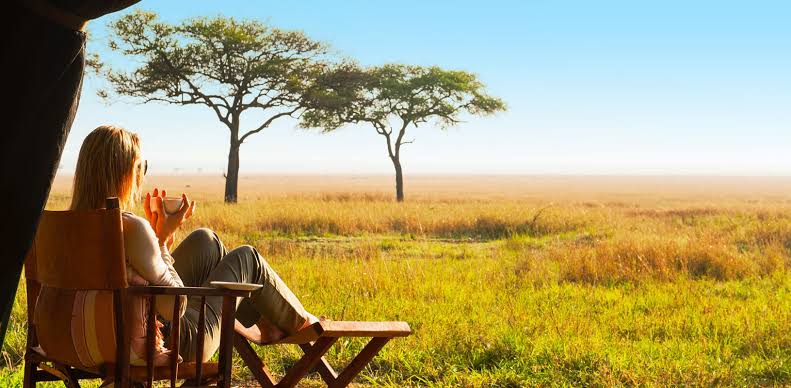
- Tent vs lodge room: Most Serengeti and Tarangire accommodation uses permanent tented camps — canvas-walled tents on wooden platforms, with en-suite bathrooms, proper beds, and all amenities. These feel genuinely luxurious in practice despite the tent format. Lodge rooms at Ngorongoro are typically conventional hotel rooms with the dramatic advantage of a crater view from the window.
The Wildlife Reality — Setting Expectations Correctly
Tanzania's wildlife is extraordinary — but it operates on its own terms, not on a schedule:
- Not every drive produces a lion kill: A 7-day safari produces an average of 15 to 20 game drives. Most will include lions. Not all will include lions killing. Managing the expectation that the most dramatic moments are bonuses — not guarantees — allows you to appreciate what actually happens rather than being disappointed by what does not.
- But there will be lions: The Serengeti has 3,000 lions. The Ngorongoro Crater has 60 to 75. You will see lions. Probably every day in the Serengeti.
- The unexpected is the point: The most frequently cited 'highlight of the trip' moments in adventuresseeker.com's guest feedback are almost always unexpected — a serval cat in the tall grass at dawn, a caracal on a rock for 30 seconds, a pangolin crossing the road (extraordinarily rare). These moments cannot be planned. They happen to guests who are present and paying attention.
- Your guide makes the difference: The same location, same season, same vehicle produces dramatically different experiences depending on the guide. A guide who has driven the Seronera valley for 10 years knows the specific trees where the leopard rests on specific mornings. This is why guide quality matters more than any other single variable in your safari experience.
7-DAY TANZANIA SAFARI: COMPLETE DAY-BY-DAY ITINERARY
What follows is adventuresseeker.com's recommended 7-day Northern Circuit safari itinerary — not a generic template but the specific sequence, specific activities, and specific advice that we build into every 7-day safari we plan from Arusha. Seasonal notes are included where the experience changes meaningfully between the dry and green seasons.
DAY 1 · ARRIVE ARUSHA — WELCOME TO TANZANIA
Kilimanjaro International Airport → Arusha
Your Tanzania safari begins the moment you walk out of Kilimanjaro International Airport's arrivals hall. The air is different here — warmer, softer, carrying the faint scent of red volcanic earth and distant acacia. Your Adventures Seeker representative is waiting with your name on a sign. The drive to Arusha takes 45 minutes on a good day, and the views of Mount Kilimanjaro — visible on clear mornings to the north — provide an immediate sense of where you are.
- Arrival formalities: Tanzania e-Visa should be sorted in advance at evisa.go.tz. Have your passport, visa approval document, return ticket, and Yellow Fever certificate ready at immigration if required.
- Transfer to Arusha: Approximately 45–60 minutes. Your guide will provide a brief orientation during the drive — what to expect over the next 7 days, safety protocols in the parks, and what the current wildlife conditions are.
- Arusha afternoon: If you arrive early (before noon), consider a half-day visit to Arusha National Park — just 35 minutes from the airport. Canoeing on the Momella Lakes, a walking safari with colobus monkeys, and simultaneous views of Kilimanjaro and Mount Meru. An extraordinary way to begin a safari.
- Accommodation: Overnight in Arusha. Recommended properties: Arusha Coffee Lodge (luxury), Rivertrees Country Inn (premium), Mount Meru Hotel (comfort).
- Evening: Welcome dinner at your Arusha lodge. A proper meal, a full briefing on the week ahead, and the first early night. Tomorrow begins before sunrise.
🌅 Day 1 Wildlife Highlight: If you visit Arusha National Park on arrival afternoon: black-and-white colobus monkeys in the groundwater forest, giraffes on the open grassland, hippos in the Momella Lake, and the extraordinary view of both Kilimanjaro and Meru simultaneously.
DAY 2 · TARANGIRE NATIONAL PARK — THE ELEPHANT KINGDOM
Arusha → Tarangire National Park (2 hours by road)
Day 2 is the moment many guests later identify as the instant they understood what a Tanzania safari actually is. The drive from Arusha to Tarangire takes two hours through Maasai pastoral land — you will pass red-robed Maasai herding cattle across the road, flat-topped acacia trees against an enormous sky, and the gradual transition from the green highlands to the semi-arid savannah that defines Tarangire's landscape.
The moment you enter the Kwa Kuchinja gate and drive down into the Tarangire River valley, the scale of what you are in becomes apparent. The baobab trees — some over 1,000 years old, their vast trunks wider than a car — appear first. Then, as you descend toward the river, the elephants.
- Morning: Depart Arusha by 7:00 AM. Arrive Tarangire gate approximately 9:00 AM. Enter the park and begin the morning game drive immediately.
- The Tarangire River: In the dry season (June–October), the river is the only permanent water source for an enormous area. The game drive heads straight for the river bank — the concentration of wildlife here in the dry season is extraordinary. Elephant herds of 100 to 300 animals. Buffalo herds of 200 to 500. Lions resting in the shade of the riverine acacias.
- Python Rock: In the southern park, this specific rock formation hosts multiple African rock pythons simultaneously in the dry season — sometimes 5 or more adults of 3 to 5 metres bask on the rock at once. Your guide knows whether the pythons are currently active and will plan the route accordingly.
- Afternoon: The south circuit, the Silale Swamp (excellent for birds), and the return to the lodge via the baobab woodland at sunset.
- Accommodation: Overnight inside or near Tarangire. Recommended: Oliver's Camp (premium, walking safari access), Tarangire Treetops (luxury tree-house rooms in baobab trees), Tarangire Sopa Lodge (comfort, reliable, good views).
🌅 Day 2 Wildlife Highlight: The Tarangire River bank in the dry season. 300 elephants converging from different directions simultaneously, buffalo herds in the dust, lions resting in the riverine shade. The scale of the wildlife concentration at a single river bank is something no photograph or documentary has ever fully communicated.
🐘 Tarangire Strategy: Ask your guide to position the vehicle on a high bank overlooking the river by 7:30 AM on Day 3 (your second morning) and stay for at least 90 minutes. The elephant herds arrive in waves from different directions throughout the morning. Watching 50 elephants approach from the north while another 100 are already at the water is one of the most powerful wildlife encounters available in Africa.
DAY 3 · TARANGIRE TO LAKE MANYARA — FOREST, FLAMINGOS & LIONS IN TREES
Tarangire National Park → Lake Manyara National Park → Ngorongoro
Day 3 is a transit day that manages to be anything but transitional. You begin with a final dawn game drive in Tarangire — the best time to see lion prides returning from a night hunt and to catch the river bank in its quiet early-morning state before the peak elephant activity of mid-morning. Then you drive to Lake Manyara for an afternoon that introduces Tanzania's most compact and most ecologically diverse park.
- Dawn Tarangire drive (6:30–9:30 AM): Your final morning in the park. Lion sightings are highest at dawn when prides are still near their overnight kill. The baobab woodland in early morning light — before the heat haze builds — is Tarangire at its most beautiful.
- Drive to Lake Manyara (10:00 AM–11:30 AM): Via Makuyuni junction — a 100 km drive through Maasai country. Stop at the Makuyuni market town if time allows — colourful and authentic.
- Lake Manyara National Park (noon–5:00 PM): The main gate opens into the groundwater forest immediately — a dramatic transition from the semi-arid Tarangire landscape to dense, high-canopy forest fed by underground springs from the Rift Valley escarpment. Black-and-white colobus monkeys appear in the canopy within the first 15 minutes. The hippo pool at the north end of the park holds 50 or more animals at close range. The lake shore produces flamingo sightings (peak November–April), pelicans, herons, and an extraordinary diversity of waterbirds.
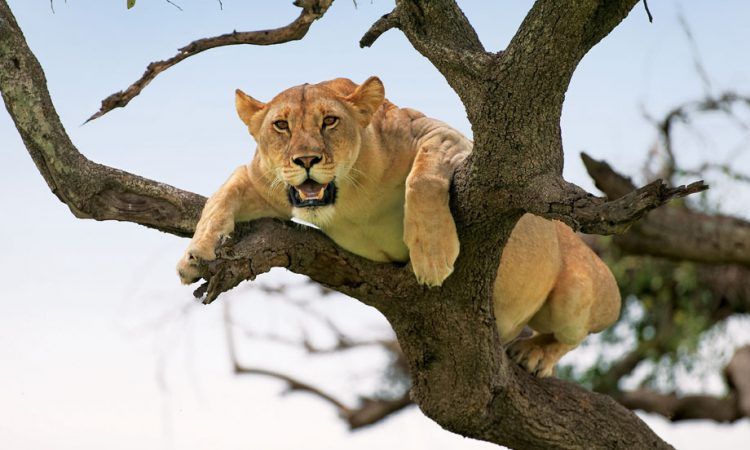
- Tree-climbing lions: Lake Manyara is one of only three places on Earth where lions routinely climb and rest in trees. Your guide knows which specific fig trees are currently being used by habituated prides. Sighting probability on a full afternoon visit with a knowledgeable guide: approximately 50–65%.
- Drive to Ngorongoro rim (5:30–7:00 PM): From Manyara gate, the drive ascends toward Ngorongoro through the highland agricultural town of Karatu. The temperature drops perceptibly as you gain altitude. Arrive at the rim as darkness falls.
- Accommodation: Overnight on the Ngorongoro crater rim. Recommended: &Beyond Ngorongoro Crater Lodge (ultra-luxury, iconic views), One Nature Ngorongoro Lodge (luxury, panoramic design), Ngorongoro Serena Safari Lodge (premium), Ngorongoro Sopa Lodge (comfort).
🌅 Day 3 Wildlife Highlight: The tree-climbing lions of Lake Manyara. A pride of four lions draped across the branches of a large fig tree, six metres above the ground, looking down at your vehicle with supreme indifference — one of Africa's most extraordinary and most improbable wildlife sightings.
DAY 4 · NGORONGORO CRATER — THE GREATEST WILDLIFE SHOW ON EARTH
Full Day: Ngorongoro Conservation Area
Day 4 is the day that most 7-day Tanzania safari guests later describe as their single most extraordinary day on the continent — and after three days of extraordinary, that is a meaningful claim. The Ngorongoro Crater descent at dawn is the moment the Northern Circuit reaches its most concentrated, most overwhelming climax.
The Seneto descent road winds down 600 metres of crater wall, each switchback revealing more of the caldera floor below. You enter through mist at the top and emerge into brilliant morning sunshine at the bottom — a transition that feels deliberately theatrical but is entirely natural. And then you drive out onto the crater floor and the scale of it stops every conversation in the vehicle.
- Dawn descent (6:00 AM gate opening): Arrive at the Seneto Gate as it opens. Be first or among the first vehicles down. The first 90 minutes on the crater floor — before the temperature rises and the wildlife becomes less active — are the finest of the day. Lion prides are near kills. The black rhino are on the short-grass plains before moving to the forest shade. The light is horizontal and golden.
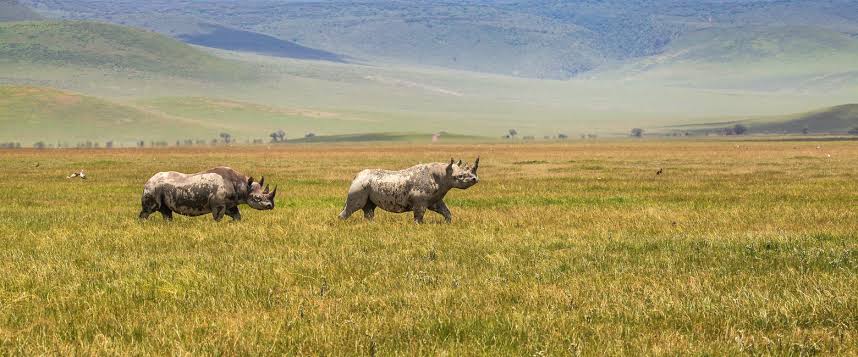
- Black rhino search (first priority): From the base of the descent road, your guide immediately heads toward the short-grass area between the road junction and Mandusi Swamp. This is Tanzania's most reliably viewable rhino habitat — approximately 26 individuals, individually known to the guides. Patience and an experienced guide produce a sighting on approximately 65–70% of full-day crater visits.
- Mandusi Hippo Pool: 50 or more hippos in a permanent pool at the crater's northern end. A designated vehicle stop allows viewing at close range — hippos at 20 metres, jostling for position, vocalising, surfacing and submerging in sequence. One of the most entertaining wildlife encounters of the entire 7 days.
- Lake Magadi and flamingos: The shallow soda lake on the crater's southern floor hosts thousands of flamingos — a vivid pink spectacle against the alkaline water with the 600-metre crater wall rising behind. Best viewed from the shore track with morning light from the east.
- Lerai Acacia Forest: The south-western crater floor. Large bull elephants with impressive tusks move between the fig trees. Leopards are occasionally spotted in the canopy. The forest light at midday has a quality entirely different from the open grassland sections.
- Ngoitokitok Spring picnic lunch: The designated picnic site on the crater floor. One of Africa's most extraordinary lunch locations — eating sandwiches while wildebeest graze at 50 metres and kite hawks circle hopefully overhead.
- Afternoon circuit: The second sweep covers any areas missed in the morning and revisits the best morning sightings. Lion prides often move to the hippo pool area in the afternoon.
- Ascent via Lerai road (3:00–4:00 PM): The ascent through the acacia forest is beautiful in its own right — emerge on the rim as afternoon light floods the crater below.
- Accommodation: Second night on the Ngorongoro rim. Same property or upgrade for a special occasion.
🌅 Day 4 Wildlife Highlight: The black rhinoceros on the Ngorongoro Crater floor at dawn. One of approximately 26 individuals — individually named and monitored by researchers for decades — grazing alone on the short grass while lions rest at 200 metres behind it and the 600-metre crater wall rises in mist above. The most concentrated wildlife scene available anywhere in Africa.
⏰ Crater Timing: The 6-hour maximum permit for the crater floor means you must begin ascending by 2:30–3:00 PM at the latest. Plan the morning to prioritise rhino and predator sightings (early, when they are most active) and save the flamingo lake and forest for midday and early afternoon. Never rush the morning predator window.
DAY 5 · OLDUVAI GORGE & INTO THE SERENGETI
Ngorongoro → Olduvai Gorge → Serengeti National Park
Day 5 is the day the Serengeti finally appears — and for most guests, the first view of the Serengeti plain from the Naabi Hill Gate entrance is a physical sensation as much as a visual one. The scale is simply not what you have been prepared for, regardless of how many documentaries you have watched.
But the day begins with a stop that many guests initially resist and universally later describe as one of the trip's unexpected highlights: Olduvai Gorge.
- Morning: Check out of the Ngorongoro rim lodge after breakfast. Load the vehicle. The drive west toward the Serengeti via the NCA highland road begins.
- Olduvai Gorge (Oldupai Gorge) — 45 minutes from the rim: The world's most important palaeontological site — where Louis and Mary Leakey discovered the fossils that established Africa as the birthplace of humanity. A 2-hour stop includes the small but excellent on-site museum (original fossil casts including the Zinjanthropus skull) and the viewpoint overlooking the gorge itself. The canyon walls display 2.1 million years of geological strata in visible cross-section. An experience that places the entire week's wildlife viewing in a genuinely staggering context.
- Naabi Hill Gate — Serengeti entrance (around noon): Pay the Serengeti entry fees and drive through the gate onto the open plains. The landscape change from the NCA highland road to the Serengeti's short-grass plains is immediate and dramatic. Your guide will stop at Naabi Hill viewpoint for the view — the Serengeti stretching to every horizon.
- Afternoon game drive to your camp (2 hours of driving/game viewing): The route to most central Serengeti camps passes through prime wildlife territory. Lions are encountered on a majority of first-afternoon Serengeti drives. Cheetahs on the open plains. Large buffalo herds.
- Accommodation: First night in the Serengeti. Central Seronera area recommended for a 7-day safari. Recommended properties: Lemala Nanyukie (premium), Four Seasons Safari Lodge Serengeti (luxury), Serengeti Sopa Lodge (comfort), Serengeti Serena Safari Lodge (comfort-premium).
- Evening: First Serengeti dinner. The sounds of the African night in the Serengeti — lion calling in the distance, hyenas whooping, the constant ticking of the bush — are unlike anything at the Ngorongoro rim lodges. The Serengeti at night is alive in a way that properly enclosed rim lodges are not.
🌅 Day 5 Wildlife Highlight: The first lion sighting in the Serengeti. Almost every guest on a 7-day safari encounters lions on their first Serengeti afternoon drive. But the specific quality of the first Serengeti lion — in the golden afternoon light, on the open plain, with the horizon behind it and the scale of the ecosystem around it — is what makes the Serengeti the Serengeti.
DAY 6 · FULL DAY SERENGETI — THE HEART OF AFRICA'S GREATEST PARK
Full Day: Serengeti National Park
Day 6 is a full day in the Serengeti — from 6:30 AM dawn to the golden hour of 6:30 PM sunset. No driving between parks. No time pressure. Just a full 12 hours available in the world's finest wildlife park, with your guide, your private vehicle, and the entire Serengeti at your disposal.
This is the day most guests describe as the one they wanted never to end. It is also the day that varies most dramatically depending on season — and understanding what your specific travel dates produce in terms of wildlife events is the most important planning decision of the entire 7-day itinerary.
Day 6 in Dry Season (June–October) — Migration and Open Landscape
The dry season Serengeti is at its most photogenic and its most wildlife-dense. Vegetation is sparse, waterholes are shrinking, and animals are concentrated at predictable locations. The specific experience depends on which Serengeti zone you are based in:
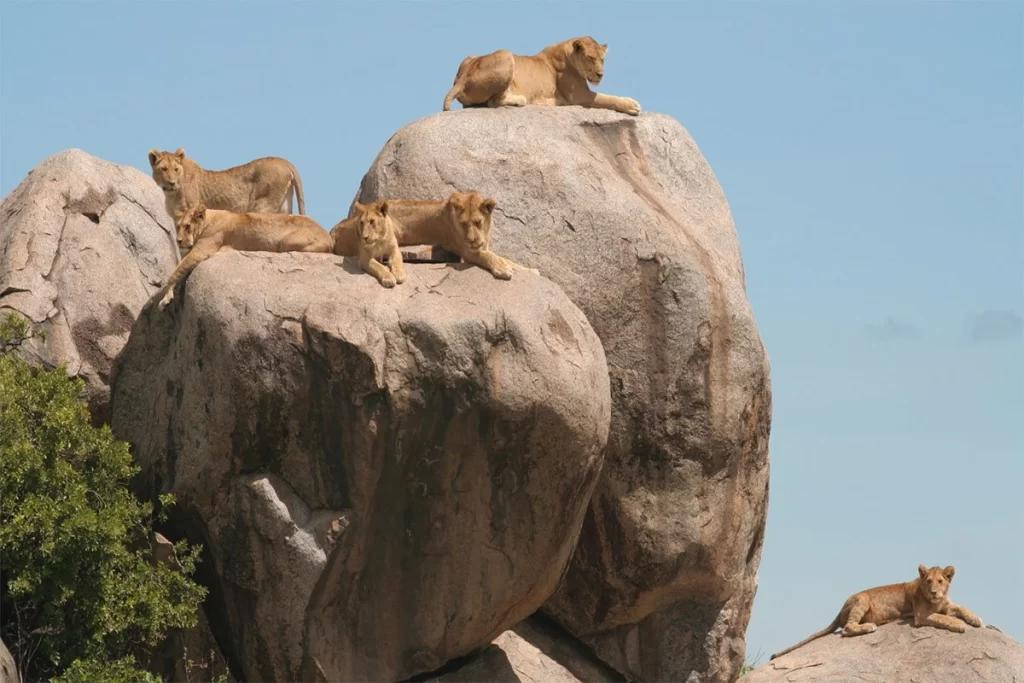
- Central Seronera (June–October): The Seronera River valley's permanent water anchors year-round resident wildlife. Leopards on the Simba and Maasai kopjes. Large lion prides near the hippo pools. Cheetah coalitions on the open plains. The day's game drive covers the river system, the kopje circuits, and the open grassland between them.
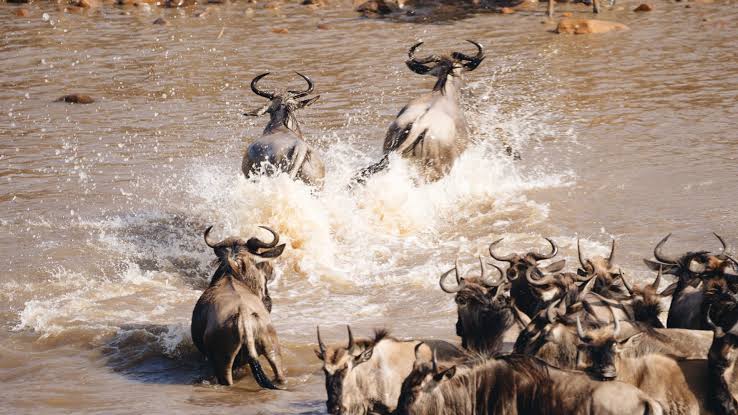
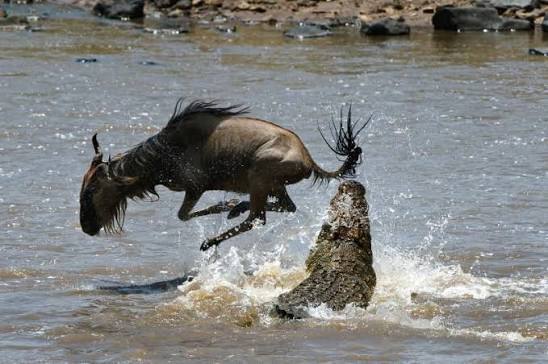
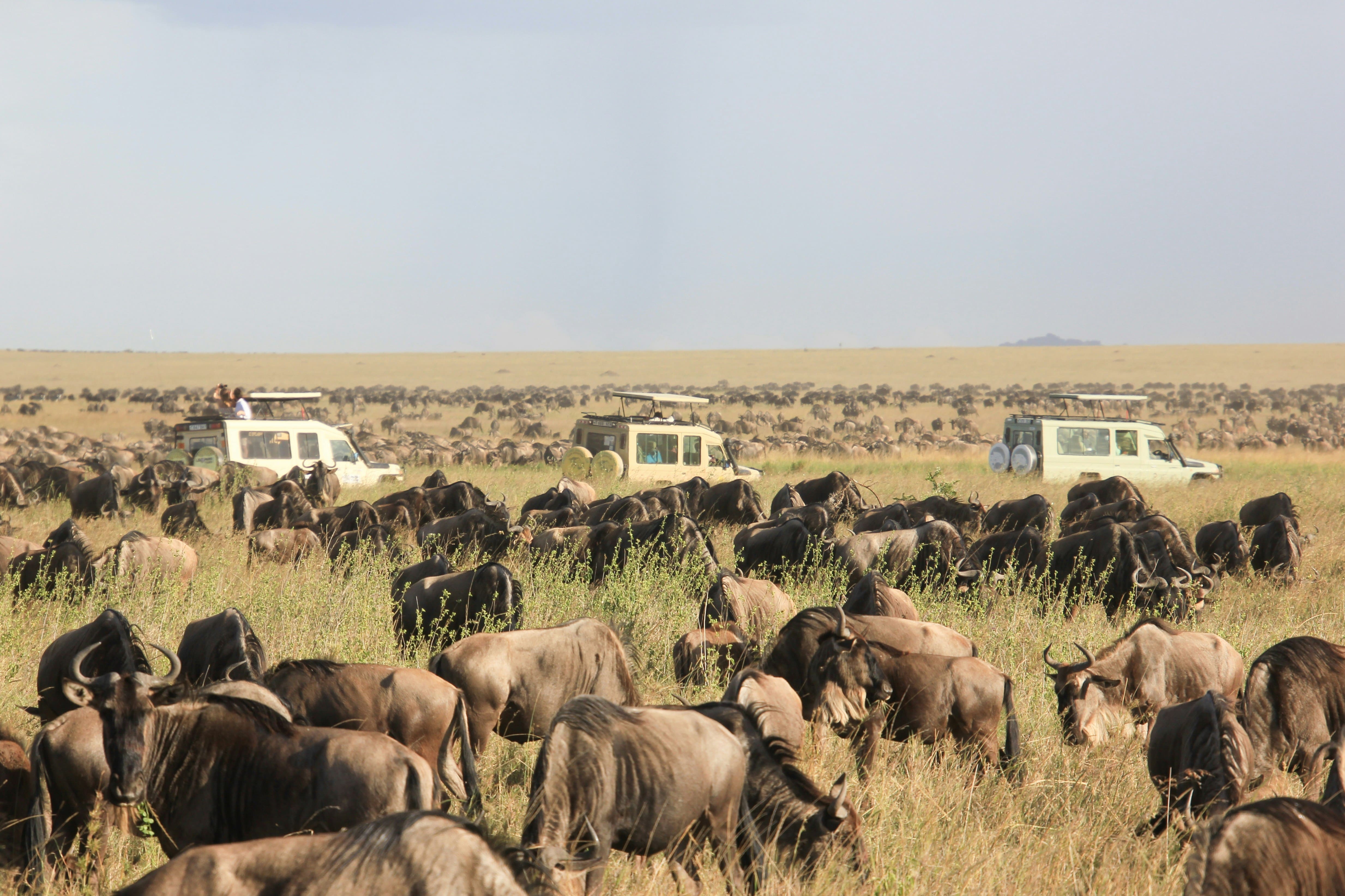
- Northern Kogatende/Lamai (July–September): If your itinerary positions you in the northern Serengeti for migration crossings, Day 6 is spent at the Mara River. Your guide positions the vehicle at the crossing bank by 6:30 AM and you wait — sometimes minutes, sometimes hours — for the herd to commit to the water. When it happens, the sound, the scale, and the chaos of a Mara River crossing is something that visitors describe as the single most intense wildlife experience of their lives.
Day 6 in Green Season (January–March) — Calving Season
The green season Serengeti delivers a completely different experience — arguably more wildlife-intensive, certainly more photogenic, and at significantly lower cost:
- Southern Serengeti and Ndutu Plains (January–March): The calving season. The migration herds are spread across the short-grass plains, and in February, 400,000 to 500,000 wildebeest calves are born in a compressed two-to-three-week pulse. The predator concentration around the calving herds — cheetahs, lions, leopards, hyenas — produces wildlife action of extraordinary frequency and intensity. Multiple kills per morning drive in a small area. Dawn photography on the lush green plains with the dramatic cloudscapes of the green season sky.
The Hot Air Balloon Option — Day 6 Dawn
Day 6 dawn is the optimal time for the hot air balloon safari if you are including it in your 7-day itinerary. The balloon lifts off at 5:30 AM — before the standard game drive departs — and returns for the champagne breakfast by approximately 8:30 AM, after which the full-day game drive begins.
- Cost: Approximately $600–$700 per person
- Booking: Must be arranged in advance through Adventures Seeker — not bookable on the day
- What it adds: The aerial perspective of the Serengeti at dawn — elephant herds visible from altitude, wildebeest dispersed across the plain like a pointillist painting, a lion pride returning from a hunt — is an entirely different experience from the ground-level game drive. The champagne breakfast in the open bush completes the most romantic morning available in Africa.
🌅 Day 6 Wildlife Highlight: Season-dependent — but reliably extraordinary. In the dry season: a Mara River crossing (if in the north) or a leopard at close range on the Seronera kopjes (if in the centre). In the green season: the calving season predator action — watching a cheetah stalk and take a wildebeest calf on the open Ndutu Plain at dawn, the most intense wildlife encounter available in Africa at any time of year.
📸 Photography Day: Day 6 is the day to put away the phone and fully engage with the photography you have been building toward all week. The Serengeti's open landscape, predictable light, and habituated wildlife produce photographs that require genuine skill to improve upon. Your guide will position the vehicle for the best shooting angles — communicate what you want to photograph and let them work.
DAY 7 · FINAL SERENGETI MORNING & DEPARTURE
Final Dawn Drive → Seronera Airstrip or Road Transfer
Day 7 begins as every other day has begun — with a 6:30 AM game drive in the Serengeti. The final morning drive has a different quality from all the previous ones: you are aware that it is ending, which creates a particular attention to everything you see. Most guests describe the last morning drive as the one they were most present for.
- Final dawn drive (6:30–10:00 AM): The last game drive of the 7-day safari. Your guide will drive the routes that produced the best sightings over the previous two days, giving you the chance to return to the leopard's kopje, the lion pride's territory, the cheetah's favourite hunting ground. The Serengeti at 7:00 AM on a clear morning, with the light still low and golden and the animals still active, is the finest wildlife photography window of the entire week.
- Return to camp by 10:00 AM: Pack the main bag for the porter team. A final coffee and the ritual exchange of sighting highlights with the camp staff. The Serengeti camp departure is typically one of the quieter emotional moments of the entire trip.
- Departure options:
- By domestic flight (recommended): Seronera airstrip is 15–20 minutes from most central Serengeti camps. The 45-minute flight to Arusha is quick and provides aerial views of the ecosystem. From Arusha, connect to Kilimanjaro International Airport (JRO) for international departure. Or fly directly to Zanzibar for the beach extension.
- By road: 7–8 hours drive from the central Serengeti to Arusha, passing through the Ngorongoro Conservation Area gate. A long day of driving but provides one more opportunity to see wildlife on the road and to stop at any missed viewpoints from the outward journey.
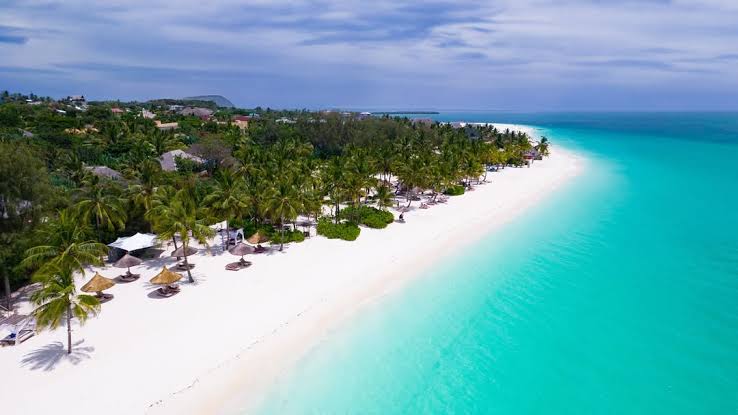
- Zanzibar option: The domestic flight from Seronera to Zanzibar takes approximately 55 minutes via Arusha connection. If adding a beach extension, this is the most natural departure point — a 7-day safari followed by 3 to 5 days in Zanzibar is the most popular overall Tanzania itinerary for international visitors.
🌅 Day 7 Wildlife Highlight: The last sighting. Every 7-day safari guest has one — the animal or the moment that arrives on the final morning when the vehicle is already turning back toward camp. A mother cheetah with three cubs crossing the road. A male lion walking directly toward the vehicle, pausing to look at you from three metres, then passing. The Serengeti's final gift. It always comes.
BEST TIME FOR A 7-DAY TANZANIA SAFARI: SEASON-BY-SEASON GUIDE
The 7-day Northern Circuit safari delivers something extraordinary in every month of the year — but what it delivers changes significantly between seasons. Here is the honest, specific guide to each season:
Dry Season: June to October — Best Overall
The dry season is the most popular and most reliably spectacular window for the 7-day safari. Sparse vegetation, shrinking waterholes, and the annual migration cycle create conditions that maximise wildlife visibility across all four parks simultaneously.
- Tarangire (June–October): Peak elephant season. August and September produce herds of 200 to 400 animals at the river — the finest elephant viewing in northern Tanzania. Dry-season photography: golden, dusty, spectacular.
- Lake Manyara (June–October): Good mammal viewing. Flamingo numbers lower than peak (November–April) but still present. Tree-climbing lion sightings are consistent.
- Ngorongoro (June–October): Excellent year-round but clearest skies and sharpest visibility. Black rhino most reliably seen on sparse dry-season grass.
- Serengeti (June–October): The Great Migration is in the western corridor (June) or northern sections (July–October). Mara River crossings peak July to September. Resident wildlife in the central Seronera is outstanding year-round.
- Crowd levels: High season — July and August in particular. Book 8–12 months ahead.
- Price: Peak season rates — 25–50% above standard pricing.
Calving Season: January to February — Best Value
Tanzania's most underrated safari window. The 7-day itinerary in January and February places you in the southern Serengeti/Ndutu for the calving season — one of the most extraordinary wildlife events in Africa:
- Tarangire (January–February): Good mammal viewing. Elephant herds smaller than peak dry season but resident lions, leopards, and giraffes excellent.
- Lake Manyara (January–February): Peak flamingo season beginning — thousands of birds on the lake. Green season lush landscape.
- Ngorongoro (January–February): Excellent year-round — no season significantly changes the crater experience.
- Serengeti/Ndutu (January–February): The herds are on the southern short-grass plains. February calving season peak — 400,000 to 500,000 calves born, extraordinary predator concentration. Cheetah kills, lion hunts, leopard stalks happening multiple times per morning in a small area.
- Price: Standard rates — 15–30% below peak dry season.
- Landscape: Lush green. Dramatic cloudscapes. Beautiful photography conditions entirely different from the dry season.
Shoulder Season: November and December
The short rains — brief afternoon showers of 1 to 2 hours that rarely disrupt morning game drives — transform the landscape without significantly compromising the wildlife viewing. Baby animals appear across many species. Migratory birds arrive. Prices are below peak.
- November: Good across all parks. Short rains. Flamingos returning to Manyara. Wildlife dispersing from dry-season concentrations. Good value.
- December (early): Excellent — improving conditions. Good wildlife, reasonable prices, less crowded than peak. Avoid the Christmas/New Year fortnight when prices spike 40–80%.
Green Season: March to May — Best Budget
The long rains produce the most challenging conditions but also the lowest prices, the emptiest parks, and the finest birding of the year. For specific traveller types, this is genuinely the best time:
- Best for: Birding enthusiasts, budget-conscious travellers, those who want complete park solitude, luxury travellers who want access to premium properties at comfort prices.
- Not ideal for: First-time safari visitors expecting the classic dry-season wildlife concentration. Some seasonal camps close. Some roads become challenging.
- Price advantage: Luxury lodges at 30–45% discount. The finest possible moment to access premium Serengeti properties at dramatically reduced rates.
WILDLIFE TO EXPECT ON A 7-DAY TANZANIA SAFARI
The specific wildlife you encounter on a 7-day Northern Circuit safari depends on the season and the zone, but the following represents what a typical 7-day itinerary produces across the four parks:
Near-Certainties — You Will Almost Certainly See These
- Lion: The Serengeti has 3,000 lions. The Ngorongoro Crater has 60–75. You will see lions on virtually every Serengeti and crater game drive. On a 7-day safari you will typically encounter lions 8–12 times.
- Elephant: Tarangire alone justifies the elephant claim — herds of 200+ in the dry season. Elephants are also present year-round in the Serengeti, Ngorongoro Crater, and Lake Manyara.
- Buffalo: Abundant throughout all four parks. Large herds in the Serengeti are regularly 500 to 1,000 animals.
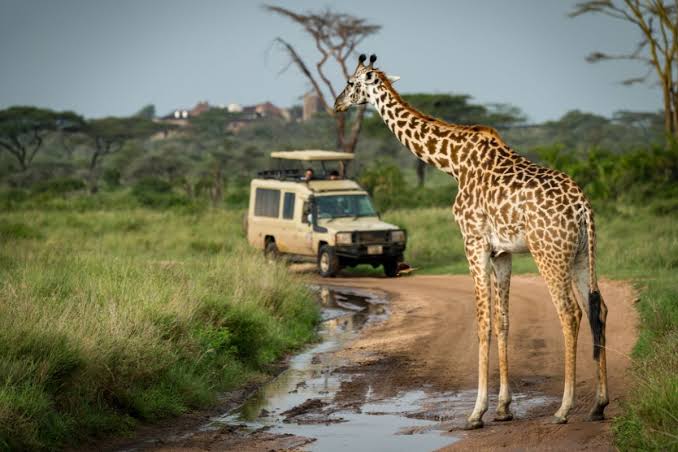
- Giraffe: Maasai giraffe throughout all four parks. Some of the most relaxed and closest-approach giraffe sightings anywhere in Africa at Lake Manyara and Tarangire.
- Zebra: Abundant throughout. Large mixed herds with wildebeest are one of the Serengeti's most iconic visual experiences.
- Hippopotamus: Guaranteed at the Ngorongoro Mandusi Hippo Pool, present at Lake Manyara, and in the Seronera River pools.
- Warthog: Common throughout — their habit of running with tails raised vertically makes them one of the most entertaining species to watch.
- Colobus monkey and baboon: Lake Manyara forest zone. Baboons at Ngorongoro and throughout Serengeti.
High Probability — Expect These on a 7-Day Safari
- Leopard: The Serengeti's Seronera kopjes are Tanzania's most reliable leopard habitat. With an experienced guide, probability of at least one sighting on a 3-night Serengeti stay: 75–85%.
- Cheetah: Central and southern Serengeti year-round. The open plains are ideal cheetah habitat. Probability on a 3-night central Serengeti stay: 70–80%.
- Wildebeest: Present in the Serengeti year-round. Spectacular migration herds July–October (north) and January–March (south).
- Black rhinoceros: Ngorongoro Crater. Approximately 26 individuals. Full-day crater visit with experienced guide: 65–70% sighting probability.
- Flamingo: Lake Manyara and Ngorongoro Crater (Lake Magadi). Year-round presence — peak November to April.
- Spotted hyena: Abundant throughout — one of the Serengeti's most frequently seen predators.
Possible Bonuses — Consider These Extraordinary
- African wild dog: Present but unpredictable in the Serengeti — packs range widely. A sighting is genuinely special.
- Tree-climbing lions: Lake Manyara (50–65% probability with knowledgeable guide). A wildlife experience available in almost no other location on Earth.
- Serval cat: The tall-grass specialist — seen at dawn and dusk on the Serengeti and Ngorongoro plains. Beautiful and surprisingly large.
- Pangolin: Extraordinarily rare — one of the world's most endangered mammals. A pangolin sighting on a 7-day safari is among the rarest and most discussed wildlife events at any Serengeti camp.
- African wild cat: Nocturnal but occasionally seen at dawn — resembles a large, striped domestic cat and is the ancestor of all domestic cat breeds.
- Ostrich courtship display: Male ostriches performing their extraordinary wing-fanning courtship dance on the Serengeti plains — comically theatrical and surprisingly moving.
HOW MUCH DOES A 7-DAY TANZANIA SAFARI COST IN 2026?
The honest cost answer: between $2,800 and $20,000+ per person for a 7-day Northern Circuit safari depending on tier. Here is the specific breakdown.
The Fixed Floor: Park Fees
These fees are fixed by the Tanzanian government and identical regardless of operator or accommodation tier:
- Tarangire (2 days): $140 per person
- Lake Manyara (1 day): $70 per person
- Ngorongoro Conservation Area (2 days): $140 per person
- Ngorongoro Crater descent fee (2 descents): $295 per vehicle — approximately $148 per person in a couple sharing a private vehicle
- Serengeti (3 days): $210 per person
- Total park fees (7 days, 2 crater descents, shared private vehicle): Approximately $580–$620 per person
Any 7-day Northern Circuit quote that appears to be significantly below this figure is either excluding a park, including only one crater descent, or using shared vehicles.
Full 7-Day Cost by Accommodation Tier
- Budget camping: $1,800 – $2,800 per person. Public campsites with shared facilities. Shared vehicle (maximum 6 passengers). All parks included. Same wildlife — different camp comfort.
- Comfort lodge: $3,000 – $5,500 per person. Private en-suite accommodation, full board, private vehicle, experienced guide. The most common tier for international visitors. The sweet spot.
- Premium safari: $5,500 – $9,500 per person. Named lodges, private vehicle as standard, superior food and service, possible concession access.
- Luxury safari: $9,500 – $22,000+ per person. Singita, Four Seasons, &Beyond, Nomad — the world's finest safari lodges. Private aircraft, butler service, exclusive concession game drives.
The Hot Air Balloon Addition
- Cost: $600–$700 per person
- Book: Through Adventures Seeker in advance — not available on the day
- Verdict: Worth it. No other activity on the 7-day itinerary produces the same combination of perspective and romance. Book it for Day 6 dawn.
What the Season Does to the Price
- April–May (long rains): –30% to –45% on lodge rates. Deepest discounts of the year.
- January–February (calving): Standard rates — outstanding wildlife at the best value.
- June, October (shoulder dry season): +10% to +20% on standard rates.
- July–September (peak dry season): +30% to +60% on standard rates. Book 10–12 months ahead.
- Christmas and New Year (Dec 24–Jan 2): +50% to +80%. Very limited availability — book 12+ months ahead.
Additional Budget Items
- International flights: $900–$2,000 per person return from Europe; $1,200–$2,500 from North America
- Travel insurance (medical evacuation included): $80–$200 per person
- Tanzania e-Visa: $50–$100 per person
- Tips (guide, lodge staff): $200–$350 per person for 7 days
- Malaria prophylaxis: $40–$100 per person
- Personal spending (souvenirs, extras): $100–$300 per person
WHAT TO PACK FOR A 7-DAY TANZANIA SAFARI
Seven days across four national parks requires a packing approach that is both versatile and light — most bush aircraft have strict 15 kg total luggage limits (checked plus carry-on), and you will be living out of your bag every day.
The Non-Negotiables
- Binoculars (8x42 or 10x42): The single most important piece of safari equipment. More important than a camera for most guests. Your guide cannot always position the vehicle for naked-eye proximity. Binoculars transform distant sightings into meaningful encounters.
- Neutral-coloured clothing only: Khaki, beige, olive green, tan, brown. No white (visible to animals), no blue (attracts tsetse flies), no bright colours. This is not optional.
- Warm fleece or down jacket: Early morning Serengeti drives in July and August can be 10–12°C. The first morning without a fleece is the last morning without a fleece.
- Sunscreen (SPF50+) and sun hat: The equatorial sun at altitude is intense regardless of cloud cover. Apply daily.
- DEET insect repellent: Essential throughout Tanzania. Apply daily at dusk and dawn.
Clothing Checklist for 7 Days
- Lightweight long-sleeve safari shirts (neutral): 3 shirts. Long sleeves provide sun and insect protection during game drives.
- Convertible zip-off trousers: 2 pairs. Convert to shorts at midday.
- Shorts (1–2): For lodge afternoons and warm midday periods.
- Fleece or lightweight down jacket: 1 — essential for morning drives.
- Light rain jacket (packable): 1 — for shoulder season travel.
- T-shirts (3–4): For under safari shirts and lodge evenings.
- Swimwear (2 sets): Most lodges have pools — essential for midday recovery.
- Wide-brim sun hat: 1 — not optional.
- Comfortable walking shoes: Closed-toe. For lodge grounds and any walking safari.
- Sandals or flip-flops: For lodge evenings.
- Wool or synthetic hiking socks (5 pairs): Comfort over 7 days of different terrain.
Camera Equipment
- Telephoto zoom lens (100–400mm): The single most impactful camera item. The Serengeti's open landscape allows long-distance shooting; a telephoto zoom maximises wildlife detail from any vehicle position.
- Memory cards and batteries: Triple what you think you need. A full Serengeti game drive day can fill 32 GB of storage.
- Dustproof sealed bag: The dry-season Serengeti produces fine dust that penetrates every camera bag not specifically sealed. A padded waterproof dry bag is essential.
- Power bank (20,000 mAh): Vehicle charging points exist but are unreliable. A full-capacity power bank keeps phones, cameras, and GPS devices charged across a 10-hour drive day.
Luggage
- Soft duffel bag (main bag, max 15 kg): Not hard-shell. Bush aircraft require soft-sided bags for overhead and under-seat storage. 15 kg total is the standard limit — weigh before you leave home.
- Day pack (20–25 litre): Carried by you on game drives. Waterproof cover. Fits between your feet in the vehicle.
HOW TO CHOOSE THE RIGHT OPERATOR FOR YOUR 7-DAY SAFARI
The operator you choose for your 7-day Tanzania safari determines more about your experience than the lodges you stay in, the parks you visit, or the month you travel. Here is the essential checklist:
The Six Non-Negotiables
- TATO registration: All legitimate operators must be registered with the Tanzania Association of Tour Operators. Ask for the TATO number and verify at tato.co.tz.
- Physical office in Tanzania: Your operator must have a physical Arusha office — not a virtual presence or an overseas booking desk. The people who plan your safari should be in Tanzania, with current ground-level knowledge of park conditions.
- Same guide and vehicle throughout: The 7-day Northern Circuit with multiple park changes is exactly the scenario where subcontracting guides and vehicles between parks is most tempting for operators. Ask explicitly: will I have the same guide and same vehicle from Day 1 to Day 7?
- Guide name and specific experience: Ask for your guide's name before booking and ask how many times they have driven the Seronera valley in the past year. A guide who drives the Serengeti every week has knowledge that a guide who visits once a month simply cannot match.
- Line-item pricing: A trustworthy operator provides a quote that shows park fees by park by number of days, accommodation costs, vehicle costs, and their margin separately. A single total figure with no breakdown is a signal to ask questions.
- Private vehicle confirmation: For a 7-day safari with the level of wildlife engagement this guide describes, a shared vehicle is a significant compromise. Confirm that a private vehicle is included in your quote before signing anything.
Adventures Seeker: TATO-registered Arusha-based operator. Same guide and vehicle throughout your 7-day safari. Line-item pricing on every quote. Guide assigned by name before booking. WhatsApp communication within hours. All vehicles owned and maintained by our team. Contact adventuresseeker.com for a personalised 7-day Northern Circuit quote.
7-DAY TANZANIA SAFARI VARIATIONS: CUSTOMISING FOR YOUR PRIORITIES
The standard 7-day Northern Circuit itinerary above is the most broadly excellent format. But specific wildlife priorities, travel dates, and travel styles benefit from specific adjustments:
Variation 1: Migration Crossings Focus (July–September)
For guests whose primary objective is the Mara River crossings, the standard itinerary is adjusted to position 3 nights in the northern Serengeti at Kogatende or Lamai rather than 3 nights in the central Seronera:
- Days 1–2: Tarangire (2 nights) — elephants at river peak.
- Day 3: Ngorongoro — crater descent (1 night on rim, 1 descent only).
- Day 4: Drive or fly to central Serengeti. Afternoon drive.
- Days 5–7: Fly or drive to northern Serengeti (Kogatende). 3 nights at the Mara River. Days 5, 6, and 7 at crossing points.
This variation sacrifices the second Ngorongoro crater descent and the Tarangire south circuit in exchange for maximum time at the migration crossings. Worth it in July and August — not necessary in September when the crossings are less frequent.
Variation 2: Calving Season (January–February)
For guests travelling in January or February, the Serengeti nights are relocated to the south:
- Days 1–2: Tarangire (2 nights).
- Day 3: Lake Manyara (afternoon). Ngorongoro rim (overnight).
- Day 4: Ngorongoro Crater descent. Drive to Ndutu Plains (southern Serengeti/NCA).
- Days 5–6: Ndutu Plains — 2 nights in the calving season zone. Mobile camps follow the herds.
- Day 7: Drive or fly to central Serengeti. Morning game drive. Departure.
Variation 3: First-Time Visitor — Maximum Wildlife
For guests who want the most guaranteed wildlife sightings across the week, the following adjustment maximises park time at the expense of driving time:
- Day 1: Arrive JRO. Half-day Arusha National Park (canoeing, walking safari). Overnight Arusha.
- Day 2: Fly directly from Arusha to Tarangire airstrip (25 minutes). Full day Tarangire. Overnight.
- Day 3: Second full day Tarangire — south circuit, Python Rock.
- Day 4: Drive Tarangire to Lake Manyara (1.5 hours). Full day Manyara. Overnight rim.
- Day 5: Ngorongoro Crater descent. Full day on crater floor. Overnight rim.
- Days 6–7: Fly to Serengeti (Seronera). Full day Day 6. Morning drive Day 7. Fly to Zanzibar or JRO.
Variation 4: 7 Days + 3 Nights Zanzibar (Most Popular Overall)
The 7-day safari followed by a 3-night Zanzibar extension is Tanzania's most popular overall itinerary:
- Days 1–7: 7-day Northern Circuit as standard itinerary above.
- Day 7 afternoon: Fly Seronera → Zanzibar (~55 minutes via Arusha connection). Stone Town arrival.
- Day 8: Stone Town cultural day — UNESCO city, spice farm, Forodhani Night Market dinner.
- Day 9: Transfer to Nungwi or Matemwe beach. Mnemba Atoll snorkelling. Sunset dhow cruise.
- Day 10: Beach morning. Airport transfer. Depart Zanzibar.
WHEN TO BOOK YOUR 7-DAY TANZANIA SAFARI
Timing your booking correctly is one of the most important practical decisions in 7-day safari planning. Here is the specific timeline:
For July and August Travel — Book Now
- Book 10–14 months ahead: The northern Serengeti migration camps (Kogatende, Lamai area) sell out in October–November for the following July–August. If migration crossings are your priority, the booking window for next summer is now.
- Why so early: There are fewer than 30 'premier crossing position' camp slots per night in the northern Serengeti. With 50,000 annual Kilimanjaro climbers and 450,000 Serengeti visitors, the maths are straightforward — good properties fill quickly.
For January–February Travel — Book 4–6 Months Ahead
- Better availability than peak: January and February are the best-kept safari secret in Tanzania — outstanding wildlife at standard prices with significantly more accommodation availability than July–August.
- Mobile camps fill first: The Ndutu area mobile camps (the best positioning for the calving season) do fill up — book these 5–6 months ahead.
For June, September–October — Book 4–6 Months Ahead
- Good availability in early window: The shoulder months of the dry season offer slightly more flexibility than peak but still require advance booking for the best properties.
For November–April (Excluding Christmas/New Year) — Book 2–3 Months Ahead
- Most flexible window: The green season and its shoulder months have the most accommodation availability. 2–3 months lead time is typically sufficient.
- Exception — Christmas and New Year: Dec 24–Jan 2 requires 12+ months advance booking. Both safari lodges and Zanzibar properties fill completely for the holiday fortnight.
What to Book in Which Order
- Contact your operator and describe your requirements (dates, group size, budget, priorities).
- Receive and review the detailed itinerary and cost breakdown.
- Confirm lodges — the most time-sensitive booking component.
- Pay the deposit (typically 25–30% of total).
- Book international flights after lodge confirmation.
- Apply for Tanzania e-Visa (3–10 business days processing — apply 3 weeks ahead minimum).
- Visit travel medicine clinic for malaria prophylaxis and vaccinations (6 weeks before departure).
- Purchase travel insurance with medical evacuation cover.
7-DAY TANZANIA SAFARI FAQS: 15 QUESTIONS ANSWERED
Is 7 days enough for a Tanzania safari?
Yes — 7 days is the recommended standard for a first-time Tanzania safari visitor. It is enough time to visit all four major Northern Circuit parks (Tarangire, Lake Manyara, Ngorongoro, Serengeti) at a proper pace without rushing any of them. A 5-day safari is possible but feels compressed. A 10-day safari for first-time visitors is usually better structured as 7 days of safari plus 3 days in Zanzibar than as 10 full safari days.
Which parks does the 7-day safari cover?
The standard 7-day Northern Circuit covers: Tarangire National Park (Days 2–3), Lake Manyara National Park (Day 3 afternoon), Ngorongoro Conservation Area (Days 3–4), and the Serengeti National Park (Days 5–7). Some itineraries add Arusha National Park as a half-day on Day 1 arrival.
How much does a 7-day Tanzania safari cost?
Budget camping: $1,800–$2,800 per person. Comfort lodge: $3,000–$5,500 per person. Premium: $5,500–$9,500 per person. Luxury: $9,500–$22,000+ per person. These figures include all park fees, accommodation, meals, vehicle, and guide but exclude international flights, tips, travel insurance, and the optional hot air balloon.
What is the best time for a 7-day Tanzania safari?
For Mara River crossings (the most dramatic wildlife spectacle): July and August. For best overall dry-season wildlife: September (slightly quieter than August, equally spectacular). For calving season and predator action at best value: February. For lowest prices with good wildlife: November or early December. There is genuinely no bad month for a 7-day Northern Circuit safari — what changes is which specific spectacle the itinerary is optimised for.
Can I see the Big Five on a 7-day Tanzania safari?
Yes — all five species are present on the Northern Circuit and a well-planned 7-day safari produces sightings of four reliably (lion, elephant, buffalo, leopard) and the fifth with high probability (black rhino at Ngorongoro Crater). A 7-day safari with two crater descents at Ngorongoro and an experienced crater guide produces a rhino sighting approximately 65–70% of the time.
Do I need a private vehicle for a 7-day safari?
Yes — strongly recommended. A private vehicle allows you to control exactly when you stop, how long you stay at a sighting, and how the day is structured. On a shared vehicle, other passengers' preferences and energy levels compromise every sighting. The premium for a private vehicle (typically $150–$300 per day above a shared vehicle) is the single most valuable upgrade available in any safari budget.
What is included in a 7-day Tanzania safari package?
A well-structured 7-day Tanzania safari package from Adventures Seeker includes: all park entry fees, all accommodation on a full-board basis (all meals in the parks), private 4WD safari vehicle with pop-top roof, experienced TATO-registered guide/driver, all road transfers between parks, and the Ngorongoro crater descent fee. It excludes: international flights, travel insurance, personal spending, tips, and optional extras (hot air balloon, walking safari fees, cultural visit fees).
Is the 7-day safari suitable for families with children?
Yes — Tanzania is one of Africa's most family-friendly safari destinations. Most Northern Circuit lodges accept children aged 6 and above; some family camps from age 4. The dry season (June–October) is best for families as predictable waterhole wildlife keeps all ages engaged. Tarangire's elephant herds, the Ngorongoro Crater's Big Five, and the Serengeti's open landscape are particularly compelling for children. Book lodges that specifically accommodate children — inform Adventures Seeker of ages when booking.
What is the typical daily start time on a 7-day safari?
Morning game drives depart between 6:00 and 6:30 AM — the most productive wildlife window of the day. Wake-up is typically 5:30 AM. This early start feels jarring on Day 1 and entirely natural by Day 3. Afternoon drives depart at 3:30 to 4:00 PM and return by 6:30 to 7:00 PM at sunset. The midday period (approximately 11:30 AM to 3:00 PM) is used for driving between areas, lunch, and rest at the lodge.
Can I add Zanzibar to a 7-day safari?
Yes — and this is the most popular Tanzania itinerary for international visitors. A 7-day safari followed by 3 to 5 days in Zanzibar is seamlessly connected by a 45-minute domestic flight from the Serengeti airstrip to Zanzibar (via Arusha). Adventures Seeker arranges both components as a single, connected package with one point of contact for the entire trip.
What airport do I fly into for the 7-day safari?
Kilimanjaro International Airport (IATA code: JRO) is the primary gateway for Northern Circuit safaris. It is 45 minutes from Arusha, 30 minutes from Arusha National Park, and well-connected by direct and one-stop international flights from Amsterdam (KLM), Doha (Qatar Airways), Dubai (Emirates), Istanbul (Turkish Airlines), and Addis Ababa (Ethiopian Airlines). Your Adventures Seeker representative meets you in the arrivals hall.
How much should I tip on a 7-day Tanzania safari?
The widely accepted tip standards: your guide $15–$25 per person per day (7-day total: $105–$175 per person to the guide); lodge staff $5–$10 per person per day (typically left in the provided tip envelope at each lodge checkout). Total tip budget for a 7-day safari for a couple: approximately $300–$500. Bring USD cash in small denominations specifically for tips.
What is the difference between a tented camp and a lodge room?
On the Northern Circuit, most Serengeti and Tarangire accommodation is in permanent tented camps — large canvas tents on raised wooden platforms with en-suite bathrooms (flushing toilet, hot shower), proper beds with quality linen, and electricity. These are not camping in any conventional sense — they are comfortable, well-appointed rooms that happen to be in canvas rather than concrete. Ngorongoro rim accommodation is typically conventional lodge rooms with the specific advantage of a crater view. Both formats are excellent; the choice is personal preference rather than a quality difference.
What do I eat on a 7-day Tanzania safari?
All meals in the parks are included in full-board packages. Breakfast is typically a buffet of fresh fruit, eggs, toast, cereals, and hot drinks served from 6:00 to 6:30 AM before the morning drive. Mid-morning brunch (around 11:00 AM) is a more substantial meal at a picnic site or on return to camp. Lunch (12:30–1:30 PM) is served at the lodge. Dinner (7:30–8:00 PM) is a three-course restaurant-quality meal. Food quality on well-managed safaris consistently exceeds guest expectations — this is a detail that distinguishes good operators from average ones.
Why book through Adventures Seeker rather than an international booking platform?
Adventures Seeker is based in Arusha, Tanzania — 45 minutes from Kilimanjaro Airport and directly on the ground in every park we visit. International booking platforms add 15–25% commission without adding any value to the wildlife experience. When you book through adventuresseeker.com, you communicate directly with the team who will plan and run your safari, you receive current ground-level knowledge of park and wildlife conditions, and you have a Tanzanian phone number that responds to WhatsApp within hours if anything changes during your trip. The trip itself is identical — the price is lower, the service is better, and the accountability is direct.
Plan Your 7-Day Tanzania Safari with Adventures Seeker
The 7-day Tanzania Northern Circuit safari is, in the honest assessment of a team that has planned hundreds of them, the single finest wildlife experience available within one week anywhere on Earth. Four national parks. The Big Five. The Great Migration. The world's greatest volcanic crater. Elephant herds at a scale that redefines what you thought you knew about wildlife. And the specific quality of being in the Serengeti at dawn — the light, the space, the absolute sense of being somewhere that matters — that every guest carries home and talks about for years.
At adventuresseeker.com, we plan 7-day Northern Circuit safaris from our Arusha base every week of the year. We know the parks in real time — which river bank is producing the largest Tarangire elephant concentrations this week, which Serengeti kopje the resident leopard has been using this month, what the current calving season status is on the Ndutu Plains. Every 7-day safari we build is specific to your dates, your group, your priorities, and your budget — not adapted from a generic template.
Tell us what matters to you. We will build the week around it.
Plan Your 7-Day Safari: Visit adventuresseeker.com and tell us your target travel dates, group size, budget range per person, which wildlife experience matters most to you (migration crossings, calving season, or general Northern Circuit excellence), and whether you want to add Zanzibar. We respond within 24 hours with a personalised day-by-day itinerary, lodge recommendations, and a clear cost breakdown.
Excellent
Based on 100+ reviews
Need Help?
Have questions about planning your Tanzania adventure? Our travel experts are here to help.
You May Also Like
Latest Articles
Stay Updated
Subscribe to our newsletter for the latest travel guides and exclusive offers.
Request a custom itinerary for your next trip to Tanzania.
Our team of travel experts is here to help you create a custom itinerary for your next trip to Tanzania. We will work with you to create a itinerary that is tailored to your needs and budget.