
Best Tanzania Wildlife Safari Parks & Experiences (2026)
July 10, 2026
Tanzania is not merely a safari destination. It is the safari destination — the country that defines, more than any other, what an African wildlife experience looks and feels like. It holds roughly a quarter of Africa's entire large mammal population. Its protected areas cover 364,000 square kilometres, more than the entire land area of Germany. And its range of ecosystems — from active volcanic crater to endless open plain, ancient baobab woodland to Indian Ocean island — is so diverse that returning visitors find a genuinely different experience in each landscape.
This guide is the most comprehensive resource we have built at adventuresseeker.com on Tanzania's parks. It covers every major wildlife destination on both the Northern and Southern Circuits, the specific experiences that define each one, the animals you will find and when, the safari activities available beyond the standard game drive, and everything you need to match the right park to the right traveller. Whether you are planning your first Africa trip or your fifth return to Tanzania, this guide gives you the detail to plan it right.
WHY TANZANIA HAS AFRICA'S GREATEST WILDLIFE
The Numbers That Define Tanzania's Wildlife
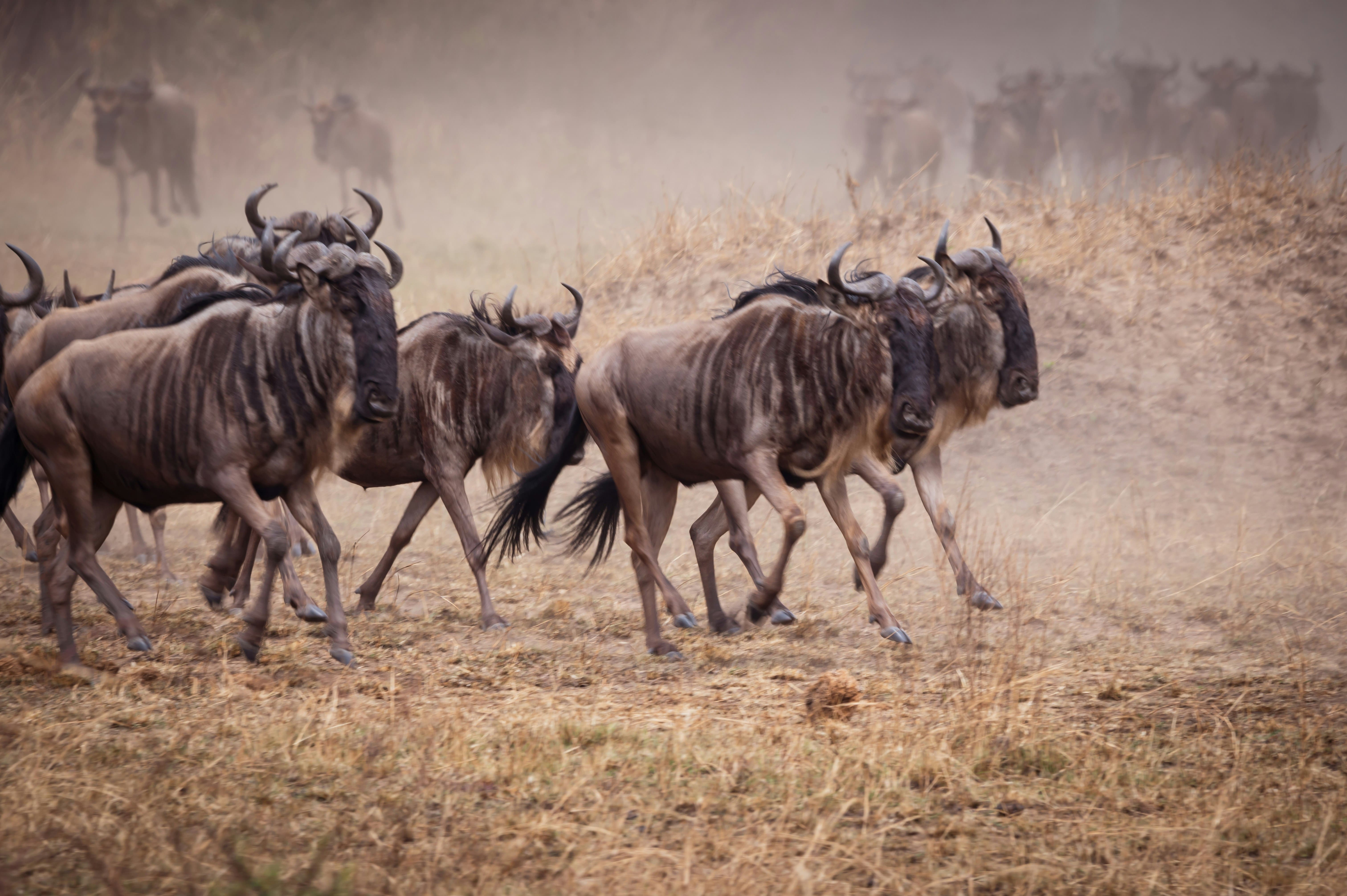
Understanding Tanzania's wildlife supremacy starts with scale. Tanzania is not simply well-stocked with animals — it is home to concentrations of wildlife that have no equivalent anywhere on Earth outside its own borders.
- Large Mammal Population
- Tanzania's standing: Home to approximately 25% of Africa’s entire large mammal population
- Protected Land Area
- Tanzania's standing: Around 364,000 km² of protected areas — larger than Germany’s total land area
- Percentage of Country Protected
- Tanzania's standing: Approximately 38% of Tanzania’s total territory is protected for wildlife conservation
- Lion Population
- Tanzania's standing: The largest lion population in Africa, estimated at 14,000–16,000 individuals
- Elephant Population
- Tanzania's standing: Around 60,000 savannah elephants, making it one of Africa’s largest elephant populations
- Wildebeest (Great Migration)
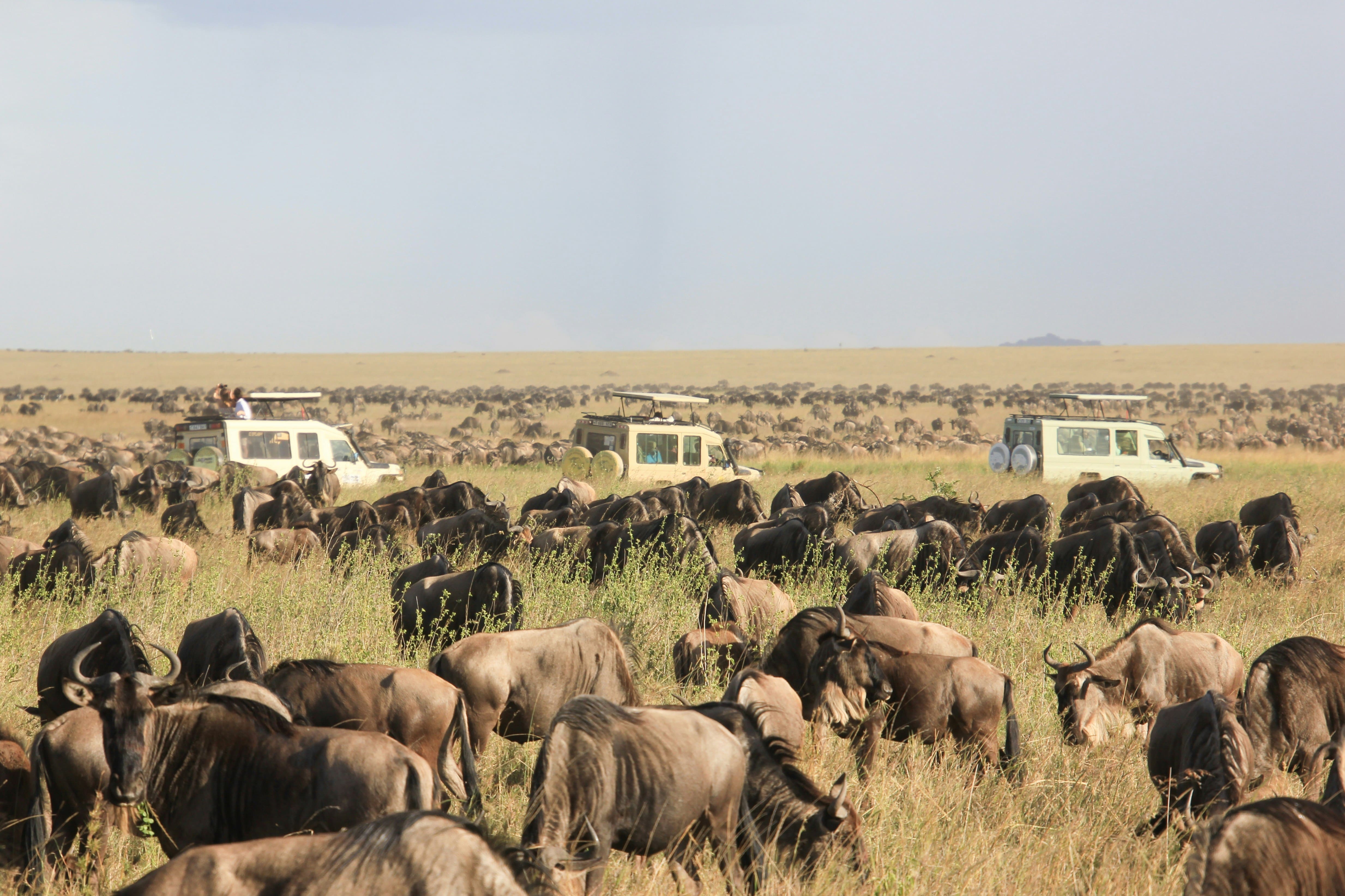
- Tanzania's standing: Hosts the world-famous Great Migration with around 1.5 million wildebeest moving in one continuous herd
- Bird Species Recorded
- Tanzania's standing: More than 1,100 bird species recorded — exceeding the total number found across North America
- National Parks & Protected Areas
- Tanzania's standing: 10 national parks, 5 game reserves, and 1 conservation area
- UNESCO World Heritage Wildlife Sites
- Tanzania's standing: Home to three of Africa’s most important wildlife heritage areas:
- Serengeti National Park
- Ngorongoro Conservation Area
- Selous Game Reserve (Nyerere National Park)
- Tanzania's standing: Home to three of Africa’s most important wildlife heritage areas:
- Chimpanzee Population
- Tanzania's standing: Estimated 2,500–3,000 chimpanzees living mainly in Mahale Mountains and Gombe National Parks
Four Completely Different Ecosystems in One Country
Most safari countries offer one or two habitat types. Tanzania contains four entirely distinct safari ecosystems within a single itinerary, each producing a different wildlife experience:
- Open savannah grassland (Serengeti): The defining African landscape — endless golden plains under enormous skies. Optimal visibility, massive predator density, and the stage for the Great Migration.
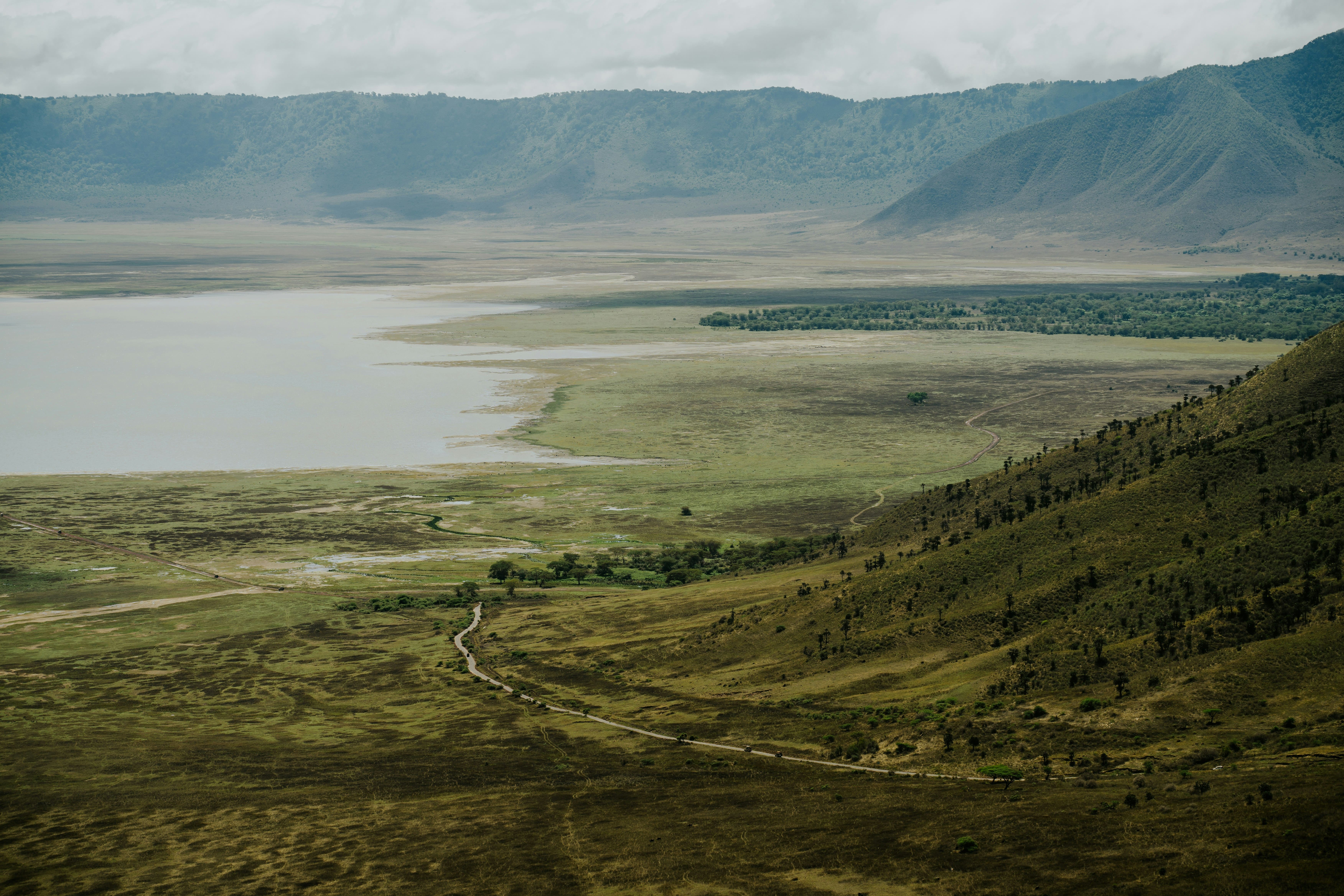
- Ancient volcanic crater (Ngorongoro): A collapsed caldera 19 km wide and 600 m deep that traps moisture and animals year-round. The most productive wildlife area by density anywhere on the continent.
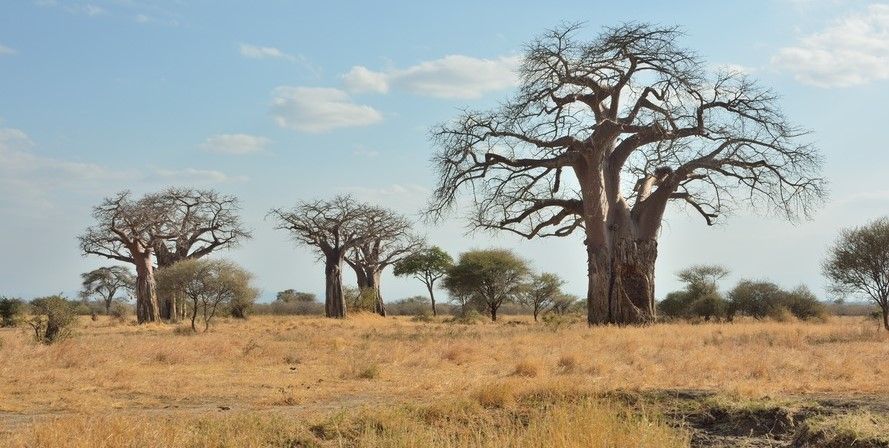
- Baobab woodland and riverine forest (Tarangire and Manyara): Ancient baobab trees over 1,000 years old, groundwater forest teeming with birds and primates, and elephant herds that rival any in Africa.
- Mountain rainforest (Mahale, Gombe, Arusha NP): Dense equatorial forest sheltering chimpanzees, colobus monkeys, and extraordinary bird diversity — a completely different world from the open savannah.
Conservation: Why Tanzania's Wildlife Has Survived
Tanzania's wildlife did not simply persist — it has been actively protected through a combination of government policy, community investment, and international conservation partnerships that have made Tanzania one of Africa's great conservation success stories.
The country banned trophy hunting in game reserves in 2021 — a landmark conservation decision. Its anti-poaching efforts in the Serengeti ecosystem are among the most intensive on the continent. Community conservation areas around national parks share tourism revenue directly with local villages, creating economic incentives for coexistence with wildlife that many African countries have struggled to achieve.
🌍 Conservation Fact: Tanzania's Nyerere National Park (formerly Selous Game Reserve) is the largest protected area in Africa at over 50,000 km². Combined with the Serengeti-Mara ecosystem, Tanzania's interconnected protected areas form one of the greatest wildlife refuges on Earth.
TANZANIA'S SAFARI PARKS: COMPLETE OVERVIEW
- Serengeti National Park
- Size: 14,763 km²
- Circuit: Northern
- Best for: Great Migration, Big Five, and predator sightings
- Best months: Year-round (varies by migration zone)
- Crowd level: High during peak season, low during green season
- Ngorongoro Conservation Area
- Size: 8,292 km²
- Circuit: Northern
- Best for: Big Five sightings in one morning and black rhino encounters
- Best months: Year-round
- Crowd level: Moderate–High
- Tarangire National Park
- Size: 2,850 km²
- Circuit: Northern
- Best for: Large elephant herds, baobab trees, and dry-season wildlife concentration
- Best months: June–October
- Crowd level: Low–Moderate
- Lake Manyara National Park
- Size: 648 km²
- Circuit: Northern
- Best for: Tree-climbing lions, flamingos, and birdwatching
- Best months: Year-round
- Crowd level: Low–Moderate
- Arusha National Park
- Size: 552 km²
- Circuit: Northern
- Best for: Kilimanjaro views, giraffes, colobus monkeys, and walking safaris
- Best months: Year-round
- Crowd level: Low
- Ruaha National Park
- Size: 20,226 km²
- Circuit: Southern
- Best for: Lions, African wild dogs, elephants, and exclusive safari experiences
- Best months: June–October
- Crowd level: Very Low
- Nyerere National Park
- Size: 54,600 km²
- Circuit: Southern
- Best for: Boat safaris, walking safaris, and wild dog sightings
- Best months: June–October
- Crowd level: Low
- Katavi National Park
- Size: 4,471 km²
- Circuit: Western
- Best for: Hippos, buffalo, lions, and remote wilderness experiences
- Best months: June–October
- Crowd level: Extremely Low
- Mahale Mountains National Park
- Size: 1,613 km²
- Circuit: Western
- Best for: Chimpanzee trekking and Lake Tanganyika experiences
- Best months: June–October
- Crowd level: Very Low
- Gombe Stream National Park
- Size: 52 km²
- Circuit: Western
- Best for: Jane Goodall’s famous chimpanzees and primate research heritage
- Best months: Year-round (dry season preferred)
- Crowd level: Very Low
THE NORTHERN CIRCUIT: TANZANIA'S SAFARI BACKBONE
The Northern Circuit is Tanzania's most accessible, most visited, and most wildlife-dense safari route. It connects four or five major parks within a 5-to-9-day itinerary from Arusha, and delivers the Big Five, the Great Migration, and four completely distinct ecosystems in a single trip. For first-time Tanzania visitors, this is where to start.
Serengeti National Park
The Serengeti is Tanzania's flagship park and one of the most famous wildlife destinations on Earth. Its name derives from the Maasai word Siringet — 'the place where the land runs on forever' — and standing on a kopje (granite outcrop) at sunset watching the plain extend to every horizon, you understand exactly what the Maasai meant. The Serengeti covers 14,763 square kilometres of open grassland, riverine forest, acacia woodland, and rocky kopje landscape, forming the core of a broader ecosystem that extends into Kenya's Masai Mara and is home to the greatest wildlife show on the planet.
Serengeti National Park — At a Glance
- UNESCO Status
- World Heritage Site since 1981
- Size
- 14,763 km² — approximately the size of Northern Ireland
- Established
- 1951
- Location
- Northern Tanzania, about 335 km west of Arusha
- Park Entry Fee
- USD $70 per person per day
- Best For
- Great Migration, Big Five safaris, Africa’s highest lion density, and exceptional predator sightings
- Best Months
- Year-round — each region has its own peak season depending on wildlife movements
- Getting There
- 7–8 hours by road from Arusha, or approximately 1 hour by light aircraft
- Accommodation
- Wide range of options, from luxury tented camps to budget camping experiences across all travel styles and budgets
The Four Zones of the Serengeti
The Serengeti is not a single place — it is a vast ecosystem with four distinct geographic zones, each with its own seasonal character and wildlife offering. Understanding which zone to visit and when is the most important logistical decision in planning a Serengeti safari.
Zone 1: Southern Serengeti and Ndutu Plains (Best: January–March)
The short-grass plains of the southern Serengeti and the Ndutu area of the adjacent Ngorongoro Conservation Area are the winter home of the Great Migration. From January through March, the herds of wildebeest, zebra, and gazelle spread across these plains to graze on the nutrient-rich short grass. In February, the wildebeest calving season produces an extraordinary spectacle: roughly 400,000 to 500,000 calves born in a two-to-three-week pulse. The concentration of prey draws Africa's big cats in extraordinary numbers. Cheetahs, lions, and leopards hunt daily within a small area. This is arguably Tanzania's finest wildlife experience — and it is chronically undervisited.
- Key wildlife: Wildebeest calves, cheetah, lion, leopard, serval, jackal, vulture, hyena.
- Why it's underrated: The calving season is widely known among guides and operators but poorly marketed internationally. You get extraordinary wildlife with significantly lower visitor numbers than peak July–August.
Zone 2: Central Serengeti — Seronera Valley (Best: Year-Round)
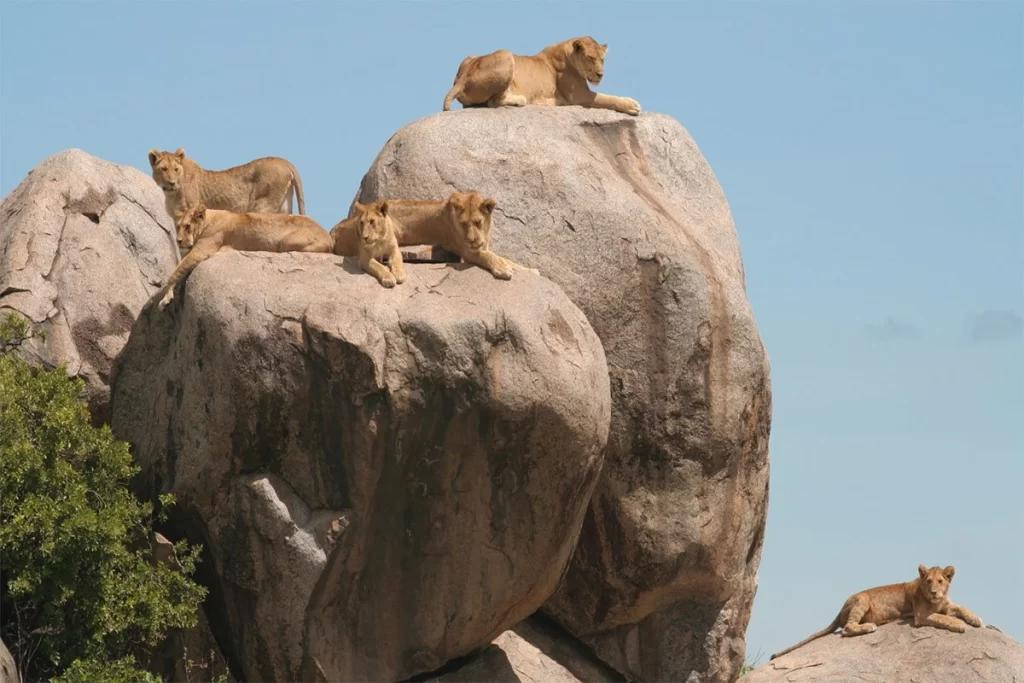
The Seronera area in the heart of the park is the most consistently productive wildlife zone in the Serengeti throughout the year. The Seronera River creates a permanent water source that anchors resident populations of lion, leopard, hippo, crocodile, and elephant regardless of season. The kopjes (granite outcroppings) are famous leopard lairs — large spotted cats draped over fig-tree branches above the boulders are among the Serengeti's most celebrated sightings. Lion prides in the central Serengeti are among the most studied and most habituated in the world, making close approach and extended observation possible.
- Key wildlife: Resident lion prides, leopard, cheetah, hippo, crocodile, elephant, giraffe, zebra, wildebeest, impala, topi, warthog.
- Year-round advantage: The central Serengeti is the only zone that remains excellent in every month. It is the recommended base for first-time visitors on shorter itineraries.
🐆 Leopard Tip: The kopjes along the Seronera River — particularly Simba Kopjes, Gol Kopjes, and the area around the Retima Hippo Pool — are Tanzania's most reliable leopard habitat. An experienced guide will check specific trees at specific times of day. Request a guide with Seronera local knowledge when booking.
Zone 3: Western Corridor and Grumeti River (Best: May–July)
As the rains end and the herds begin moving north-west in May and June, they funnel through the Western Corridor of the Serengeti toward the Grumeti River. The Grumeti crossing is the Great Migration's first major river obstacle. The river is narrower and faster-moving than the Mara to the north, making crossings more chaotic and unpredictable. The Nile crocodiles in the Grumeti are among the largest in Africa — some estimated at over 5 metres — having fattened during years between crossings. The Western Corridor also hosts Tanzania's most exclusive luxury accommodation: Singita Grumeti's three camps occupy a private concession of 350,000 acres bordering the park.
- Key wildlife: Wildebeest migration herds, massive Nile crocodiles, topi, hartebeest, hippo, lion, cheetah.
- Unique feature: The Grumeti is less famous than the Mara but often produces more intense individual crossings due to the confined geography.
Zone 4: Northern Serengeti — Kogatende and Lamai Wedge (Best: July–October)
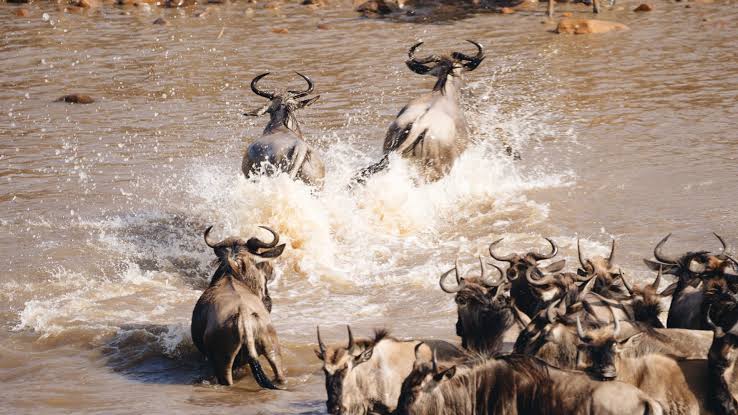
The northern Serengeti is where the Great Migration reaches its most dramatic point. By July, the wildebeest herds have moved northward and now face the Mara River — a wide, fast, crocodile-filled obstacle that they must cross to access Kenya's Masai Mara grasslands. The crossings are among the most extraordinary wildlife events on Earth. Herds of thousands mass on the steep south bank, sometimes for hours, pacing and vocalising with collective anxiety before one individual leaps — triggering a stampede. The chaos, the noise, the Nile crocodiles lunging from the water, and the extraordinary scale of the crossing is something that no written description or photograph fully prepares you for.
- Key wildlife: Wildebeest river crossings (July–September), large Nile crocodiles, lion prides, topi, eland, elephant.
- Booking critical: Kogatende and Lamai area camps sell out 10–14 months in advance for July–August. Book in October–November for the following season.
Serengeti Wildlife Beyond the Migration
The Great Migration draws the headlines, but the Serengeti's resident wildlife is extraordinary in its own right. The park hosts the highest lion density of any ecosystem in Africa, with approximately 3,000 lions in the greater Serengeti ecosystem. Cheetah populations are among the most studied in the world. Leopard sightings in the central Serengeti are more reliable than almost anywhere else on the continent. And the bird life — over 500 species recorded in the park — rivals any birding destination in Africa.
- Lion
- Estimated population: ~3,000 (greater ecosystem)
- Best zone: Central Seronera, Northern Serengeti
- Best months: June–October
- Leopard
- Estimated population: Unknown — widespread throughout the park
- Best zone: Seronera kopjes
- Best months: Year-round
- Cheetah
- Estimated population: ~1,000 (ecosystem)
- Best zone: Central and Southern plains
- Best months: January–March, June–October
- African Wild Dog
- Estimated population: Small — occasional visitor
- Best zone: Any zone
- Best months: Unpredictable
- Elephant
- Estimated population: ~6,000 (park population)
- Best zone: Central and Western Serengeti
- Best months: Year-round
- Buffalo
- Estimated population: ~70,000 (ecosystem)
- Best zone: All zones
- Best months: Year-round
- Giraffe
- Estimated population: ~10,000 (ecosystem)
- Best zone: Central and Southern Serengeti
- Best months: Year-round
- Hippo
- Estimated population: ~3,000 (park rivers)
- Best zone: Seronera and Mara Rivers
- Best months: Year-round
- Nile Crocodile
- Estimated population: High density in rivers
- Best zone: Grumeti River (June), Mara River (July–October)
- Best months: June–October
- Black Rhino
- Estimated population: Rare — occasional sightings
- Best zone: Central and Northern Serengeti
- Best months: Year-round
Serengeti Experiences Beyond Game Drives
- Hot Air Balloon Safari: The most celebrated add-on experience in Tanzania. Dawn departure from a central Serengeti camp, one hour floating silently over the plains as wildlife moves below, followed by a champagne breakfast served on white linen in the bush. Cost: approximately $600–$700 per person. Available year-round from central Seronera.
- Walking Safari (Concession Areas): Walking is not permitted inside the national park boundaries, but private concession areas adjacent to the Serengeti allow guided walks with armed rangers. Available through operators holding specific concession permits.
- Night Drives (Concession Areas): Similarly, night drives are prohibited in the park but available in private concessions bordering it. Nocturnal wildlife — lion on the move, leopard hunting, genets, civets, porcupines — transforms after dark.
- Fly-in Safari: Light aircraft connections link Arusha, Kilimanjaro, and multiple Serengeti airstrips (Seronera, Kogatende, Grumeti, Ndutu). Flying between zones saves significant driving time and offers extraordinary aerial perspectives.
- Cultural Visit — Maasai Village: Several camps near the park boundary offer guided visits to authentic Maasai bomas (homesteads). The Maasai have coexisted with the Serengeti ecosystem for centuries and provide extraordinary cultural context.
Ngorongoro Conservation Area
The Ngorongoro Crater is the most reliably productive wildlife venue in all of Africa. No other destination on the continent guarantees Big Five sightings in a single morning with the consistency of this extraordinary geological formation. The 19-kilometre-wide, 600-metre-deep collapsed volcanic caldera creates a near-enclosed ecosystem where 25,000 large mammals live permanently on the crater floor — and the walls trap moisture year-round, keeping the floor green and animal-rich regardless of what the season does to the surrounding landscape.
Ngorongoro Crater — At a Glance
- Crater Dimensions
- 19 km diameter and 600 m deep — the largest intact volcanic caldera on Earth
- Conservation Status
- UNESCO World Heritage Site and Biosphere Reserve
- Animals Inside
- Approximately 25,000 large animals permanently living on the crater floor
- Park Entry
- USD $70 per person per day + USD $295 vehicle fee for crater descent
- Permit Limit
- Maximum of 6 hours allowed on the crater floor per descent permit
- Black Rhino Population
- Around 26 individuals — Tanzania’s most reliable location for black rhino sightings
- Best For
- Big Five in one location, extremely high wildlife density, and black rhino encounters
- Best Months
- Year-round — the crater offers excellent wildlife viewing in every season
- Getting There
- Approximately 3–4 hours by road from Arusha
- Rim Altitude
- 2,286 m above sea level — pack a warm layer for cool evenings and mornings
What Makes Ngorongoro Unlike Anywhere Else
The Ngorongoro Crater is often described as a natural zoo — but this description misrepresents it significantly. It is not enclosed by walls, and animals do move in and out over the crater walls via established migration routes. But the resources on the crater floor — water, mineral-rich grass, permanent lakes — mean that the vast majority of the resident population stays within the caldera year-round, creating a wildlife concentration that is genuinely unique.
The crater floor covers 260 square kilometres and is divided between open short-grass plains in the centre, the shallow alkaline Lake Magadi in the south (with resident flamingos), the Lerai Acacia Forest in the south-west (the best area for elephants and leopards within the crater), and Mandusi Swamp in the north (hippo pools and buffalo). A single clockwise route of the crater floor covers all these habitats in six hours.
- Lions: The Ngorongoro Crater lion population is genetically isolated and historically inbred — a fact that has been studied extensively. The current population is healthy and large, and the lions here are notably heavy-bodied, long-maned, and visible in the open grass.
- Black Rhino: Tanzania's most consistently sightable black rhino population. Approximately 26 animals are present. Sightings are not guaranteed on every descent but occur on the majority of full-crater mornings.
- Elephants: Large bulls with impressive tusks move through the Lerai Acacia Forest. The crater's elephant population consists primarily of large males — breeding herds tend to leave the crater.
- Hippo Pool: Mandusi Swamp hosts a permanent hippo pool where 50 or more hippos share a shrinking waterhole year-round. One of Tanzania's most reliably entertaining wildlife congregations.
🦏 Black Rhino Strategy: For the best chance of a black rhino sighting, descend early (aim to be on the crater floor by 7:00 AM), ask your guide to check the short-grass area between the ascent road and Mandusi Swamp in the first hour, then move to the Lerai Forest area by mid-morning. Patient guides with local knowledge find rhino on approximately 70% of full-day crater visits.
Ngorongoro Beyond the Crater
The Ngorongoro Conservation Area is more than the crater. The area covers 8,292 square kilometres of highlands, crater highlands, and the Ndutu plains, and contains several other extraordinary wildlife and cultural experiences.
- Olduvai Gorge (Oldupai Gorge): One of the most important palaeontological sites on Earth, located within the Conservation Area on the drive between Ngorongoro and the Serengeti. This is where Louis and Mary Leakey discovered Australopithecus boisei and Homo habilis fossils that revolutionised our understanding of human evolution. A small but excellent museum on-site provides context. The gorge walls visibly expose two million years of geological strata.
- Empakaai Crater: A smaller, deeper, and almost entirely unknown second crater within the NCA. Reached by a 4WD track and a 45-minute descent hike, the crater floor holds a deep lake that is home to thousands of flamingos. Rarely visited — a completely different experience from the main crater.
- Maasai Cultural Visits: The Ngorongoro Conservation Area is unique among Tanzania's protected areas in that the Maasai people are permitted to live within it under a co-existence arrangement dating to 1959. Visits to authentic Maasai bomas — with prior consent and operator arrangement — provide some of Tanzania's most meaningful cultural encounters.
Tarangire National Park
Tarangire is the park that most consistently surprises first-time Tanzania visitors. Arriving after the visual drama of the Serengeti and Ngorongoro, many guests expect Tarangire to be merely a supporting act — and instead find themselves watching 300 elephants converge on a single waterhole under the shade of 1,000-year-old baobab trees. It is, for many guides and long-term Tanzania travellers, their favourite park in the country.
Tarangire National Park — At a Glance
- Size
- 2,850 km²
- Established
- 1970
- Distance from Arusha
- Approximately 2 hours by road — the closest major safari park to Arusha
- Entry Fee
- USD $70 per person per day
- Peak Season
- June–October — elephant herds reach their highest concentration during the dry season
- Key Feature
- Home to some of Tanzania’s largest elephant herds and ancient baobab trees, including some estimated to be over 1,000 years old
- Best For
- Elephant encounters, dry-season wildlife concentration, predator sightings, photography, and fewer crowds compared with other northern circuit parks
- Unique Feature
- Python Rock — known as one of Africa’s highest concentrations of pythons in a single location
- Birding
- Over 550 bird species recorded, making it one of Africa’s premier birdwatching destinations
Why Tarangire is the Best Elephant Park in Tanzania
The Tarangire River is the only permanent water source for a vast area of northern Tanzania during the dry season. From June through October, every animal within a radius of 80 kilometres migrates toward it — creating concentrations of wildlife that are extraordinary even by Tanzania's elevated standards. Elephant herds of 200 to 300 animals are recorded daily. Single panoramas from a vehicle on the riverbank can include hundreds of elephants, dozens of zebra and wildebeest, giraffe, buffalo, and resident lions — all sharing the same dwindling resource simultaneously.
But Tarangire's elephants are not just numerous — they are large. The park is known for producing some of Tanzania's most impressively tusked bulls, and the breeding herds are matriarch-led units of remarkable cohesion. Watching a family herd of 60 elephants cross the road in front of your vehicle — calves first, bulls at the rear, the matriarch directing traffic — is one of the most moving wildlife experiences Tanzania offers.
- Python Rock: A specific rocky outcrop in the park's north where African rock pythons are found in unusually high density — sometimes 5 or more individuals visible at once. An extraordinary and photogenic encounter.
- Baobab landscape: Tarangire's ancient baobab trees — some estimated over 1,000 years old, with circumferences of 20 metres — are the park's most iconic visual feature. Photographing elephants against a silhouetted baobab at sunset is one of Tanzania's most enduring safari images.
Tarangire's Lesser-Known Wildlife
Beyond elephants, Tarangire offers wildlife diversity that rivals much more famous destinations. The park is one of Tanzania's finest for large predators — lion prides are frequently encountered near the river, leopards are present throughout the acacia and terminalia woodland, and wild dogs occasionally pass through. Gerenuks — a remarkable long-necked antelope that stands on its hind legs to browse — are found here and in few other Tanzania parks. Oryx, greater kudu, and fringe-eared oryx add rare sightings unavailable in the Serengeti.
- Birdlife: 550+ species recorded — including 48 raptor species, the red-and-yellow barbet, the extraordinary Ashy starling (endemic to Tanzania), lilac-breasted roller, and spectacular concentrations of yellow-collared lovebirds. Tarangire is arguably Tanzania's finest birding park.
Lake Manyara National Park
Lake Manyara is Tanzania's most compact national park and a perfect introduction to the country's wildlife before moving on to larger destinations. Its small size — 648 square kilometres, of which 230 square kilometres is the lake itself — belies extraordinary ecosystem diversity. A single game drive covers six distinct habitats within forty minutes of driving: groundwater forest, acacia woodland, open flood plain, alkaline lake, and rift wall escarpment. Ernest Hemingway called it 'the most beautiful lake in Africa.'
Lake Manyara National Park — At a Glance
- Size
- 648 km² total area, including approximately 230 km² of lake surface
- Distance from Arusha
- Approximately 2 hours by road
- Entry Fee
- USD $70 per person per day
- Famous For
- Tree-climbing lions, massive flamingo flocks, and the lush groundwater forest ecosystem
- Birding
- Over 400 bird species recorded — recognized as a Ramsar Wetland of International Importance
- Best Time
- Year-round — each season offers different wildlife highlights
- Lake Feature
- Home to seasonal gatherings of up to 2 million lesser and greater flamingos, with peak numbers typically between November and April
- Best For
- First-time Tanzania safari experiences, birdwatching, tree-climbing lions, primates, and scenic landscapes
The Tree-Climbing Lions of Manyara
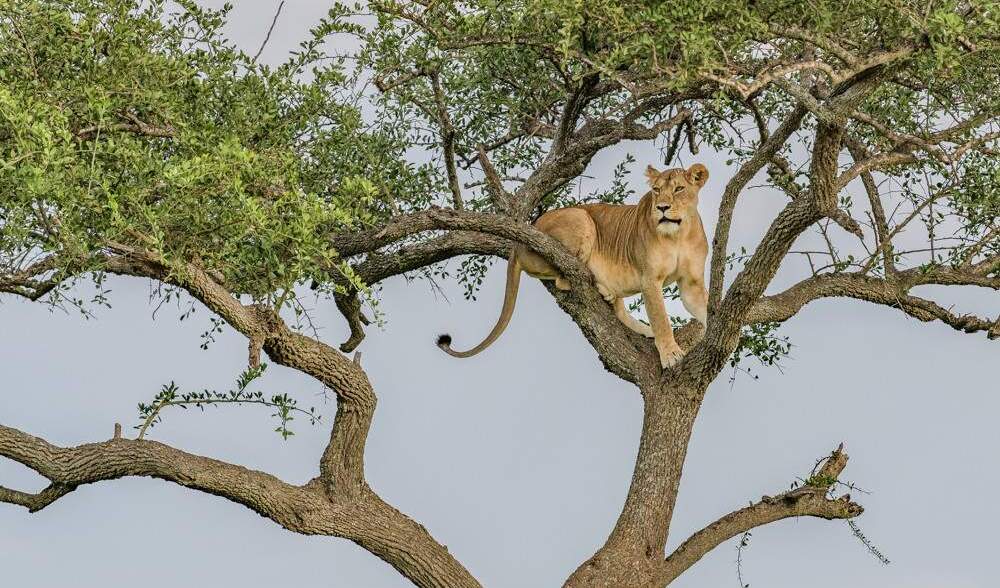
Lake Manyara's most famous wildlife curiosity is its tree-climbing lion population — large lions that regularly rest and sleep in the canopy of fig trees, sometimes 6 to 8 metres above the ground. This behaviour is unusual and is documented in only two other locations globally (Ishasha in Uganda and Queen Elizabeth NP). The exact reason is debated — possible explanations include escaping ground-level insects, accessing breeze, or a behaviour learned and transmitted culturally within specific prides. Whatever the cause, encountering a pride of five lions draped like enormous furry rugs over a fig tree's branches is one of Tanzania's most memorable and unlikely wildlife sightings.
Sightings are not guaranteed — it is a natural behaviour, not a performance. But the park's guides know the specific trees favoured by habituated prides, and early morning drives in the forest area significantly increase the chances.
- Best flamingo timing: November to April, when alkaline conditions concentrate up to 2 million lesser and greater flamingos in vast pink clouds on the lake surface. One of East Africa's most spectacular and photogenic natural gatherings.
- Hippo Pool: A large, accessible hippo pool near the park entrance holds 200 or more hippos. Accessible from a safe viewing platform — a dramatic close-range encounter.
- Primates: Blue monkeys and olive baboons in the groundwater forest are numerous and habituated. Vervet monkeys are common throughout.
Arusha National Park
Arusha National Park is Tanzania's most underappreciated and most conveniently located park. Sitting just 35 kilometres east of Arusha city and accessible for a half-day trip, it offers a dramatically different landscape from the open savannah of the more famous parks: dense montane forest, deep volcanic craters, and the extraordinary backdrop of Mount Meru — Africa's fifth-highest peak at 4,566 metres.
Your content is already converted into a clean list format. Here is a slightly polished version for a travel guide/blog style:
Arusha National Park — At a Glance
- Size
- 552 km²
- Distance from Arusha
- Located 35 km east of Arusha, approximately 40 minutes by road
- Entry Fee
- USD $45 per person per day
- Highlights
- Ngurdoto Crater
- Momella Lakes with flamingos
- Scenic views of Mount Meru
- Black-and-white colobus monkeys
- Unique Feature
- The only national park in Tanzania offering canoeing safaris on Momella Lakes
- Walking Safaris
- Guided walking safaris are permitted with a ranger, making it one of the few parks in northern Tanzania where visitors can explore on foot
- Best For
- Day trips from Arusha
- Colobus monkey sightings
- Giraffe encounters
- Mount Meru climbing base
- Travelers looking for a shorter, active safari experience
- Wildlife
- Giraffes
- African buffalo
- Hippos
- Black-and-white colobus monkeys
- Blue monkeys
- Zebras
- Warthogs
- Flamingos
What Makes Arusha NP Special
The Momella Lakes — a series of seven shallow alkaline lakes of different colours, each supporting different algae concentrations — are home to abundant flamingo populations and extraordinary waterbirds. A canoe safari on the lakes is one of the most peaceful and unique activities available in Tanzania, drifting silently past hippos and flamingos in the shadow of Mount Meru. Black-and-white colobus monkeys tumble through the forest canopy along the road to Ngurdoto. Giraffes browse in open glades that frame Mount Kilimanjaro on clear mornings — the only park in Tanzania where you can see both Kilimanjaro and Meru from the same vehicle.
THE SOUTHERN CIRCUIT: TANZANIA'S WILD AND UNCROWDED ALTERNATIVE
The Southern Circuit is Tanzania's best-kept safari secret. Three parks — Ruaha, Nyerere, and Mikumi — form an interconnected southern wilderness that rivals the north in wildlife quality while offering a fraction of the visitor numbers and a level of exclusivity that even peak-season Serengeti cannot match. Reaching the Southern Circuit typically requires a domestic flight from Arusha or Dar es Salaam, which adds cost but also adds exactly the remoteness that makes the experience so powerful.
Ruaha National Park
Ruaha is Tanzania's largest national park and one of Africa's most extraordinary wildlife destinations. It is also among the least known internationally — a consequence of its remote location and the domestic flight required to reach it — and that obscurity is exactly what makes it so remarkable. A safari in Ruaha in peak season produces the kind of exclusive encounters that the northern parks deliver only in the green season: sightings of a lion kill with no other vehicles present, a wild dog pack resting in the shade with no competing observation, a 200-strong buffalo herd crossing the Great Ruaha River without another tourist in sight.
Ruaha National Park — At a Glance
- Size
- 20,226 km² — Tanzania’s largest national park
- Location
- Southern Tanzania, approximately 130 km west of Iringa
- Entry Fee
- USD $70 per person per day
- Getting There
- Domestic flight from Dar es Salaam (approximately 1.5 hours) or Arusha (approximately 2 hours)
- Best Season
- June–October (dry season) — wildlife gathers around the Great Ruaha River, making sightings easier
- Famous For
- Some of Africa’s largest lion prides, African wild dogs, large elephant populations, and exclusive wilderness experiences
- African Wild Dog Ranking
- One of Africa’s top three destinations for African wild dog sightings
- Visitor Numbers
- Fewer than 15,000 visitors per year — a small fraction compared with the Serengeti
- Activities
- Game drives
- Walking safaris
- Night drives
- Fly camping experiences
Ruaha's Wildlife: Why It Competes with the Best
Ruaha's wildlife credentials are extraordinary. The park supports the largest lion population in Tanzania outside the Serengeti, with prides regularly exceeding 20 animals — some guides report prides of 30 or more in the dry season. The reason is prey density: massive buffalo herds, large elephant populations, abundant zebra, greater kudu, sable antelope, and roan antelope provide a prey base that supports predators at extraordinary levels.
- African Wild Dogs: Ruaha is one of Africa's premier wild dog destinations. Packs range across the park's vast territory, and the dry season brings them to predictable water sources where multi-hour observation of pack behaviour is possible. Wild dog pup sightings in the wet season are extraordinary.
- Greater Kudu and Sable Antelope: Two of Africa's most beautiful antelope, largely absent from the northern parks, are found in excellent numbers in Ruaha. The greater kudu's spiral horns and the sable's sweeping curved horns against the dry-season woodland are among the park's great photographic subjects.
- Elephants: Ruaha's elephant population is one of Tanzania's largest. The concentration of herds along the Great Ruaha River in the dry season produces remarkable sightings of hundreds of elephants in a single riverbank tableau.
- Birds: 600+ species, including many species absent from the north — the Ruaha red-billed hornbill and the ashy starling are park specialties.
Walking Safaris in Ruaha
Ruaha is one of Tanzania's finest walking safari destinations. Several camps operate guided walks with licensed and armed walking guides — the experience of moving through the bush on foot, tracking lion spoor, reading elephant dung for freshness, and approaching a herd of buffalo on foot is the most viscerally powerful wildlife experience Tanzania offers. Walking in Ruaha can be physically demanding in the heat — morning starts at 6:00 AM and return by 10:30 AM are standard.
Nyerere National Park
Nyerere National Park — formerly and still often called the Selous Game Reserve — is the largest protected wildlife area in Africa at over 54,600 square kilometres. It was designated a UNESCO World Heritage Site in 1982 and remains one of the continent's most significant and least-visited wild areas. Named after Tanzania's founding president Julius Nyerere in 2019, the park offers safari experiences available nowhere else in Tanzania: boat safaris on the Rufiji River, fly-camping in the true wilderness, and walking safaris led by some of East Africa's finest professional guides.
Nyerere National Park — At a Glance
- Size
- 54,600 km² — the largest protected area in Africa
- Conservation Status
- UNESCO World Heritage Site since 1982
- Location
- Southern Tanzania, approximately 4–5 hours from Dar es Salaam
- Entry Fee
- USD $70 per person per day
- Getting There
- Domestic flight from Dar es Salaam (approximately 45 minutes) is the recommended option
- Unique Feature
- Boat safaris on the Rufiji River — a unique safari experience not available elsewhere in Tanzania
- Best Season
- June–October (dry season)
- Famous For
- Rufiji River ecosystem
- African wild dogs
- Boat safaris
- Walking safaris
- Large hippo populations
- Hippo Population
- Home to one of Africa’s highest concentrations of hippos, especially along the Rufiji River
- Activities
- Boat safaris
- Walking safaris
- Game drives
- Fly camping
- Fishing experiences
The Rufiji River: Tanzania's Greatest Safari Secret
The Rufiji River is the centrepiece of Nyerere's safari experience — and the boat safari on its channels and lakes is unlike anything available elsewhere in Tanzania. Moving silently along the water in a flat-bottomed boat, you observe wildlife at eye level and from angles impossible in a vehicle: a bull elephant wading chest-deep across a channel, a crocodile exhaling slowly on a sandbar two metres away, a fish eagle dropping from a dead tree to pluck a bream from the surface, hippo pods filling the river with their extraordinary, resonant bellowing.
- Hippos: Nyerere holds one of Africa's highest hippo concentrations. Pods of 50 to 80 animals are common on the river's oxbow lakes. The boat safari passes through and among them at close range.
- Nile Crocodiles: The Rufiji's crocodile population is enormous and ancient. Specimens of 4 to 5 metres basking on sandbanks at close range are a defining Nyerere experience.
- Fish Eagles: The African fish eagle's haunting call — the sound of wild Africa — accompanies every Rufiji boat safari. Dense nesting populations mean sightings every few minutes.
- Wild Dogs: Nyerere has one of Tanzania's highest wild dog densities. Pack sightings near the river during the dry season are frequent.
Katavi National Park: Tanzania's Most Remote Safari
Katavi is Tanzania's most remote and least-visited major park, and for experienced safari travellers who have exhausted the better-known destinations, it represents the frontier of wild Africa. Fewer than 1,000 tourists visit per year — a number that would constitute a busy morning at the Serengeti's most popular crossing points. The dry season concentrates wildlife on the dwindling Katuma River and Chada Plain in numbers that must be seen to be believed.
Katavi National Park — At a Glance
- Size
- 4,471 km²
- Visitors per Year
- Fewer than 1,000 visitors annually — Tanzania’s least-visited major national park
- Location
- Western Tanzania — one of the most remote accessible safari destinations
- Getting There
- Domestic flight from Arusha or Dar es Salaam (2+ hours) followed by a connecting charter flight
- Best Season
- June–October (dry season is essential for the best wildlife viewing)
- Famous For
- Massive hippo pods of 200+, huge buffalo herds, powerful lion sightings, and untouched wilderness
- Hippo Pods
- Home to some of Africa’s largest dry-season hippo concentrations
- Best For
- Experienced safari travelers
- Wildlife photographers
- Adventurers seeking a true remote African wilderness experience
In August and September, the Katuma River shrinks to a series of pools, and every hippo within 50 kilometres is forced into these confined spaces. Pods of 200 to 400 hippos share a single pool — bellowing, fighting, submerging, and rising in a spectacle that is fundamentally unlike any other wildlife experience in Africa. Buffalo herds of 1,000 animals cross the cracked floodplain. Lions, emboldened by the concentration of prey, walk in the open at midday. Crocodiles line every sandbar.
🦛 Katavi Reality Check: Katavi has no luxury infrastructure equivalent to the northern parks. Accommodation is basic to mid-range. The appeal is entirely the extraordinary, undisturbed wildlife and the absence of other visitors. This is a park for travellers who want the experience, not the lodge.
Mahale Mountains National Park
Mahale Mountains National Park offers one of the most extraordinary wildlife encounters available anywhere on Earth: trekking on foot through dense mountain forest to spend time with habituated chimpanzees that have been studied and observed by researchers since 1965. The park is accessible only by boat or light aircraft across Lake Tanganyika — the world's longest freshwater lake — and sees fewer than 2,000 visitors per year. The combination of complete remoteness, extraordinary primate encounter, and the extraordinary setting of the Mahale Mountains rising from the turquoise lake produces an experience that defies ordinary safari categorisation.
Mahale Mountains National Park — At a Glance
- Size
- 1,613 km²
- Location
- Western Tanzania, on the eastern shore of Lake Tanganyika
- Getting There
- Charter flight from Arusha (approximately 3 hours) or boat transfer from Kigoma
- Entry Fee
- USD $100 per person per day
- Chimpanzee Trek Fee
- USD $150 per person per trek
- Limited to a maximum of 6 guests per chimpanzee community
- Best Season
- June–October only — the dry season provides the best tracking conditions, while wet months make trekking more difficult
- Chimpanzee Population
- Approximately 1,000 chimpanzees — Tanzania’s largest chimpanzee population
- Habituated Chimp Community
- The famous M-Group has around 60 fully habituated individuals and has been studied since the 1960s
- Chimp Trek Duration
- Typically 1–6 hours depending on the chimpanzees’ location on the day
- Activities
- Chimpanzee trekking
- Snorkeling
- Kayaking
- Forest walks
- Swimming in Lake Tanganyika
The Chimpanzee Trekking Experience
The experience begins before dawn, when trackers leave camp to locate the chimp community's sleeping trees from the previous evening. Guests follow on foot through montane forest — sometimes steep, sometimes muddy, always extraordinary — until the trackers signal a sighting. From that moment, you have one permitted hour with the group.
Chimpanzees share 98.7% of human DNA, and the experience of sitting in the forest while a social group of 60 individuals goes about its morning — grooming, playing, vocalising, nursing infants, the dominant male displaying — is profoundly moving in a way that no description prepares you for. The eye contact of a young chimp at three metres, studying you with the same careful curiosity you bring to it, is the defining moment of Mahale for most visitors.
- Lake Tanganyika: The lake at Mahale's base is extraordinary in its own right. Crystal-clear, warm freshwater with endemic cichlid fish visible while snorkelling — a freshwater reef experience found nowhere else on Earth.
- Colobus Monkeys and Red-Tailed Monkeys: The forest is also home to black-and-white colobus, red-tailed monkeys, and blue monkeys — frequently encountered on the walk to and from the chimp group.
Gombe Stream National Park
Gombe Stream is the world's smallest national park at just 52 square kilometres, and the most historically significant chimpanzee sanctuary on Earth. It was here, from 1960 onwards, that Dr Jane Goodall began her groundbreaking research into chimpanzee behaviour — research that transformed our understanding of tool use, social complexity, and the relationship between humans and other primates. The habituated chimpanzees of Gombe Stream represent the most long-studied chimpanzee community in history.
Gombe Stream National Park — At a Glance
- Size
- 52 km² — the world’s smallest national park
- Location
- Eastern shore of Lake Tanganyika, near Kigoma
- Historical Significance
- Jane Goodall’s research site since 1960 — home to the longest-running chimpanzee study in history
- Getting There
- Boat transfer from Kigoma (approximately 1–2 hours) or charter flight access
- Best Season
- Year-round, with June–October preferred due to drier hiking trails and easier chimp tracking
- Chimpanzee Population
- Approximately 150 chimpanzees across three communities
- Best For
- Historic wildlife experiences
- Chimpanzee encounters
- Lake Tanganyika adventures
- Travelers interested in conservation and primate research
A visit to Gombe is, for many, as much a historical and cultural experience as a wildlife one. Walking the same forest trails that Jane Goodall walked in 1960, sitting with the descendants of the chimpanzees she first named and studied — David Greybeard, Flo, Fifi — is a connection to one of science's great stories. The experience is less polished than Mahale and the accommodation more basic, but the historical resonance is unmatched.
TANZANIA'S BIG FIVE: WHERE TO SEE THEM AND WHEN
The Big Five — lion, leopard, elephant, buffalo, and black rhino — were originally named by big-game hunters as the five most dangerous animals to hunt on foot. They are now the most sought-after wildlife sightings on the continent. Tanzania offers the Big Five, but the distribution and reliability of each species varies significantly by park.
- Lion
- Best park: Serengeti (Central and Northern regions)
- Second best: Ngorongoro Crater
- Best months: June–October
- Difficulty of sighting: Easy — Tanzania has some of the highest lion densities in Africa
- Leopard
- Best park: Serengeti (Seronera kopjes)
- Second best: Ruaha, Tarangire
- Best months: June–October
- Difficulty of sighting: Moderate — requires patience and an experienced guide
- Elephant
- Best park: Tarangire National Park (especially during the dry season)
- Second best: Ruaha, Nyerere National Park
- Best months: June–October
- Difficulty of sighting: Easy — Tarangire can have herds of 200–300 elephants
- Buffalo
- Best park: Serengeti (all zones)
- Second best: Ngorongoro Crater, Ruaha
- Best months: Year-round
- Difficulty of sighting: Easy — large herds are common throughout Tanzania’s parks
- Black Rhino
- Best park: Ngorongoro Crater
- Second best: Rare sightings elsewhere
- Best months: Year-round
- Difficulty of sighting: Moderate — around 26 individuals live in the crater, making sightings possible but still special
The Big Five: Species Deep-Dives
Lion (Panthera leo)
Tanzania holds the largest lion population in Africa, estimated at 14,000 to 16,000 individuals across the greater Serengeti ecosystem. Lions here exist in unusually large, stable prides — the famous Ngorongoro Crater prides are notably large-bodied and dark-maned due to genetic isolation. Lion behaviour in Tanzania is less avoidance-oriented than in more pressured environments: vehicles are ignored, hunts occur within metres of watching jeeps, and prides rest in the open without retreating.
Lion hunting in Tanzania is primarily nocturnal, but in the dry season, daytime hunts around waterholes are frequent. The optimal time for lion sightings is at dawn, when prides return from night hunting and often remain near kills through the early morning.
Leopard (Panthera pardus)
Tanzania's leopard population is one of the most consistently viewable in Africa, particularly in the central Serengeti's kopje landscape. Leopards are solitary, nocturnal, and normally elusive — but the Serengeti's habituated population has learned to ignore safari vehicles, allowing extended close-range observation that would be impossible in less-visited areas. The key behaviours to watch for: a leopard hauling a kill into a tree (a significant energy investment requiring extraordinary strength), a mother bringing prey to cubs in a kopje den, and the evening emergence from a daytime resting tree.
African Elephant (Loxodonta africana)
Tanzania's approximately 60,000 savannah elephants make it one of Africa's most significant elephant nations. The dry-season Tarangire experience — hundreds of elephants converging on the river — is the continent's finest accessible elephant spectacle. Nyerere's elephant population along the Rufiji is observed by boat. Serengeti elephants are resident throughout the park year-round. Adult male bulls in Tarangire carry some of the finest ivory in East Africa and are among the most photogenically impressive individuals found anywhere on the continent.
African Buffalo (Syncerus caffer)
Often called 'the widowmaker' for its unpredictability when wounded or cornered, the Cape buffalo is present in Tanzania in enormous numbers. Serengeti buffalo herds of 1,000 or more animals moving across the open plain are one of safari's most impressive sights. Ngorongoro Crater buffalo are reliably numerous. In Ruaha, bachelor herds of old bulls (known as 'dagga boys' for rolling in mud) are frequently encountered near waterholes, and their scarred, battle-worn physiognomy makes them particularly compelling photographic subjects.
Black Rhinoceros (Diceros bicornis)
Tanzania's black rhino population was decimated by poaching in the 1970s and 1980s. The Ngorongoro Crater now holds the country's most accessible and most studied population — approximately 26 individuals that have been individually identified and monitored for decades. Sightings require patience and an early start, but occur on a majority of full-day crater visits with an experienced guide. The black rhino is a browser rather than a grazer — look for them in the Lerai Acacia Forest and in the short-grass areas in the early morning.
TANZANIA'S WILDLIFE BEYOND THE BIG FIVE
The Big Five are the starting point, not the ceiling, of Tanzania's wildlife offering. The country's biodiversity extends far beyond five flagship species to include extraordinary predators, remarkable primates, ancient reptiles, and bird life that rivals any destination on Earth.
Tanzania's Predators
- Cheetah (Acinonyx jubatus)
- Tanzania population: ~1,000 (Serengeti ecosystem)
- Best location: Central and Southern Serengeti, Ndutu Plains
- Viewing quality: Excellent — open plains provide ideal habitat for this daytime hunter
- African Wild Dog (Lycaon pictus)
- Tanzania population: ~400
- Best location: Ruaha National Park, Nyerere National Park, Selous ecosystem
- Viewing quality: Good — sightings depend on guide knowledge of pack territories
- Spotted Hyena (Crocuta crocuta)
- Tanzania population: ~7,000 (Serengeti ecosystem)
- Best location: All major parks — especially Serengeti
- Viewing quality: Excellent — extremely common and the largest predator by biomass in Serengeti
- Striped Hyena (Hyaena hyaena)
- Tanzania population: Uncommon
- Best location: Serengeti and dry arid regions
- Viewing quality: Rare — nocturnal species found mainly in dry habitats
- Nile Crocodile (Crocodylus niloticus)
- Tanzania population: Very high density in suitable rivers
- Best location: Mara River, Grumeti River, Rufiji River
- Viewing quality: Excellent — especially during migration river crossings
- Serval Cat (Leptailurus serval)
- Tanzania population: Common in tall grass habitats
- Best location: Serengeti, Ngorongoro, Ndutu
- Viewing quality: Moderate — a secretive cat often found in tall grass areas
- Caracal (Caracal caracal)
- Tanzania population: Uncommon
- Best location: Dry acacia areas, especially Tarangire
- Viewing quality: Rare — one of the most sought-after small cats in Tanzania
Primates of Tanzania
- Chimpanzee (Pan troglodytes schweinfurthii): Tanzania's most famous primate. Habituated communities at Mahale Mountains (~1,000 individuals) and Gombe Stream (~150) are among the most accessible chimp trekking experiences in Africa.
- Olive Baboon (Papio anubis): Abundant throughout — Ngorongoro, Manyara, Serengeti, Tarangire. Social groups of up to 80 animals are complex, entertaining, and revealing of primate social structure.
- Vervet Monkey (Chlorocebus pygerythrus): The most commonly seen primate in Tanzania — present in every park.
- Blue Monkey (Cercopithecus mitis): Dense populations in Arusha National Park's groundwater forest and around Ngorongoro rim.
- Black-and-White Colobus (Colobus guereza): Spectacular forest primate with flowing white mantle. Common in Arusha NP and forest edges near Ngorongoro and Mahale.
- Zanzibar Red Colobus (Piliocolobus kirkii): Critically endangered and found only in Jozani Forest on Zanzibar island. One of Africa's rarest primates.
Tanzania's Remarkable Bird Life
Tanzania is one of Africa's premier birding destinations with over 1,100 species recorded — more than the entirety of North America. Serious birders can target specific endemics and specials across different parks and habitats.
- Ostrich (Struthio camelus)
- Best park: Serengeti, Tarangire
- Notes: The world's largest bird, commonly seen on open grasslands and savannahs
- Secretary Bird (Sagittarius serpentarius)
- Best park: Serengeti National Park
- Notes: Famous for stalking the plains while hunting snakes; one of Africa's most distinctive birds
- Lilac-Breasted Roller (Coracias caudatus)
- Best park: All Northern Circuit parks
- Notes: Tanzania's most photographed bird, renowned for its vibrant multicolored plumage
- Kori Bustard (Ardeotis kori)
- Best park: Serengeti, Ngorongoro Conservation Area
- Notes: The world's heaviest flying bird
- Grey-Crowned Crane (Balearica regulorum)
- Best park: Ngorongoro Conservation Area, Lake Manyara National Park
- Notes: Uganda's national bird, often seen in elegant flocks near wetlands
- Flamingos (Phoeniconaias minor & Phoenicopterus roseus)
- Best park: Lake Manyara, Ngorongoro Crater lakes
- Notes: Seasonal flocks can reach up to 2 million birds, with peak numbers from November to April
- African Fish Eagle (Haliaeetus vocifer)
- Best park: Nyerere National Park (Rufiji River), Lake Manyara National Park
- Notes: Famous for its unmistakable call, often described as the sound of wild Africa
- Ashy Starling (Cosmopsarus unicolor)
- Best park: Tarangire, Ruaha
- Notes: A near-endemic species found almost exclusively in Tanzania
- Shoebill (Balaeniceps rex)
- Best location: Malagarasi Wetlands (Northwestern Tanzania)
- Notes: One of Africa's most sought-after birds, rare but possible to find with experienced birding guides
- Southern Ground Hornbill (Bucorvus leadbeateri)
- Best park: Serengeti, Tarangire
- Notes: Africa's largest hornbill, commonly seen walking the plains in family groups
UNIQUE SAFARI EXPERIENCES IN TANZANIA
Beyond the standard game drive — extraordinary as Tanzania's game drives are — the country offers a range of unique activities that redefine what a safari can be.
1. Great Migration River Crossings
There is no wildlife event on Earth that compares to the scale and drama of a Mara River crossing during the Great Migration. Between July and October, herds of up to 10,000 wildebeest mass on the steep south bank of the Mara River and eventually — sometimes after hours of milling, turning back, and renewed advance — commit to the crossing. The chaos is extraordinary: hooves on rock, the roar of the water, Nile crocodiles lunging at will, the opposite bank seething with desperate animals. The entire crossing of a single herd can take 20 minutes or three hours. No two crossings are the same.
🐊 Crossing Strategy: Position matters more than timing. The best river crossing viewpoints are specific, known rocks and banks — ask your guide to commit to a crossing point and wait. Chasing the herd up and down the river burns fuel and time. A guide who knows one excellent bank and waits patiently will outperform a guide who rushes to every false start.
2. Hot Air Balloon Safari
A dawn hot air balloon flight over the central Serengeti is one of the most extraordinary experiences available in Tanzania. The balloon lifts off in near-darkness and rises silently above the treeline as the sun breaks the horizon. Below, the Serengeti comes to life: herds of zebra and wildebeest moving to water, a pride of lions walking from a night hunt, elephants processing through acacia groves. After approximately one hour in the air, the balloon lands for a champagne breakfast served on white linen in the open bush. Cost: approximately $600–$700 per person. Available year-round from Seronera.
3. Walking Safaris
Walking on foot through the African bush is a fundamentally different experience from any vehicle-based game drive. The sounds are richer, the smells more immediate, and the pace allows you to notice details invisible from a moving vehicle: a dung beetle rolling its ball, a chameleon motionless on a branch, the fresh tracks of a lion that passed an hour before. Walking safaris in Tanzania are available in Ruaha, Nyerere, Katavi, and selected private concessions adjacent to the Serengeti. All walks are led by licensed and armed walking guides.
4. Boat Safaris on the Rufiji River
Available exclusively in Nyerere National Park, the Rufiji River boat safari is unlike any other Tanzania wildlife experience. Moving at water level changes every sight line and every animal encounter. A 5-metre Nile crocodile at two metres is a completely different experience from the same animal viewed from a truck three metres above. Hippos in chest-deep water, elephants swimming across channels, fish eagles stooping to the surface — the Rufiji boat safari is, for many, the highlight of a complete Tanzania safari circuit.
5. Chimpanzee and Gorilla Trekking
Tanzania's chimpanzee trekking in Mahale Mountains and Gombe Stream are among the most profound wildlife encounters in East Africa. The habituated communities at both parks allow close approach on foot — a permitted hour with the M-Group at Mahale, surrounded by 60 chimpanzees in a mountain rainforest, produces the kind of emotional response that no plains-based safari can match. For mountain gorilla trekking, Rwanda and Uganda are the destinations — but Tanzania's chimp experience is their closest equivalent and is available within the same East Africa circuit.
6. Night Drives and Fly Camping
Tanzania's national parks prohibit night drives and off-road driving within their boundaries. But private concessions adjacent to parks — including several bordering the Serengeti and Ruaha — permit both activities. Night drives reveal a completely different cast of characters: leopards active on the hunt, spotted genets moving through the undergrowth, porcupines and honey badgers, civets and servals in torch-lit grass. Fly camping — sleeping on a mattress under a fly sheet in the open bush — combines a night drive with an overnight in the wilderness, with no camp walls between you and the sounds of the African night.
7. Cultural Encounters — The Maasai
The Maasai people have coexisted with Tanzania's wildlife for centuries, herding cattle through landscapes that also support lion, elephant, and buffalo. Visits to authentic Maasai bomas (homesteads) — organised through reputable operators with community consent and direct financial benefit — provide cultural context that transforms the wildlife experience. Understanding the Maasai's relationship with the land, their conservation philosophy, and their centuries of ecological knowledge makes every subsequent game drive richer.
TANZANIA WILDLIFE CALENDAR: MONTH BY MONTH
Tanzania Wildlife Calendar: Month by Month
| Month | Migration Location | Key Wildlife Event | Best Park |
|---|---|---|---|
| January | Southern Serengeti / Ndutu | Herds on short-grass plains; predator peak | Ndutu / Southern Serengeti |
| February | Ndutu Plains | CALVING SEASON — 400,000–500,000 calves born | Ndutu Plains (peak season) |
| March | Central Serengeti | Herds moving north; green season begins | Ngorongoro, Tarangire |
| April | Central–Western Serengeti | Long rains; low season; birds arriving | Ngorongoro (year-round) |
| May | Western Corridor | Late rains; best lodge deals of year | Tarangire, Ngorongoro |
| June | Western Corridor / Grumeti | Dry season opens; GRUMETI CROSSINGS begin | Western Serengeti, Tarangire |
| July | Northern Serengeti / Mara | MARA RIVER CROSSINGS begin; peak season | Northern Serengeti |
| August | Northern Serengeti | PEAK CROSSINGS; Tarangire elephant peak | Northern Serengeti, Tarangire |
| September | Northern Serengeti / Kenya | Crossings continue; southern herds return | Tarangire, Ruaha, Nyerere |
| October | Returning south | Herds dispersing south; resident wildlife peak | Tarangire, Ngorongoro |
| November | Central–Southern Serengeti | Short rains; baby animals; birds arrive | Serengeti, Manyara |
| December | Southern Serengeti | Herds reaching southern plains; dry improving | Serengeti, Ngorongoro |
TANZANIA SAFARI CIRCUITS: ITINERARY RECOMMENDATIONS
The Northern Circuit (5–10 Days) — Recommended for First-Time Visitors
The Northern Circuit connects Arusha, Tarangire, Lake Manyara, Ngorongoro, and the Serengeti in a single route that can be completed in 5 to 9 days. It delivers the Big Five, the Great Migration (seasonally), four distinct ecosystems, and accommodation options across all budget tiers.
5-Day Minimum
Tarangire (1 night) → Ngorongoro (1 night + crater) → Serengeti (2 nights)
7-Day Standard
Tarangire (2 nights) → Lake Manyara (1 day) → Ngorongoro (1 night + crater) → Serengeti (3 nights)
9-Day Extended
Arusha NP (half day) → Tarangire (2 nights) → Manyara (1 night) → Ngorongoro (2 nights) → Serengeti (4 nights, 2 zones)
The Southern Circuit (7–10 Days) — Recommended for Experienced Visitors
The Southern Circuit requires domestic flights but delivers a completely different — and for many, more powerful — experience: Ruaha's massive lion prides and wild dogs, Nyerere's boat safari on the Rufiji, and genuine solitude. Best combined with a northern circuit visit on the same trip for the complete Tanzania experience.
7-Day Southern
Fly Dar → Ruaha (3 nights, game drives + walking) → fly Ruaha → Nyerere (3 nights, boat + drives)
10-Day Combined
Arusha → Ngorongoro → Serengeti (5 days) → fly Seronera → Ruaha (3 nights) → Nyerere (2 nights)
The Western Circuit (7–10 Days) — For Wildlife Enthusiasts
The Western Circuit targets Tanzania's remote primate destinations. Mahale and Gombe are reached via Kigoma on Lake Tanganyika — a combination of domestic flight and lake boat journey that is itself part of the experience.
7-Day Western
Arusha → fly Kigoma → boat to Mahale (3 nights chimps) → boat to Gombe (2 nights chimps) → fly back
10-Day with Katavi
Arusha → Katavi (3 nights, hippos + lions) → fly Mahale (3 nights chimps) → Gombe (2 nights) → fly Dar
The Ultimate Tanzania Safari (14–21 Days)
For travellers with time and appetite for the complete experience, a combined Northern + Southern or Northern + Western circuit — ending with Zanzibar — is the most comprehensive Tanzania itinerary available.
Day 1–2
Arrive Arusha. Arusha National Park half-day. Briefing.
Day 3–4
Tarangire National Park — elephant herds, baobabs
Day 5
Lake Manyara — flamingos, tree-climbing lions
Day 6–7
Ngorongoro Conservation Area — crater descent, Olduvai Gorge
Day 8–11
Serengeti — central Seronera (resident wildlife) + seasonal zone
Day 12–14
Fly to Ruaha — lion prides, wild dogs, walking safari
Day 15–17
Nyerere — boat safari on Rufiji, fly camping
Day 18–19
Fly to Mahale — chimpanzee trekking, Lake Tanganyika
Day 20–21
Fly to Zanzibar — Matemwe beach, Stone Town. Depart.
TANZANIA WILDLIFE SAFARI FAQS
Which is the best Tanzania national park for first-time visitors?
The Serengeti and Ngorongoro Crater together form the best combination for a first-time Tanzania visitor. The Ngorongoro Crater guarantees Big Five sightings in one morning — the highest-density wildlife experience in Africa — while the Serengeti provides the scale, the open landscape, and (depending on your season) the Great Migration. Adding Tarangire for the elephant herds and baobabs makes the Northern Circuit the definitive first-time itinerary.
Is the Great Migration worth it?
Yes — unconditionally. The Great Migration is the most extraordinary recurring wildlife event on Earth. Whether you witness the calving season in February (extraordinary predator action), the Grumeti River crossings in June, the Mara River crossings in July–August, or the return south in October, there is no comparable wildlife spectacle available anywhere else. The scale — 1.5 million wildebeest moving as a single continuous herd — cannot be adequately prepared for in advance.
Which Tanzania park has the most lions?
The Serengeti has the highest overall lion population — approximately 3,000 in the greater ecosystem. The Ngorongoro Crater has the highest density — you are virtually guaranteed to see lions within hours of descending. Ruaha in the south has the largest individual prides — groups of 20 or more animals are regularly encountered. For a lion-focused safari, the Ngorongoro Crater is the most reliable single destination.
Where is the best place to see African wild dogs in Tanzania?
Ruaha National Park and Nyerere National Park are Tanzania's premier wild dog destinations. Ruaha's dry-season concentration of prey makes it one of the top three wild dog locations in Africa. Nyerere's vast territory supports several packs. Wild dog sightings in the Serengeti are rare and unpredictable — the park's lion density makes it difficult territory for dogs.
Can I see the Big Five in one park?
The Ngorongoro Crater is the only Tanzania park where the Big Five are reliably present in a small enough area to see all five in a single day. The Serengeti has all five (including occasional black rhino sightings) but is too large for a guaranteed Big Five day. Tarangire has all except reliable rhino.
What is the difference between the Northern and Southern Circuits?
The Northern Circuit (Serengeti, Ngorongoro, Tarangire, Manyara) is accessible by road from Arusha, is well-developed for all accommodation tiers, and delivers the Great Migration and Big Five. The Southern Circuit (Ruaha, Nyerere) requires a domestic flight, has fewer but more exclusive lodges, and delivers wild dogs, boat safaris, and genuine exclusivity. Both are outstanding — the north is recommended for first-timers and the south for repeat visitors seeking something different.
How many days do I need for a Tanzania safari?
A minimum of 5 days covers the Northern Circuit highlights. Seven days is the standard recommended duration for a comfortable, unhurried experience. Ten days allows the northern circuit plus either a southern addition or a Zanzibar extension. Fourteen or more days enables a combined north-and-south trip with Zanzibar and represents the complete Tanzania experience.
Is Tanzania wildlife better than Kenya?
Tanzania and Kenya share the same ecosystem — the Mara-Serengeti complex — but Tanzania has significantly more of it. The Serengeti is ten times the size of Kenya's Masai Mara. Tanzania also offers parks and experiences (Ruaha, Nyerere, Mahale, Katavi, the Ngorongoro Crater) that have no Kenyan equivalent. For breadth of wildlife experience, Tanzania consistently wins. Kenya's Masai Mara alone is world-class; Tanzania offers eight additional world-class destinations alongside its equivalent of the Mara.
What is the best month to see the most wildlife in Tanzania?
August is the month that most experienced Tanzania guides cite as the overall peak for wildlife viewing quality and variety. The Mara River crossings are happening in the north, Tarangire has its maximum elephant concentration, the Ngorongoro Crater is in excellent condition, and the dry landscape across all parks makes wildlife easy to find and observe. July is a close second. For predator action and dramatic births rather than peak dry-season density, February is the month most often recommended by guides who have seen every month.
Is Tanzania safe for wildlife safaris?
Tanzania is one of Africa's most stable and safe safari destinations. The country has been politically stable since 1964, its national parks are professionally managed, and the safari industry is regulated through TANAPA and TATO. Malaria is present and managed with prophylaxis. Anti-poaching efforts in the Serengeti are among the most intensive in Africa. For wildlife travellers following standard precautions and booking through registered operators, Tanzania presents no significant safety concerns.
What should I bring on a Tanzania wildlife safari?
The essentials: quality binoculars (8x42 or 10x42), camera with a telephoto lens (100–400mm minimum), neutral-coloured clothing (khaki, beige, olive), a warm fleece or jacket for cold early mornings, DEET insect repellent, malaria prophylaxis (prescribed by your doctor), high-SPF sunscreen, a wide-brim hat, and a headlamp. For the dust of the dry season, add sealed bags for all camera equipment. For the Mahale or Gombe chimp trek, add sturdy hiking boots and long trousers.
Can I combine Tanzania wildlife safari with Zanzibar?
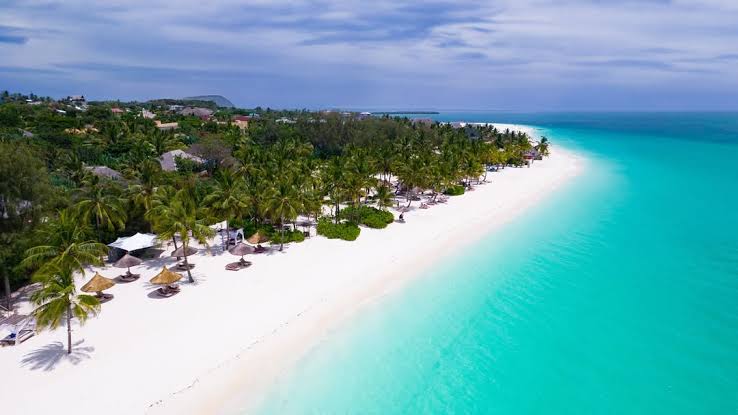
Yes — and this is the most popular international Tanzania itinerary. The flight from the Serengeti or Arusha to Zanzibar takes 45 minutes to one hour by domestic flight. Most operators (including adventuresseeker.com) plan this as a combined trip: 7 days of Northern Circuit safari followed by 3 to 5 days in Zanzibar. The contrast between the open savannah and the turquoise Indian Ocean is one of travel's great pleasures, and Tanzania is the only country where you make that transition within an hour.
Plan Your Tanzania Wildlife Safari with Adventures Seeker
Tanzania's wildlife is the most extraordinary on Earth, and the experience of encountering it — at any season, in any park, at any tier — is one that changes the way you understand the natural world. From the thundering chaos of a Mara River crossing to the silence of sitting with chimpanzees in the Mahale forest, from 300 elephants at a Tarangire waterhole to a black rhino grazing alone on the Ngorongoro Crater floor — these are experiences that stay with people for the rest of their lives.
At adventuresseeker.com, we are based in Arusha, Tanzania. Our team knows these parks not from brochures or annual press trips but from years of driving the roads, building the relationships with lodge managers and guides, and learning the seasonal rhythms that determine where the animals are and where the best encounters happen. Every itinerary we build is designed from scratch around your specific dates, priorities, and budget.
Start Planning: Visit adventuresseeker.com to request a personalised Tanzania wildlife safari quote. Tell us which parks interest you most, your travel dates, your group size, and your budget range — and we will build you a detailed, day-by-day itinerary with lodge recommendations and a clear, itemised cost breakdown.
Excellent
Based on 100+ reviews
Need Help?
Have questions about planning your Tanzania adventure? Our travel experts are here to help.
You May Also Like
Latest Articles
Stay Updated
Subscribe to our newsletter for the latest travel guides and exclusive offers.
Request a custom itinerary for your next trip to Tanzania.
Our team of travel experts is here to help you create a custom itinerary for your next trip to Tanzania. We will work with you to create a itinerary that is tailored to your needs and budget.