
Complete Tanzania Safari Guide 2026
July 4, 2026
Tanzania is not the easiest country to reach. It is not the cheapest destination on Earth. And yet, year after year, travellers who make the journey describe it as the single most powerful wildlife experience of their lives.
The reason is simple: Tanzania has more. More land — 38% of the country is protected wilderness. More animals — roughly a quarter of Africa's entire large mammal population lives here. More ecosystems packed into a single itinerary — ancient volcanic craters, endless golden plains, groundwater forest, remote mountain jungle, and Indian Ocean islands — all reachable within the same trip.
This guide exists to give you everything you need to plan that trip in 2026. It covers every park, every budget, every type of traveller, every season, and every question we hear from first-time and returning safari visitors. Read it from start to finish, or jump to the section that matters most to you right now.
WHY TANZANIA IS THE WORLD'S GREATEST SAFARI DESTINATION
Travellers considering their first African safari typically start by comparing Tanzania with Kenya, South Africa, Botswana, and Zimbabwe. Here is why Tanzania consistently comes out on top — not because of marketing, but because of geography, ecology, and scale.
1. The Greatest Wildlife Concentration on Earth
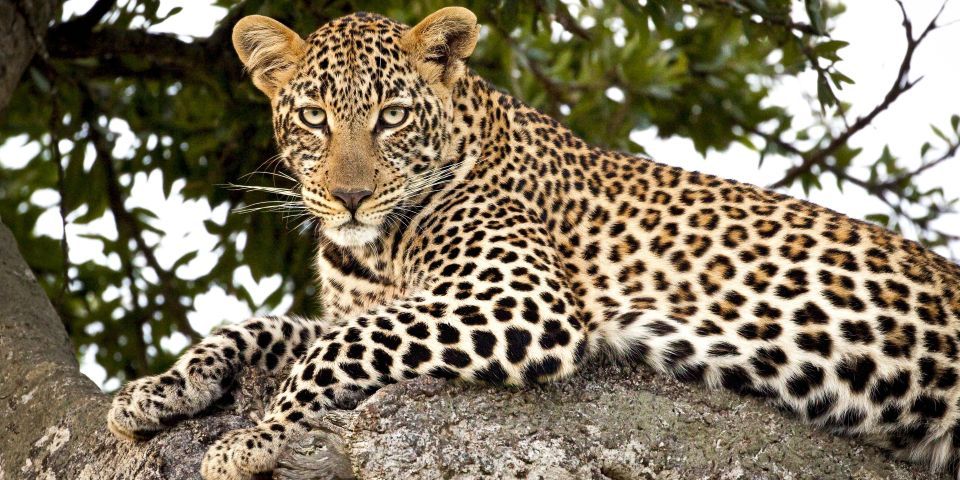
Tanzania holds approximately 25% of Africa's large mammal population. The Serengeti alone hosts 1.5 million wildebeest, 500,000 zebra, 300,000 Thomson's gazelle, and the highest lion density of any ecosystem on the continent. In Tarangire, you can watch 300 elephants share a single waterhole. In the Ngorongoro Crater, you are guaranteed Big Five sightings in a single morning. This level of density — the sheer weight of animals on the landscape — is unmatched anywhere.
2. Four Completely Different Ecosystems in One Trip
Most safari countries do one habitat well. Tanzania packs four into a seven-day itinerary: the endless open plains of the Serengeti; the lush groundwater forest of Lake Manyara; the baobab and acacia woodland of Tarangire; and the extraordinary collapsed volcanic caldera of Ngorongoro. Add the remote savannah of Ruaha, the riverine wilderness of Nyerere, and the mountain forests of Mahale, and you have a country that rewards both first-time visitors and those returning for a fifth or sixth time.
3. More Space Per Visitor Than Kenya
The Serengeti covers 14,763 square kilometres — roughly ten times the area of Kenya's Masai Mara. During peak season, a lion kill in the Mara can attract 30 to 80 vehicles within minutes. The same event in the central Serengeti draws 5 to 12. This is not a policy difference — it is a consequence of scale. Tanzania simply has more room, and that translates directly into the quality of your safari experience.
4. The Only Country with the Great Migration Year-Round
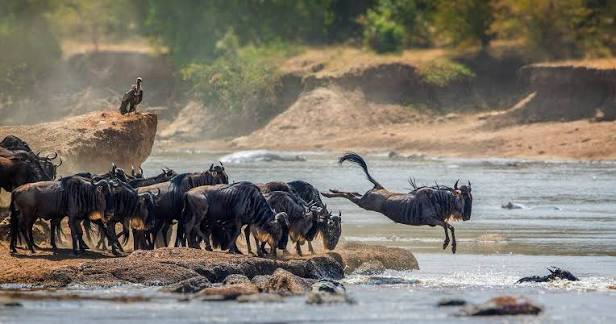
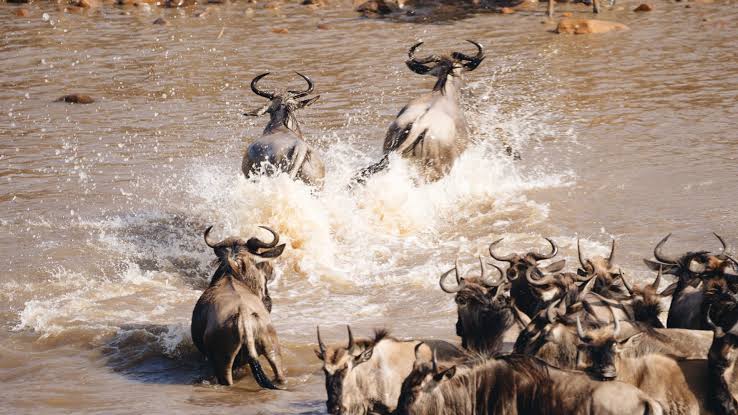
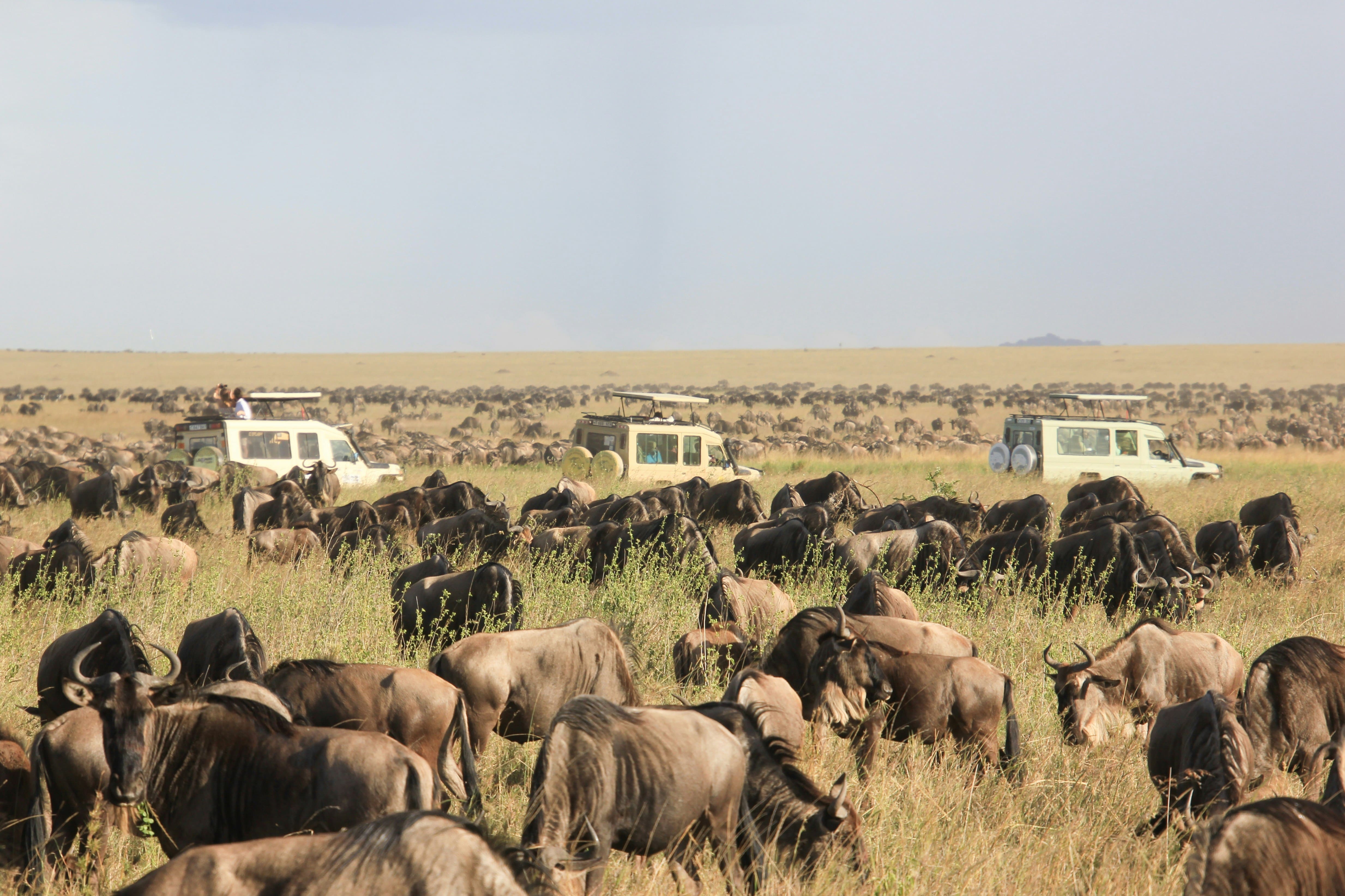
The Great Migration — the movement of 1.5 million wildebeest and 800,000 zebra and gazelle in a continuous clockwise loop through the Serengeti-Mara ecosystem — spends approximately ten months of every year in Tanzania. The drama ranges from February's extraordinary calving season on the Ndutu Plains to the iconic Mara River crossings of July and August. No other country offers this range of migration experiences.
5. Political Stability and a Mature Tourism Industry
Tanzania has been stable since independence in 1964. There are no active conflict zones. The government invests significantly in wildlife conservation — Tanzania's protected areas are among the best-managed on the continent. The safari industry is mature, professional, and deeply regulated through organisations like TATO (Tanzania Association of Tour Operators) and TANAPA (Tanzania National Parks Authority).
BEST TIME TO VISIT TANZANIA FOR A SAFARI IN 2026
This is the question we receive more than any other. The honest answer is that Tanzania does not have one best month — it has four distinct windows, each of which wins at something different. Pick the experience you want first; the month will follow.
Peak Dry Season: June to October
This is Tanzania's most celebrated safari window and for good reason. Rainfall stops completely, vegetation thins dramatically, and every water source dries up except the permanent rivers. Animals have no choice but to concentrate at predictable locations — and that concentration is extraordinary. Lion prides are easy to find. Elephant herds of 200 or more gather at the Tarangire River. And in the northern Serengeti, the Mara River crossings unfold in some of the most heart-stopping wildlife spectacle available anywhere.
- July and August are the absolute peak months for Mara River wildebeest crossings.
- June offers excellent conditions before the crowds fully arrive — prices are slightly lower and the parks are less busy.
- September and October maintain outstanding wildlife visibility as herds begin returning south.
- Advance booking of 8–12 months is essential for July and August in popular camps.
Calving Season: January and February
February is the month that experienced Tanzania guides most often name as their personal favourite. On the short-grass plains of Ndutu and the southern Serengeti, roughly 400,000 to 500,000 wildebeest calves are born in a concentrated two-to-three-week pulse. Within minutes of birth, calves must stand and run — and Africa's big cats are waiting. Predator action reaches a level of intensity that no other month can match. The landscape is still lush and green from the November–December short rains, creating extraordinary photographic conditions.
Guide Insight: In February, you can sometimes watch three or four separate cheetah kills within a single morning in the Ndutu area. The concentration of prey and predator is unlike anything else in the safari calendar — and most visitors have never even heard of it.
Short Rains Shoulder: November and December
The short rains typically last just one to two hours in the late afternoon and rarely disrupt game drives. The landscape transforms almost overnight from dust to green. Baby animals from various species begin to appear. Migratory birds arrive in huge numbers. Prices sit between green season and peak season, making this an excellent value window for discerning travellers who want quality without peak-season costs and crowds.
Long Rains: March to May
March through May is the deepest part of the rainy season. Some seasonal camps close, and certain roads become challenging. But for the right kind of traveller, this is a hidden gem. Luxury lodges offer discounts of 25–45%. The parks are virtually empty. The landscape is lush and beautifully lit for photography. And certain parks — particularly Ngorongoro Crater and Tarangire — remain outstanding wildlife destinations regardless of the season.
| Window | Months | Key Experience | Crowd Level |
|---|---|---|---|
| Peak Dry Season | Jun – Oct | River crossings, dense wildlife | High |
| Calving Season | Jan – Feb | 500,000 wildebeest born; predator peak | Moderate |
| Short Rains Shoulder | Nov – Dec | Lush landscapes, baby animals, birds | Low–Moderate |
| Long Rains (Green) | Mar – May | Birdlife, empty parks, lowest prices | Very Low |
COMPLETE GUIDE TO TANZANIA'S NATIONAL PARKS AND SAFARI DESTINATIONS
Tanzania has ten national parks, five game reserves, and one extraordinary conservation area. Each offers a completely different experience. Here is the authoritative breakdown — what each park delivers, when to go, and who it is best suited to.
The Northern Circuit — Tanzania's Safari Backbone
The Northern Circuit is the most accessible, most visited, and most wildlife-dense safari route in Tanzania. It covers four main destinations that can be combined in 5 to 9 days from Arusha and delivers the Big Five, the Great Migration, and four distinct ecosystems within a single trip.
Serengeti National Park
- Size - 14,763 km² (the size of Northern Ireland)
- UNESCO Status - World Heritage Site since 1981
- Best Time - Varies by region — see below
- From Arusha - 7–8 hours by road or 1 hour by light aircraft
- Park Fees - ~$70 USD per person per day (non-resident)
- Best For - Great Migration, Big Five, predator density, photography
The Serengeti is Tanzania's flagship park and one of the most famous wildlife destinations on Earth. But it is not a single place — it is a vast ecosystem with four distinct sub-regions, each with its own seasonal character.
Southern Serengeti and Ndutu Plains (January–March): This is the calving season zone. The short-grass plains of Ndutu within the Ngorongoro Conservation Area host the wildebeest birth pulse. Cheetahs, lions, and leopards are in extraordinary concentration. Lush green landscape, dramatic predator action, and surprising emptiness for such a spectacular experience.
Central Serengeti around Seronera (Year-round): The most consistently productive area for resident wildlife. The Seronera River valley hosts large leopard and lion populations year-round. Hippos fill the river pools. Elephants move through on daily circuits. This is the ideal base for first-time visitors and shorter stays.
Western Corridor and Grumeti River (June): The first river crossings of the migration happen here at the Grumeti River in June. Smaller than the Mara crossings but often more chaotic, with enormous Nile crocodiles waiting in the narrow, fast-flowing water.
Northern Serengeti at Kogatende and Lamai (July–October): This is where the famous Mara River crossings happen. Herds of thousands of wildebeest mass on the south bank for hours before leaping into the river. It is the single most dramatic wildlife spectacle available anywhere on Earth. Book 10–14 months ahead.
Ngorongoro Conservation Area
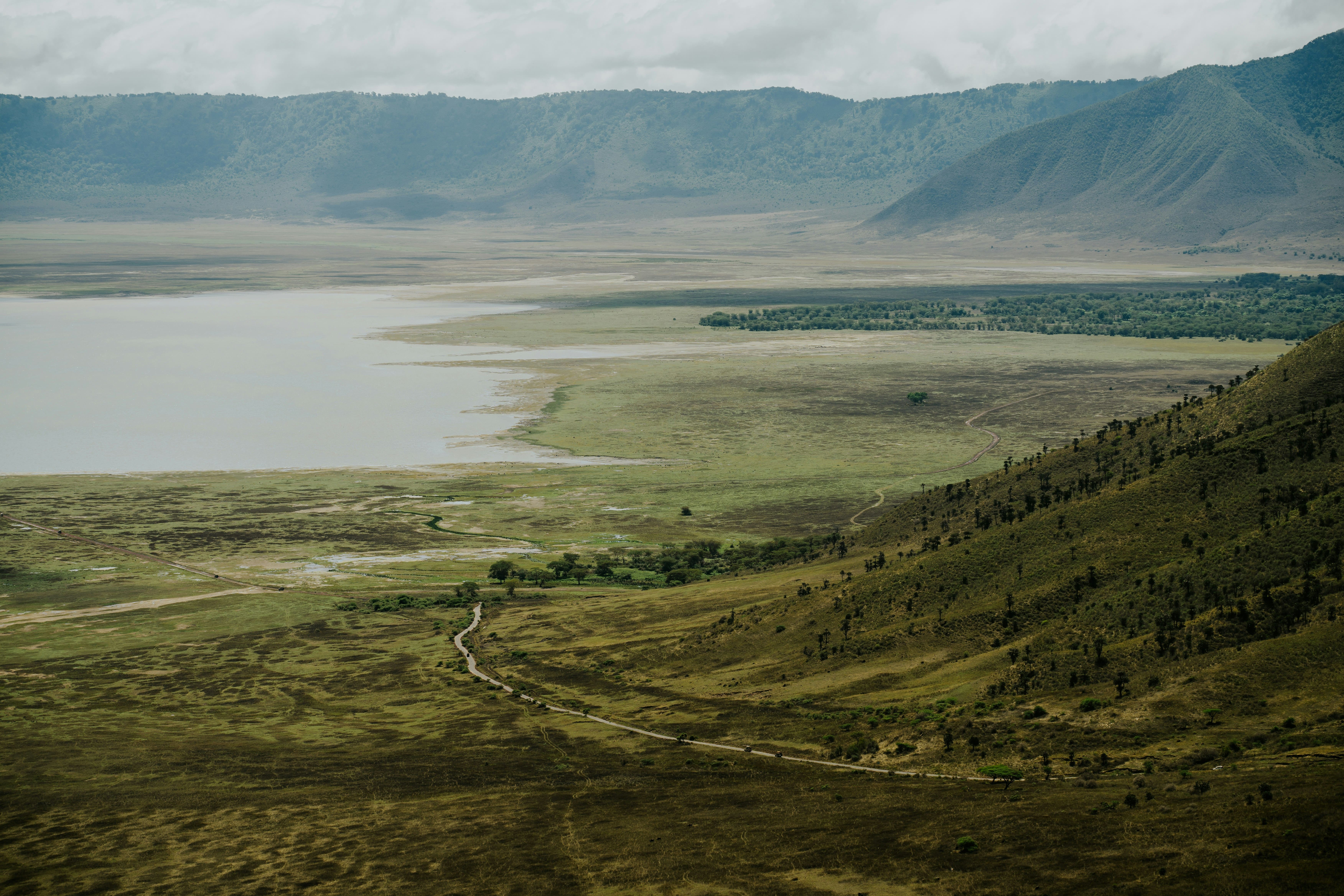
- Crater Size - 19 km wide, 600 m deep — largest intact volcanic caldera on Earth
- Wildlife Inside - ~25,000 large animals live permanently on the crater floor
- Permit Limit - 6 hours maximum on the crater floor per visit
- Park Fee - $70/person + $295/vehicle for crater floor access
- Best Time - Year-round — the crater is always excellent
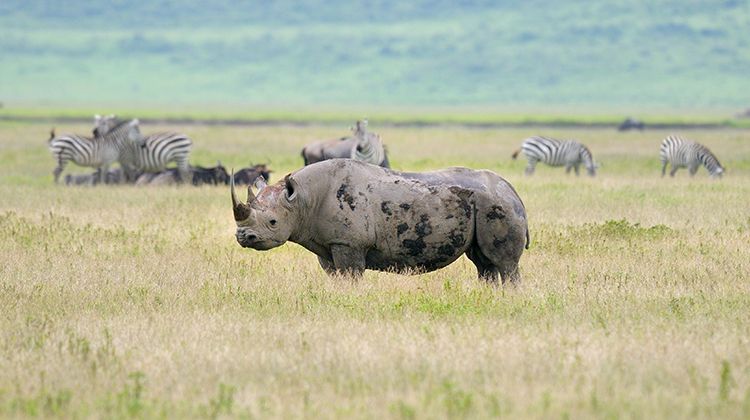
- Best For - Black rhino, Big Five, highest density wildlife viewing in Africa
The Ngorongoro Crater is arguably the single most productive wildlife venue in all of Africa. The collapsed volcanic caldera creates a natural enclosure 19 kilometres wide, and its walls trap moisture year-round — meaning the crater floor stays green and animal-rich regardless of the season outside. The 25,000 animals permanently resident on the crater floor include the Big Five, with Tanzania's most reliably viewable population of black rhino. Lions here are notably large and often encountered in sizeable prides in the short grass. Most visitors descend at dawn to maximise their 6-hour permit allocation.
Tarangire National Park
- Size - 2,850 km²
- From Arusha - 2 hours by road
- Peak Season - June – October
- Wildlife Peak - Largest elephant herds in Tanzania (3,000+ animals)
- Iconic Feature - Ancient baobab trees, some over 1,000 years old
- Best For - Elephant viewing, dry-season concentration, photography, uncrowded
Tarangire is the park that consistently surprises first-time visitors the most. In the dry season from June to October, the Tarangire River becomes the only permanent water source for hundreds of kilometres. This draws elephant herds of 200 to 300 animals, plus lions, leopards, buffalos, oryx, giraffes, and massive python populations in the acacia woodlands. The iconic ancient baobabs — some 1,000 years old and wider than a car — create landscapes you will not find in the Serengeti. It is also consistently less crowded than the more famous parks, making encounters feel more intimate.
Lake Manyara National Park
- Size - 648 km² (including the lake)
- From Arusha - 2 hours by road
- Best Time - Year-round — different highlights by season
- Famous For - Tree-climbing lions, flamingos, groundwater forest
- Wildlife - Elephants, hippos, flamingos, baboons, various antelope
- Best For - Compact intro park, birdwatching, scenic drive
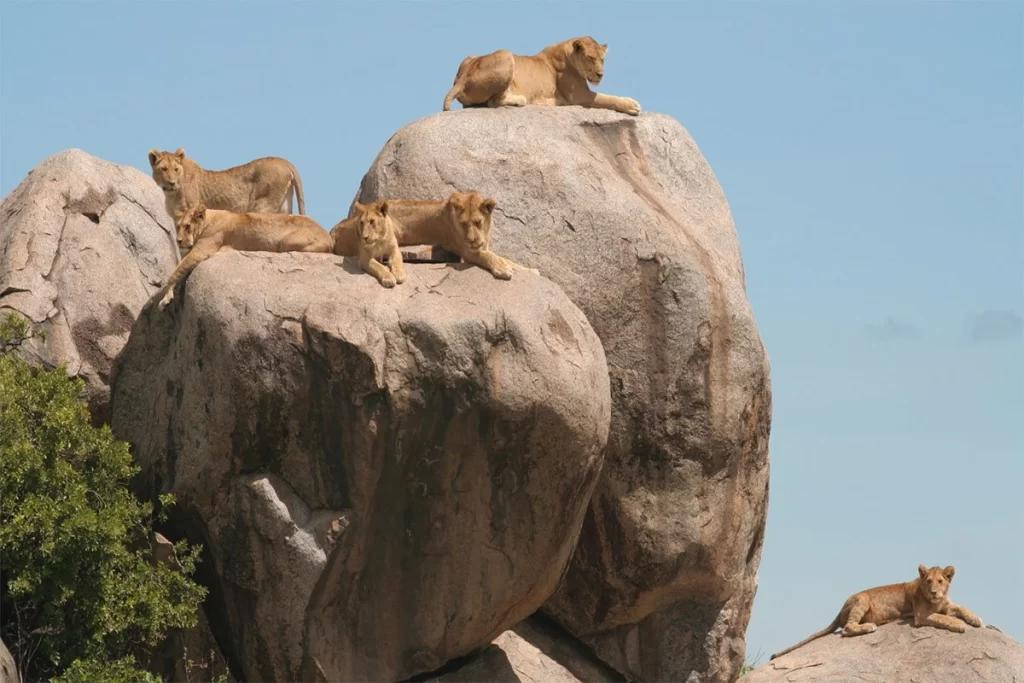
Lake Manyara is Tanzania's most compact national park and works beautifully as a half-day or full-day introduction before moving on to the larger parks. The Rift Valley escarpment dominates the western side, creating a dramatic scenic backdrop to every game drive. The groundwater forest at the park entrance is extraordinarily lush and dense — entirely different from the open savannah that most people associate with Tanzania. The tree-climbing lions of Manyara are famous but not guaranteed — a lucky sighting of a full pride draped across fig tree branches is one of Tanzania's most memorable experiences. The lake itself hosts large flamingo populations, especially between November and April.
The Southern Circuit — Tanzania's Wild, Uncrowded Alternative
For travellers seeking a more remote, more exclusive, and fundamentally less-visited Tanzania, the Southern Circuit offers experiences that the north simply cannot match. The tradeoff is logistics: these parks are harder to reach and typically require either a domestic flight or a 14-day combined itinerary.
Ruaha National Park
Tanzania's largest national park at 20,226 km², Ruaha is a serious safari destination for serious wildlife travellers. Lion prides here are among the largest in Africa — regularly exceeding 20 animals. The park is exceptional for African wild dogs, with reliable sighting rates that rival Botswana and Zimbabwe. Elephants number in the thousands. And because visitor numbers are a fraction of the north, sightings here are genuinely private. The dry season from June to October is essential — water sources concentrate wildlife along the Great Ruaha River in spectacular fashion.
Wild Dog Hotspot: Ruaha National Park has one of the highest densities of African wild dogs (painted wolves) on the continent. The pack-hunting behaviour of these endangered animals — capable of covering 40+ km per day — is one of safari's most electrifying encounters.
Nyerere National Park (formerly Selous Game Reserve)
Nyerere is Africa's largest protected area at over 50,000 km², and it offers safari activities unavailable in the north: boat safaris on the Rufiji River, walking safaris through the bush, and fly-camping under the stars with no camp walls between you and the wilderness. The Rufiji River ecosystem supports enormous hippo populations, Nile crocodiles over 5 metres long, fish eagles, and bathing elephants. Lion prides are large and confident. African wild dogs are regularly sighted. Best visited from July to October.
Mahale Mountains National Park
One of Africa's most extraordinary and least-visited parks, Mahale is accessible only by boat or light aircraft across Lake Tanganyika. The reason to make the journey: habituated chimpanzees that have been studied by researchers since 1965 and will approach within metres of a visitor on foot. The forest trekking is demanding, the setting is spectacular — steep jungle mountains dropping to the turquoise lake — and the encounters are among the most intimate wildlife experiences available anywhere. Visit June to October only; mountain trails become dangerous in the rains.
Katavi National Park
Tanzania's remotest major park sees fewer than 1,000 visitors per year. During the dry season, the Katuma River and seasonal floodplains concentrate hippos in extraordinary numbers — pods of 200 or more are regularly photographed. Buffalo herds of 1,000 animals cross the cracked floodplain. Lions stalk freely. For experienced safari travellers who have done the north multiple times and want something entirely different, Katavi is a revelation.
TYPES OF TANZANIA SAFARI: WHICH ONE IS RIGHT FOR YOU?
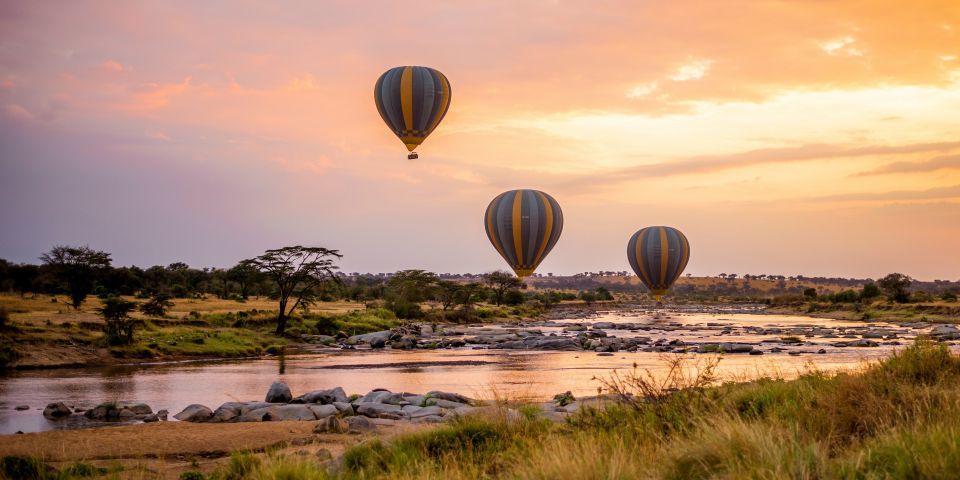
The format of your safari matters as much as where you go. The same Serengeti plains, the same wildlife, the same guide quality can be experienced across four very different tier levels. Understanding the real differences between them will help you make a decision you are confident in.
Private vs Group Safari: The Most Important Choice
Before choosing a tier, decide whether you want a private or group safari. This is the most structurally important decision in your planning process.
Private safari: Your own Land Cruiser, your own guide, your own schedule. You decide when to move, when to stay at a sighting, and where to go. Private safaris cost 15–35% more than comparable group options, but they deliver a fundamentally different quality of experience. Recommended for couples, families, photographers, and anyone visiting for the first time.
Group safari: Share a Land Cruiser (maximum 6 to 7 passengers in a properly run vehicle) with other travellers on a fixed itinerary. Costs are lower, and the social element can be enjoyable. Recommended for solo travellers, students, backpackers, and anyone with a flexible mindset and a tight budget. Quality group operators cap vehicles at 6 to guarantee every passenger a window seat.
The Four Safari Tiers
- Budget Camping
- Price - $1,800 – $2,800
- Accommodation - Public campsites, shared facilities
- Vehicle - Shared Land Cruiser
- Best For - Backpackers, students, budget travellers
- Comfort Lodge
- Price - $2,800 – $5,000
- Accommodation - Mid-range lodges, private bathrooms
- Vehicle - Private or shared
- Best For - First-timers, couples, most visitors
- Premium Safari
- Price - $5,000 – $9,000
- Accommodation - Premium lodges, larger rooms, pools
- Vehicle - Private, owned vehicle
- Best For - Photographers, discerning couples
- Luxury Safari
- Price - $9,000 – $20,000+
- Accommodation - Singita, Four Seasons, &Beyond, mobile camps
- Vehicle - Exclusive-use vehicles
- Best For - Honeymoons, special occasions
Budget Camping Safaris
Do not let the price mislead you. The wildlife on a budget camping safari is identical to the wildlife on a luxury safari — the same lion prides, the same river crossings, the same elephant herds. The difference is the experience between drives: public campsites with shared ablution facilities, simpler meals, and a more stripped-back environment. The guide quality at a reputable budget operator is often indistinguishable from the premium tier. For travellers who can sleep on a cot and share a bathroom, this is outstanding value.
Comfort Lodge Safaris
This is where the majority of international safari visitors land, and for good reason: the cost-to-experience mathematics are the cleanest here. A well-chosen mid-range lodge gives you a private en-suite bathroom, hot water, a proper bed with quality linen, three-course meals, and a reliable safari vehicle. You are not paying for a name-brand lodge — you are paying for the infrastructure that makes seven days of early mornings and full days on game drives comfortable and sustainable.
Most Recommended: For first-time Tanzania safari visitors, the comfort lodge tier delivers the complete experience — excellent wildlife, comfortable nights, great food — without the diminishing returns of the luxury tier at three times the price.
Premium Safaris
Premium properties like Ndutu Safari Lodge, Serena upper-tier lodges, and Plantation Lodge in Karatu offer significantly larger rooms, higher-quality food and beverage programmes, and often swimming pools for midday breaks. Vehicles are typically owned by the operator rather than subcontracted, which matters for reliability and guide continuity. Private guides are available on request, and itineraries can be customised in ways that comfort lodges cannot always accommodate.
Luxury Safaris
Tanzania's luxury safari tier is genuinely world-class. Singita Grumeti in the Western Corridor, Four Seasons Safari Lodge Serengeti, &Beyond Ngorongoro Crater Lodge, and the range of Sanctuary and Nomad mobile camps that follow the migration represent some of the finest hospitality experiences available anywhere in the world. Private vehicles, named guides, concession-exclusive game drives, hosted sundowner setups in the bush, and menus prepared by trained chefs are standard. If budget is not a constraint and a once-in-a-lifetime experience is the goal, Tanzania's luxury tier will exceed expectations.
Specialist Safari Formats
Walking Safaris: Available in Ruaha, Nyerere, and certain conservancy areas around the Serengeti. An armed ranger and guide lead you on foot through the bush, tracking spoor, reading animal sign, and approaching wildlife on foot. The most visceral and humbling way to experience Tanzania.
Boat Safaris: Exclusive to Nyerere National Park. The Rufiji River boat safari is unique in Tanzania and delivers encounters with hippos, crocodiles, elephants, and waterbirds from a completely different perspective.
Hot Air Balloon Safaris: Available over the Serengeti from the central Seronera area. An approximately one-hour dawn flight over the plains followed by a champagne breakfast in the bush. Cost: approximately $600–$700 USD per person. One of Tanzania's most memorable add-on experiences.
Fly Camping: Portable fly camps set up in remote areas away from any lodge. Ultra-exclusive, often available only through luxury operators in remote areas like Katavi or the outer Serengeti.
Chimpanzee Trekking: Mahale Mountains only. Full-day guided trek through mountain forest to locate habituated chimp communities. One of East Africa's most extraordinary wildlife encounters.
HOW MUCH DOES A TANZANIA SAFARI COST IN 2026? THE COMPLETE BREAKDOWN
Safari costs in Tanzania are made up of several distinct components. Understanding what drives each one helps you evaluate quotes accurately and avoid being overcharged or unknowingly underserved.
What You Are Actually Paying For
When you book a Tanzania safari, your payment is divided across several essential cost components. Understanding these helps explain why prices vary between operators while highlighting which costs are fixed.
- Park Entry Fees
- What it covers: Daily conservation and entrance fees charged by TANAPA and the Ngorongoro Conservation Area Authority (NCAA).
- Approximate share of total cost: 15–25%
- Note: These fees are fixed by the government and are the same regardless of the tour operator.
- Lodge / Accommodation
- What it covers: Hotels, lodges, tented camps, or camping facilities.
- Approximate share of total cost: 40–55%
- Note: This is the largest variable in your safari budget and has the biggest impact on the final price.
- Vehicle & Fuel
- What it covers: 4×4 safari vehicle rental, fuel, insurance, maintenance, and park driving costs.
- Approximate share of total cost: 15–20%
- Guide / Driver
- What it covers: Professional guide salary, accommodation, meals, and related expenses.
- Approximate share of total cost: 5–10%
- Operator Margin
- What it covers: Business overhead, administration, marketing, customer support, and company profit.
- Approximate share of total cost: 10–15%
Park Fees: The Fixed Floor
Tanzania's national park fees are set by the government and cannot be negotiated. Every licensed safari operator pays the same official fees, regardless of the package you choose. Knowing these charges helps you recognize when a safari quote is unrealistically low.
Serengeti National Park
- Park fee: $70 USD per person per day
- Additional fees:
- Public camping: $50 USD per night
- Special camping: $100 USD per night
Ngorongoro Crater (Crater Floor)
- Park fee: $70 USD per person per day
- Additional fee:
- $295 USD per vehicle for each crater descent
Ngorongoro Conservation Area (Rim Only)
- Park fee: $70 USD per person per day
- Additional fees:
- No vehicle surcharge for visitors staying on the crater rim
Tarangire National Park
- Park fee: $70 USD per person per day
- Additional fees: None
Lake Manyara National Park
- Park fee: $70 USD per person per day
- Additional fees: None
Ruaha National Park
- Park fee: $70 USD per person per day
- Additional fees: None
Nyerere National Park
- Park fee: $70 USD per person per day
- Additional fees:
- Boat safaris are charged separately.
💡 Key Insight:
A typical 7-day Northern Circuit safari visiting Tarangire, Lake Manyara, Ngorongoro (including two crater descents), and Serengeti (three nights) will incur approximately $560–$650 USD per person in park fees alone. These fees do not include accommodation, transport, meals, or guide services. If a safari quote is significantly below this amount, it is worth asking how these mandatory costs are being covered.
Full Cost Guide by Safari Tier
Budget Camping
- 7-day safari: $1,800–$2,800 USD per person
- 10-day safari: $2,400–$3,800 USD per person
- What changes: Camping accommodation and basic facilities.
- What stays the same: Professional guide, park access, and wildlife viewing.
Comfort Lodge
- 7-day safari: $2,800–$5,000 USD per person
- 10-day safari: $4,000–$7,000 USD per person
- What changes: Lodge quality, room comfort, and amenities.
- What stays the same: Parks visited, wildlife, and guiding standards.
Premium
- 7-day safari: $5,000–$9,000 USD per person
- 10-day safari: $7,000–$13,000 USD per person
- What changes: Premium lodges, private safari vehicle, and more personalized service.
- What stays the same: National parks and wildlife encounters.
Luxury
- 7-day safari: $9,000–$20,000+ USD per person
- 10-day safari: $13,000–$28,000+ USD per person
- What changes: Luxury accommodations, exclusive concessions, charter flights, gourmet dining, and tailor-made experiences.
- What stays the same: The parks and wildlife remain the same—the difference is the level of comfort and exclusivity.
What Season Does to the Price
January – February
- Price: Standard (slight premium in February)
- Why: Calving season in the Serengeti attracts many visitors.
March
- Price: 15–25% lower than standard.
- Why: The long rains begin, creating attractive discounts.
April – May
- Price: 30–45% lower than standard.
- Why: This is the quietest period of the year and offers the best safari deals.
June
- Price: 10–20% above standard.
- Why: Dry season begins and visitor numbers increase.
July – August
- Price: 40–70% above standard.
- Why: Peak safari season. Accommodation often sells out 10–12 months in advance.
September – October
- Price: 20–40% above standard.
- Why: Excellent wildlife viewing continues while demand gradually decreases.
November
- Price: Standard to 10% below standard.
- Why: Short rains return, and many lodges offer seasonal discounts.
December
- Price: Standard to 40% above standard.
- Why: Christmas and New Year holidays create one of the busiest travel periods of the year.
Book Direct vs Booking Platforms: The Cost Difference
Most international safari booking platforms layer a commission of 15–25% on top of the operator's actual price. This means a trip quoted at $4,500 through a platform might cost $3,600 if booked directly with the Arusha operator who actually runs it. The wildlife experience is identical. The service is often better when booked direct, because you communicate with the people who will actually deliver the trip.
adventuresseeker.com: We are based in Arusha, Tanzania. Every itinerary is built and operated by our team on the ground. When you book with us, there is no platform between you and the people driving the roads.
TANZANIA SAFARI ITINERARIES: THE BEST ROUTES FOR EVERY DURATION
Here are the most tried-and-tested itinerary shapes for a Tanzania safari, structured by trip length and traveller type.
5-Day Classic Northern Circuit
The shortest itinerary that still delivers a meaningful Tanzania safari experience. Best for travellers with limited time or those combining with Zanzibar or Kilimanjaro.
- Day 1: Arrive Kilimanjaro or Arusha. Briefing and overnight.
- Day 2: Tarangire National Park — full day game drive. Overnight in or near the park.
- Day 3: Lake Manyara National Park — morning drive. Drive to Ngorongoro rim. Overnight on rim.
- Day 4: Ngorongoro Crater — full crater floor descent at dawn. Return to rim. Drive to Serengeti central.
- Day 5: Serengeti — morning game drive. Afternoon drive to airstrip or Arusha.
📍 5-Day Note: This is the minimum viable Northern Circuit. Tarangire and Manyara could be compressed to half-days, but four parks in five days will feel rushed. If time is tight, drop Manyara and spend the extra time in the Serengeti.
7-Day Northern Circuit (Most Popular)
The gold-standard Tanzania safari itinerary. Seven days is the optimal shape — enough time to do each park justice without feeling like a catalogue tour.
- Day 1: Arrive Kilimanjaro International Airport (JRO). Transfer to Arusha. Overnight.
- Day 2: Drive to Tarangire National Park. Full day game drive. Overnight in or near park.
- Day 3: Tarangire or Lake Manyara. Afternoon drive to Ngorongoro Conservation Area.
- Day 4: Ngorongoro Crater — dawn descent. Full crater floor morning. Afternoon drive to central Serengeti.
- Day 5: Serengeti — full day game drive, Seronera valley. Overnight in Serengeti.
- Day 6: Serengeti — full day. Fly or drive south (depends on itinerary direction).
- Day 7: Morning game drive. Transfer to JRO or Zanzibar. Depart.
10-Day Ultimate Northern Circuit + Zanzibar
The most complete Tanzania experience for a single trip. Seven days of safari followed by three days on Zanzibar Island — the combination that most return visitors wish they had done on their first trip.
- Days 1–7: Northern Circuit as above.
- Day 8: Morning game drive. Fly Arusha to Zanzibar (~45 minutes). Overnight Stone Town.
- Day 9: Stone Town cultural tour — UNESCO World Heritage architecture, spice market, Darajani Bazaar.
- Day 10: East coast beach day — Paje, Nungwi, or Kendwa. Overnight before departure.
14-Day North and South Combined
The definitive Tanzania safari for experienced travellers or those wanting to see both circuits. Northern Circuit for the migration and Big Five; Southern Circuit for wild dogs, boat safaris, and true remoteness.
- Days 1–6: Northern Circuit — Tarangire, Ngorongoro, Serengeti.
- Day 7: Fly Arusha or Seronera to Ruaha (domestic flight, ~90 minutes).
- Days 8–10: Ruaha National Park — full-day game drives, evening walks.
- Day 11: Fly Ruaha to Nyerere (Selous).
- Days 12–13: Nyerere National Park — boat safaris, game drives, fly camping.
- Day 14: Fly Nyerere to Dar es Salaam. Connect to Zanzibar or international departure.
HOW TO CHOOSE A TANZANIA SAFARI OPERATOR: 8 CHECKS BEFORE YOU PAY
The single most important variable in the quality of your Tanzania safari is not the park you visit, the month you go, or even the lodge you stay in. It is the operator who plans and runs your trip. The wrong operator means the wrong vehicle, the wrong guide, and no accountability when something goes wrong — and something always eventually needs adjusting. Here are the eight checks that separate genuine operators from marketing fronts.
Check 1: TATO Registration
The Tanzania Association of Tour Operators (TATO) is the regulatory body for the safari industry. All legitimate operators must be registered. Ask for the TATO membership number and verify it on the TATO website. This is the legal floor — not a guarantee of quality, but an absolute prerequisite.
Check 2: Physical Office in Arusha or Tanzania
Your operator should have a physical office in Tanzania — ideally in Arusha, which is the gateway city for the Northern Circuit. A physical office means the operator is genuinely on the ground, understands current conditions, and has local relationships with lodges and parks. Be very cautious of operators based entirely outside Africa who claim to 'partner with' local companies — this adds a commission layer and removes accountability.
Check 3: Same Vehicle and Guide for the Full Duration
Ask explicitly: will I have the same vehicle and the same guide from departure to return? Premium operators commit to this. Operators who subcontract between parks swap vehicles and guides mid-trip — this compounds risk, reduces the guide's knowledge of your preferences, and often results in lower-quality vehicles in the sub-contracted legs.
Check 4: Owned Vehicles, Not Subcontracted
Ask whether the Land Cruisers are owned by the operator or rented from a third party. Owned vehicles are maintained to the operator's standard and inspected by the operator's mechanics. Subcontracted vehicles are an unknown quantity — and a vehicle breakdown in a national park is a material problem.
Check 5: Line-Item Pricing
A trustworthy operator will provide a quote that itemises park fees, lodge costs, vehicle costs, guide costs, and operator margin. If a quote arrives as a single total with no breakdown, that is a signal. It typically means the operator does not want you to see the commission being added. Ask for the breakdown and evaluate each line.
Check 6: Direct Communication with the Planner
You should be able to communicate directly — by WhatsApp, email, or phone call — with the person who built your itinerary and knows it in detail. Not a call centre. Not a booking agent who has never visited Tanzania. The person who answers your questions should be able to describe specific waterhole positions in Tarangire, explain why they have put you in a particular Serengeti sub-region for your dates, and name the guide who will be driving you. This direct access is one of the clearest signals of a legitimate, experienced operator.
Check 7: Reviews Verified by Experience
Look for reviews on TripAdvisor and Google that go beyond 'amazing experience!' The most valuable reviews are specific: they name the guide, describe a wildlife encounter, mention the lodge, and note something about how the operator handled an unexpected situation. Generic five-star reviews with no detail are easy to manufacture. Specific, experiential reviews are not.
Check 8: Transparent Cancellation and Insurance Policy
A legitimate operator will have a clear, written cancellation and amendment policy and will recommend or require travel insurance as a condition of booking. Ask what happens if you need to change dates due to illness or a flight disruption. The quality of this answer tells you a great deal about how the operator handles real-world problems.
Adventures Seeker Commitment: At adventuresseeker.com, every safari is planned by our team in Arusha. We use our own vehicles, our guides are employed directly by us, we provide line-item pricing on every quote, and we respond to WhatsApp queries within hours — not days. Ask us anything.
PRACTICAL INFORMATION: VISAS, HEALTH, SAFETY, AND GETTING THERE
Getting to Tanzania
The main international gateway for safari travellers is Kilimanjaro International Airport (JRO), located between Arusha and Moshi. JRO receives direct flights from Amsterdam (KLM), Doha (Qatar Airways), Dubai (Emirates), Istanbul (Turkish Airlines), Addis Ababa (Ethiopian Airlines), Nairobi (Kenya Airways, Jambojet), and various European hubs. Dar es Salaam's Julius Nyerere International Airport (DAR) is the country's largest airport and offers additional connections.
Recommended arrival airport for Northern Circuit: Kilimanjaro International (JRO) — 45 minutes from Arusha.
Recommended arrival airport for Southern Circuit: Julius Nyerere International (DAR) — then connect by domestic flight.
Visa Requirements for 2026
Most travelers require a visa to enter Tanzania. The Tanzania e-Visa system allows visitors to apply online before departure and typically processes applications within 3–10 business days. To avoid delays or unexpected issues, it is recommended to apply at least three weeks before your travel date.
United States
- Visa Type: Single-entry tourist visa
- Fee: $100 USD
- Notes: Available through the e-Visa system and also on arrival at major international entry points.
United Kingdom
- Visa Type: Single-entry tourist visa
- Fee: $50 USD
- Notes: Applying online before travel is recommended for a smoother arrival.
European Union
- Visa Type: Single-entry tourist visa
- Fee: Approximately $50 USD
- Notes: Visa fees and requirements may vary slightly depending on your country of citizenship.
Canada
- Visa Type: Single-entry tourist visa
- Fee: $50 USD
- Notes: Online application through the e-Visa system is recommended.
East African Community (EAC) Citizens
- Visa Type: Free movement
- Fee: Free
- Eligible countries: Citizens of Kenya, Uganda, and Rwanda can enter Tanzania under East African Community agreements, subject to current immigration regulations.
💡 Travel Tip:
Before booking your safari, always verify the latest visa requirements through the official Tanzania Immigration website, as entry regulations and fees may change. Ensure your passport is valid for at least six months beyond your arrival date and has at least one blank visa page for immigration stamps.
Important: Always verify current visa requirements with the Tanzania Immigration Department or your country's foreign affairs office before travel — fees and policies can change with limited notice.
Health and Vaccinations
Consult a travel medicine doctor or clinic at least 6 weeks before departure. The following are the standard recommendations for Tanzania safari travellers:
- Malaria prophylaxis: Tanzania is a malaria zone year-round. Doxycycline, Malarone, or Lariam — discuss with your doctor which is appropriate for your health history and trip length.
- Yellow Fever vaccination certificate: Required if entering from a yellow fever endemic country. Always carry the physical certificate.
- Routine vaccinations: Ensure Hepatitis A, Hepatitis B, Typhoid, Tetanus, and Measles-Mumps-Rubella are current.
- COVID-19: Requirements change — check current regulations with Tanzania's Ministry of Health before travel.
- Travel insurance with medical evacuation cover: Essential, not optional. Remote park locations can be significant distances from adequate medical facilities.
Safety in Tanzania
Tanzania is one of Africa's most stable and safe tourist destinations. The country has been politically stable since independence in 1964, with no active conflict zones and a government that actively protects its tourism industry. Approximately 1.5 million international tourists visit annually. The following standard precautions apply:
- Book with a TATO-registered operator and do not exchange large amounts of cash in informal settings.
- Secure valuables in hotel safes. Arusha city is generally safe but apply standard urban awareness.
- Do not attempt to leave safari vehicles in the national parks — park rules and common sense forbid it.
- Drink bottled or treated water throughout the trip.
- Apply insect repellent with DEET daily, especially at dusk and dawn.
Currency and Money
The official currency is the Tanzanian Shilling (TZS). However, safari lodges, national parks, and most hotels price in US Dollars (USD), which is widely accepted and preferred. Bring a supply of USD cash in small denominations for tips, market purchases, and anywhere cards are not accepted. Credit cards are accepted at most lodges and hotels; carry cash for everything else.
💵 Tipping Guide: Safari guide tip: $15–$25 USD per person per day. Lodge staff tip: $5–$10 USD per person per day, left in the envelope provided at checkout. Hot air balloon pilot: $20–$30 USD. These are widely recognised standards in Tanzania's safari industry.
What to Pack: Season-by-Season
Clothing colour is critical on safari. Stick to neutral tones: khaki, beige, olive green, tan, and brown. Avoid white (highly visible to animals), blue (attracts tsetse flies), and bright colours. Beyond colour, pack for conditions:
Dry Season (Jun–Oct): Light breathable layers for warm days, a warm fleece or down jacket for cold early mornings and evenings (temperatures can drop to 12°C in the Serengeti highlands), quality sunglasses, high-SPF sunscreen, a hat with full brim, and sealed dust-protective bags for cameras.
Green Season (Nov–May): A lightweight waterproof jacket or compact poncho, waterproof boots or trail shoes for muddy camp paths, DEET insect repellent, and anti-malaria medication. A polarising filter for camera lenses handles the dramatic green-season skies beautifully.
Year-round essentials: 8x42 or 10x42 binoculars (non-negotiable — your guide cannot always position you perfectly for naked-eye viewing), a headlamp, and a good travel power bank for charging cameras and phones.
COMBINING TANZANIA SAFARI WITH ZANZIBAR: THE COMPLETE GUIDE
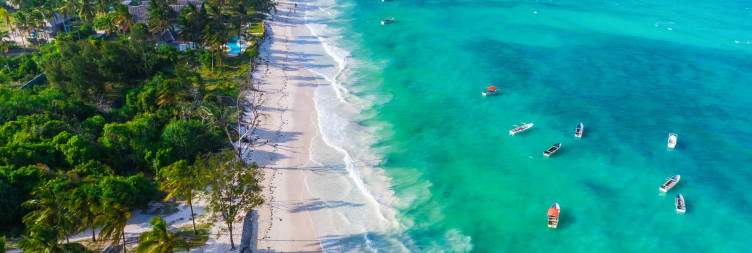
Tanzania offers one of the world's great travel combinations: a multi-day safari on the mainland followed by a beach stay on the Zanzibar archipelago. The flight from Arusha or Kilimanjaro to Zanzibar takes approximately 45 minutes to 1 hour on a direct charter or domestic service, making the logistical transition remarkably easy.
When Does a Safari & Zanzibar Combination Work Best?
Pairing a Tanzania safari with a beach holiday in Zanzibar is one of the most popular ways to experience the country. However, the overall experience depends on the season, as weather conditions affect both wildlife viewing on the mainland and beach conditions on the island.
June – October (Dry Season Safari)
- Zanzibar conditions: Dry season with calm seas, sunny skies, crystal-clear water, and excellent visibility for snorkeling and diving.
- Overall rating: ⭐⭐⭐⭐⭐ Excellent
- Why choose this period: This is widely considered the best time to combine a safari with a Zanzibar beach holiday, offering exceptional wildlife viewing and ideal beach weather.
January – February (Calving Season)
- Zanzibar conditions: Short dry season with warm temperatures, plenty of sunshine, and the occasional brief shower.
- Overall rating: ⭐⭐⭐⭐ Very Good
- Why choose this period: A great choice for witnessing the Serengeti's calving season while still enjoying pleasant beach conditions in Zanzibar.
November – December (Shoulder Season)
- Zanzibar conditions: Light short rains with mostly sunny weather and occasional afternoon showers.
- Overall rating: ⭐⭐⭐⭐ Very Good
- Why choose this period: Fewer crowds, competitive accommodation rates, and generally enjoyable weather make this an attractive option for travelers seeking better value.
April – May (Long Rainy Season)
- Zanzibar conditions: Heavy rainfall, rougher seas, and reduced opportunities for beach activities.
- Overall rating: ⭐⭐ Avoid
- Why avoid this period: Both the safari circuit and Zanzibar experience significant rainfall, making this the least favorable time for a combined safari and beach holiday.
What to Do in Zanzibar
Stone Town: UNESCO World Heritage Site and the historic heart of Zanzibar. Arab, Persian, Indian, and African architecture intertwine in a labyrinthine old town of carved wooden doors, narrow alleys, spice markets, and Swahili coffee houses. Allow a full day minimum.
Spice Farm Tour: Zanzibar was historically the world's largest producer of cloves, and the island still grows a rich array of tropical spices, fruits, and medicinal plants. A half-day guided spice farm tour is one of the most memorable activities on the island.
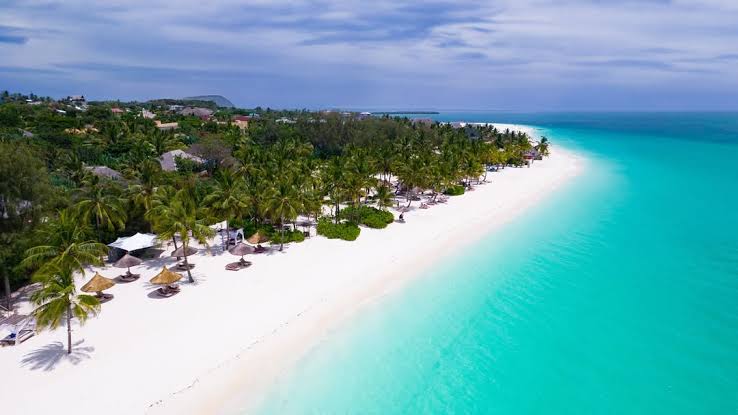
East Coast Beaches: Paje, Jambiani, and Bwejuu on the east coast offer the classic Indian Ocean beach experience — white sand, turquoise water, traditional dhow boats on the horizon. Paje is also the island's kitesurfing capital when conditions are right.
Diving and Snorkelling: Zanzibar's waters are home to over 500 species of fish, whale sharks (November–February at Mafia Island, sometimes visible from Zanzibar), and the extraordinary diversity of the Indian Ocean reef system.
Nungwi and Kendwa (North Coast): The north coast offers calmer waters, full-day sunbathing conditions, and a more social atmosphere with sunset dhow cruises and beach bars.
TANZANIA SAFARI FAQ 2026: 18 QUESTIONS ANSWERED
What is the best time for a Tanzania safari in 2026?
The peak dry season from June to October delivers the most consistently outstanding game viewing — sparse vegetation, animals at waterholes, and Mara River crossings from July onward. January and February are exceptional for calving season and predator action in the southern Serengeti. April and May offer the deepest discounts. There is no universally wrong time to visit Tanzania; every month has something extraordinary to offer.
How much does a 7-day Tanzania safari cost in 2026?
Budget camping starts at approximately $1,800 to $2,800 per person for 7 days. Comfort lodge sits at $2,800 to $5,000 per person. Premium lodges run $5,000 to $9,000, and luxury starts at $9,000 and rises past $20,000 for private exclusive experiences. Park fees alone account for $450 to $650 per person on a full Northern Circuit trip and are non-negotiable.
Do I need a visa for Tanzania in 2026?
Most nationalities require a visa. The Tanzania e-Visa is available at evisa.go.tz and costs approximately $50 USD for most countries ($100 for US citizens). Processing takes 3 to 10 business days. Apply well in advance. East African Community citizens (Kenya, Uganda, Rwanda) enjoy free movement.
Which Tanzania park is the best for first-time visitors?
The Ngorongoro Crater is the safest recommendation for a guaranteed Big Five experience, with the highest density of large mammals in Africa in a compact area. The Serengeti is the best overall park for diversity of experience across all seasons. For a first-time visitor on a 7-day trip, the combination of Tarangire, Ngorongoro, and Serengeti covers virtually every possible wildlife wish list.
Can I see the Great Migration without going to Kenya?
Yes. The Great Migration spends approximately 10 months of every year in Tanzania. The famous Mara River crossings happen at crossing points on both sides of the Kenya-Tanzania border, but some of the best crossing sites — Kogatende and Lamai Wedge — are on the Tanzanian side of the river. You can experience the full drama of the migration, including river crossings, without setting foot in Kenya.
Is Tanzania safe for tourists in 2026?
Tanzania is one of Africa's most stable and safe safari destinations. The country has been politically stable since independence in 1964, welcomes over 1.5 million international tourists annually, and has no active conflict zones. The safari sector is mature, regulated, and actively protected by the government. Standard travel precautions apply: use a registered operator, take malaria prophylaxis, secure valuables, and drink bottled water.
What vaccinations do I need for Tanzania?
Consult a travel doctor at least 6 weeks before departure. Standard recommendations include malaria prophylaxis (essential — Tanzania is a malaria zone year-round), Yellow Fever certificate (required if coming from an endemic country), and updated routine vaccinations including Hepatitis A, Hepatitis B, Typhoid, and Tetanus. Travel insurance with medical evacuation cover is strongly recommended.
How do I get from the airport to the safari?
Your operator should handle all transfers from Kilimanjaro International Airport (JRO) or Arusha Airport to the starting point of your safari. Most Northern Circuit itineraries begin from Arusha — a 45-minute to 1-hour transfer from JRO. Your operator will meet you at arrivals. If not, you should be asking why.
Can I do a Tanzania safari with children?
Yes. Most Tanzania safari lodges welcome children aged 6 and above. Family-specialist camps accept children from age 4. The dry season (June–October) is ideal for families, as predictable waterhole-based wildlife viewing keeps all ages engaged. Many lodges offer junior ranger programmes and child-appropriate activities during the midday break. Ensure your children's malaria prophylaxis is appropriate for their age and weight — consult a paediatrician.
What is the minimum number of days for a Tanzania safari?
A meaningful safari experience requires at least 5 days. This allows a full day in Tarangire, a half or full day at Lake Manyara, one Ngorongoro Crater descent, and one to two nights in the Serengeti. For the optimal Northern Circuit experience, 7 days is the recommended minimum. Ten days or more allows you to combine the north with Zanzibar or the southern parks.
Is malaria a serious risk on safari?
Tanzania is a malaria zone, and the risk is real but highly manageable with appropriate precautions. Take the malaria prophylaxis prescribed by your travel doctor, apply DEET repellent daily especially at dawn and dusk, sleep under the mosquito net provided in your tent or room, and wear long sleeves and trousers in the evenings. Most travellers who follow these precautions complete their safari without any issue. If you develop a fever within 60 days of returning home, tell your doctor you visited a malaria zone.
What language is spoken in Tanzania?
Swahili (Kiswahili) is the national language and the primary language of communication across Tanzania. English is widely spoken in the safari and tourism industry — your guide, lodge staff, and operators will communicate with you in English. Learning a few basic Swahili phrases (jambo for hello, asante for thank you, habari for how are you) is appreciated and often elicits warm smiles.
What currency should I bring to Tanzania?
US Dollars are the effective currency for safari travellers in Tanzania. Lodges, national parks, and most hotels price in USD. Bring USD in small denominations ($1, $5, $10, $20) for tipping, local markets, and small purchases. Credit cards are accepted at most lodges and hotels. Tanzanian Shillings (TZS) are useful for local markets and informal purchases — exchange at reputable banks or bureau de change in Arusha or Dar es Salaam.
What camera equipment should I bring?
A telephoto lens is the most important piece of safari photography equipment. A 100–400mm zoom is excellent for versatility; a fixed 500mm or 600mm delivers stunning results at greater distances. Bring a 70–200mm for environmental shots and portraits, and a wide-angle for landscapes. Carry more memory cards and batteries than you think you need — game drives start before dawn and run until after dusk. A sensor brush and lens cloths are essential in the dry season dust. Ask your operator about pop-top or open-sided vehicle options for unrestricted shooting angles.
Can I climb Kilimanjaro and do a safari on the same trip?
Yes — and this is a popular combination. Kilimanjaro routes take 6 to 8 days depending on the route chosen (Machame, Lemosho, Marangu are the most common). A typical itinerary is 7 days on the mountain followed by 7 days on safari — a 14-day trip that delivers both of Tanzania's great adventure experiences. The combination works logistically because both depart from the Kilimanjaro-Arusha region. Start with Kilimanjaro while your legs are fresh; finish with safari while you recover.
What is E-E-A-T and why does it matter for this guide?
Google's quality guidelines emphasise Experience, Expertise, Authoritativeness, and Trustworthiness (E-E-A-T) for content that helps people make important decisions — like planning an international safari. This guide is written by Adventures Seeker, an operator physically based in Arusha, Tanzania, with hands-on experience across every park, itinerary, and price tier described. The goal is not to generate clicks — it is to give you information accurate enough to make a good decision.
How far in advance should I book my Tanzania safari?
For July and August — peak migration river crossing season — book 10 to 14 months in advance. Popular camps at Kogatende and Lamai in the northern Serengeti sell out in October for the following year. For shoulder season (June, September–October, January–February), 4 to 6 months is generally sufficient. For the green season (April–May), 2 to 3 months is usually fine as availability is high.
What makes Adventures Seeker different from other operators?
Adventures Seeker is Arusha-based and Tanzania-focused. Our team has driven every road in the Northern and Southern Circuits and knows the current conditions, lodge quality, and seasonal wildlife patterns at the ground level. We use our own vehicles, employ our guides directly, provide line-item pricing on every quote, and communicate directly — not through a call centre or booking platform. Every itinerary is built around your specific travel dates, interests, and budget — not adapted from a generic package.
Plan Your Tanzania Safari 2026 with Adventures Seeker
Tanzania will change the way you understand the natural world. From watching 500,000 wildebeest calves take their first steps on the Ndutu Plains to witnessing a thousand wildebeest leap simultaneously into the crocodile-filled Mara River, from the silence of an empty Ngorongoro Crater at dawn to the sound of a lion calling across the Serengeti in the dark — these experiences do not fade. They become part of how you see the world.
At adventuresseeker.com, every safari is designed by people who know Tanzania the way only years on the ground can teach. We are here to help you plan it right — the right month, the right parks, the right tier, and the right itinerary for who you are as a traveller.
Ready to Plan: Visit adventuresseeker.com to explore tailored Tanzania safari itineraries, request a personalised quote, or speak directly with our Arusha team. We respond to every inquiry within 24 hours and typically within hours.
Excellent
Based on 100+ reviews
Need Help?
Have questions about planning your Tanzania adventure? Our travel experts are here to help.
You May Also Like
Latest Articles
Stay Updated
Subscribe to our newsletter for the latest travel guides and exclusive offers.
Request a custom itinerary for your next trip to Tanzania.
Our team of travel experts is here to help you create a custom itinerary for your next trip to Tanzania. We will work with you to create a itinerary that is tailored to your needs and budget.