
The Ultimate Guide to Ngorongoro for First-Time Visitors
June 27, 2026
Planning a safari in Africa can be overwhelming. With countless parks, lodges, and wildlife hotspots, it's hard to know where to go for the ultimate wildlife experience. Ngorongoro offers the perfect balance. The area has the world's largest intact volcanic caldera and is teeming with wildlife (including the Big Five). Keep reading to find out where Ngorongoro is, how to get there, the best places to stay, and when to visit for the ultimate safari experience.
WHERE IS NGORONGORO?
Ngorongoro is in northern Tanzania, Africa, within the Arusha Region. The area forms part of the Ngorongoro Conservation Area (NCA), a UNESCO World Heritage Site renowned for its remarkable natural beauty and rich biodiversity.
The NCA covers roughly 3,200 square miles (8,300 square kilometres) and encompasses a variety of landscapes, including the world-famous Ngorongoro Crater, rolling highlands, volcanic ridges, and forests.
Visits to Ngorongoro are often combined with trips to nearby destinations such as Lake Manyara National Park and the Serengeti National Park. The mix of dramatic scenery and dense wildlife makes it one of the most rewarding safari destinations in East Africa.
Ngorongoro is also home to Maasai communities, who have lived alongside the wildlife for generations. The community maintains traditional pastoral lifestyles that help preserve the region's ecological balance.
WHAT IS THE NGORONGORO CRATER IN TANZANIA?
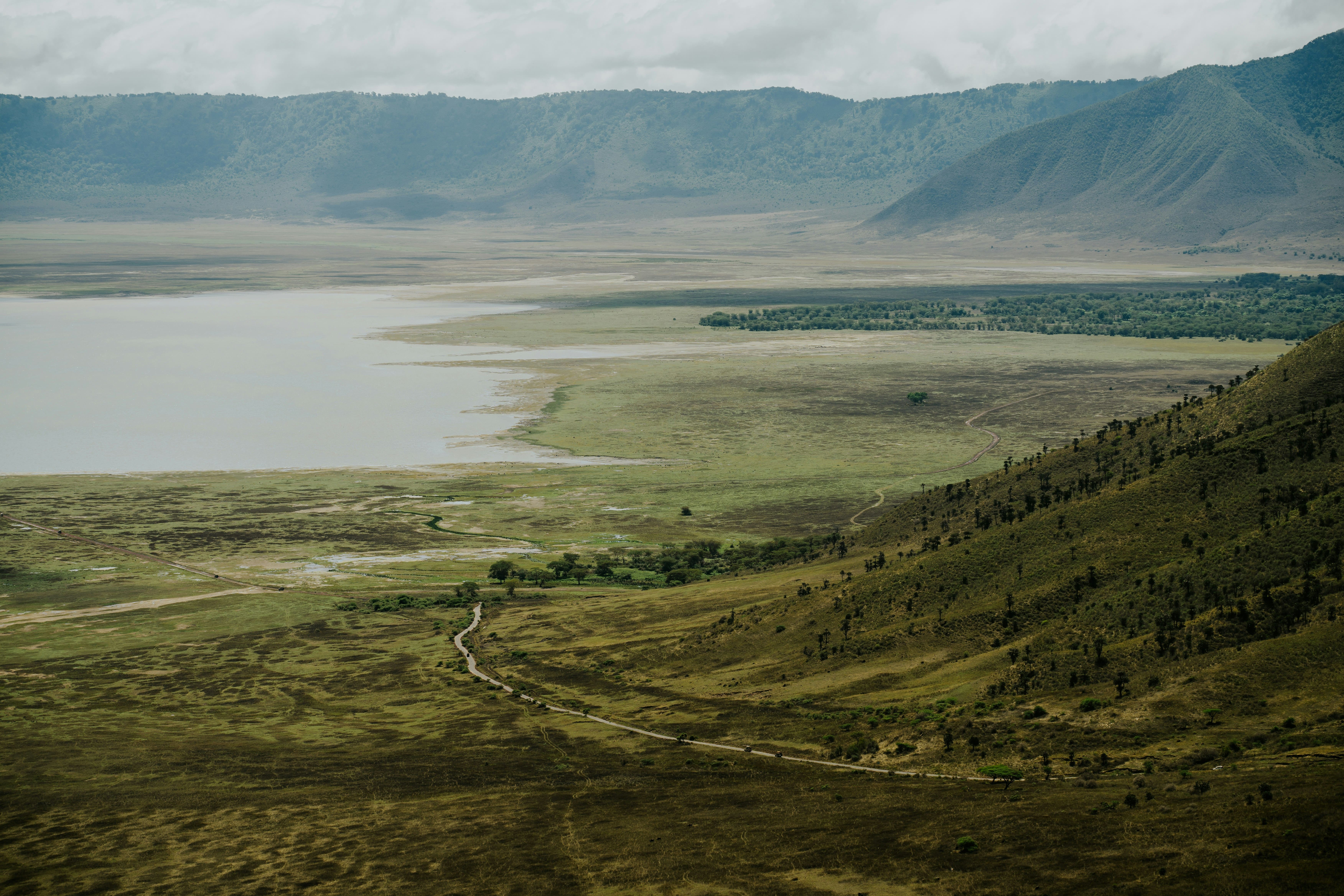
The Ngorongoro Crater is the world's largest intact volcanic caldera (a large, cauldron-like depression formed when a volcano collapses into itself after an eruption).
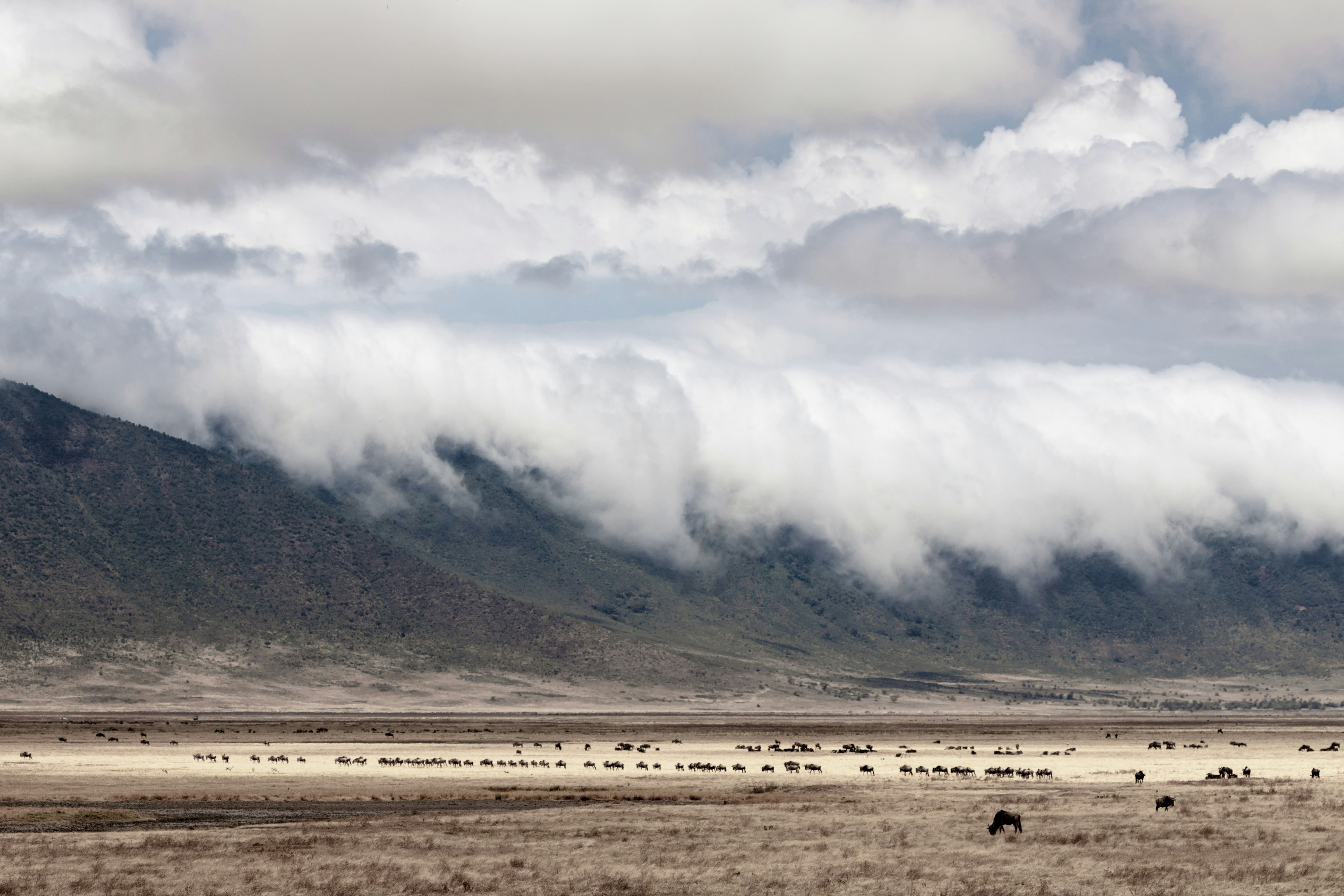
The area is a vast, natural amphitheatre teeming with wildlife. Because the crater's walls rise steeply around the plains, many animals live here year-round, creating an incredible density of wildlife in a relatively small area.
But Ngorongoro offers more beyond its famous crater.
WHY IS NGORONGORO WORTH VISITING?
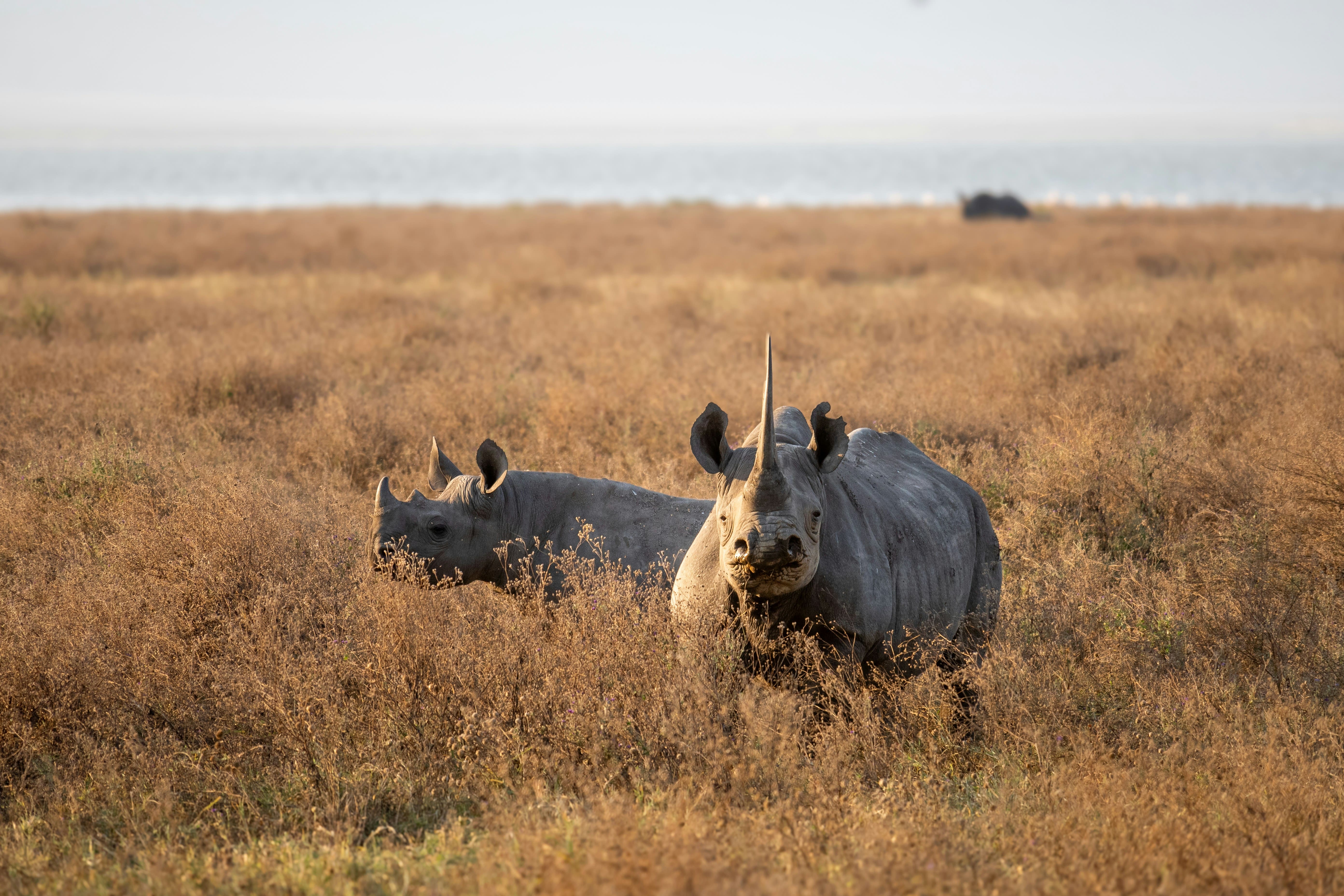
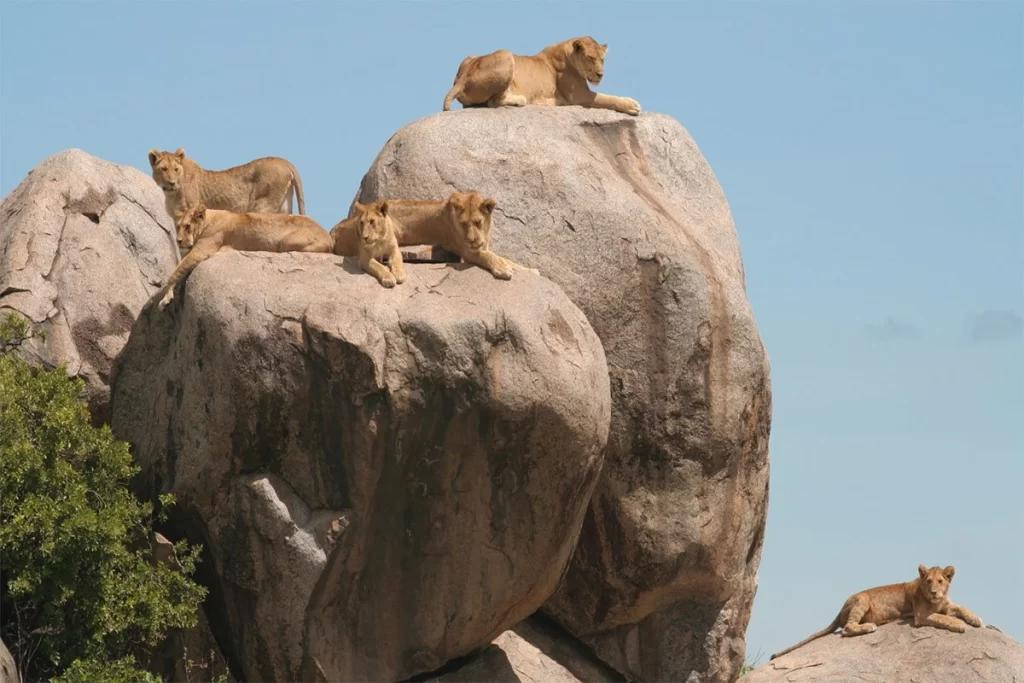
One of the main reasons Ngorongoro is worth visiting is the wildlife. The area is one of the few places where travellers can realistically see the Big Five in a single day (lions, leopards, elephants, rhinos, and buffalo).
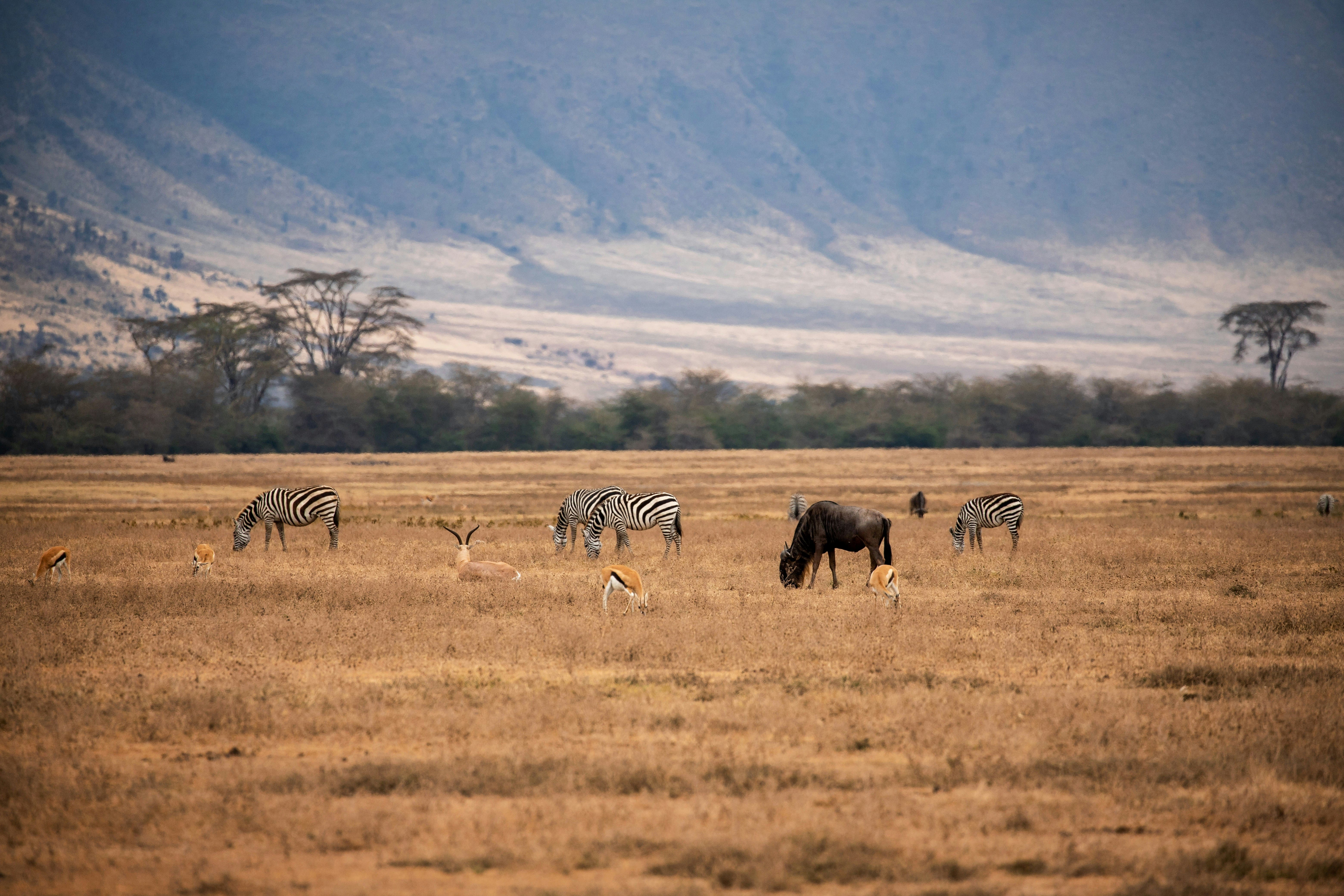
Massive elephants, majestic lion prides, and elusive black rhinos all roam its floor, sharing space with zebras, wildebeest, hyenas, hippos, buffalo, and hundreds of bird species. The surrounding highlands offer mist-covered forests, rolling green slopes, and Maasai communities who have lived alongside wildlife for generations.
HOW TO GET TO NGORONGORO
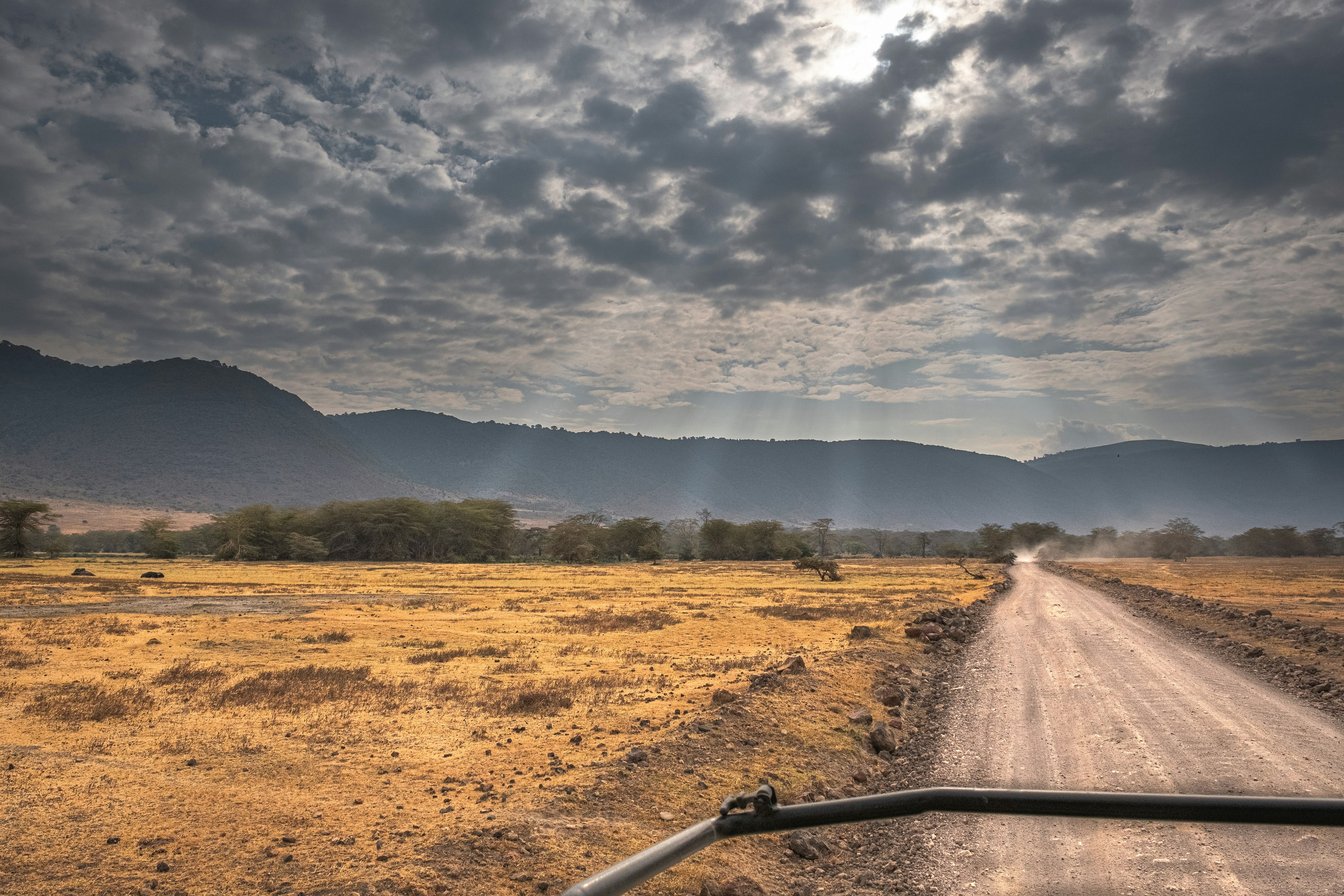
Most travellers reach Ngorongoro through Arusha, the main safari hub in northern Tanzania. Here's how that journey looks:
Fly into Kilimanjaro or Arusha Airport
Most travellers arrive at one of these airports: Kilimanjaro International Airport (JRO) is the main international airport. After landing, you take a 45-minute road transfer to Arusha, where most safaris begin. Arusha Airport (ARK) handles regional flights. If you land here, you can start your safari drive straight from Arusha.
Drive from Arusha to Ngorongoro
The usual approach to Ngorongoro is a drive south-west from Arusha. Distance: Approximately 112 miles (180km). Travel time: 3.5–4.5 hours. Road quality: The first 50 miles (80km) is on a good tar road, while the remaining road is gravel (which can be rough in places). The route passes through Mto wa Mbu, where fuel is available, climbs the Great Rift Valley wall, and reaches the area's entrance at Loduare Gate.
Visit as part of a guided safari
The easiest and safest way to get to Ngorongoro is to join a safari experience where operators arrange some of the travel logistics for you. This includes private airport transfers, private 4×4 Ngorongoro Crater safari vehicles with a professional guide, road transfers, and return transfers from Ngorongoro back to Arusha or Kilimanjaro International Airport.
WHERE TO STAY IN NGORONGORO
There's a wide range of Ngorongoro accommodation available, from luxury lodges perched on the crater rim to convenient mid-range hotels in nearby Karatu.
Choosing the right Ngorongoro Crater accommodation depends on your budget, desired comfort level, and how close you want to be to the wildlife.
Crater rim lodges
Staying on the rim gives travellers the iconic experience: waking up above a vast volcanic amphitheatre. These lodges offer spectacular views and easy access to early-morning game drives.
Karatu hotels
Karatu is a small town about 30 minutes from the crater entrance. It offers more affordable accommodation options while still providing convenient access to the crater.
Highland lodges
For those seeking a more remote experience, highland lodges offer peaceful settings with beautiful views of the surrounding landscape.
WHEN TO VISIT NGORONGORO
Ngorongoro is a year-round destination, but timing your visit can enhance your experience. The dry season (June to October) offers the best wildlife viewing, with animals gathering around water sources and clearer visibility.
The wet season (November to May) brings lush green landscapes and fewer crowds, though some roads may be challenging. It's ideal for travellers who prefer quieter safari moments, too.
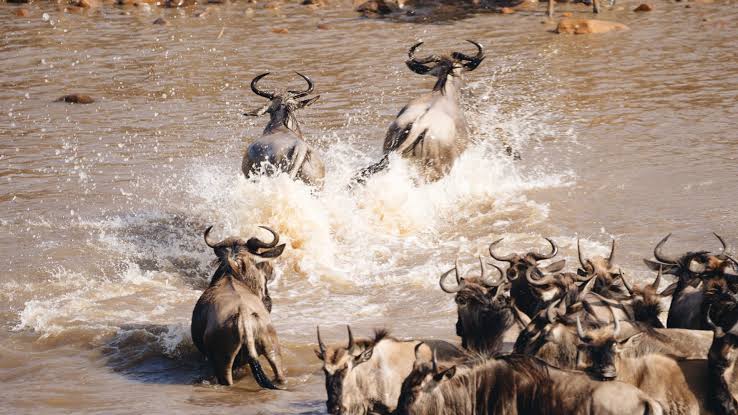
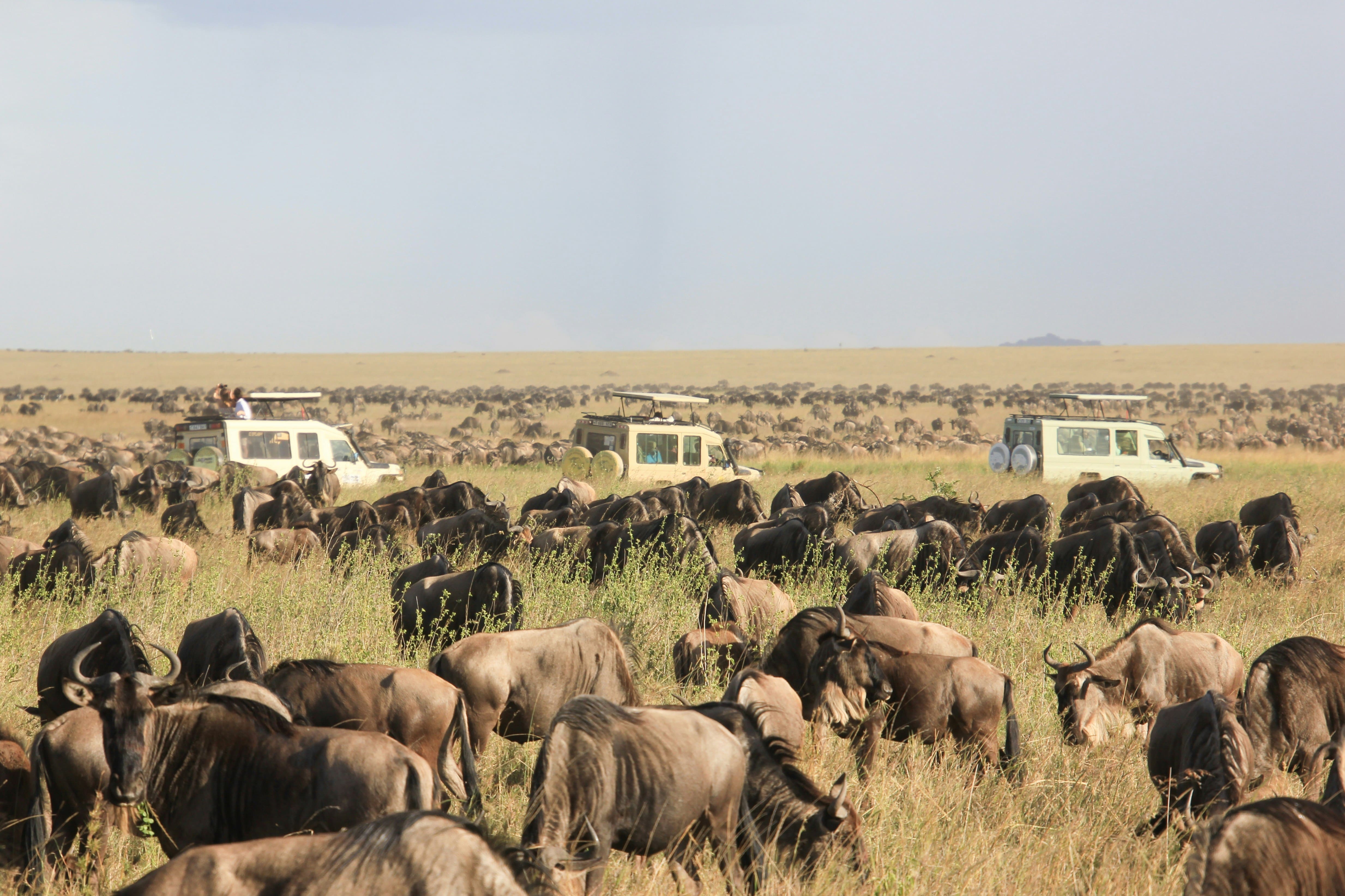
Top tip: Head to the Ngorongoro Crater in late Jan/Feb to have the best chance of seeing the Great Wildebeest Migration, where millions of wildebeest, zebra, and gazelles follow the rains for fresh grazing. It's quite the spectacle, where predators are abundant and new calves are born in a spectacular display of life.
FEES, PERMITS, AND PRACTICALITIES WHEN VISITING NGORONGORO
Ngorongoro is carefully protected, which means visiting requires planning. Here are some of the permits and fees you'll need to consider before your trip.
Park Ngorongoro entry fees
All visitors pay a 24-hour conservation fee, which grants access to the wider Ngorongoro Conservation Area. This fee supports wildlife protection, local communities, and infrastructure to support tourism.
Crater descent fee
If you want to enter the crater floor (which almost everyone does, and we definitely recommend it), there's an additional per-vehicle fee. Only registered 4×4 vehicles with proper permits can descend via the steep crater roads.
Opening time and access rules
Ngorongoro operates on a tight schedule. Gates open early at 6am and close at 6pm, access to the crater closes at 4pm. This helps protect wildlife and reduces environmental impact. Most travellers prefer early-morning game drives, when animals are active, and the light is spectacular.
Accommodation and concession fees
Staying on or near the crater rim may involve extra concession or camping fees. Fees vary depending on the type of accommodation. For example, there's a $35.40 (£26.60) fee for non-East African citizens when staying at a public campsite.
NGORONGORO FAQS
How to pronounce Ngorongoro?
Ngorongoro is pronounced "N-gor-on-gor-o". The first "N" is lightly sounded before "gor."
How was the Ngorongoro Crater formed?
Around two–three million years ago, a volcano erupted and collapsed in on itself. This eruption created a caldera, a huge, bowl-shaped depression. Over time, the crater became a natural habitat for wildlife, forming one of the richest ecosystems in Africa.
How big is the Ngorongoro Crater?
The crater is approximately 12 miles (19km) wide and covers about 100 square miles (260 square kilometres). It's the world's largest intact volcanic caldera!
How high is Ngorongoro Crater?
The crater rim sits around 7,200–7,900 ft (2,200–2,400 metres), meaning chilly evenings and crisp mornings. The crater floor is slightly warmer but still cooler than many safari destinations.
Why is Ngorongoro not a national park?
Although often referred to as "Ngorongoro Crater National Park" or "Ngorongoro National Park", the area isn't officially a national park. Why? Because it's part of the Ngorongoro Conservation Area, which has a different management model. Unlike other national parks, the area allows Maasai communities to live and graze their livestock alongside wildlife. This makes Ngorongoro a unique blend of conservation and cultural heritage.
How far is Ngorongoro from Arusha?
Ngorongoro is roughly 112 miles (180km) from Arusha. The journey usually takes 3.5 to 4.5 hours by car, depending on traffic and road conditions.
Why are giraffes not found in the Ngorongoro Crater?
Giraffes rarely enter the crater because its walls are steep and difficult to descend. Their long legs and top-heavy bodies make the journey challenging. However, they're commonly seen on the Ngorongoro Conservation Area plains.
How many days should you spend at the Ngorongoro Crater?
Most travellers spend one or two days in the crater. One day on a Ngorongoro safari is enough to see the major wildlife highlights. Two days allow for a more relaxed pace, better photography opportunities, and a chance to explore additional viewpoints and surrounding areas.
CONCLUSION
Ngorongoro truly is a safari destination like no other. Whether you're hoping to spot the Big Five, enjoy breathtaking views from the crater rim, or immerse yourself in the peaceful highlands, Ngorongoro has something for every traveller.
For first-time visitors, the logistics of getting to the area, choosing the right accommodation, and planning drives into the crater is a huge undertaking. That's where a guided safari can help.
From private airport transfers to expert-led 4×4 game drives, professional operators handle the details so you can focus on what really matters: the wildlife, the scenery, and the unforgettable memories.
Excellent
Based on 100+ reviews
Need Help?
Have questions about planning your Tanzania adventure? Our travel experts are here to help.
You May Also Like
Latest Articles
Stay Updated
Subscribe to our newsletter for the latest travel guides and exclusive offers.
Request a custom itinerary for your next trip to Tanzania.
Our team of travel experts is here to help you create a custom itinerary for your next trip to Tanzania. We will work with you to create a itinerary that is tailored to your needs and budget.