
Arusha National Park
Arusha National Park is Tanzania's most overlooked major wildlife destination — and one of its most rewarding. Sitting just 35 kilometres east of Arusha city, it is the closest national park to Tanzania's safari capital, and yet it consistently surprises visitors who expect it to be merely a convenient warm-up before the Serengeti. It is not a warm-up. It is a genuinely extraordinary destination in its own right.
The park contains within its 552 square kilometres a volcanic landscape of haunting beauty: the sheer crater walls of the Ngurdoto Crater — a forested caldera sometimes called the 'Little Ngorongoro'; the seven Momella Lakes, each a different shade of alkaline blue and green, home to flamingos and extraordinary waterbirds; the upper reaches of Mount Meru, Africa's fifth-highest peak at 4,566 metres, whose summit is one of Tanzania's finest trekking objectives; and forest-covered slopes populated by black-and-white colobus monkeys, bushbuck, buffalo, warthog, and a bird community of over 400 species.
Arusha National Park is also the only park in Tanzania where both Mount Kilimanjaro and Mount Meru are simultaneously visible — on clear mornings, the two peaks frame the landscape from east and west in a panorama that exists nowhere else on Earth. And it is the only park in northern Tanzania where you can leave your vehicle and walk freely with a ranger — opening a dimension of wildlife experience that the vehicle-based game drive culture of the larger parks cannot provide.
This guide gives you everything you need to plan a visit to Arusha National Park in 2026 — the landscapes, the wildlife, the walking safari experience, the Mount Meru climb, the canoeing on the Momella Lakes, the best time to visit, and how to position the park perfectly within a Northern Circuit itinerary that makes the most of Tanzania's most accessible and most underappreciated national park.
ARUSHA NATIONAL PARK: QUICK FACTS
- Size: 552 km² — the smallest and closest Northern Circuit park to Arusha
- Established: 1960
- Location: 35 km east of Arusha city, between the towns of Arusha and Moshi
- Nearest city: Arusha — 35 km west / approximately 40 minutes by road
- Park entry fee: USD $45 per person per day (non-resident adult, 2026 — lower than other Northern Circuit parks)
- Vehicle entry fee: USD $40 per vehicle per entry
- Mount Meru climb fee: USD $45 per person per day (separate from standard park entry; climbing days charged separately)
- Walking safari fee: USD $23.80 per person per walk (armed ranger guide required)
- Canoeing fee: Included in park entry — ask at the gate to arrange
- From Kilimanjaro International Airport (JRO): ~30 km / 35 minutes by road
- From Moshi: ~60 km / 1 hour by road
- Altitude range: 1,524 m (Momella Gate) to 4,566 m (Mount Meru summit — Socialism Peak)
- Mount Meru height: 4,566 metres — Africa's fifth-highest peak
- Key features: Ngurdoto Crater, seven Momella Lakes, Mount Meru, Ngurdoto Museum, Jekukumia River
- Famous for: Walking safaris, canoeing on Momella Lakes, black-and-white colobus monkeys, giraffes, Mount Meru climbing, simultaneous Kilimanjaro and Meru views
- Unique distinction: The only park in Tanzania where you can see both Kilimanjaro and Meru simultaneously, and the only northern circuit park permitting unrestricted walking with a ranger
- Bird species: 400+ recorded
- Annual visitors: Approximately 15,000–25,000 — one of Tanzania's least-visited major parks
- Best combined with: Tarangire, Lake Manyara, Ngorongoro, Serengeti (Northern Circuit); Mount Kilimanjaro climb
- Management: Tanzania National Parks Authority (TANAPA)
WHY ARUSHA NATIONAL PARK DESERVES MORE THAN A HALF-DAY STOP
Most Northern Circuit itineraries treat Arusha National Park as an afterthought — a convenient half-day excursion for guests who arrive at Kilimanjaro Airport with an afternoon to spare before their 'real' safari begins the following morning. This is one of the Northern Circuit's most persistent misunderstandings. Arusha National Park is not a half-day park. It is a destination with genuine depth that rewards full-day visits and benefits enormously from an overnight stay.
Tanzania's Most Diverse Small Park
Arusha National Park packs more ecological diversity per square kilometre than any other park in Tanzania. Within its 552 square kilometres — smaller than the greater Arusha city area — you encounter montane forest with colobus monkeys, open grassland with giraffes and zebra, volcanic craters, alkaline lakes with flamingos, and the upper slopes of a 4,566-metre volcanic peak. A single full-day visit moves through five completely distinct habitats, each producing different wildlife and different photographic conditions.
Tanzania's Only Walking Safari National Park on the Northern Circuit
Every other major park on the Northern Circuit requires you to remain in your vehicle. In the Serengeti, in Ngorongoro, in Tarangire, in Lake Manyara — you observe Africa's wildlife from behind glass and steel, which is extraordinary but ultimately creates a mediated relationship with the landscape. Arusha National Park changes this entirely. It is the only northern circuit park that permits unrestricted walking with an armed ranger — allowing you to stand on the ground, hear your own footsteps on the volcanic soil, smell the acacia blossoms, and approach wildlife on foot at a proximity that vehicle-based game drives simply cannot replicate.
A walking safari in Arusha National Park — whether approaching a giraffe at 40 metres on foot or watching buffalo move through the forest edge from a stationary position — is an encounter with the African wilderness at a fundamentally different level from any vehicle-based experience. For many visitors, the 90-minute walking safari in Arusha National Park produces the most intimate wildlife memory of their entire Tanzania trip.
The Two-Mountain View
On clear mornings — most reliable in the dry season from June through October and in January and February — Arusha National Park offers something available nowhere else on Earth: simultaneous, unobstructed views of Mount Kilimanjaro (5,895 m, Africa's highest peak) to the south-east and Mount Meru (4,566 m, Africa's fifth-highest) to the west. The two volcanic mountains, framing the open grasslands of the park between them, create one of Africa's most extraordinary landscape vistas. From specific viewpoints within the park — particularly the Momella Lakes area and the Ngurdoto Crater rim — this panorama is fully accessible to anyone willing to be at the right spot before 9:00 AM on a clear morning.
🏔️ Two-Mountain Fact: Arusha National Park is the only place on Earth from which both Africa's highest peak (Kilimanjaro at 5,895 m) and Africa's fifth-highest peak (Meru at 4,566 m) are simultaneously visible with no obstruction. On clear days in the dry season, both snow-capped summits are visible from the Momella Lakes area at dawn.
The Closest Park to Arusha — The Perfect First Day
At just 35 kilometres from Arusha city and 30 kilometres from Kilimanjaro International Airport, Arusha National Park is the natural first or last day of any Northern Circuit itinerary. Visitors who arrive at JRO on an early morning flight and are not scheduled to begin the main circuit until the following day have a complete world-class safari park available within 35 minutes of their hotel. Few Tanzania itineraries make sufficient use of this proximity.
ARUSHA NATIONAL PARK'S LANDSCAPE: THREE EXTRAORDINARY FEATURES
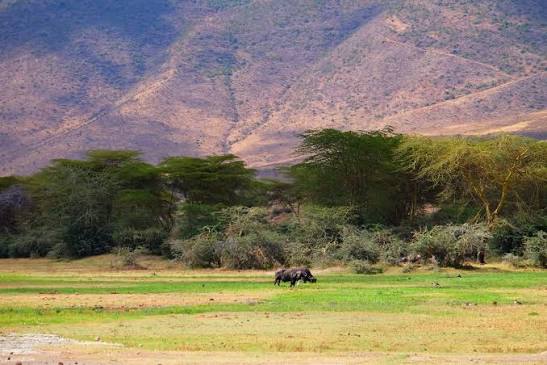
Arusha National Park's landscape is defined by three geological features that give the park its distinctive character and its ecological diversity: the Ngurdoto Crater, the Momella Lakes, and the Mount Meru massif.
Ngurdoto Crater — The Little Ngorongoro
In the park's south-eastern section, the Ngurdoto Crater is a volcanic caldera approximately 3.5 kilometres in diameter and 400 metres deep. Unlike the Ngorongoro Crater, whose floor is accessible by vehicle, the Ngurdoto Crater floor is entirely off-limits to visitors — it is maintained as a pristine wilderness reserve, visible only from the crater rim road that circles its edge. This restriction, which might seem frustrating initially, creates an extraordinary experience: you look down into a genuinely untouched African wilderness — a dense, green caldera floor of permanent swamp and forest where buffalo, bushbuck, warthog, and colobus monkeys live entirely undisturbed by human presence.
The crater rim road provides viewpoints at several intervals, each offering a different perspective on the caldera and its contents. At dawn, with mist still in the caldera, the view is genuinely haunting — the impression of looking into a world that has been sealed from human interference and allowed to develop on its own terms.
- Wildlife on crater floor (visible from rim): Buffalo, warthog, waterbuck, bushbuck, black-and-white colobus monkeys in the forest canopy
- Best viewpoint: Leitong Point on the western rim — the highest accessible point with the broadest caldera view
- Photography: Dawn is the finest time — mist in the caldera, soft light, and the forest birds calling from below create an extraordinary atmosphere
The Momella Lakes — Seven Lakes, Seven Colours
The seven Momella Lakes in the park's northern section are one of Tanzania's most remarkable geological features. Each lake is a shallow, alkaline soda lake of slightly different chemistry, producing slightly different algae concentrations — and therefore slightly different colours. Viewed together, they form a palette ranging from pale blue-green to deep jade to burnt orange-brown, depending on season and time of day.
The lakes formed in the hollows left by ancient volcanic lava flows and subsidence, and their alkaline chemistry — similar to Lake Manyara and the Rift Valley soda lakes — makes them inhospitable to fish but ideal for the blue-green algae that flamingos feed on. The lakes are also home to large hippopotamus pods, abundant waterbirds, and the extraordinary sight of giraffes and zebra coming to drink at the lake edge while flamingos feed in the shallows alongside them.
- Big Momella Lake: The largest of the seven — significant hippo population, flamingos, pelicans, and the clearest view of both Meru and Kilimanjaro from its eastern shore
- Little Momella Lake: Shallower and more intimate — flamingo concentrations can be higher here in peak months
- Kusare Lake: Known for buffalo coming to drink at dawn — one of the park's best early morning wildlife spots
- Tulusia Lake: Beautiful jade-green colour — the most photogenic of the seven in terms of water colour
- Canoeing access: The Momella Lakes are the only place in any northern Tanzania national park where canoeing safaris are offered — a unique activity available exclusively here
Mount Meru — Africa's Fifth-Highest Peak
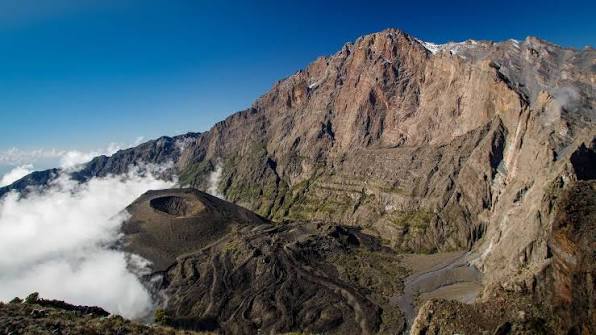
Mount Meru dominates the western section of the park — a volcanic massif that rises 3,042 metres above the surrounding plains to a summit of 4,566 metres. Meru is an active stratovolcano — its last significant eruption was in 1910 — whose eastern wall was catastrophically destroyed by a massive eruption approximately 8,000 years ago, creating the dramatic horseshoe-shaped crater visible today. The resulting Inner Cone, rising from the crater floor, is the actual summit approached by trekkers.
Mount Meru is both a trekking destination in its own right and one of the finest acclimatisation objectives for Kilimanjaro. Its altitude of 4,566 metres provides meaningful high-altitude exposure without the extreme demands of Kilimanjaro's 5,895 metres, and the 3 to 4 day standard itinerary is achievable by most fit trekkers. The views from Meru's summit — of Kilimanjaro at dawn, of the crater, of the entire Arusha plains below — are among the finest in East Africa.
- Summit name: Socialism Peak — 4,566 metres
- Trek duration: 3 days minimum / 4 days recommended
- Climb difficulty: Moderate to challenging — steeper than Kilimanjaro's standard routes, shorter, and with wildlife encounters (buffalo and elephant on the lower slopes)
- Unique feature: The only major African peak where you trek through a landscape with wildlife — armed rangers accompany all groups due to the presence of buffalo and elephant on the lower forested slopes
- Best for: Kilimanjaro acclimatisation, independent mountain experience, fit trekkers seeking a less-visited alternative to Kilimanjaro
The Montane Forest Zone
Between the Momella Lakes and the crater rim, much of Arusha National Park is covered in montane forest — dense, high-canopy woodland dominated by fig, wild mango, Cape chestnuts, and podocarpus trees. This forest is the primary habitat of the park's black-and-white colobus monkeys and is alive with birdlife at all hours. Walking through the forest zone with a ranger — the sound of the canopy birds, the calls of distant colobus troops, the quality of filtered forest light — is one of the park's most atmospheric experiences.
ARUSHA NATIONAL PARK WILDLIFE: COMPLETE SPECIES GUIDE
Arusha National Park does not offer the Big Five safari experience of the larger Northern Circuit parks — no lions, no leopards in reliable numbers, no rhinos. What it offers instead is a different kind of wildlife encounter: intimate, on-foot, close-range, and often entirely private. The park's wildlife is genuinely extraordinary in its own terms, and the walking safari format means that every encounter has a quality of directness and immediacy unavailable in any vehicle.
Black-and-White Colobus Monkey — The Park's Signature Species
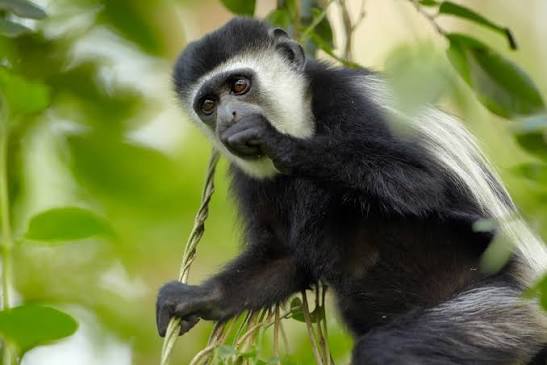
The black-and-white colobus monkey (Colobus guereza) is Arusha National Park's most iconic and most celebrated wildlife resident. These striking primates — coal-black bodies with flowing white mantle fur, a white-fringed face, and a long white tail — live in the park's montane forest in troops of 5 to 15 individuals, moving through the canopy with extraordinary agility and calling with a deep, resonant roar that carries across the forest from first light.
Colobus monkeys are unique among primates in being entirely folivorous — they eat only leaves. Their complex, multi-chambered stomach allows them to safely digest leaves that would be toxic to most other primates, including the young fig and podocarpus leaves that dominate their Arusha diet. This dietary specialism means they spend most of their time in the canopy, rarely descending to the ground. Watching a colobus leap between branches — its white fur streaming behind it — is one of the most beautiful and most photographically compelling wildlife moments available in any Tanzania park.
- Best location: The forest road between the park entrance and the Ngurdoto Crater rim — colobus troops are consistently present in the large fig trees along this section
- Best time: Early morning (6:00–9:00 AM) when troops are most active and feeding in the canopy
- Photography: A 200–400mm lens is ideal for canopy shots. The contrast of the black-and-white fur against green leaves produces striking images. Dawn light in the forest creates extraordinary atmospheric conditions.
Giraffe — Abundant and Approachable
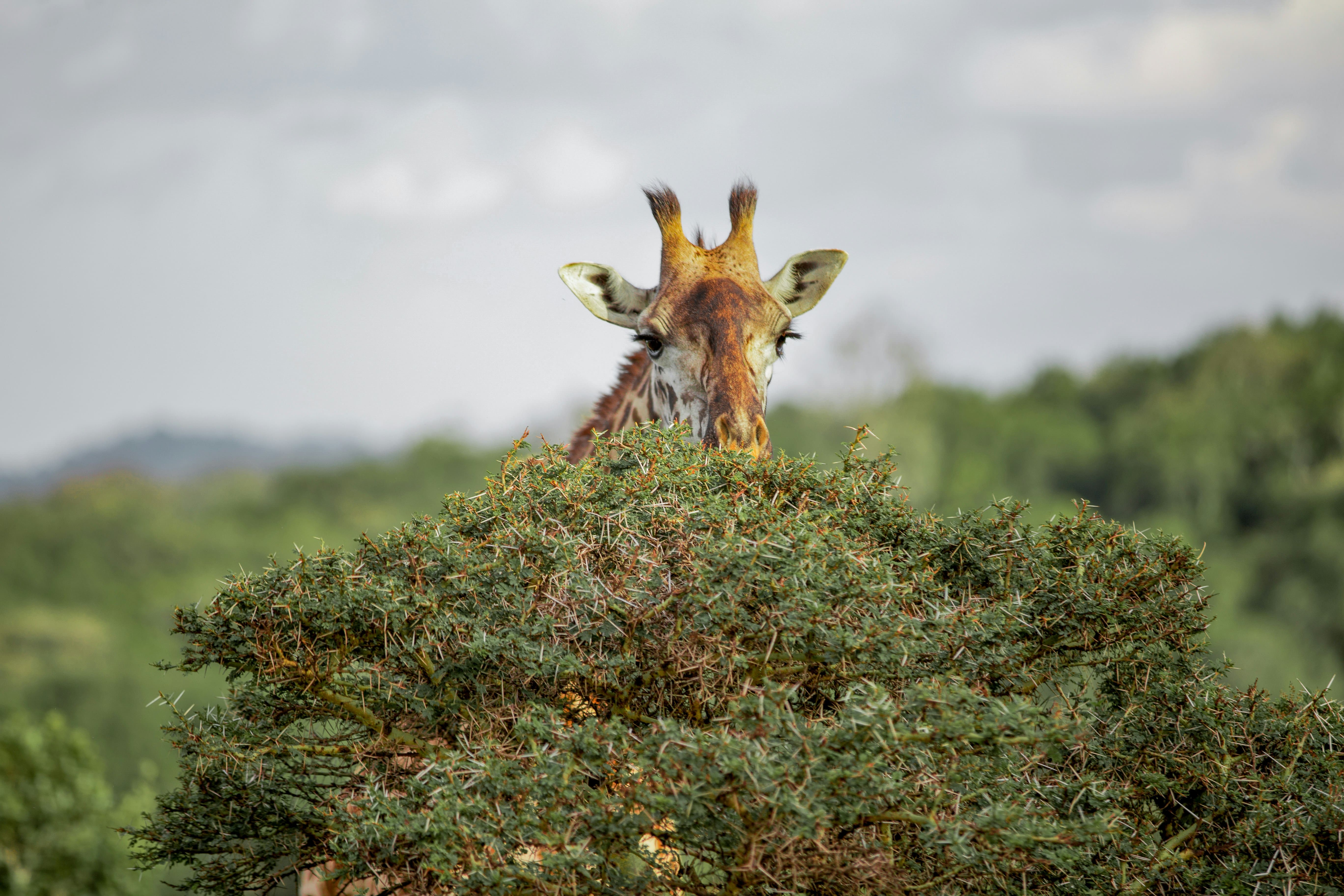
Maasai giraffe are abundant throughout Arusha National Park's grassland and woodland zones. The combination of open grassland, acacia trees at the right browsing height, and the park's walking safari culture means that giraffe encounters in Arusha are among the most intimate available anywhere in Tanzania. Walking to within 40 metres of a giraffe on foot — observing the heartbeat visible in its neck arteries, the extraordinary reach of its tongue as it strips acacia leaves, the sound of its chewing — is a fundamentally different encounter from viewing the same animal from a vehicle at the same distance.
- Best area: The open grassland around the Momella Lakes, particularly the Bonde la Ndege (Valley of the Birds) area
- Group sizes: Small nursery groups of 3–8 individuals are most common in the park. Larger aggregations of 15–20 occasionally form near the lakes
- Walking approach: Your ranger guide will position the group downwind and approach slowly. Giraffes are curious rather than fearful of slow-moving humans — prolonged close-range observation is possible with patient movement
Buffalo
Cape buffalo are present throughout the park in herds of 20 to 80 animals, and are the primary reason that all walking safaris require an armed ranger escort. Buffalo are the most dangerous animal in Arusha National Park for foot travellers — old bulls particularly can be unpredictable and aggressive when surprised. The armed ranger carries a rifle not as a tourist attraction but as a genuine safety measure for potential buffalo encounters.
From a wildlife viewing perspective, buffalo encounters on foot in Arusha are some of the most memorable in Tanzania. The difference between watching a buffalo herd from a vehicle at 20 metres and standing on the same ground as a buffalo herd at 40 metres is not a matter of degree — it is a different category of experience. Your awareness is completely different. Your heart rate is measurably elevated. The encounter becomes real in a way that vehicle-based observation cannot replicate.
- Best area: Kusare Lake area at dawn, Ngurdoto Crater floor (visible from rim), the forest edges throughout the park
- Safety protocol: Your ranger makes all decisions about approach, movement, and retreat. Never approach buffalo independently. Never run if a buffalo tests its position. Your ranger knows exactly how to manage these encounters.
Warthog
Warthogs are common throughout the open grassland zones and are frequently encountered on walking safaris — families with young piglets are a particularly entertaining sight, the mother and her offspring running in single file with tails erect. Warthogs in Arusha have slightly lower habituation to humans than those in heavily visited parks, making encounters feel more genuinely wild.
Zebra
Plains zebra are abundant at Arusha National Park, particularly around the Momella Lakes and the open grassland areas. Zebra in the park are often found mixed with wildebeest and impala in the open grassland sections, and their striped patterns against the green-and-gold landscape create beautiful photographic compositions. Walking among zebra on a guided walk produces close-range sightings that vehicle-based safaris in larger parks rarely match for intimacy.
Waterbuck
The defassa waterbuck — a large, shaggy antelope with a distinctive white circular patch on its rump — is common near the Momella Lakes and the park's stream systems. The waterbuck's strong musky odour (a natural predator deterrent) is detectable at considerable distances when walking near their habitat. Large males with impressive curved horns are frequently seen near the water's edge.
Hippopotamus
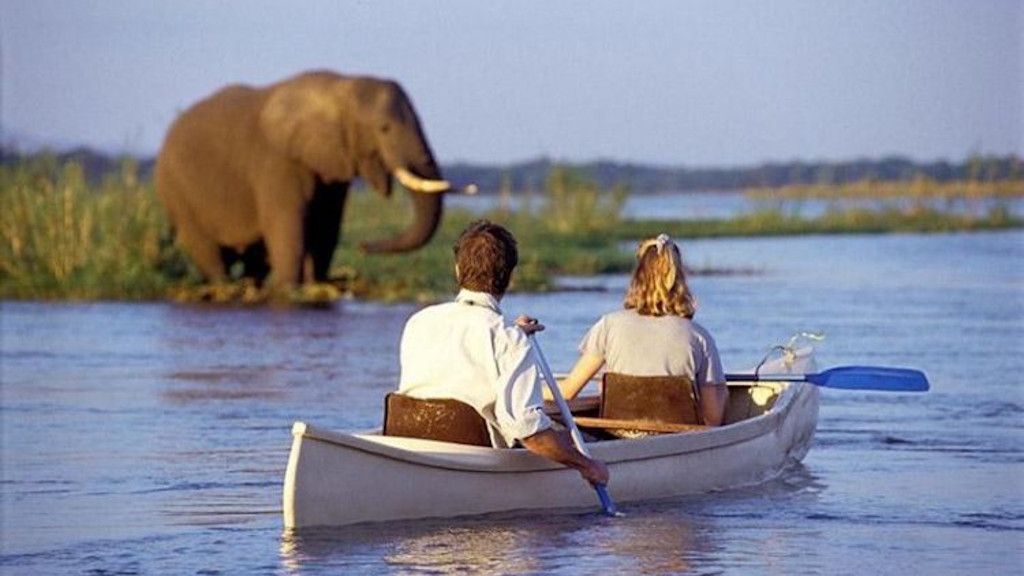
The Momella Lakes host a resident hippo population — viewable from the lake shore and particularly spectacular from a canoe. Approaching hippos in a canoe is one of the most unusual and memorable wildlife activities available in any Tanzania park. The flatness of the lake surface, the silence of the canoe, and the proximity of the hippos — surfacing, exhaling, submerging — creates an encounter of extraordinary immediacy.
- Safety note: Canoeing safaris in Arusha National Park are conducted by experienced ranger guides who manage safe distances from hippo pods. The activity is entirely safe when conducted with the assigned ranger — never attempt independent canoeing
Elephant
Elephants are present in Arusha National Park — particularly on the forest slopes of Mount Meru — but are less reliably seen than in Tarangire or the Serengeti. Elephant encounters in Arusha National Park are more frequent on the Mount Meru trek (lower forested slopes) than on the standard game drive circuit. When elephants are encountered on walking safaris, the armed ranger manages the approach and retreat with particular care.
Other Notable Wildlife
- Olive baboon (Papio anubis): Large troops throughout the park — highly visible and entertaining. Habituated to vehicles and foot traffic alike.
- Blue monkey (Cercopithecus mitis): Present in the montane forest alongside colobus — distinguished by their grey-blue colouration and continuous forest canopy movement.
- Bushbuck (Tragelaphus scriptus): Elegant, shy antelope of the forest understory — most often seen at dawn and dusk near the forest edge.
- Reedbuck: Common in the grassland areas around the Momella Lakes.
- Mongoose (banded and dwarf): Family groups foraging in the open areas near the forest edge.
- Leopard: Present but rarely seen — forest cover and low human pressure mean leopards exist in the park at low density. A sighting is a genuine bonus.
- Hyena (spotted): Occasionally seen at dawn near the Momella Lakes.
- Nile monitor lizard: Common along the stream banks and lake shores — Africa's largest lizard.
- Flamingo (lesser and greater): Present at the Momella Lakes year-round; concentrations vary with lake conditions — peak November to April
MOUNT MERU: TANZANIA'S MOST UNDERRATED TREKKING DESTINATION
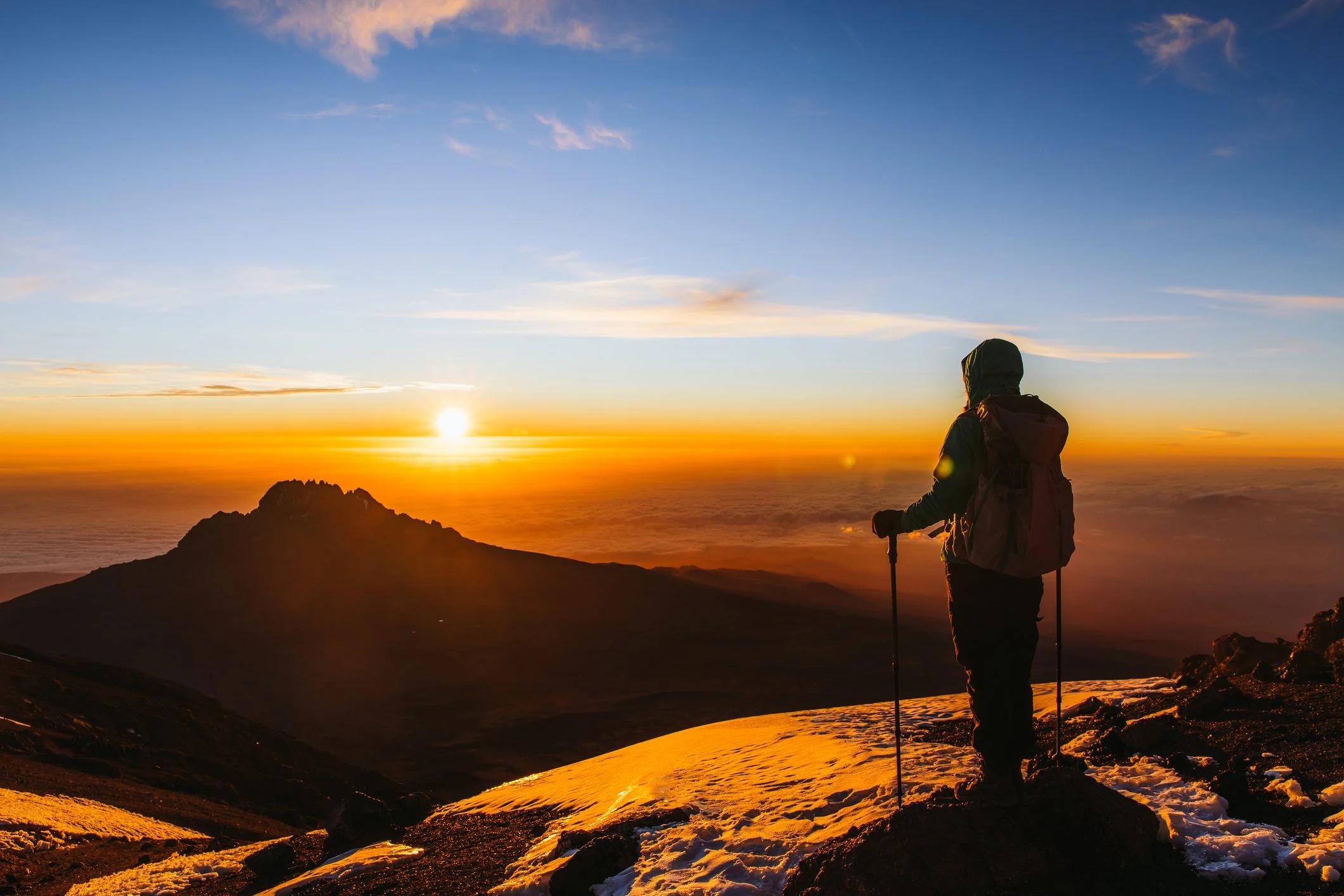
Mount Meru is climbed by approximately 15,000 trekkers annually — a fraction of Kilimanjaro's 50,000. This relative obscurity is one of the mountain's greatest assets: the trails are uncrowded, the huts are well-managed, the scenery is extraordinary, and the satisfaction of reaching a 4,566-metre summit with Africa's highest peak visible across the plain is an experience that repeat Kilimanjaro climbers consistently describe as among the finest mountain days of their lives.
Why Climb Mount Meru?
- Kilimanjaro acclimatisation: Meru is the single finest acclimatisation objective before a Kilimanjaro climb. The 4,566 m summit provides meaningful high-altitude exposure at exactly the right altitude to stimulate acclimatisation without the extreme demands of Kibo. Most climbers who do Meru before Kilimanjaro report significantly easier Kilimanjaro climbs and higher summit success rates.
- Wildlife on the trail: Unlike Kilimanjaro, where wildlife is limited to the lower forest zone, Meru's lower slopes have significant populations of buffalo and elephant. All trekking groups are escorted by an armed ranger from the gate — wildlife encounters on the lower trail sections are common and add a dimension of genuine wild-Africa adventure unavailable on Kilimanjaro.
- Less crowded: With 15,000 trekkers versus Kilimanjaro's 50,000, Meru feels genuinely uncrowded even in peak season. Huts are not overwhelmed. The summit approach does not have the convoy-of-headlamps feel that Kilimanjaro's summit night can produce at peak times.
- The crater view: Meru's summit is on the rim of the park's most dramatic geological feature — the inner crater left by the ancient eruption. The view into this crater, combined with the view of Kilimanjaro across the plain, is one of the finest summit panoramas in East Africa.
- Achievability: Meru is accessible to fit trekkers without high-altitude experience. Its 3 to 4 day format is manageable for most adults with basic hiking fitness.
🏔️ Meru vs Kilimanjaro: Meru is steeper, shorter, and wilder than Kilimanjaro. It demands more technical scrambling near the summit (steel rope assists in sections) and has significantly more wildlife on the lower trails. Kilimanjaro is higher, longer, and more famous. Doing Meru before Kilimanjaro is the single most valuable preparation a Kilimanjaro climber can make.
The Meru Route — Day by Day
Mount Meru has one primary climbing route — the Momella Route — approached through the Momella Gate within Arusha National Park. The route ascends through forest, montane moorland, and the high crater rim before the final summit push:
- Day 1 — Momella Gate (1,500 m) to Miriakamba Hut (2,514 m): The initial ascent through montane forest. This section is shared with wildlife — buffalo and elephant are frequently encountered. Armed ranger escort is mandatory. The forest is extraordinary — colobus monkeys, birdlife, and dense vegetation create an atmosphere entirely different from the arid upper mountain. 3–4 hours, 1,014 m elevation gain.
- Day 2 — Miriakamba Hut (2,514 m) to Saddle Hut (3,566 m): The forest gives way to heathland and moorland. The vegetation changes dramatically — giant heather, lobelia, and the first views of the crater wall. Saddle Hut sits in the saddle between the main Meru massif and Little Meru (3,820 m). An acclimatisation walk to Little Meru summit is strongly recommended on the afternoon of Day 2. 3–4 hours main ascent.
- Day 3 — Summit Night, Saddle Hut (3,566 m) to Socialism Peak (4,566 m): Departure at 2:00 AM to 3:00 AM for a dawn summit. The summit night on Meru is shorter and less extreme than Kilimanjaro's but shares its essential character: cold, dark, volcanic scree and rock, with the crater wall looming above. From Socialism Peak, Kilimanjaro's snows are visible to the south-east as dawn breaks — one of East Africa's finest mountain views. Descent to Miriakamba Hut same day. 5–7 hours to summit; 4–6 hours descent.
- Day 4 — Miriakamba Hut (2,514 m) to Momella Gate (1,500 m): Final descent through the forest. Buffalo and elephant encounters again possible. Arrive gate mid-morning. Transfer to Arusha or Moshi. 2–3 hours.
🏔️ Meru Acclimatisation Tip: The afternoon walk to Little Meru (3,820 m) on Day 2 is one of the most valuable acclimatisation activities available on any Tanzania mountain. It takes 1–2 hours from Saddle Hut, provides meaningful altitude exposure at 3,820 m, and the view of the main Meru crater and Kilimanjaro is extraordinary. Never skip this walk if you are using Meru to acclimatise for Kilimanjaro.
Meru Trekking Costs
- Park entry fee: $45 per person per day (4-day climb = $180 in park fees)
- Rescue fee: $20 per climber
- Armed ranger fee: $23.80 per day (mandatory for all trekking groups — paid at gate)
- Hut fees: Approximately $35–$50 per person per night at Miriakamba and Saddle Hut
- Guide and crew: Adventures Seeker provides guide, cook, and porters — included in total package price
- Total Meru climb cost (Adventures Seeker package, 4 days): Approximately $800–$1,200 per person all-inclusive excluding tips
- Tipping: $10–$15 per person per day for guide; $8–$10 per person per day for porter — cash USD at gate
WALKING SAFARIS IN ARUSHA NATIONAL PARK: AFRICA ON FOOT
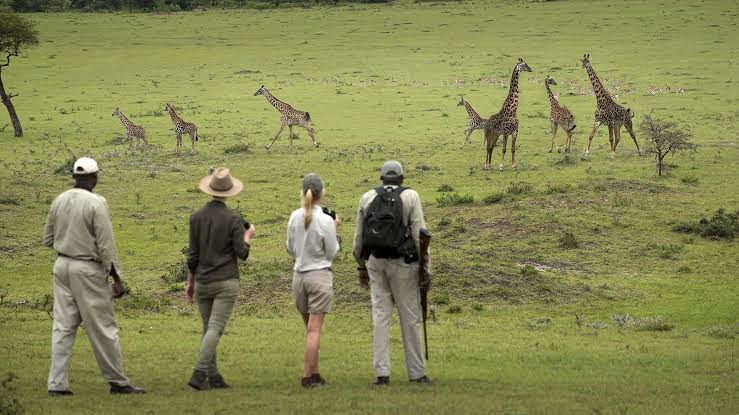
Arusha National Park is the only park on the Northern Circuit where you can leave your vehicle and walk freely with a ranger through the African bush. This single fact distinguishes it from every other northern Tanzania park and makes it an essential stop for any visitor who wants to engage with the African wilderness at a deeper level than the vehicle-based game drive allows.
What a Walking Safari in Arusha Involves
Walking safaris depart from the Momella Gate or from designated points within the park, accompanied by a mandatory armed ranger. The ranger is not ceremonial — buffalo and elephant are present on the park's trails and genuine wildlife management skill is required. The ranger leads the group (maximum 6 walkers per ranger), reading tracks, interpreting signs, and managing approach distances.
A standard walking safari covers 3 to 8 kilometres over 2 to 4 hours, depending on wildlife activity and the pace of the group. The route typically moves through a combination of forest edge, open grassland, and lake shore — maximising the chance of encountering the park's key species (giraffe, colobus, buffalo, zebra, warthog) at close range.
What the Walking Safari Reveals
The most transformative aspect of walking in Arusha is not which animals you see but how you see them. On a vehicle-based game drive, you observe wildlife through a window. On a walking safari, you share the same ground. This creates several experiences unavailable from a vehicle:
- Tracking: Your ranger reads elephant footprints in the dust, identifies which direction the herd moved and approximately when. A fresh track — still damp at the edges — tells the ranger the buffalo passed within the last 30 minutes. This interpretive layer is invisible from a vehicle.
- Smell: The African bush has a complex, layered scent environment. The musky odour of nearby waterbuck. The acid sharpness of fresh buffalo dung. The sweetness of the small acacia blossoms. The dust and the grass. Walking activates senses that vehicle-based game drives suppress entirely.
- Sound: The specific call of an alarm-calling impala indicates a predator nearby. The deep whooping of a distant colobus troops carries through the forest. The snapping of a branch 200 metres ahead signals buffalo moving. These audio cues are the primary wildlife intelligence tool of an experienced walking guide — and they are fully accessible only when you are out of the vehicle.
- Scale: Standing in the same grassland as a giraffe at 50 metres, at ground level, without the elevation advantage of a vehicle seat — the animal's genuine scale becomes apparent in a way that vehicle-based observation always slightly distorts.
- Silence: The engine is off. The radio is silent. There is no mechanical noise. Just your boots on the soil and the sound of Africa.
👣 Walking Safari Tip: Request a morning walking safari beginning at 6:30 AM — the first two hours after dawn are the most wildlife-active period and produce the best photography light in the forest. Afternoon walking safaris (3:00–5:30 PM) are also excellent. Midday walking is less productive and significantly hotter.
Walking Safari Logistics
- Minimum group size: 1 walker (solo walking safaris are available — your ranger is dedicated to you)
- Maximum group size: 6 walkers per armed ranger — larger groups can split with additional rangers
- Duration options: 2-hour short walk / 4-hour half-day walk / full-day walk with packed lunch
- Fitness requirement: Moderate — the terrain is not technical but the pace is sustained walking over uneven ground
- What to wear: Neutral-coloured clothing (khaki, beige, olive). Closed-toe shoes or hiking boots. Avoid bright colours and white. Hat and sunscreen essential.
- Fee: USD $23.80 per person per walk (armed ranger fee — paid at park gate in addition to standard entry fee)
- Booking: Arrange through Adventures Seeker — we pre-book ranger availability to avoid disappointment, particularly during busy periods
CANOEING ON THE MOMELLA LAKES: A UNIQUE NORTHERN CIRCUIT EXPERIENCE
Canoeing on the Momella Lakes is one of Tanzania's most unusual and most rewarding safari activities — and one that very few Northern Circuit visitors know about, let alone experience. It is available only at Arusha National Park, and it provides a perspective on wildlife and landscape available nowhere else in northern Tanzania.
The Canoeing Experience
Flat-bottomed fibreglass canoes, paddled by guests with ranger guidance, move silently across the alkaline surface of the Momella Lakes. The silence is the defining quality — no engine, no mechanical noise, just paddles dipping and the calls of waterbirds. From this low position on the water, the scale of the landscape changes entirely: Mount Meru appears enormous against the sky, the flamingos are at eye level, and the hippos surfacing nearby produce an encounter of extraordinary immediacy.
- Hippo encounters: The Momella Lakes have a significant resident hippo population. Canoeing within 20 to 30 metres of surfacing hippos — managed carefully by the ranger to maintain a safe distance from their territorial boundaries — is the most heart-rate-elevating wildlife encounter Arusha National Park offers.
- Flamingo viewing: The shallow lake edges where flamingos feed are approached silently in a canoe, allowing photography at distances impossible from the road. The perspective of looking across a plane of pink flamingos at water level is unavailable from any other vantage point.
- Photography: The still water of the early-morning lake produces perfect reflections of Meru, Kilimanjaro, and the flamingos. Dawn canoe photography sessions in Arusha National Park are among the finest photography experiences available in any northern Tanzania park.
- Duration: 1 to 2 hours typical canoe session
- Fee: Included in standard park entry — canoes and ranger available at the Momella Lake area (ask at gate or pre-arrange through Adventures Seeker)
- Best time: Dawn (6:00–8:00 AM) for the best reflections and wildlife activity. Wind picks up by mid-morning on the lakes — early sessions are calmer and safer.
🛶 Canoeing Tip: Book your canoeing session for the first activity of the day — at dawn, the lake is mirror-calm, the reflections of Meru are perfect, the flamingos are actively feeding, and the hippos are returning from overnight land grazing. By 9:00 AM, wind has typically begun disrupting the lake surface. Dawn canoeing at Momella is one of the finest photography experiences in northern Tanzania.
ARUSHA NATIONAL PARK BIRDLIFE: 400+ SPECIES IN TANZANIA'S SMALLEST MAJOR PARK
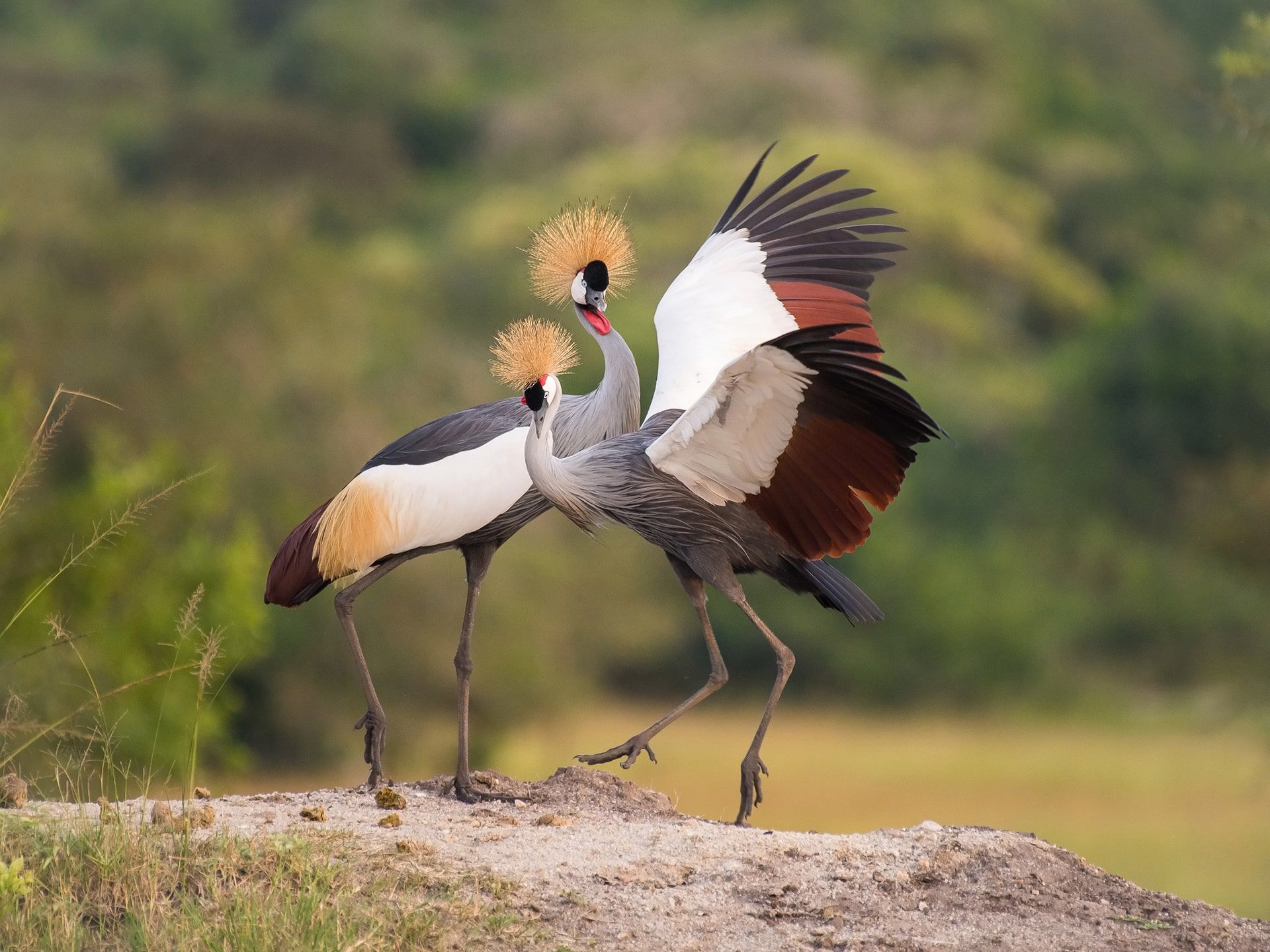
With over 400 bird species recorded in 552 square kilometres, Arusha National Park delivers a higher bird species density than any other park in the Northern Circuit. The combination of montane forest, open grassland, alkaline lakes, and volcanic moorland creates an exceptional diversity of habitats that support species from multiple ecological communities in a compact area.
Key Bird Species and Habitats
- Flamingo (lesser and greater): Momella Lakes — year-round residents with peak concentrations November to April. Both species present — lesser flamingos smaller and more numerous, greater flamingos larger and paler with bent pink bills.
- African fish eagle (Haliaeetus vocifer): The Momella Lakes — Africa's most iconic raptor call, heard constantly from the lake shores. Regularly seen stooping to the surface for fish.
- Grey crowned crane (Balearica regulorum): Open grasslands and lake margins — dancing pairs are a regular sight in the Momella area. Tanzania's most elegant bird.
- Augur buzzard (Buteo augur): Soaring over the open grasslands and moorland on thermal updrafts from the mountain slopes. Large, black-and-white buteo — unmistakable.
- Verreaux's eagle (Aquila verreauxii): The volcanic rock formations and cliff faces of the park's higher areas — Africa's most elegant large eagle, specialising in rock hyrax.
- Silvery-cheeked hornbill: The montane forest canopy — large, noisy, and unmistakable with its enormous casque bill. Often heard before seen.
- Tropical boubou: Dense forest understory — a duetting pair's melodious call-and-response is one of the most beautiful sounds in the forest.
- African paradise flycatcher: Forest edges and riverside trees — the male's long orange tail streamers are extraordinary in the dappled forest light.
- Hartlaub's turaco: The montane forest — brilliant red-and-green plumage with crimson wing flashes visible in flight. More often heard than seen.
- Malachite sunbird: Open moorland and heathland — the long-tailed male's metallic green plumage catching the sunlight is a moorland highlight.
- Rufous-naped lark: Open grassland — singing from termite mounds or fence posts. One of Africa's finest songsters.
- White stork (migratory): November to April — large flocks of European white storks are a dramatic winter visitor to the open grasslands.
- Saddle-billed stork: Lake shores and open grasslands — Africa's tallest stork. Unmistakable red-yellow-and-black bill.
- African snipe: Wet grassland areas near the lake edges — difficult to spot but reliably present in suitable habitat.
- Kori bustard: Open grassland — the world's heaviest flying bird strides the Momella grasslands in the dry season.
- Over 400 species total: Including migratory species (November to April when European and Asian migrants dramatically increase species counts), resident forest species, and the full complement of Rift Valley waterbird community.
🦅 Birding Tip: Request a birding guide with specific Arusha National Park forest knowledge from Adventures Seeker. The park's montane forest species — including Hartlaub's turaco, the silvery-cheeked hornbill, African paradise flycatcher, and the resident sunbird community — require specialist knowledge to locate efficiently. A dedicated birding day in Arusha produces species lists that rival much larger parks.
BEST TIME TO VISIT ARUSHA NATIONAL PARK
Arusha National Park is one of the most seasonally forgiving parks in Tanzania — its diverse habitats mean that something extraordinary is happening in every month of the year. However, certain months deliver specific highlights that make them the optimal choice for particular activities.
Year-Round Accessibility and Appeal
Unlike the Serengeti or Tarangire, whose dry-season wildlife concentration is a defining feature, Arusha National Park's wildlife is distributed relatively evenly year-round. The park's permanent water sources — the Momella Lakes, the forest springs, and the mountain streams — mean that wildlife does not need to concentrate in the same way as in drier parks. You can visit in any month and encounter the park's key species.
Dry Season — June to October (Best Overall)
- Wildlife viewing: Excellent. Vegetation thins slightly, making mammal spotting easier. Grassland wildlife (giraffe, zebra, warthog, buffalo) is most visible in the open areas around the Momella Lakes.
- Mount Meru climbing: Best conditions — dry trails, clearest summit views, most reliable weather. July to September in particular produces the clearest Kilimanjaro views from the summit.
- Photography: The dry season combination of clear skies, low humidity, and the simultaneous visibility of both Kilimanjaro and Meru makes this the finest photography season.
- Canoeing: Excellent — calm morning conditions on the lakes. Water levels optimal.
- Walking safaris: Best conditions — firm, dry trails, comfortable temperatures, wildlife most active in cool mornings.
- Flamingos: Present but not at peak numbers — peak is November to April.
- Crowds: Low — Arusha National Park is rarely crowded even at peak season by Northern Circuit standards.
- Price: Standard park pricing — entry fee is $45/person/day year-round.
Green Season — November to May (Best for Birds and Flamingos)
- Flamingos: November to April is the peak flamingo season — concentrations at the Momella Lakes can reach tens of thousands of birds. The green landscape and alkaline lake chemistry are at their most productive for the blue-green algae that flamingos feed on.
- Birding: Outstanding November to April — European and Asian migratory species arrive dramatically increasing species diversity. The forest bird community is at its most vocal during the breeding season.
- Landscape photography: The green season transforms the park — lush, vivid, with dramatic cloud formations over Mount Meru.
- Mount Meru climbing: Possible but more challenging — trails are muddier, summit views less reliable. Not recommended in April and May (peak rains).
- Walking safaris: Good in November, December, and March. Avoid April and May when trails can be very wet.
- Colobus monkeys: Present and active year-round — green season produces lush forest backgrounds for photography.
The Two Finest Months
February — The finest single month in Arusha National Park. The short dry period of January and February produces clear skies, excellent Kilimanjaro and Meru views, active wildlife, flamingo numbers building toward peak, and the lush green landscape left from the November–December rains. Simultaneously, this is the calving season in the nearby Serengeti — making February the finest month for a combined Arusha day visit and Serengeti calving season itinerary.
September — The finest dry-season month. Wildlife at its most visible, Kilimanjaro views clearest, Mount Meru trail conditions optimal, and visitor numbers at their seasonal low after the August peak in the larger parks. September in Arusha National Park produces the clearest two-mountain panoramas of any month.
WHAT TO DO IN ARUSHA NATIONAL PARK: COMPLETE ACTIVITY GUIDE
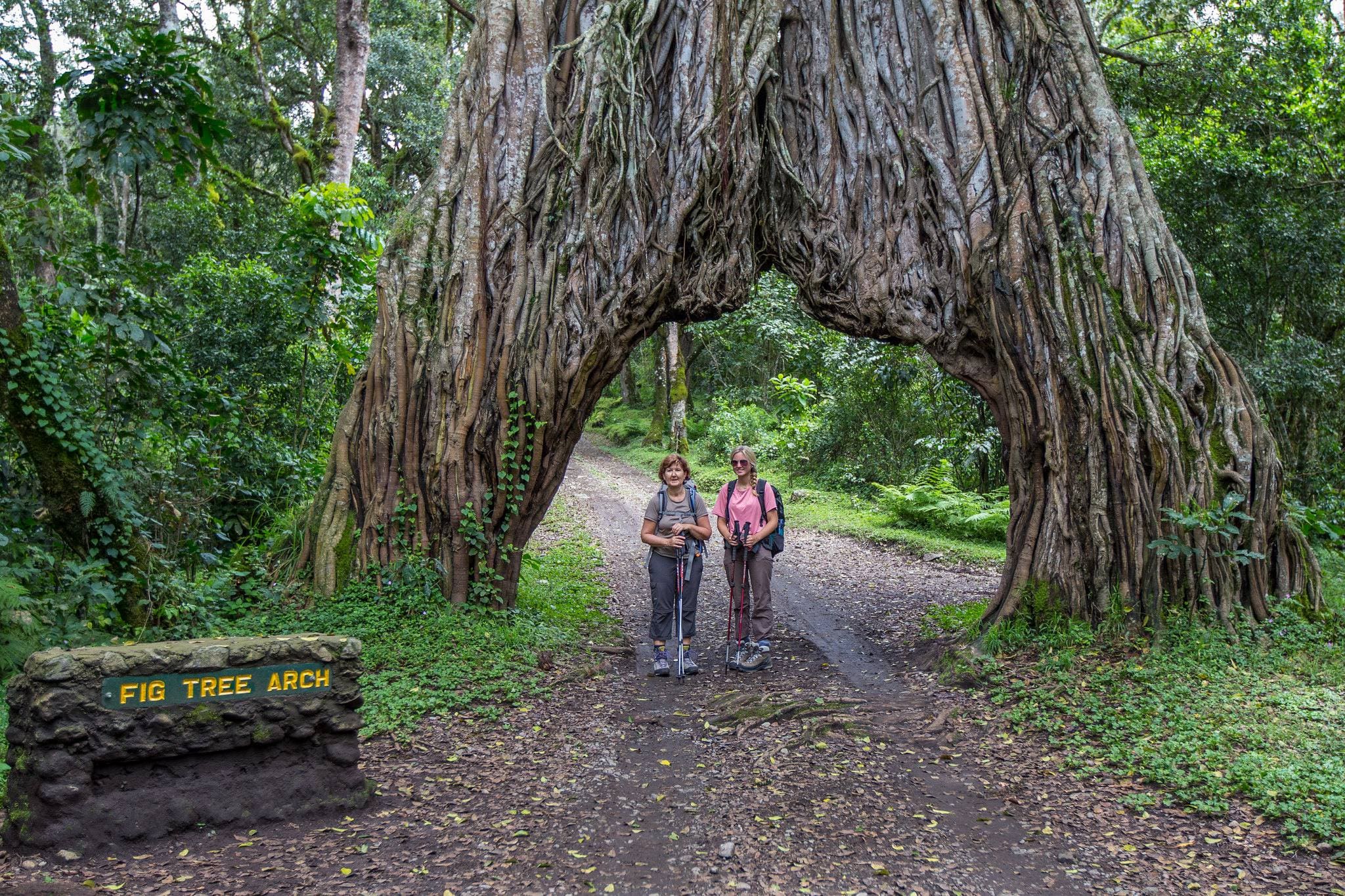
Arusha National Park offers a broader range of activities than any other Northern Circuit park — the combination of walking safaris, canoeing, game driving, mountain trekking, and cultural visits in a compact area makes it the most activity-diverse park in Tanzania's north.
1. Game Drives
Standard 4WD game drives cover the Ngurdoto Crater rim road, the Momella Lakes circuit, and the open grassland areas. The main circuit can be completed in 3 to 4 hours and covers all the park's primary habitats. A full-day game drive adds the forest road to the Ngurdoto Museum and the viewpoints with the best Kilimanjaro and Meru panoramas.
- Best route: Momella Gate → Ngurdoto Crater rim (crater viewpoints) → Ngurdoto Museum → Momella Lakes circuit → Kusare Lake → return Momella Gate
- Duration: 3–4 hours (half day) or 5–7 hours (full day with lunch)
- Private vehicle advantage: Arusha National Park's narrow forest roads and limited parking at viewpoints make a private vehicle significantly more practical than a shared vehicle — you can position at viewpoints as long as needed
2. Walking Safaris
Described in detail in Section 6 above — the park's defining activity and the primary reason to visit. Available in 2-hour, half-day, and full-day formats with an armed ranger. The most intimate wildlife encounter available on the Northern Circuit.
3. Canoeing on the Momella Lakes
Described in detail in Section 7 — the most unique activity in any Northern Circuit park. Dawn canoeing with hippos, flamingos, and the twin-mountain panorama is an experience that visitors consistently describe as the highlight of their entire Tanzania trip.
4. Mount Meru Trekking
A 3 to 4 day mountain trek described in detail in Section 5. Africa's fifth-highest peak, accessible without technical climbing experience, with wildlife on the lower slopes and extraordinary summit views. The finest Kilimanjaro acclimatisation objective in East Africa.
5. Ngurdoto Museum Visit
The Ngurdoto Museum, located inside the park on the Ngurdoto Crater road, provides an excellent introduction to the park's geology, ecology, and wildlife. The exhibits cover the volcanic history of both Ngurdoto and Meru, the five climate zones, and the key plant and animal species. A 45-minute museum visit adds significant context to the subsequent game drive experience.
- Entry: Included in standard park entry fee
- Duration: 30–60 minutes
- Best for: First-time visitors, families with children, anyone wanting geological and ecological background
6. Ngurdoto Crater Rim Viewpoints
The crater rim road circles the full perimeter of the Ngurdoto Crater, with designated viewpoints at Leitong Point, the Fig Tree Arch, and several informal stops. Each offers a different perspective on the caldera floor. The combination of the sealed caldera, the wildlife visible below, and the volcanic geology is one of the park's most dramatic experiences. Dawn drives to the rim, when mist fills the caldera and clears progressively with the morning sun, produce some of the park's finest photography.
7. Kilimanjaro and Meru Panorama Points
Specific viewpoints within the park — particularly the open ground near Little Momella Lake and the elevated points on the Ngurdoto road — provide the simultaneous two-mountain views that make Arusha National Park photographically unique. Dawn visits to these points in clear conditions (best June to October, also January to February) produce some of the most spectacular landscape photography available in Tanzania.
8. Night Drive at Momella Lodge
Night drives are not permitted within Arusha National Park proper. However, the Momella area just outside the park boundary has nocturnal activity that can be observed from the Momella Lodge property — serval cats, large-spotted genets, and African civets are frequently seen from the lodge's lit areas after dark. Ask the lodge team about their current nocturnal wildlife sightings.
9. Arusha Cultural Tour (Combined Visit)
Arusha town and its surrounding area has significant cultural dimensions that complement an Arusha National Park visit:
- Cultural Heritage Centre, Arusha: Tanzania's finest collection of traditional arts, crafts, and cultural artefacts — Tingatinga paintings, Makonde sculpture, Maasai beadwork, and Chagga metalwork. One of the best curated cultural shopping experiences in East Africa.
- Arusha town market: The central market and its surroundings offer an authentic glimpse of daily life in Tanzania's safari capital. Produce, spice, and fabric markets surround the central area.
- Maasai cultural visit (arranged): The Maasai communities around the Arusha area offer genuinely authentic cultural visits when arranged through responsible operators with direct community benefit.
ARUSHA NATIONAL PARK ACCOMMODATION: LODGE AND CAMP OPTIONS
Arusha National Park's proximity to Arusha city means that most visitors stay in Arusha town accommodation and day-visit the park. However, staying within or immediately adjacent to the park allows dawn activities — canoeing, walking safaris, and crater rim photography — that are impossible for day-visitors who must first drive 35 kilometres from town.
Inside and Adjacent to the Park
- Momella Wildlife Lodge: The only lodge within Arusha National Park's boundary — a classic, somewhat dated property with direct access to the Momella Lakes and excellent wildlife from the lodge grounds (giraffes and zebra regularly on the lawns). The best base for dawn canoeing and early gate access. Comfort tier. Approximately $120–$200 per person per night.
- Hatari Lodge: The finest property adjacent to the park — a beautifully designed boutique lodge on the park boundary with extraordinary Meru and Kilimanjaro views from every room. Built on the farm of Hardy Kruger, the German actor-filmmaker who lived here in the 1960s. The lodge has original safari character that most modern properties lack. Premium tier. Approximately $400–$700 per person per night.
- Ngare Sero Mountain Lodge: A historic colonial-era property on the lower slopes of Meru, surrounded by a private forest with its own bird-rich gardens. Boutique, characterful, and peaceful. Approximately $250–$450 per person per night.
- African View Lodge: A comfortable mid-range property just outside the park with reasonable Meru views and genuine convenience for morning gate access. Good food, reliable service. Approximately $150–$280 per person per night.
Arusha Town — For Day Visits
- Arusha Coffee Lodge (Luxury): Extraordinary boutique lodge on a working coffee estate — one of Tanzania's most atmospheric pre/post-safari hotels. Excellent food, beautiful grounds, and 35 minutes from Momella Gate. $400–$800 per person per night.
- Rivertrees Country Inn (Premium): Elegant riverside property outside Arusha — gardens, river swimming, excellent food. 40 minutes from the park gate. $250–$400 per person per night.
- Elewana Arusha Coffee Lodge: Outstanding pre/post-safari base. Walking distance from Arusha town. Coffee estate setting. $350–$650 per person per night.
- Mount Meru Hotel (Comfort): Reliable city-centre hotel. Walking distance from Arusha facilities. Well-run, consistent. $120–$220 per person per night.
- Ilboru Safari Lodge (Comfort): Pleasant garden property, 15 minutes from town. Popular with safari groups. Good food, friendly staff. $100–$180 per person per night.
Accommodation for Mount Meru Climbers
- Miriakamba Hut (2,514 m): The first mountain hut on the Meru route. Basic dormitory-style accommodation with ablution facilities. Managed by TANAPA. Sleeps approximately 48 climbers. Booking through your operator is essential.
- Saddle Hut (3,566 m): The high camp on Meru — simple dormitory huts at the saddle between Meru and Little Meru. Cold, windy, but well-positioned for summit night. Sleeps approximately 24 climbers.
Adventures Seeker: We work directly with Momella Wildlife Lodge, Hatari Lodge, and all major Arusha town properties. For Mount Meru climbers, we pre-book hut space at both Miriakamba and Saddle Hut. For Northern Circuit day-visitors, we recommend either a night at Hatari Lodge (for dawn park access) or a morning transfer from Arusha town to catch the park at opening.
ARUSHA NATIONAL PARK COSTS 2026: COMPLETE GUIDE
Standard Park Entry Fees
- Adult non-resident: USD $45.00 per person per day — the lowest entry fee of any Northern Circuit park
- Child (5–15 years) non-resident: USD $22.50 per person per day
- Child under 5 years: Free
- Vehicle entry fee: USD $40.00 per vehicle per entry
- Walking safari (armed ranger): USD $23.80 per person per walk
- Canoeing: Included in standard park entry — canoe and ranger time additional arrangements
- Mount Meru entry: USD $45.00 per person per day (same rate as standard entry)
- Mount Meru rescue fee: USD $20.00 per climber
- Mount Meru hut fees: Approximately $35–$50 per person per night at each hut
Full Day Visit Cost (Per Person, Couple in Private Vehicle)
- Park entry (1 day × $45): USD $45.00
- Vehicle entry (per vehicle / 2 passengers): USD $20.00 per person
- Walking safari (2-hour, armed ranger): USD $23.80 per person
- Canoeing (1 hour): Included in entry
- Safari vehicle and guide (private, 1 day): USD $150–$250 per person
- Accommodation (1 night, Hatari Lodge premium): USD $400–$700 per person
- Accommodation (1 night, Momella Lodge comfort): USD $120–$200 per person
- Meals (typically included at Arusha-area lodges): Included at most properties
- Tips (guide + lodge staff, 1 day): USD $25–$40 per person
- TOTAL ESTIMATE (full day, private vehicle, comfort tier): USD $385–$580 per person
- TOTAL ESTIMATE (full day, private vehicle, premium tier): USD $640–$1,030 per person
Arusha NP vs Other Northern Circuit Parks — Cost Comparison
- Arusha National Park entry: $45/person/day — lowest on the Northern Circuit
- Tarangire NP entry: $70/person/day
- Lake Manyara NP entry: $70/person/day
- Ngorongoro CA entry: $70/person/day + $295/vehicle crater descent
- Serengeti NP entry: $70/person/day
Arusha National Park is the most affordable entry-fee destination on the Northern Circuit — a significant advantage for budget-conscious travellers who want a full wildlife and walking safari experience without the $70/day entry fee of the larger parks.
HOW TO GET TO ARUSHA NATIONAL PARK
By Road from Arusha City
- Distance: ~35 km / approximately 40 minutes by road
- Route: Arusha → Usa River → Ngare Nanyuki road → Momella Gate (main gate). The road is tarmac to Usa River then murram (gravel) — passable in any vehicle in dry conditions, 4WD preferred in wet season.
- Alternative gate: Ngurdoto Gate on the southern approach — used for crater rim access. Slightly further from Arusha but allows a different circuit.
From Kilimanjaro International Airport (JRO)
- Distance from JRO to Momella Gate: ~30 km / approximately 35 minutes by road
- Why this matters: JRO is actually closer to Arusha National Park's Momella Gate than to Arusha city centre. Visitors arriving at JRO on an early morning flight can be inside the park and on the Momella Lakes by 7:00–7:30 AM — a significant advantage for dawn wildlife photography.
- JRO transfers: Adventures Seeker provides all airport transfers to the park gate or to Arusha accommodation — confirm timing at booking to enable early gate arrival if dawn activities are planned.
From Moshi
- Distance from Moshi to Momella Gate: ~60 km / approximately 1 hour by road
- Route: Moshi → Usa River → Ngare Nanyuki road → Momella Gate
- Relevance: For Kilimanjaro climbers based in Moshi post-summit who want to add an Arusha National Park visit before their safari begins, the journey is straightforward and manageable
Position in the Northern Circuit
Arusha National Park sits at the eastern entry point of the Northern Circuit — the first or last park for travellers arriving at Kilimanjaro International Airport. Its natural position in any itinerary is as the opening day (arrival day activity while Tarangire and Manyara are saved for full overnight days) or as a final morning activity before airport departure. Both uses are valid and both produce extraordinary experiences.
- Standard Northern Circuit order including Arusha NP: Arrive JRO → Arusha NP (afternoon/day 1) → Tarangire (2 nights) → Lake Manyara (1 night) → Ngorongoro (2 nights) → Serengeti (2–3 nights) → fly Zanzibar or return JRO
ARUSHA NATIONAL PARK IN THE NORTHERN CIRCUIT: ITINERARY OPTIONS
Option 1: Arrival Day Activity — Half Day Arusha NP
The most common and most practical way to use Arusha National Park. Arriving at JRO on a morning international flight, clearing customs and collecting luggage, and driving directly to Momella Gate for an afternoon visit makes use of what would otherwise be a wasted afternoon before the main circuit begins.
- Arrive JRO. Clear customs and baggage. Adventures Seeker meets you in arrivals.
- Transfer to Momella Gate (35–40 minutes). Enter the park by midday.
- 3-hour afternoon game drive — Momella Lakes circuit, Ngurdoto Crater rim viewpoints, colobus monkey forest road.
- Exit park at 5:00 PM. Transfer to Arusha hotel. Overnight.
- Depart Arusha the following morning for Tarangire or wherever the main circuit begins.
Option 2: Full Day Including Walking Safari and Canoeing
The complete Arusha National Park experience — beginning at dawn with canoeing on the Momella Lakes, followed by a walking safari and a full-day game drive.
- 6:00 AM — Arrive Momella Gate at opening. Park early for dawn conditions.
- 6:15–8:00 AM — Canoeing on Momella Lakes. Hippos, flamingos, Meru and Kilimanjaro reflected in still water. Dawn photography.
- 8:30–10:30 AM — Walking safari. Approach giraffe on foot, track buffalo, observe colobus from ground level. Armed ranger.
- 10:30 AM–1:00 PM — Game drive, Ngurdoto Crater rim. Viewpoints, museum visit, crater photography.
- 1:00–2:00 PM — Picnic lunch at park picnic site (bring packed lunch from lodge).
- 2:00–4:30 PM — Momella Lakes afternoon circuit. Second canoeing session optional. Waterbirds at peak afternoon activity.
- 5:00 PM — Exit gate. Transfer to Arusha accommodation. Overnight.
Option 3: Overnight at Hatari Lodge — Best Arusha NP Experience
Staying at Hatari Lodge (or Momella Wildlife Lodge for a more affordable option) on the park boundary transforms the Arusha National Park experience — dawn access to the park is immediate, wildlife is on the lodge grounds at first light, and the two-mountain sunrise from the lodge terrace is one of Tanzania's most extraordinary dawn views.
- Afternoon Day 1 — Arrive JRO. Drive to Hatari Lodge (35 minutes). Afternoon game drive in the park. Sundowner on the lodge terrace — twin Meru and Kilimanjaro views.
- Dawn Day 2 — 6:00 AM canoe on Momella Lakes. Breakfast at lodge.
- Morning Day 2 — Walking safari (2–3 hours). Ngurdoto Crater rim drive. Museum visit.
- Early afternoon — Depart for Tarangire (1.5 hours from Hatari Lodge via Arusha). Arrive Tarangire gate by 2:00 PM for afternoon game drive.
Option 4: Kilimanjaro Climb + Arusha NP Recovery Day
After descending from Kilimanjaro, Arusha National Park makes an ideal recovery activity — the pace is gentler than the larger safari parks, the proximity to both Moshi and Arusha is convenient, and the park's canoe activity provides a restful contrast to the previous week of mountain effort.
- Post-climb Day 1 — Descent from Kilimanjaro gate. Transfer to Moshi or Arusha hotel. Rest and meal. Sleep.
- Post-climb Day 2 — Morning Arusha National Park visit. Canoeing on Momella Lakes (gentle, no physical effort required). Morning game drive. Afternoon rest.
- Post-climb Day 3 — Begin Northern Circuit safari at Tarangire or Ngorongoro.
Adventures Seeker Tip: We build Arusha National Park into every Northern Circuit itinerary as either an arrival-day or departure-day activity — it adds no extra days, uses time that would otherwise be travel, and consistently produces wildlife encounters that guests describe as highlights of their entire Tanzania trip. Do not skip it.
ARUSHA NATIONAL PARK CONSERVATION: PROTECTING TANZANIA'S DOORSTEP WILDERNESS
The Park's Unique Conservation Position
Arusha National Park occupies a conservation position without parallel in Tanzania — it is the only major national park directly adjacent to a rapidly growing city. The park's boundary is just 35 kilometres from a city of 1.5 million people and growing, and the pressure of urban development, agriculture, and human settlement on its edges is constant and increasing.
This proximity creates both vulnerability and opportunity. The vulnerability is obvious: a park bordered by agricultural land on three sides and a growing city on the fourth is under persistent encroachment pressure. The opportunity is equally significant: no other park in Tanzania is as immediately accessible to as many people, creating extraordinary potential for conservation education and community engagement.
The Ngurdoto Crater — Africa's 'Eden'
The decision to permanently close the Ngurdoto Crater floor to all visitors — taken when the park was established in 1960 — was one of the most consequential and most forward-thinking conservation decisions in Tanzania's national park history. The crater floor has been undisturbed by human activity for over 65 years. The ecosystem that has developed in isolation over that period — self-regulating, ecologically complex, and entirely unmanaged — represents one of the finest examples of what protected African wilderness looks like when left genuinely alone.
The wildlife visible from the crater rim — the buffalo herds moving across the swamp floor, the colobus monkeys in the forest canopy, the waterbuck at the crater lake edges — are not habituated to human presence in any way. They exist at natural densities and in natural patterns that vehicle-accessible wildlife areas cannot replicate. The crater's status as a sealed reserve is not a restriction on the visitor experience — it is the foundation of one of the park's most extraordinary encounters.
Mount Meru Water Tower
Mount Meru is the primary water tower for the entire Arusha region. The mountain's upper forest zone captures rainfall and releases it gradually through springs and streams that feed the Arusha plains below — providing water for Arusha city, its agricultural hinterland, and the Momella Lakes ecosystem of the national park itself. The protection of the mountain's forest cover within the national park is not simply a wildlife conservation decision — it is a water security decision for hundreds of thousands of people.
Deforestation of the mountain's lower slopes outside the park boundary — for charcoal production, agricultural expansion, and human settlement — directly threatens the quantity and timing of water release into the Arusha plains. TANAPA's management of the park's forest zone is therefore simultaneously wildlife conservation and watershed protection.
Community Conservation Around the Park
The villages surrounding Arusha National Park — particularly the communities on the southern and eastern boundaries — have historically had complex relationships with the park's wildlife, particularly buffalo and elephant that occasionally raid agricultural crops. TANAPA works with NGO partners including the Wildlife Conservation Society to develop community benefit programmes that create economic incentives for tolerance of wildlife on community land.
Adventures Seeker supports local community conservation efforts around Arusha National Park. A proportion of revenue from every Arusha National Park itinerary we operate is directed to community development projects in the buffer zone villages. We can specify which projects your booking supports on request.
ARUSHA NATIONAL PARK FAQS: 15 QUESTIONS ANSWERED
Is Arusha National Park worth visiting?
Yes — and significantly more than most Northern Circuit itineraries currently acknowledge. Arusha National Park is not a 'lesser' safari park that fills time before the real circuit begins. It is a genuinely extraordinary destination with experiences — walking safaris, canoe safaris on the Momella Lakes, colobus monkey encounters at close range, the Ngurdoto Crater, and the simultaneous Kilimanjaro-and-Meru panorama — that are unavailable in any other park in Tanzania. The question is not whether it is worth visiting but whether your itinerary allocates enough time to it.
What makes Arusha National Park unique?
Three things distinguish it from every other Northern Circuit park. First: it is the only park that permits walking safaris on the Northern Circuit — allowing foot-level wildlife encounters unavailable anywhere else in northern Tanzania. Second: the canoe safari on the Momella Lakes — the only canoeing experience available in any northern Tanzania park. Third: the simultaneous visibility of both Kilimanjaro and Meru from a single viewpoint — a perspective available nowhere else on Earth.
Can I see the Big Five at Arusha National Park?
Not reliably. Arusha National Park does not offer a Big Five safari experience. Lions and rhinos are absent. Leopards are present but extremely rarely seen. Buffalo and elephants are present. The park's appeal is not Big Five density — it is ecological diversity, walking safari opportunities, the Ngurdoto Crater, the Momella Lakes, and the Mount Meru trek. Set expectations accordingly and the park consistently exceeds them. Set expectations as a Big Five park and it will disappoint.
How long should I spend at Arusha National Park?
A half-day visit covers the Momella Lakes circuit and the Ngurdoto Crater rim viewpoints at a comfortable pace. A full day adds the walking safari, canoeing, and the museum visit — this is the recommended minimum to experience the park's full range. An overnight stay (at Hatari Lodge or Momella Lodge) allows dawn access to the park for canoeing and photography, which transforms the experience. For Mount Meru, budget 3 to 4 days.
What wildlife can I see at Arusha National Park?
The most consistently viewable species are: black-and-white colobus monkey (the park's signature species — reliably seen in the forest zone), Maasai giraffe (abundant in the grassland areas), plains zebra, Cape buffalo, common warthog, waterbuck, reedbuck, olive baboon, blue monkey, hippopotamus (in the Momella Lakes), flamingo (seasonal), and over 400 bird species including grey crowned crane, African fish eagle, Augur buzzard, and silvery-cheeked hornbill.
Is walking in Arusha National Park safe?
Yes — with an armed ranger escort, which is mandatory for all walking safaris. The park's buffalo and elephant populations make walking without a ranger unsafe. All walking safaris organised through Adventures Seeker include a trained, armed TANAPA ranger throughout. The ranger manages all wildlife approaches and retreats, and the safety record of guided walking safaris in Arusha National Park is excellent. Visitors should follow ranger instructions completely and without hesitation.
Can I see both Kilimanjaro and Mount Meru from Arusha National Park?
Yes — on clear mornings, typically before 9:00 AM when cloud begins to build on the higher peaks. The best viewpoints for the two-mountain panorama are the open grassland areas around the Momella Lakes, particularly the eastern shore of Big Momella Lake. The dry season (June–October) and January–February provide the most reliable clear-sky conditions. September and February are the finest months for this specific view.
What is canoeing on the Momella Lakes like?
Flat-bottomed fibreglass canoes, paddled by guests with ranger guidance on the still alkaline surface of the Momella Lakes. The experience is quiet, slow, and extraordinarily atmospheric — hippos surfacing nearby, flamingos feeding at eye level, the reflection of Mount Meru in the still water. It is genuinely unlike any other safari activity available in northern Tanzania. Available at dawn (recommended) for the best reflections and calmest conditions. Included in standard park entry.
How hard is climbing Mount Meru?
Moderate to challenging — harder than most people expect, but accessible to most fit adults without technical climbing experience. The route involves 3,042 metres of elevation gain over 3 to 4 days. The upper sections near the summit involve steep volcanic rock and sections requiring hand use. An armed ranger escort is mandatory due to buffalo and elephant on the lower forested slopes — a feature that adds an element of genuine wild-Africa adventure unavailable on Kilimanjaro. Fitness preparation of at least 3 months of regular hiking is recommended.
Is Arusha National Park good for families with children?
Excellent. The park's compact size, the colobus monkey encounters, the Momella Lakes canoeing (gentle and visually spectacular for children), the warthog families, giraffe at close range, and the Ngurdoto Crater viewpoints are all deeply appealing for children. The walking safari format — with a ranger as the lead figure — engages children in a way that vehicle-based game drives often do not. The lower park entry fee ($45 vs $70 at other parks) is also a family-budget advantage.
How much does a visit to Arusha National Park cost?
Park entry is $45 per person per day — the lowest entry fee of any Northern Circuit park. A full-day private visit including entry, vehicle, guide, and walking safari costs approximately $385–$580 per person at comfort tier. An overnight stay at Hatari Lodge adds $400–$700 per person per night (premium) or $120–$200 per person (Momella Lodge, comfort). The Mount Meru 4-day climb package costs approximately $800–$1,200 per person all-inclusive through Adventures Seeker.
Can I visit Arusha National Park on a day trip from Arusha?
Yes — and this is how most visitors experience the park. The 40-minute drive from Arusha city (35 minutes from Kilimanjaro Airport) makes it perfectly viable as a day trip. However, a dawn arrival at the gate (6:00 AM) requires either staying at an adjacent property or a very early departure from Arusha town. Adventures Seeker can coordinate either format — day trip with early departure from Arusha or overnight at Hatari/Momella to enable true dawn access.
What is the entry fee for Arusha National Park in 2026?
USD $45 per person per day for non-resident adults — the lowest entry fee of any major Northern Circuit park (compared to $70/day at Tarangire, Manyara, Ngorongoro, and Serengeti). The vehicle entry fee is $40 per vehicle. Walking safari ranger fee is $23.80 per person. Canoeing is included in the standard entry fee. Mount Meru climbing uses the same $45/day entry rate.
How do I combine Arusha National Park with a Kilimanjaro climb?
The most natural combination is Kilimanjaro first (7–8 days on the mountain) followed by an Arusha National Park recovery day before the Northern Circuit safari begins. After descending from Kilimanjaro, Arusha National Park's canoe safari on the Momella Lakes provides a gentle, restorative contrast to the previous week's mountain effort. Alternatively, Arusha National Park can be used as an acclimatisation warm-up before Kilimanjaro — the park's altitude of 1,500–3,000 m provides useful lower-altitude adaptation before the gate.
Why is Arusha National Park so much cheaper than other Northern Circuit parks?
The $45/day entry fee (vs $70 at other parks) reflects Tanzania's recognition of Arusha National Park's position as a more compact, day-visit-focused park rather than a multi-night safari destination. The lower fee makes it the most accessible park for budget travellers and day visitors, and it represents genuinely excellent value given the walking safari, canoeing, and wildlife experiences available. There is no compromise on wildlife quality — the fee simply reflects the park's different usage pattern.
Plan Your Arusha National Park Visit with Adventures Seeker
Arusha National Park is Tanzania's most accessible and most overlooked safari gem — and it sits at the foot of every adventuresseeker.com itinerary, 35 minutes from our Arusha office. We know the park the way only a team based next door can know it: which trees the colobus prefer this week, which lake shore section the hippos are currently using, which morning produces the clearest two-mountain view. Every detail is current and specific rather than generic.
Whether you want a half-day arrival activity, a full-day walking safari and canoe combination, an overnight stay at Hatari Lodge for dawn photography, a 4-day Mount Meru climb, or a post-Kilimanjaro recovery visit — we plan and operate every format from our Arusha base, with the same guides and the same vehicles that run the rest of your Northern Circuit safari.
Arusha National Park is where your Tanzania adventure begins. Make sure it gets the time it deserves.
Plan Your Arusha National Park Visit: Contact adventuresseeker.com and tell us your arrival date at Kilimanjaro Airport, how much time you have before your main circuit begins, whether walking safari and canoeing interest you, and whether you are considering Mount Meru as part of your trip. We respond within 24 hours with a personalised Arusha National Park plan that maximises your time and budget.
Quick Facts
Total Destinations
11
UNESCO Sites
7+
National Parks
16
Popular Destinations
Why Visit Tanzania?
- ✓World's largest wildlife migration
- ✓Home to Mount Kilimanjaro
- ✓Big Five game viewing
- ✓Pristine beaches & islands
- ✓Rich cultural heritage
You May Also Like
Plan Your Adventure
Ready to explore Tanzania's iconic destinations? Get in touch with our travel experts to plan your perfect safari.
Request a custom itinerary for your next trip to Tanzania.
Our team of travel experts is here to help you create a custom itinerary for your next trip to Tanzania. We will work with you to create a itinerary that is tailored to your needs and budget.