
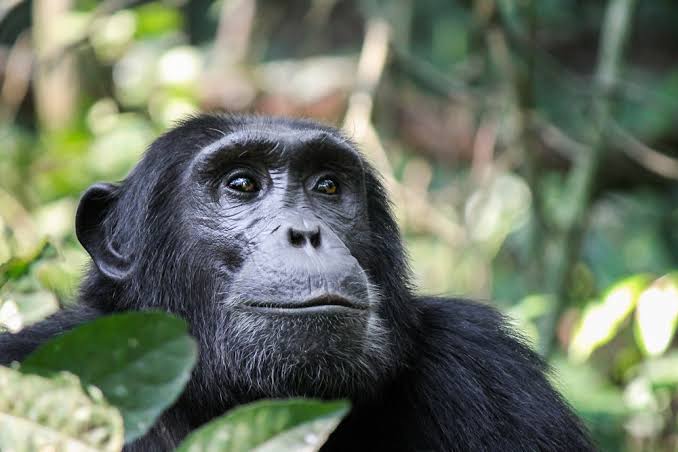
Gombe Stream National Park
In July 1960, a twenty-six-year-old Englishwoman named Jane Goodall arrived on the shores of Lake Tanganyika with a notebook, binoculars, and the intention of studying chimpanzees. She had no university degree and had been hired by the palaeontologist Louis Leakey because he believed that an untrained observer, without preconceptions about primate behaviour, might see things that scientists would miss. What she saw, in a small forest reserve on the lake's eastern shore, changed the scientific understanding of what it means to be human.
Gombe Stream National Park is one of Africa's most famous wildlife destinations — not because of its size (at just 52 square kilometres, it is Tanzania's smallest national park), not because of the density of its wildlife (the Northern Circuit parks offer more species and higher concentrations), but because of what happened here. The discoveries made in this forest — that chimpanzees make and use tools, that they hunt, that they wage war, that they have complex social and emotional lives — demolished the boundary between human and animal that Western science had maintained for centuries. Gombe is where the question 'what makes us human?' became genuinely complicated.
Today, Gombe Stream National Park offers visitors the direct continuation of that research legacy: habituated chimpanzee communities whose family trees trace back to the animals Jane Goodall first named in 1960, in the same forest, on the same lake shore, studied by a research programme that has now run for over 65 years without interruption. A chimpanzee trekking visit to Gombe is not simply a wildlife encounter. It is a walk into the most important site in the history of primate science.
This guide gives you everything you need to plan a Gombe Stream visit in 2026 — the history, the chimpanzees, the lake, the logistics, the costs, and how to combine Tanzania's most historically significant wildlife destination with Mahale Mountains, the Northern Circuit, and the full Tanzania experience.
GOMBE STREAM NATIONAL PARK: QUICK FACTS
- Size: 52 km² — Tanzania's smallest national park
- Established: 1968 (upgraded from Gombe Stream Game Reserve, which was established 1943)
- Location: Western Tanzania, Kigoma Region — on the eastern shore of Lake Tanganyika, 16 km north of Kigoma town
- Lake Tanganyika position: Northern section — far closer to Kigoma than Mahale Mountains
- Park entry fee: USD $100 per person per day (non-resident adult, 2026)
- Chimpanzee permit fee: USD $150 per person per trek (separate from park entry)
- Combined daily cost: USD $250 per person per day (entry + permit)
- Research programme: Jane Goodall Institute / Gombe Stream Research Centre — continuous study since July 1960
- Research duration: 65+ years — the longest-running wildlife study in history
- Habituated chimpanzee community: Kasekela community — approximately 60–70 individuals
- Total chimpanzee population in park: Approximately 100–120 individuals across three communities
- Annual visitors: Approximately 3,000–5,000 per year — small but higher than Mahale
- Accessibility: By water taxi or chartered boat from Kigoma town (16 km north). No road access.
- Nearest town: Kigoma — 16 km south, approximately 30–45 minutes by boat
- From Dar es Salaam: ~1.5 hours by domestic flight to Kigoma, then 30–45 min by boat
- From Arusha: ~2 hours by air (via Dar es Salaam or direct charter to Kigoma)
- Famous for: Jane Goodall's legendary research, longest-running wildlife study, chimpanzee trekking, Lake Tanganyika
- Key features: Kasekela Valley, Jane's Peak viewpoint, Kakombe Stream waterfall, Lake Tanganyika shore
- Bird species: Over 200 recorded within the park
- Best combined with: Mahale Mountains National Park, Katavi National Park, Northern Circuit
- Management: Tanzania National Parks Authority (TANAPA) in partnership with Jane Goodall Institute
JANE GOODALL AND GOMBE: THE RESEARCH THAT CHANGED EVERYTHING
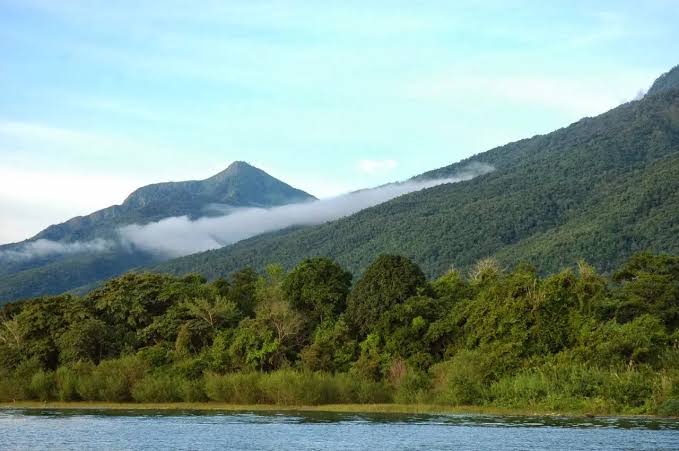
No destination guide to Gombe Stream National Park can begin anywhere other than with Jane Goodall. To visit Gombe without understanding what happened here — what was discovered in this forest, what it meant, and why it still matters — is to miss the entire point of the place. Gombe is not a wildlife park that happens to have a famous research history. It is a historical site that happens to also be a wildlife park.
The Beginning — July 1960
Jane Goodall arrived at Gombe Stream Game Reserve in July 1960 under the sponsorship of Louis Leakey, the Kenyan-based palaeontologist who was already famous for his fossil discoveries at Olduvai Gorge in Tanzania. Leakey had long believed that understanding the behaviour of our closest living relatives — the great apes — would provide crucial insights into the behaviour of our earliest human ancestors. He had specifically sought an untrained observer — someone without the assumptions and preconceptions of formal scientific training — to conduct a long-term study.
For the first months, the chimpanzees fled from Goodall at every approach. She spent weeks in the forest, day after day, moving closer by increments, sitting still for hours while the animals watched her from a distance. Slowly, cautiously, individual chimpanzees began to approach rather than flee. The breakthrough came with a male she named David Greybeard — a chimpanzee who, unlike the others, seemed genuinely curious about her presence rather than frightened by it.
🐒 The First Habituated Chimpanzee: David Greybeard was the first Gombe chimpanzee to consistently approach Jane Goodall rather than flee. He became the key through which the entire community gradually habituated to human presence — other chimpanzees observed David Greybeard's calm interactions with Goodall and, over months, reduced their own flight response. This process of habituation — which Goodall's patience and persistence made possible — is the foundation on which all great ape trekking programmes in Africa are built.
The Discoveries That Changed Science
Once the Kasekela community began to habituate, the discoveries came rapidly — and each one carried enormous scientific implications:
- November 1960 — Tool use: Goodall observed David Greybeard using a grass stem to extract termites from a termite mound — poking the stem into the mound, then pulling it out covered with termites and eating them. When she reported this to Leakey, his response became famous: 'Now we must redefine tool, redefine man, or accept chimpanzees as humans.' Prior to this discovery, the ability to make and use tools was considered a defining characteristic of humanity.
- 1960–1964 — Meat eating and hunting: Goodall documented chimpanzees actively hunting and eating meat — red colobus monkeys, bushpigs, and other mammals. Prior scientific consensus held that chimpanzees were herbivores. The discovery that our closest relatives are omnivorous hunters — that they pursue prey in coordinated groups, share meat socially, and use meat as a political tool — was deeply unsettling to prior models of human uniqueness.
- 1974–1978 — The Four-Year War: Goodall documented the first evidence of systematic lethal inter-group conflict between chimpanzee communities — a 'war' in which the Kasekela community systematically attacked and killed every member of the neighbouring Kahama community. The discovery that chimpanzees wage organised, lethal war against neighbouring groups was the most disturbing of all Gombe's findings — and the one that generated the most controversy and the most reflection about human nature.
- Emotional and social complexity: Goodall's detailed observational records — the first to assign individual names to animal subjects and track their individual life histories — documented grief, adoption of orphans, long-term friendship, political alliance, deception, and what appeared to be expressions of joy and mourning. Her insistence on describing these behaviours in emotionally resonant terms was controversial in scientific circles (where emotional language was considered anthropomorphism) but has since been validated by subsequent research.
📌 Scientific Impact: Jane Goodall's discoveries at Gombe fundamentally changed three fields simultaneously: primatology (by establishing that great apes have complex social and cultural lives), anthropology (by demonstrating the continuity between human and non-human primate behaviour), and conservation biology (by establishing the template for long-term wildlife field research). Her work is cited as among the most influential scientific contributions of the 20th century.
The Research Continues — 65 Years and Counting
The Gombe Stream Research Centre, established formally in 1965, has maintained continuous observation of the Kasekela community without interruption for over 65 years — the longest-running wildlife study in history. The research programme is now operated by the Jane Goodall Institute in partnership with TANAPA, and the data accumulated over six and a half decades constitutes an incomparable scientific record.
The chimpanzees that visitors see today at Gombe are the grandchildren and great-grandchildren of the animals Jane Goodall first named. Individual life histories spanning four generations are documented. The current alpha male's social relationships are understood within the context of his grandfather's political alliances. This continuity of knowledge — the ability to place every individual in a community whose history is known for 65 years — gives the Gombe research programme a depth of context available nowhere else in primate science.
Jane Goodall herself has not resided at Gombe since the mid-1970s, having transitioned to advocacy and conservation education. But her presence is felt in every aspect of the park — in the research programme that continues her methods, in the individual naming convention for chimpanzees that she established, and in the specific experience of walking through a forest where the relationship between humans and chimpanzees was first genuinely understood.
LAKE TANGANYIKA AT GOMBE: THE PARK'S WESTERN EDGE
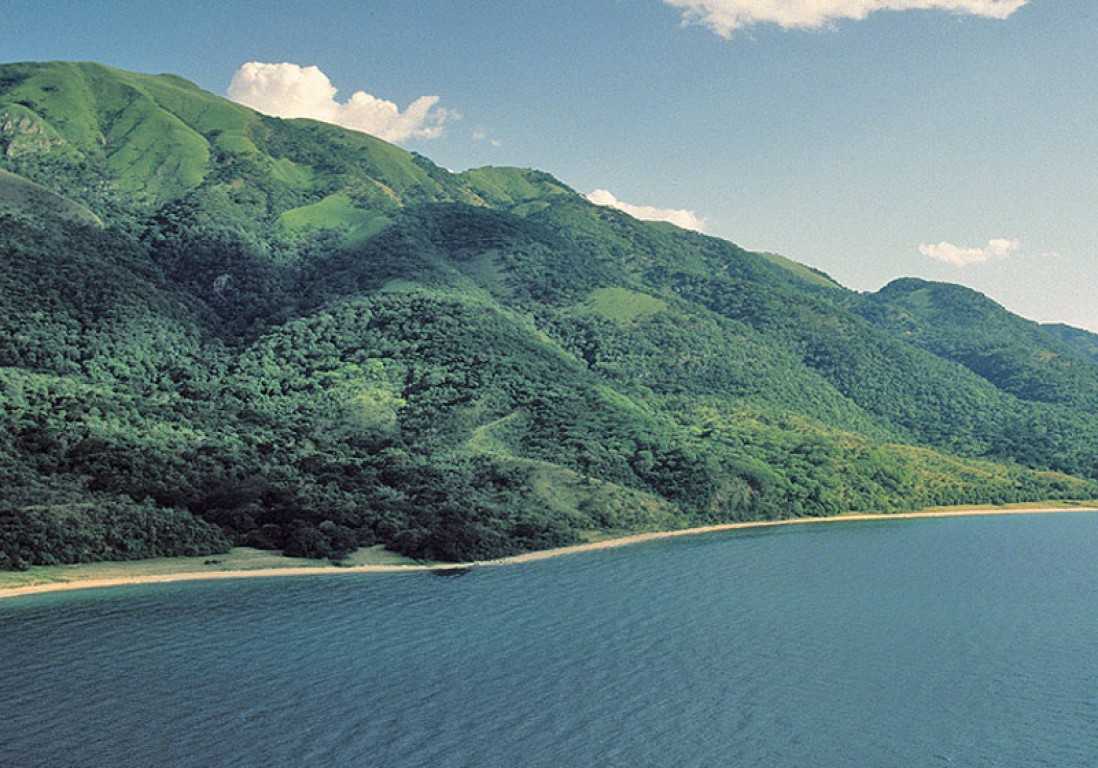
Gombe Stream National Park's western boundary is Lake Tanganyika — the same extraordinary freshwater lake that defines the Mahale Mountains experience to the south. At Gombe, the lake is not simply a backdrop: it is the arrival experience, the accommodation setting, and the afternoon recreation for most visitors.
The Lake at Gombe vs Mahale
Lake Tanganyika at Gombe has a different character from Lake Tanganyika at Mahale. Gombe is 16 kilometres from Kigoma town — a significant population centre — and the lake shore at and near Gombe sees some fishing boat traffic and the presence of local communities that the more remote Mahale does not. The beach at Gombe is narrower and the forest begins more immediately at the water's edge, giving the park a more intimate, enclosed quality compared to Mahale's open white-sand beaches.
What the lake at Gombe provides that Mahale also provides — and that no other destination in the region can match — is the extraordinary quality of freshwater swimming in water so clear and so warm (26–28°C year-round) that it recalls a tropical ocean without the salt, the currents, or the distance from the forest. Swimming in Lake Tanganyika after a morning chimpanzee trek is one of the finest physical experiences available in western Tanzania.
- Water temperature: 26–28°C year-round — comfortable swimming in all seasons
- Water clarity: Excellent in the dry season (June–October), reduced by sedimentation in the wet season
- Swimming safety: Designated swimming areas near the lodge and research centre are verified crocodile-free. Hippos are present in sections of the lake away from the main visitor areas — your guide will brief you on current hippo locations.
- Snorkelling: The rocky areas adjacent to the beach hold endemic cichlid fish — the same extraordinary freshwater biodiversity found at Mahale. Snorkelling equipment is available at most lodges.
🌊 Lake Tanganyika Facts at Gombe: The section of Lake Tanganyika adjacent to Gombe Stream National Park is shallow enough for wading in the immediate beach area but drops rapidly to significant depth offshore. The lake's northern section — where Gombe is located — is slightly less biologically diverse in cichlid species than the lake's central section near Mahale, but still holds dozens of endemic fish species found nowhere else on Earth.
THE CHIMPANZEES OF GOMBE: THREE COMMUNITIES, ONE HISTORY
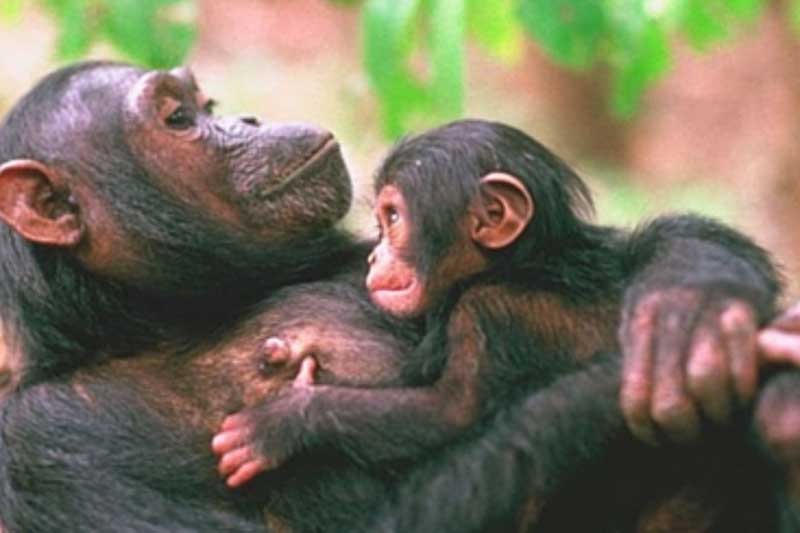
Gombe Stream National Park is home to approximately 100 to 120 chimpanzees divided into three distinct communities — the Kasekela, Mitumba, and Kalande. Of these, only the Kasekela community is fully habituated and available for tourist trekking. The other two communities are habituated to researchers but not to general visitor groups.
The Kasekela Community — The Heart of Gombe
The Kasekela community is the community that Jane Goodall began studying in 1960 — the community of David Greybeard, Flo, Figan, Freud, and the generations of named individuals whose life histories are the scientific foundation of everything we know about long-term chimpanzee social dynamics. Today's Kasekela community of approximately 60 to 70 individuals includes individuals whose grandparents were named and studied by Goodall herself.
The Kasekela community occupies the central section of Gombe National Park, including the Kasekela Valley — the specific valley where most of the park's most famous observations were made. The community's home range includes the lakeshore, the valley forests, and the higher ridge forests that rise steeply from the shore.
- Community size: Approximately 60–70 individuals — smaller than Mahale's M-Group
- Habituation status: Fully habituated — the most extensively habituated chimpanzee community in Africa, having been in continuous contact with researchers since 1960
- Research status: Each individual is named, known, and part of a 65-year documented lineage — the most thoroughly documented chimpanzee population in science
- Territorial range: Approximately 25 km² of the park's central and lakeside forest
Kasekela's Famous Family Lines
The Kasekela community's documented lineages include some of the most famous individual chimpanzees in science:
- The F Family (Flo's descendants): Flo — the old, low-ranking female whose extraordinary maternal success and documented grief over the death of her son Flint became the centrepiece of Goodall's 1971 book 'In the Shadow of Man' — has descendants in the current community. Her lineage represents the longest-documented primate family history in science.
- The research name convention: All Kasekela chimpanzees are named with the first letter of their mother's name — Flo's children include Fifi, Figan, Flint, Flame, and others. This naming convention, established by Goodall in the early 1960s, allows the community's matrilineal structure to be read directly from the animals' names.
- Current individuals: The current generation includes individuals whose specific family histories and social relationships are known in extraordinary detail. Your guide at Gombe will know who you are looking at — not just 'a chimpanzee' but a specific named individual with a documented history.
🐒 The Naming Convention: Jane Goodall's decision to name the chimpanzees rather than assign them numbers — standard scientific practice at the time — was initially criticised by the scientific establishment. Naming implied individuality and personality, which was considered anthropomorphic. Her defence was simple: the chimpanzees demonstrably had individual personalities, recognisable faces, and distinct behavioural styles. Denying this by using numbers was the less accurate approach. The naming convention is now standard in primate research worldwide.
Chimpanzee Behaviour at Gombe
The behaviours observable during a Gombe chimpanzee trekking session include the full range documented in Goodall's research:
- Termite fishing: The tool use behaviour that launched Goodall's fame — individual chimpanzees selecting, trimming, and using grass stems or small sticks to extract termites from mounds. The Kasekela Valley has several active termite mounds that community members visit regularly. Witnessing this behaviour — identical to what Goodall first observed in 1960 — in the same valley where it was first documented is one of the most affecting experiences at Gombe.
- Grooming: The primary social bonding behaviour — extended sessions of mutual grooming between coalition partners, between mothers and infants, between friends. Grooming sessions near the research centre where the chimpanzees are most relaxed around human presence produce extraordinarily close observation opportunities.
- Social hierarchy and politics: The Kasekela community's complex political structure — the alpha male's dominance supported by coalition partners, the constant negotiation of status through grooming, display, and alliance — is visible in every extended observation session. Your guide will identify the relevant individuals and explain the current social context.
- Feeding and foraging: The forest provides an extraordinary variety of fig and other fruiting trees that the chimpanzees exploit according to fruiting season. Watching a Kasekela individual select, process, and eat forest fruits — or in termite season, engage in extended tool-using sessions — reveals the sophisticated cognitive relationship between these animals and their environment.
- Mother-infant interaction: Females with infants are the most emotionally accessible subjects for most visitors. The nursing, the carrying, the play, and the first tentative independent movements of an infant chimpanzee — all behaviours that are immediately recognisable to any human parent — produce the visceral recognition of kinship that defines the Gombe experience.
The 8-Metre Rule and Visitor Protocol
All Gombe chimpanzee trekking operates under identical health protection protocols to Mahale — an 8-metre minimum distance, mandatory face masks, prohibition on visiting with respiratory symptoms, and no eating or drinking near the chimpanzees. Maximum group size is 6 visitors per trekking group. Maximum time with the chimpanzees is 1 hour per day.
- Respiratory protection: Masks must be worn at all times within 8 metres of any chimpanzee. The genetic similarity between humans and chimpanzees (98.7% shared DNA) makes human respiratory diseases potentially fatal to chimpanzee communities.
- No photography flash: Strictly prohibited — flash causes distress and disrupts normal behaviour
- Group discipline: The 8-metre rule requires constant management as the habituated chimpanzees sometimes approach closer of their own accord. Follow your guide's positioning instructions.
CHIMPANZEE TREKKING AT GOMBE: WHAT TO EXPECT
Gombe's chimpanzee trekking experience has a different character from Mahale's — shaped by the smaller park size, the longer research history, the closer proximity to Kigoma, and the specific landscape of the Kasekela Valley forest.
The Gombe Trekking Landscape
Gombe Stream National Park's landscape is steep, densely forested, and physically demanding. The park occupies a narrow strip of territory — between 2 and 5 kilometres wide — squeezed between Lake Tanganyika on the west and the steep ridges of the Rift Valley escarpment on the east. The terrain rises rapidly from lake level to ridge tops at over 1,500 metres, and the forest trails follow stream valleys (including the Kasekela Stream) and ridge lines that require significant climbing.
This terrain creates a trekking experience that is more physically demanding than Mahale's lower-elevation forest trails. Guests should be prepared for genuine uphill hiking — the Kasekela Valley trails climb several hundred metres through dense forest, and the ridge viewpoints require sustained effort to reach. Good physical fitness and appropriate footwear are more important at Gombe than at many other chimpanzee trekking destinations.
- Trail gradient: Steep — the valley trails gain 200 to 500 metres of elevation from the lake shore to the upper forest
- Trail condition: Well-marked by the research programme but steep, often muddy in wet season, and with significant root and rock obstacles
- Fitness requirement: Moderate to high — the most physically demanding chimpanzee trekking in Tanzania
- Duration to find chimpanzees: 30 minutes to 2 hours depending on the community's daily movement
The Research Centre and Its Role in Trekking
Gombe's longstanding research centre presence gives the trekking experience a quality unavailable at newer primate trekking destinations. The chimpanzees near the research centre are the most deeply habituated individuals in the Kasekela community — animals that have been in daily contact with researchers for their entire lives. Near the centre, chimpanzee encounters can be extraordinarily close and extraordinarily relaxed — individuals grooming each other at 3 metres from observers, infants playing within arm's reach of the trail edge, old individuals resting with complete indifference to human presence.
As you move further from the research centre into the upper forest, encounters become wilder — the animals are habituated but less accustomed to the specific research centre's human density, and their behaviour is slightly less relaxed. Both zones provide extraordinary encounters; the lower research centre area is the best choice for relaxed, close-range photography, while the upper forest is better for observing natural foraging and social behaviour in a more pristine setting.
Jane's Peak — The Most Famous Viewpoint
One of Gombe's most distinctive experiences is the climb to Jane's Peak — the ridge viewpoint where Jane Goodall herself regularly sat to survey the valley and observe chimpanzee movements from above. The climb from the lake shore takes approximately 45 minutes to 1.5 hours depending on fitness and pace. The view from the top — the forest canopy below, Lake Tanganyika gleaming to the west, the Congo hills visible on the far shore — is one of Tanzania's finest accessible viewpoints.
- Elevation of Jane's Peak: Approximately 1,000–1,200 metres above lake level
- Climb time: 45 minutes to 1.5 hours from the lake shore
- Best time: Clear morning in dry season (June–October) for the finest views
- What Goodall saw from here: The entire Kasekela Valley visible from above — allowing her to track chimpanzee movements and identify individuals at distances impossible at ground level
👣 Trekking Tip: The combination of an early morning chimpanzee trek in the Kasekela Valley followed by the climb to Jane's Peak in mid-morning makes the finest full-day Gombe experience. Start the trek at 6:30 AM (when the chimpanzees are most active), spend 1 hour with the community, return to the research centre by 9:30 AM, then begin the Jane's Peak climb. Reach the viewpoint by 11:00 AM for the clearest lake views before afternoon cloud builds.
The Kakombe Waterfall
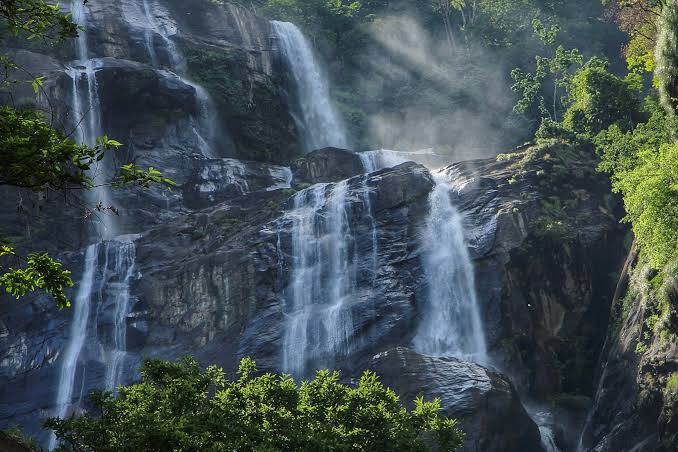
The Kakombe Stream waterfall — a 20-metre cascade in a narrow forested gorge — is one of Gombe's most beautiful and most historically significant locations. Jane Goodall documented specific chimpanzees performing elaborate 'rain dances' at this and other waterfalls — rhythmic swaying, branch-dragging displays, and bipedal movements that she described as resembling religious ritual. Whether these displays represent something analogous to awe or simply a response to the kinetic energy of flowing water remains debated, but the observation was one of the most thought-provoking in Goodall's entire research record.
- Distance from lake shore: Approximately 2 km along the Kakombe Stream trail — 45 minutes to 1 hour walk
- Current chimpanzee use: The Kasekela chimpanzees still visit the falls and may be encountered on the trail to and from the cascade
- Photography: The falls are at their most photogenic in the wet season when water volume is highest, but trail access is most challenging in heavy rain
Gombe vs Mahale — Trekking Comparison
Visitors planning to trek with chimpanzees in Tanzania frequently ask whether to visit Gombe or Mahale. The honest comparison:
- Scientific significance: Gombe wins decisively — the 65-year research record, the documented lineages, and the historical connection to Jane Goodall give it an intellectual and emotional depth that Mahale cannot match
- Chimpanzee community size: Mahale's M-Group (60–65 individuals) is similar to Kasekela (60–70) — comparable
- Lodge quality and setting: Mahale wins — Greystoke Mahale is among Africa's finest lodges. Gombe's accommodation is more limited.
- Beach quality: Mahale wins — wider, more developed lake shore with clearer beaches
- Exclusivity: Mahale wins — fewer annual visitors (1,500–2,500 vs Gombe's 3,000–5,000)
- Accessibility from Kigoma: Gombe wins — 16 km from Kigoma town vs Mahale's 120 km. Day trips are possible from Kigoma to Gombe; impossible to Mahale.
- Trekking terrain: Mahale is more accessible — Gombe's steep terrain is more physically demanding
- Historical and research depth: Gombe wins decisively — no wildlife destination in Africa has the depth of documented scientific knowledge that 65 years of continuous research has produced
- Overall for most visitors: Mahale provides the better overall experience in terms of comfort, setting, and exclusivity. Gombe provides the more historically and scientifically significant encounter. Visiting both is the ideal — a 2-night Gombe + 3-night Mahale combination is the finest western Tanzania primate itinerary available.
OTHER WILDLIFE AT GOMBE STREAM NATIONAL PARK
Gombe's small size limits the diversity of large mammal species compared to larger parks, but the forest supports a rich community of primates and smaller mammals that provide genuine wildlife interest beyond the chimpanzee trekking sessions.
Other Primates
- Olive baboon (Papio anubis): Large troops throughout the park — the baboons and chimpanzees of Gombe have a complex relationship that has been extensively documented. The two species occasionally associate and have been observed competing for food resources and, in some cases, forming what appear to be cross-species social bonds. Baboon troops near the research centre are large, bold, and highly entertaining.
- Red-tailed monkey (Cercopithecus ascanius): The primary arboreal primate of the forest canopy — identified by its vivid red tail. Present throughout the park and frequently encountered on forest trails. One of the chimpanzees' primary prey species during hunts.
- Blue monkey (Cercopithecus mitis): Present in the forest canopy — grey-blue colouration and continuous movement through the upper levels.
- Red colobus monkey (Procolobus rufomitratus): The Kasekela chimpanzees' preferred prey species during hunts. Red colobus troops are frequently encountered near the chimpanzee community — locating a colobus troop can lead directly to a hunting chimpanzee party. Their alarm calls when chimpanzees are nearby are a reliable tracking tool for experienced guides.
Forest Mammals
- Bush pig (Potamochoerus larvatus): Present in the forest — most often heard rather than seen. Roots through the forest floor around the research centre at night.
- Harvey's red duiker (Cephalophus harveyi): Small, reddish forest antelope of the undergrowth — very shy but regularly encountered on quiet morning walks.
- African civet (Civettictis civetta): Nocturnal — occasionally seen in spotlight checks around the lodge after dark.
- African palm civet (Nandinia binotata): An arboreal civet of the forest canopy — rarely seen but present in the upper forest zone.
- Mongoose species: Banded and marsh mongoose present near the lake shore and stream areas.
- Hippopotamus: Present in the lake adjacent to the park — particularly in the areas away from the lodge and beach. Your guide will brief you on current hippo positions.
Reptiles
- Nile monitor lizard (Varanus niloticus): Large individuals on the lake shore and along stream banks — Africa's largest lizard, reaching 2 metres. Frequently sunbathing on rocks near the water.
- Rock python (Python sebae): Present in the forest — not commonly encountered but seen occasionally in the lower valley areas.
- Lake Tanganyika crocodile: Nile crocodiles are present in sections of the lake — your guide will brief you on safe swimming and walking areas.
GOMBE BIRDLIFE: FOREST SPECIALISTS ON LAKE TANGANYIKA'S SHORE
Gombe Stream National Park has recorded over 200 bird species — a significant total for a park of only 52 square kilometres. The combination of lakeside habitats, forest edge, stream corridors, and dense forest interior supports a diverse and interesting bird community that rewards early morning birding sessions.
Key Bird Species at Gombe
- African fish eagle (Haliaeetus vocifer): The most frequently heard and seen raptor at Gombe — its iconic call over the lake is the constant acoustic backdrop to every visit. Pairs breed in the large trees overhanging the lake shore.
- Palm-nut vulture (Gypohierax angolensis): Common along the lake shore and forest edge — feeds on the fruit of oil palms. The most unusual raptor at Gombe — nearly vegetarian.
- White-tailed ant thrush (Neocossyphus poensis): A forest floor specialist of the dense undergrowth — the Gombe forest's equivalent of a woodland thrush. Heard more than seen.
- Black-and-white casqued hornbill (Bycanistes subcylindricus): A large, noisy forest hornbill — its cackling call fills the Gombe forest canopy throughout the day.
- Trumpeter hornbill (Bycanistes bucinator): Frequently encountered in the canopy fruiting trees — often in the same trees as chimpanzees during fig season.
- African pygmy kingfisher (Ispidina picta): The tiny forest kingfisher — vivid orange, blue, and violet — flashing through the undergrowth near the stream banks.
- Malachite kingfisher (Corythornis cristatus): Abundant along the lake shore and stream mouths — brilliant blue and orange, perching on low branches over the water.
- Pied kingfisher (Ceryle rudis): Hovering over the lake surface before plunging — the most visible kingfisher from the lodge terrace.
- Blue-breasted kingfisher (Halcyon malimbica): The most spectacular of Gombe's kingfishers — large, vivid blue and chestnut, found at forest edge near the lake.
- Yellow-billed stork (Mycteria ibis): Wades the lake shallows — spectacular in groups with wings spread to shade the water while hunting.
- African open-billed stork (Anastomus lamelligerus): Congregates at the lake shore — unmistakable by the gap between the upper and lower mandibles.
- Giant kingfisher (Megaceryle maxima): Africa's largest kingfisher — occasionally seen on large perches overlooking the lake.
- African broadbill (Smithornis capensis): A forest understory specialist performing its extraordinary frog-like circular display in the dark undergrowth.
- Migratory species (November–April): Palaearctic and Afrotropical migrants increase Gombe's species count significantly in the October to April window. Various waders, flycatchers, and warblers present.
🦅 Birding Tip: The best birding at Gombe is the 45-minute period between 6:00 and 6:45 AM before the chimpanzee trek departs — the lake shore dawn chorus, with African fish eagle, pied kingfisher, and various forest species all active simultaneously, is Gombe at its most acoustically extraordinary. Request a pre-trek birding walk along the lake shore from your lodge.
BEST TIME TO VISIT GOMBE STREAM NATIONAL PARK
Gombe can be visited year-round — the chimpanzees are present and habituated in all seasons, and the lake is swimmable year-round. However, conditions for trekking, lake activities, and overall comfort vary significantly between the dry and wet seasons.
Dry Season: June to October — Best Overall
The dry season is the recommended window for most Gombe visitors — particularly for those for whom the trekking experience and lake swimming are the primary objectives.
- Chimpanzee trekking: The dry season forest is easier to navigate — trails are firm, sightlines are clearer where vegetation is less dense, and the chimpanzees tend to be found at lower elevations close to the lake shore. Trek durations are typically shorter than in the wet season.
- Lake swimming: Best conditions — highest water clarity, calmest conditions, finest snorkelling visibility
- Jane's Peak climb: Clearest views — low humidity and minimal cloud in June through September produce the finest panoramas across the lake
- Weather: Warm and dry. Temperatures comfortable for trekking. Mornings crisp, afternoons warm.
- Wildlife activity: Good throughout. Red colobus sightings associated with hunting chimpanzees most common.
- Best months overall: July, August, and September — peak season quality with generally good availability at Gombe's limited accommodation
Wet Season: November to May
The wet season brings significant rainfall and changes the Gombe experience in both positive and negative ways:
- Trekking challenges: Trails become slippery and muddy. The steep Gombe terrain becomes more physically demanding and more technically challenging in wet conditions. Trek durations increase as chimpanzees move to higher forest areas following fruiting trees.
- Forest beauty: The wet season forest is the most visually striking — extraordinarily lush, vivid green, with waterfalls running at full volume. The Kakombe waterfall is at its most spectacular from November to April.
- Birding: Outstanding — the wet season and its shoulder months bring migratory species and produce the park's highest bird diversity. November to January is excellent for migrants.
- Visitor numbers: Significantly lower — the wet season Gombe has minimal visitors, giving a quality of solitude that approximates Mahale's year-round exclusivity
- Lake clarity: Reduced by rainfall sedimentation — swimming and snorkelling are less rewarding than in the dry season
Month-by-Month Summary
- January–February: Short dry period within the wet season — one of the better wet season months. Chimpanzees active. Migratory birds present. Lake improving.
- March–May: Long rains peak. Most challenging trekking conditions. Spectacular forest. Minimal visitors. Best waterfall photography.
- June: Dry season opening. Conditions rapidly improving. Good availability. An excellent month that is underused.
- July–September: Peak dry season. Best overall conditions — firm trails, clear lake, short treks. July and August are the finest months.
- October: Still excellent. Short rains approaching. Good conditions throughout the month.
- November–December: Short rains. Chimpanzees moving higher. Good birding. Lake slightly reduced in clarity. Still entirely visitable.
WHAT TO DO AT GOMBE STREAM NATIONAL PARK
1. Chimpanzee Trekking — The Primary Experience
The defining activity at Gombe — described in detail in Sections 4 and 5. One trekking session per day, maximum 6 visitors per group, 1-hour maximum with the chimpanzees. The $150 permit fee covers one trek. Book multiple nights to allow multiple trekking mornings — as with Mahale, the experience improves significantly on successive days as familiarity with the forest and the individuals develops.
2. Swimming and Snorkelling in Lake Tanganyika
The lake shore at Gombe provides freshwater swimming in clear, warm water. The rocky areas at the ends of the beach hold endemic cichlid fish viewable while snorkelling. Best in the dry season (June–October) when water clarity is highest. Swimming is safe within the designated beach area near the lodge — your guide will confirm safe zones relative to hippo positions.
3. Jane's Peak Hike
The climb to Jane's Peak — the viewpoint where Goodall surveyed the valley — is a 1.5 to 2.5 hour round trip from the lake shore. The view from the top encompasses the entire Kasekela Valley, Lake Tanganyika, and on clear days the hills of the Democratic Republic of Congo on the far western shore. Best in dry season morning. Guided by your lodge guide — request specifically if interested, as it is not always included in the standard day's programme.
4. Kakombe Waterfall Visit
A 45-minute to 1-hour walk along the Kakombe Stream to the park's most famous waterfall — the site of the 'rain dances' that Goodall documented and described as resembling ritual. The waterfall is at its most spectacular in the wet season, the trail most accessible in the dry season. The combination of the forest trail, the stream crossings, and the waterfall at the end makes this one of Gombe's finest half-day activities even on days when the chimpanzee trek has already been completed.
5. Research Centre Visit
The Gombe Stream Research Centre — the original field station where Goodall worked — is accessible to visitors. The centre includes a small exhibition on the research programme's history, the specific discoveries made at Gombe, and photographs of key individuals from Goodall's original work through to the present generation of researchers. For visitors with a serious interest in the science behind the chimpanzee trekking experience, the research centre provides essential context.
- Duration: 30–60 minutes
- Best time: Early afternoon, after the morning trek and before the afternoon activities
- Arrangement: Through your lodge — the centre is accessible during researcher working hours
6. Fishing Village Visits
The fishing villages adjacent to the park's northern and southern boundaries provide a window into the local fishing economy based on Lake Tanganyika's dagaa (sardine) harvest. Guided visits — arranged with community consent through responsible operators — include the traditional fishing methods, the processing and drying of dagaa on the beach, and the genuine daily life of communities whose livelihoods are entirely defined by the lake. More developed and more easily arranged than equivalent visits at Mahale, due to Gombe's proximity to Kigoma.
7. Boat Trip Along the Park Boundary
A boat journey along the park's lake shore — travelling between the southern and northern boundaries by water — provides an entirely different perspective on the park. From the lake, the steep forest-covered ridges of the national park are visible in their full context, the beach is accessible at multiple points, and bird species (African fish eagle, palm-nut vulture, various kingfishers) are viewable from the water in excellent conditions. Most lodges can arrange this as a late afternoon activity combining birding with the famous Lake Tanganyika sunset.
GOMBE STREAM ACCOMMODATION: LIMITED BUT AUTHENTIC
Gombe Stream National Park has significantly more limited accommodation than Mahale Mountains — a reflection of its smaller size, its historical role as a research station rather than a tourism destination, and the relative difficulty of establishing significant lodge infrastructure in a park accessible only by boat. The options available range from the TANAPA rest houses to a small number of private camps.
Gombe Forest Lodge
Gombe Forest Lodge is the most comfortable privately operated accommodation at Gombe — a small lodge on the lake shore within or adjacent to the park boundary. It provides the most consistent standard of accommodation available at Gombe, with en-suite bandas, lake views, and meals prepared by lodge staff. It is significantly simpler in design and finish than Mahale's Greystoke or Nomad lodges, reflecting the different investment context of this smaller, less-visited park.
- Category: Comfort — honest, functional, well-positioned
- Setting: Lake Tanganyika shore with forest behind — direct beach access
- Approximate cost: USD $200–$350 per person per night (full board)
- Key advantage: The most developed private accommodation at Gombe, with the most experienced guides for the chimpanzee trekking experience
TANAPA Rest Houses
TANAPA operates several rest houses within the park — basic but functional accommodation used by researchers, government officials, and budget travellers. The rest houses are available to visitors through advance booking with TANAPA's Gombe office in Kigoma.
- Category: Budget — very basic facilities
- Cost: USD $50–$100 per person per night
- Practical note: Meals are not typically included — bring own food or arrange catering through TANAPA. Basic cooking facilities available.
Kigoma-Based Accommodation
Given the 16 km / 30–45 minute boat journey from Kigoma to Gombe, some visitors choose to stay in Kigoma town and travel to the park on a daily basis. This is the most logistically flexible format and allows access to Kigoma's amenities, but it reduces time available in the park and makes early morning departures (essential for the best chimpanzee trekking) more complicated.
- Jakobsen's Beach Hotel, Kigoma: The most reputable accommodation in Kigoma — simple but clean, on the lake shore, with good food and helpful staff familiar with Gombe logistics. USD $60–$120 per night.
- Kigoma Hilltop Hotel: The largest hotel in Kigoma with the most reliable services — used by NGO staff, researchers, and visitors. USD $80–$150 per night.
- Advantage of Kigoma stay: Access to Kigoma's market, restaurants, and the Ujiji historical site (where Stanley met Livingstone). Flexibility to visit Gombe on different days.
- Disadvantage: Daily boat journey of 30–45 minutes each way reduces actual park time. Early morning departure for dawn trekking requires very early Kigoma wake-up.
Adventures Seeker Note: For visitors primarily focused on the chimpanzee trekking experience, we recommend staying at Gombe Forest Lodge within or adjacent to the park rather than commuting from Kigoma. The ability to begin trekking at 6:30 AM (gate opening) without a prior boat journey significantly improves trekking quality and time on the trail. For visitors combining Gombe with Kigoma town visits or the Ujiji historical site, a split stay between the two is entirely practical.
GOMBE STREAM NATIONAL PARK COSTS 2026: COMPLETE GUIDE
Park and Permit Fees
- Park entry fee: USD $100 per person per day
- Chimpanzee permit fee: USD $150 per person per trek
- Combined daily cost (entry + permit): USD $250 per person per day
- 2-night visit (2 trekking days): USD $500 per person in government fees
- 3-night visit (3 trekking days): USD $750 per person in government fees
Full 2-Night Gombe Visit Cost (Per Person)
- Park entry fees (2 days × $100): USD $200
- Chimpanzee permit fees (2 treks × $150): USD $300
- Gombe Forest Lodge accommodation (2 nights, full board): USD $400–$700
- Return boat transfer Kigoma → Gombe → Kigoma: USD $50–$100
- Kigoma flights (Dar es Salaam → Kigoma return, scheduled): USD $200–$400
- Tips (guide + lodge staff, 2 nights): USD $100–$150
- TOTAL ESTIMATE (2-night Gombe, Gombe Forest Lodge): USD $1,250–$1,850 per person
- TOTAL ESTIMATE (2-night Gombe, TANAPA rest house): USD $850–$1,200 per person
Gombe vs Mahale — Cost Comparison
- Gombe 2-night visit (Gombe Forest Lodge): USD $1,250–$1,850 per person
- Mahale 3-night visit (Greystoke Mahale): USD $6,200–$8,800 per person
- Mahale 3-night visit (Kungwe Beach Lodge): USD $3,300–$4,900 per person
Gombe is significantly more affordable than Mahale — the difference is primarily in the lodge quality and the remoteness of the destination. The government fees ($250/day) are identical at both parks. Gombe's much lower accommodation cost makes it accessible to a wider range of budgets.
Day Trip from Kigoma — Minimum Cost Option
- This is technically possible: A day trip from Kigoma to Gombe involves a 30–45 minute boat journey each way, a $100 park entry fee, a $150 chimpanzee permit, and the boat cost ($30–$60 per person shared water taxi or $100–$200 chartered). Total approximate cost for a day trip: $280–$510 per person excluding Kigoma accommodation. This is the most affordable way to experience Gombe's chimpanzees.
- Day trip limitation: A 6:00 AM water taxi from Kigoma arrives at Gombe by 7:00 AM — too late for the optimal dawn trekking window. The afternoon return boat typically departs Gombe by 3:00 PM, limiting time in the park. An overnight stay significantly improves the quality of the experience.
HOW TO GET TO GOMBE STREAM NATIONAL PARK
Gombe is significantly easier to reach than Mahale — its 16 km proximity to Kigoma town makes it one of Tanzania's more logistically accessible remote parks, despite its western Tanzania location.
Step 1: Getting to Kigoma
Kigoma is the gateway town for Gombe Stream National Park. It is accessible by:
- Domestic flight from Dar es Salaam (recommended): Approximately 1.5 hours. Air Tanzania and Precision Air operate scheduled services. Flights typically depart morning and midday. This is the standard routing for international visitors.
- Domestic flight from Arusha (via Dar or direct charter): Approximately 2 hours. Charter flights from Arusha to Kigoma can be arranged through Adventures Seeker — the most convenient option for visitors combining Gombe with the Northern Circuit.
- Tanzania Railways (TAZARA): Dar es Salaam to Kigoma by train takes approximately 36–40 hours — a classic East African rail journey that some adventurous travellers include specifically for the experience. Not recommended as a primary transport option for time-constrained visitors.
- Kigoma accommodation pre/post flight: Jakobsen's Beach Hotel or Kigoma Hilltop Hotel — book in advance as quality accommodation in Kigoma is limited
Step 2: Kigoma to Gombe (16 km by Boat)
From Kigoma, all access to Gombe Stream National Park is by boat:
- Water taxi (shared public boat): Departs from Kibirizi jetty in Kigoma in the early morning (approximately 6:00 AM). Takes 30–45 minutes. Cost approximately TZS 3,000–5,000 per person (less than USD $2). The most affordable option but limited departure times.
- Chartered speedboat: Arranged through your Kigoma hotel or Adventures Seeker. Departs at your required time. Takes 20–30 minutes. Cost approximately $80–$200 per boat (not per person). Essential for very early dawn departures.
- Lodge boat transfer: Gombe Forest Lodge provides boat transfers for guests — the most convenient option. Confirm timing and cost when booking the lodge.
- MV Liemba (lake steamer): The historic MV Liemba — one of the world's oldest operating passenger ships, built in 1913 — operates a weekly service along Lake Tanganyika stopping at Gombe. Primarily a transport option for travellers doing the full lake journey, not the most practical for a focused Gombe visit.
🌊 The Water Taxi Experience: The early morning shared water taxi from Kigoma to Gombe — departing before dawn, crossing the lake as the sun rises, arriving at the park shore as the forest birds begin calling — is itself one of the finest arrival experiences in Tanzania. Pack a warm layer for the pre-dawn lake crossing and position yourself at the front of the boat for the best view of the park appearing from the water.
From Mahale to Gombe — The Combined Primate Circuit
For visitors combining both western Tanzania chimpanzee destinations, the routing from Mahale to Gombe (or vice versa) requires:
- Charter flight: Mahale airstrip → Kigoma airport (approximately 45–60 minutes). The most practical and most time-efficient connection between the two parks.
- Scheduled flight via Dar: Mahale boat → Kigoma scheduled → Dar es Salaam → Kigoma scheduled (reverse for the Mahale leg). Significantly longer but uses scheduled services.
- Lake boat: Not practical — the lake journey between Mahale and Kigoma takes 3–4 hours by motorised boat. Possible but not time-efficient for most itineraries.
COMBINING GOMBE WITH THE REST OF TANZANIA
Option 1: The Complete Western Tanzania Primate Circuit (Gombe + Mahale)
The definitive western Tanzania primate experience — visiting both chimpanzee trekking destinations in a single itinerary:
- Day 1: Arrive Kigoma via Dar es Salaam (domestic flight). Overnight Kigoma (Jakobsen's or Hilltop Hotel).
- Days 2–3: Gombe Stream — 2 nights, 2 chimpanzee trekking mornings, Jane's Peak climb, Kakombe waterfall. Kasekela community encounter in Goodall's original research forest.
- Day 4: Charter flight Kigoma → Mahale (45–60 minutes). Afternoon lake swim and first forest walk. Overnight Greystoke Mahale or Nomad.
- Days 5–6: Mahale Mountains — 2 chimpanzee trekking mornings with M-Group. Lake Tanganyika snorkelling and kayaking.
- Day 7: Charter Mahale → Kigoma or direct Mahale → Dar es Salaam. Onward connection.
Option 2: Gombe + Northern Circuit Safari
- Days 1–2: Gombe Stream (2 nights, 2 treks). Fly Dar → Kigoma, boat to park.
- Day 3: Fly Kigoma → Arusha (via Dar). Transfer to Tarangire.
- Days 4–5: Tarangire National Park — elephant herds, baobabs, walking safari.
- Day 6: Lake Manyara — tree-climbing lions, flamingos, groundwater forest.
- Days 7–8: Ngorongoro Conservation Area — crater descent, Big Five, black rhino.
- Days 9–10: Serengeti — migration zone (seasonal), lion prides, leopard kopjes.
- Day 11: Fly Serengeti → Zanzibar or return JRO. Depart.
Option 3: Gombe + Katavi (Western Circuit Only)
For travellers focused on the Western Circuit's remote wilderness:
- Days 1–2: Gombe Stream (2 nights). Fly Dar → Kigoma, boat transfer.
- Day 3: Charter flight Kigoma → Katavi (approximately 1 hour). Afternoon game drive.
- Days 4–5: Katavi National Park — dry-season hippo spectacle (July–October), lion prides of 20+, buffalo herds of 1,000, wild dogs. Under 1,000 annual visitors.
- Day 6: Charter Katavi → Dar es Salaam. International departure or Zanzibar connection.
Option 4: Quick Gombe Day Trip from Kigoma
For travellers with very limited time who want to experience Gombe without an overnight stay:
- Very early morning: Depart Kigoma by chartered boat at 5:30–6:00 AM.
- 6:30–7:00 AM: Arrive Gombe. Pay fees. Begin chimpanzee trek immediately.
- 8:30–9:30 AM: Return from chimpanzee trek. Quick visit to research centre.
- 10:00–11:30 AM: Kakombe waterfall walk or lake swim.
- 12:00–1:00 PM: Lunch at TANAPA facilities or packed lunch on the beach.
- 1:30 PM: Return boat to Kigoma (approximately 2:00 PM arrival).
- Afternoon: Kigoma town / Ujiji historical site.
Adventures Seeker: We plan and operate all western Tanzania combinations — Gombe and Mahale together, Gombe with Katavi, Gombe as part of a larger Tanzania itinerary from Arusha. Charter flights between Kigoma, Mahale, Katavi, and Arusha are all within our operational network. One contact, one team, seamless coordination.
GOMBE CONSERVATION: THE FOUNDATION OF MODERN PRIMATE SCIENCE
The Jane Goodall Institute
The Jane Goodall Institute (JGI) has been the primary conservation and research partner at Gombe since its establishment in 1977. The Institute maintains the Gombe Stream Research Centre, coordinates the long-term monitoring of all three chimpanzee communities, supports veterinary care for injured or ill individuals, and funds anti-poaching and community conservation programmes in the forest surrounding the park.
The JGI's most significant long-term contribution — beyond the scientific record — is the community conservation programme (TACARE — Lake Tanganyika Catchment Reforestation and Education) that works with the villages surrounding Gombe to address the deforestation that has isolated the park as a forest island in a landscape of agricultural fields. The programme supports sustainable agriculture, soil conservation, and forest restoration that aims to reconnect Gombe with larger forest blocks in the surrounding landscape.
Forest Isolation — Gombe's Greatest Threat
Gombe Stream National Park faces a conservation challenge that distinguishes it from Mahale: it is a forest island. The intense agricultural development of the hills surrounding the park has isolated its 52 square kilometres of forest from any continuous forest connection. The chimpanzees of Gombe cannot disperse naturally — young males seeking territory and young females seeking new communities are confined within the park boundaries. This isolation creates long-term genetic and population management challenges that the research programme monitors carefully.
The reforestation work of the TACARE programme — which has helped local farming communities restore forest cover on degraded hillsides surrounding the park — represents the most critical conservation intervention currently operating at Gombe. Without landscape connectivity, the park's long-term biological viability is limited regardless of how well the chimpanzees themselves are protected within its boundaries.
Disease Risk at Gombe
Gombe's chimpanzee communities have experienced respiratory disease outbreaks whose scale and severity reflect the vulnerability of small, isolated populations. The Kasekela community suffered a severe pneumonia outbreak in 2009 that killed several individuals, including females with dependent infants. This outbreak — like several previous ones — was likely caused by a respiratory pathogen introduced from human contact.
The health protocols at Gombe — masks, distance, exclusion of sick visitors — are not theoretical precautions but responses to documented lethal outbreaks. The Kasekela community's relatively small size (60–70 individuals) means that a single disease event can affect a significant proportion of the population. Every visitor who complies with the health protocols at Gombe is making a direct contribution to the survival of the community.
🐒 The 2009 Outbreak: The 2009 pneumonia outbreak at Gombe killed 9 chimpanzees in a community of approximately 60 — a mortality rate of 15% in a single event. The outbreak reinforced the critical importance of the health protocols that govern visitor behaviour around the chimpanzees. Subsequent monitoring has confirmed the introduction of human respiratory viruses as the most likely source.
Community Conservation — The TACARE Model
The communities surrounding Gombe Stream National Park — primarily fishing families on the lake shore and farming families on the surrounding hills — have complex relationships with the park. The park's establishment displaced some communities and restricted their access to forest resources they had previously used freely. The JGI's TACARE programme represents one of the most developed community conservation models in East African primate research areas.
TACARE works with over 100 villages in the Kigoma region to provide: sustainable agriculture training that reduces the need to clear forest for new farmland; microcredit programmes that provide economic alternatives to forest resource extraction; scholarship programmes for girls (female education being one of the most effective long-term conservation interventions by reducing family size and resource pressure); and direct involvement of community members as forest monitors and conservation educators.
The programme's success — measurable in the restoration of forest cover on hillsides that were completely deforested in the 1990s — is one of the most significant achievements in African community conservation. Its model has been applied in other JGI programme countries across Africa.
GOMBE STREAM NATIONAL PARK FAQS: 16 QUESTIONS ANSWERED
Why is Gombe Stream National Park famous?
Gombe Stream National Park is famous as the site of Jane Goodall's legendary chimpanzee research — begun in July 1960 and still continuing today, making it the location of the longest-running wildlife study in history. The discoveries made here — that chimpanzees make and use tools, that they hunt and eat meat, that they wage war — fundamentally changed the scientific understanding of what separates humans from other animals. Today, visitors can trek with the Kasekela chimpanzee community — the same community Goodall first studied, whose descendants carry the documented lineage of 65 years of science.
How small is Gombe National Park?
At 52 square kilometres, Gombe Stream National Park is Tanzania's smallest national park — smaller than many city parks in major world capitals. Its significance has nothing to do with its size. It is defined entirely by what happened in its forest: six and a half decades of research that changed our understanding of human nature and primate evolution.
Can I see the same chimpanzees Jane Goodall studied?
Not the original individuals — all the chimpanzees Goodall first named in 1960 are long dead. However, the Kasekela community today is the direct descendant of those original individuals. The current chimpanzees are the grandchildren and great-grandchildren of David Greybeard, Flo, Figan, and the other named individuals whose behaviours launched modern primatology. Their family trees trace back to Goodall's original community, and their social dynamics are understood within the 65-year context of documented history.
Is Gombe better or worse than Mahale for chimpanzee trekking?
Different rather than better or worse. Gombe provides a more historically and scientifically significant encounter — the 65-year research record, the documented lineages, and the connection to Jane Goodall's work give it a depth and meaning that Mahale cannot match. Mahale provides a more comfortable and exclusive experience — better lodges, a more beautiful lake shore setting, and fewer visitors. For most visitors with a budget for only one western Tanzania park, Mahale is recommended for overall experience quality. For visitors who specifically value the scientific and historical significance of Gombe, Gombe is irreplaceable. Visiting both is the ideal.
How many chimpanzees are at Gombe?
The park's total chimpanzee population is approximately 100 to 120 individuals divided into three communities: Kasekela (60–70 individuals, the only fully habituated group available for trekking), Mitumba (northern section, habituated to researchers but not general visitors), and Kalande (southern section, less well studied). The Kasekela community is the one visitors encounter on standard trekking permits.
How much does a Gombe visit cost?
The mandatory government fees are $100 per person per day (park entry) plus $150 per person per trek (chimpanzee permit) = $250 per person per day. A 2-night visit including fees, accommodation at Gombe Forest Lodge, boat transfers, and Kigoma flights costs approximately $1,250 to $1,850 per person. A budget 2-night visit using TANAPA rest houses and the shared water taxi costs approximately $850 to $1,200 per person. A day trip from Kigoma without overnight accommodation can cost as little as $280 to $510 per person.
How do I get to Gombe from Arusha?
From Arusha, fly to Kigoma — either via Dar es Salaam on scheduled services (approximately 2 hours total) or by direct charter to Kigoma (approximately 2 hours). From Kigoma, take a chartered speedboat (30 minutes, $80–$200 per boat) or the shared water taxi (40–45 minutes, very affordable) to the park shore. Adventures Seeker coordinates all flights and transfers from Arusha as part of combined itineraries.
What is the Kasekela community?
The Kasekela community is the specific chimpanzee social group that inhabits the central section of Gombe Stream National Park — the community Jane Goodall began studying in 1960 and the only fully habituated community available for visitor trekking. Named after the Kasekela Valley where much of the research has been conducted, the community currently numbers 60 to 70 individuals. Their documented history — including detailed records of births, deaths, social hierarchies, and major events — spans 65 years and constitutes the most complete record of any wild animal community in science.
Can I visit Gombe and Mahale in the same trip?
Yes — and this is the recommended format for anyone interested in the western Tanzania primate experience. Gombe and Mahale are both on Lake Tanganyika's eastern shore, 120 km apart by lake or 45 to 60 minutes by charter flight via Kigoma airstrip. A combined itinerary of 2 nights at Gombe plus 3 nights at Mahale (or vice versa) provides the most complete chimpanzee trekking experience available in Africa. Adventures Seeker plans and coordinates both components as a single itinerary.
What is the best time to visit Gombe?
June through October is the recommended dry season window — firm trails, clear lake, shorter trek durations as chimpanzees stay at lower elevations, and the finest Jane's Peak views. July, August, and September are the finest months overall. November to April has the most spectacular waterfall conditions and the best birding but more challenging trekking and reduced lake clarity. The park is visitable year-round.
Is Gombe safe?
Yes. Gombe Stream National Park is a well-managed park with an experienced ranger presence. The chimpanzees are fully habituated — they do not exhibit aggression toward visitors who follow the guide's instructions and maintain the 8-metre minimum distance. Standard Tanzania travel health precautions apply: malaria prophylaxis, DEET repellent, and travel insurance with medical evacuation. The water taxi crossing of Lake Tanganyika is entirely safe in normal weather conditions.
What should I pack for Gombe?
Neutral-coloured long-sleeved clothing for the trek (no bright colours or white). Waterproof hiking boots with good ankle support — the Gombe trails are steep and often muddy. A good daypack (20–25 litres). Surgical or N95 masks. A telephoto lens (70–200mm f/2.8 or equivalent) for chimpanzee photography in variable forest light. Swimwear for the lake. A good rain jacket — essential in all seasons for this forest environment. DEET insect repellent. 2 litres minimum water capacity. Walking poles are recommended for the steep terrain.
Can children visit Gombe?
Children aged 15 and above are typically accepted for chimpanzee trekking at Gombe — the minimum age is similar to Mahale. The steep terrain and the behaviour protocols (silence, distance, masks) require a level of physical capacity and composure that younger children typically cannot maintain reliably. For the lake swimming, research centre visit, and forest walks (excluding chimpanzee trekking), younger children may be accommodated depending on lodge policy. Confirm the specific age restriction with your chosen accommodation when booking.
What is TACARE and why does it matter?
TACARE (Lake Tanganyika Catchment Reforestation and Education) is the Jane Goodall Institute's community conservation programme that works with over 100 villages surrounding Gombe to restore the forest cover that has been lost to agricultural expansion. The programme is important because Gombe is an isolated forest island — its long-term viability depends on reconnecting it with adjacent forest blocks through the reforestation of the hillsides that currently separate it from larger forest areas. TACARE's success in restoring forest cover on surrounding hillsides is one of the most significant conservation achievements in the region.
Is Gombe accessible as a day trip from Kigoma?
Technically yes — the 16 km / 30–45 minute boat journey makes it feasible. A day trip departing Kigoma at 5:30–6:00 AM by chartered speedboat reaches Gombe by 6:30 AM for the morning trek, and an afternoon departure returns to Kigoma by 2:00–3:00 PM. The day trip costs approximately $280 to $510 per person (fees + boat + TANAPA facilities) and provides one chimpanzee trekking session. The limitation is the late gate arrival relative to the optimal dawn trekking window. An overnight stay significantly improves the trekking quality.
How do I book Gombe through Adventures Seeker?
Contact adventuresseeker.com with your travel dates, group size, whether you want to combine Gombe with Mahale, Katavi, or the Northern Circuit, and your accommodation preference. We respond within 24 hours with a personalised Gombe itinerary, current lodge availability, boat and flight arrangements, and a full cost breakdown. We coordinate the entire western Tanzania itinerary from our Arusha base.
Plan Your Gombe Stream Visit with Adventures Seeker
Gombe Stream National Park is the most historically significant wildlife destination in Africa. This is not a marketing claim — it is a straightforward statement of what happened in these 52 square kilometres of forest over the past 65 years. The science of what we understand about chimpanzees — and through them, about ourselves — was built here, in this valley, by this research programme. Walking into the Kasekela Valley with a guide who can name the chimpanzee you are looking at, place that individual in a documented family tree that extends back to animals Jane Goodall first named in 1960, and explain exactly what the social interaction you are watching means in the context of six decades of documented research — that is an experience that no other wildlife destination in the world can provide.
The chimpanzees do not know about any of this. They groom each other in the afternoon sun, fish for termites with their carefully selected stems, play with their infants, and navigate the politics of their community with the same intelligence and the same social complexity that they have always had. Your guide's knowledge turns your observation into understanding. Gombe's research programme turns your visit into a connection with the most important wildlife science of the past century.
Adventures Seeker plans Gombe visits from our Arusha base — coordinating with the western Tanzania flight network, the Kigoma boat operators, and the lodge teams who know this park best. We combine Gombe with Mahale, with Katavi, with the Northern Circuit, and with Zanzibar in itineraries that make the most of Tanzania's extraordinary geographic diversity.
Plan Your Gombe Visit: Contact adventuresseeker.com with your target dates, group size, accommodation preference, and any Tanzania destinations you want to combine. We respond within 24 hours with a personalised Gombe itinerary, flight and boat arrangements, and a full cost breakdown.
Quick Facts
Total Destinations
11
UNESCO Sites
7+
National Parks
16
Popular Destinations
Why Visit Tanzania?
- ✓World's largest wildlife migration
- ✓Home to Mount Kilimanjaro
- ✓Big Five game viewing
- ✓Pristine beaches & islands
- ✓Rich cultural heritage
Plan Your Adventure
Ready to explore Tanzania's iconic destinations? Get in touch with our travel experts to plan your perfect safari.
Request a custom itinerary for your next trip to Tanzania.
Our team of travel experts is here to help you create a custom itinerary for your next trip to Tanzania. We will work with you to create a itinerary that is tailored to your needs and budget.