
Mahale Mountains National Park
There is a moment in the Mahale Mountains forest that no amount of description can fully prepare you for. You have been walking for two hours through dense equatorial rainforest, following your tracker through undergrowth so thick that the path exists only in the tracker's mind. You have heard the chimpanzees before you have seen them — their calls carrying through the canopy, growing louder, then suddenly very close. And then your guide touches your arm and points, and at eye level, three metres away, a large male chimpanzee is sitting on a branch looking directly at you. Not through you, not around you — at you. With an intelligence that is immediately, unmistakably human.
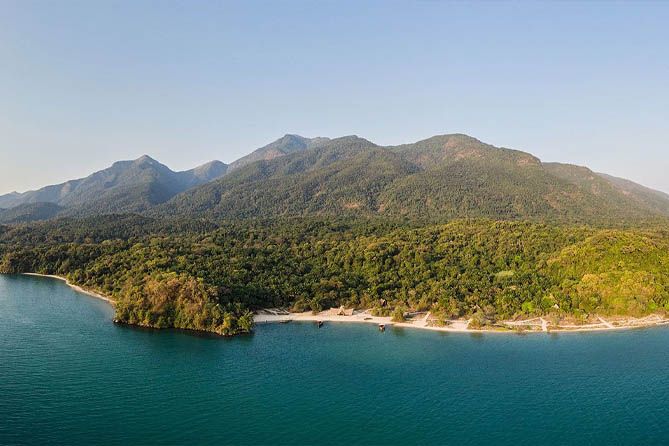
Mahale Mountains National Park is one of the most remote and most extraordinary wildlife destinations in Africa — a wilderness of dense rainforest and misty mountain ridges that drops steeply to the western shore of Lake Tanganyika, the world's longest freshwater lake. It is home to the M-Group — a community of approximately 60 habituated chimpanzees that have been continuously studied since 1965 and whose family dynamics, social hierarchies, and individual personalities are known in extraordinary detail. A chimpanzee trekking experience at Mahale is not wildlife viewing in the conventional sense. It is an encounter with the closest living relatives of the human species, in a forest that feels genuinely ancient, at a proximity that dissolves the boundary between observer and observed.
Tanzania has two chimpanzee trekking destinations — Gombe Stream and Mahale Mountains — and while Gombe has the fame of Jane Goodall's name attached to it, experienced Tanzania travellers consistently rate Mahale as the superior experience: larger forest, larger chimpanzee community, more exclusive accommodation, the extraordinary backdrop of Lake Tanganyika, and a setting of such remote beauty that the journey to reach it is itself an unforgettable part of the experience.
This guide gives you everything you need to plan a Mahale Mountains visit in 2026 — the chimpanzees, the lake, the forest, the logistics, the costs, and how to combine Tanzania's most remote major destination with the Northern Circuit safari and Zanzibar that complete the definitive Tanzania experience.
MAHALE MOUNTAINS NATIONAL PARK: QUICK FACTS
- Full name: Mahale Mountains National Park
- Size: 1,613 km²
- Established: 1985
- Location: Western Tanzania, Kigoma Region — on the eastern shore of Lake Tanganyika
- Lake Tanganyika position: Mid-western shore, approximately 120 km south of Kigoma town
- Altitude range: 773 m (lake shore) to 2,462 m (Nkungwe Peak)
- Highest peak: Nkungwe at 2,462 metres
- UNESCO status: Not yet designated — strong candidate for future World Heritage Site nomination
- Park entry fee: USD $100 per person per day (non-resident adult, 2026)
- Chimpanzee permit fee: USD $150 per person per trek (separate from park entry — combined daily cost approximately $250)
- Chimpanzee research history: Continuous study since 1965 by Japanese researchers from Kyoto University
- M-Group population: Approximately 55–65 chimpanzees — the habituated community available for trekking
- Total chimpanzee population: Approximately 800–1,000 across the full park area
- Annual visitors: Approximately 1,500–2,500 — among the most exclusive major wildlife destinations in Africa
- Accessibility: By air (charter or scheduled flights to Mahale/Kigoma) plus lake boat transfer. No road access to the park.
- Nearest town: Kigoma — approximately 120 km north by lake
- From Arusha: ~2 hours by air (via Dar es Salaam or direct charter)
- From Dar es Salaam: ~1.5 hours by air to Kigoma, then 3–4 hours by lake boat to park
- Lake Tanganyika: World's longest freshwater lake (676 km), second deepest (1,470 m), estimated 20 million years old
- Famous for: Chimpanzee trekking, Lake Tanganyika swimming and snorkelling, remote luxury lodges, extraordinary forest birding
- Best combined with: Katavi National Park (Western Circuit), Northern Circuit safari, Zanzibar
- Management: Tanzania National Parks Authority (TANAPA)
WHY MAHALE MOUNTAINS IS AFRICA'S MOST EXTRAORDINARY WILDLIFE DESTINATION
Every major Africa safari destination makes claims about being extraordinary. Mahale Mountains National Park is extraordinary in a way that most cannot claim: it offers an experience unavailable anywhere else on Earth and arrives in a setting so remote and so beautiful that the journey itself is as memorable as the destination.
The Only Place on Earth That Offers This Combination
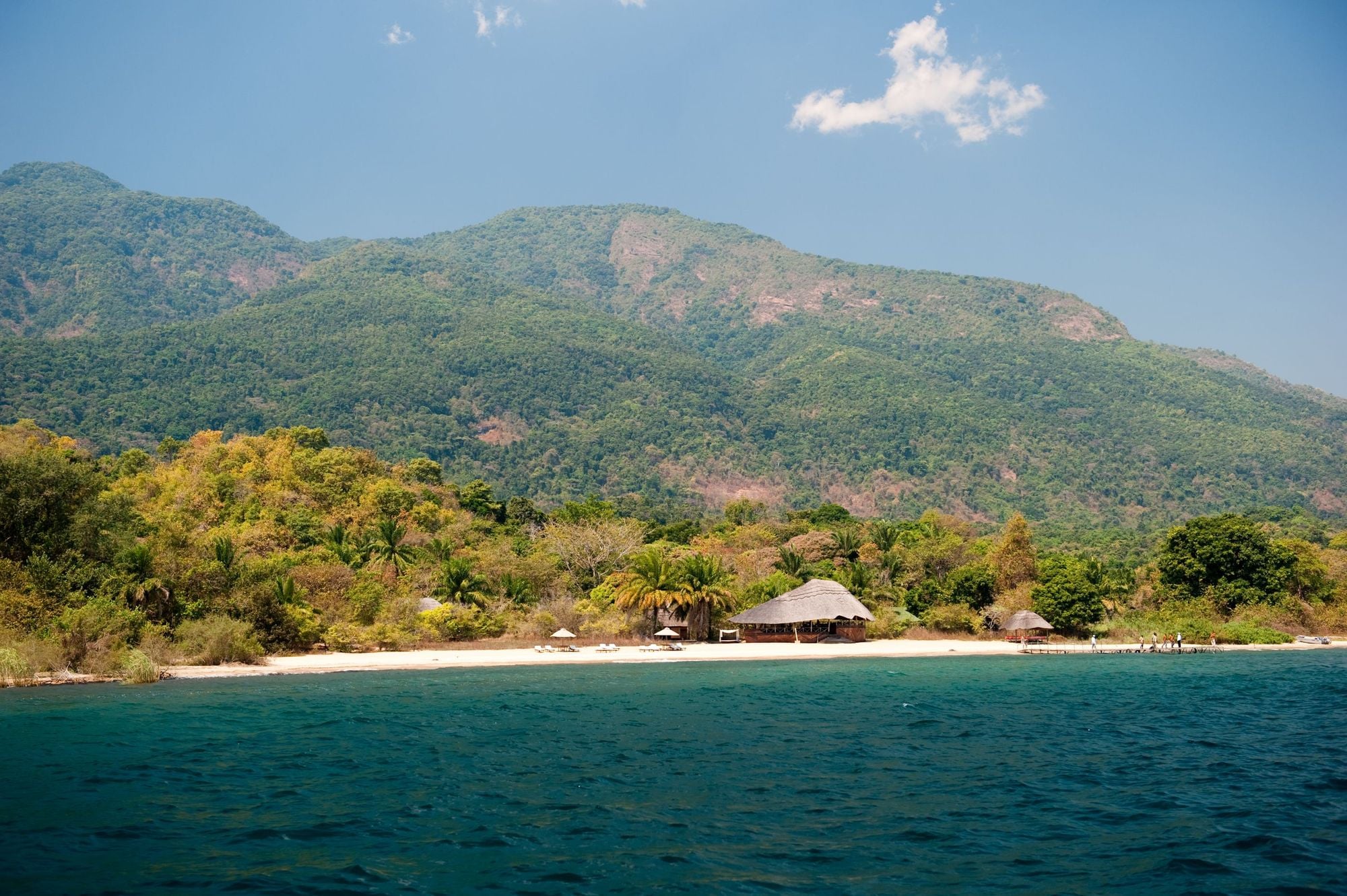
Mahale is the only place in the world where you can trek through dense equatorial rainforest to spend time with a habituated chimpanzee community, then walk back to your lodge on the shore of the world's longest freshwater lake for a swim in water so clear you can see the bottom at 15 metres depth. The combination of primate trekking and a tropical lake of extraordinary beauty — both within a 30-minute walk of each other — has no equivalent in Africa or anywhere else.
The Most Intimate Chimpanzee Experience in Africa
Both Gombe Stream and Mahale Mountains offer chimpanzee trekking. Both provide habituated animals — individuals accustomed to human presence who do not flee when approached. The difference is in scale, forest quality, and exclusivity:
- M-Group size: Approximately 55–65 individuals — significantly larger than Gombe's habituated groups. A larger community means more complex social dynamics, more dramatic social interactions, and a greater variety of individual personalities to observe.
- Forest quality: Mahale's forest is larger, denser, and more ecologically diverse than Gombe's. The Mahale Mountains rise to 2,462 metres, creating a range of forest habitats from lake-shore tropical forest to high-altitude montane woodland.
- Exclusivity: Mahale receives 1,500 to 2,500 visitors per year — compared to Gombe's higher visitor numbers and Rwanda/Uganda's gorilla trekking destinations that each receive tens of thousands. At Mahale, you will rarely see another trekking group even during peak season.
- Research history: 60 years of continuous study by Kyoto University researchers has produced an incomparable depth of knowledge about individual chimpanzees. Your guide knows the alpha male by name, knows his history, knows which females are his coalition partners and which males challenge his status. This contextual knowledge transforms the observation experience.
Lake Tanganyika — Africa's Inland Sea
Lake Tanganyika is not simply a backdrop for the Mahale chimpanzee experience — it is a destination in its own right. The world's longest freshwater lake (676 kilometres from north to south), the world's second deepest (1,470 metres), and estimated to be 20 million years old, Lake Tanganyika holds 17% of the world's available fresh water and is home to approximately 350 species of cichlid fish found nowhere else on Earth.
The lake at Mahale has qualities that tropical ocean beaches struggle to match: crystal clarity to 15 metres depth, warm swimming temperatures of 26–28°C year-round, no saltwater, no ocean currents, and a shoreline of white sand beaches backed by the forested mountain slopes of the national park. Swimming in Lake Tanganyika after a morning chimpanzee trek is one of the finest midday experiences available anywhere in Africa.
🌊 Lake Tanganyika Facts: Lake Tanganyika is older than most of the world's mountain ranges. At 20 million years old, it predates the Alps and is nearly as old as the Himalayas. Its extraordinary depth and age have produced evolutionary isolation that resulted in the cichlid fish radiation — approximately 350 species found only in this lake, making it one of the world's most important centres of freshwater biodiversity.
Absolute Remoteness — Africa as It Was
There are no roads to Mahale Mountains National Park. Access is exclusively by boat across Lake Tanganyika, reached after a flight to Kigoma or a charter directly to the park's small airstrip. This inaccessibility is not a limitation — it is Mahale's greatest conservation asset and its most powerful experiential quality. The absence of road access means the absence of road traffic, casual day visitors, and the vehicle-heavy tourism infrastructure that characterises the more accessible parks. In Mahale, the forest is quiet. The lake is undisturbed. The chimpanzees are wild.
LAKE TANGANYIKA: THE WORLD'S GREATEST FRESHWATER LAKE
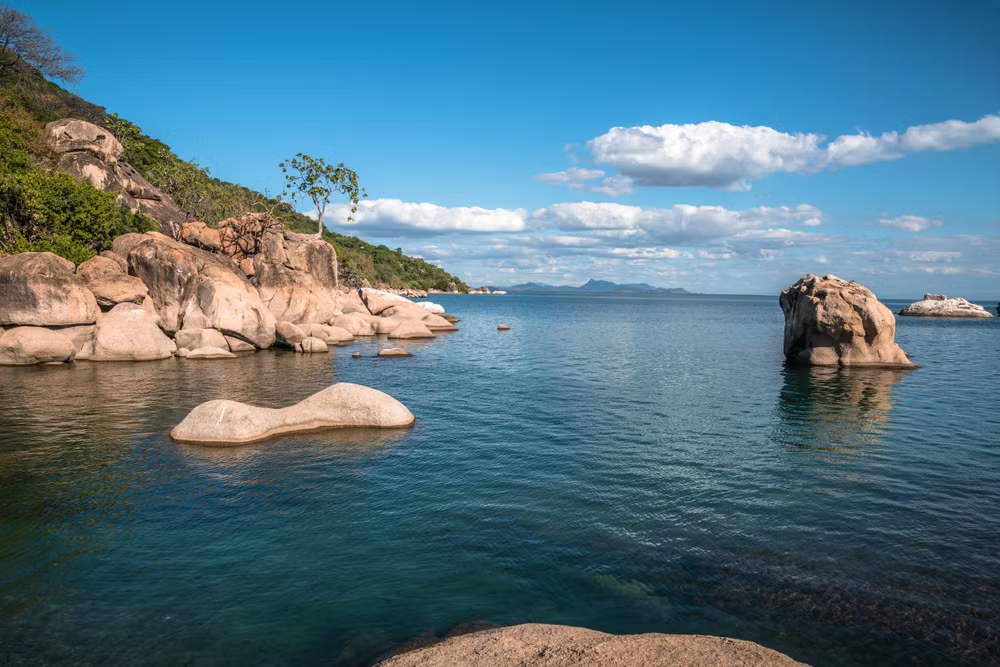
Understanding Lake Tanganyika is understanding the context within which Mahale's entire experience operates. The lake is not incidental to the destination — it defines it. The logistics of arrival (by boat across the lake), the lodges (on the lake shore, facing west for the finest sunsets in East Africa), the swimming, the snorkelling, and the extraordinary visual quality of the setting are all a function of the lake.
Scale and Depth
At 676 kilometres long and up to 72 kilometres wide, Lake Tanganyika holds 17% of the world's available surface fresh water — a volume equivalent to filling the entire United Kingdom to a depth of approximately 3 metres. Its maximum depth of 1,470 metres makes it the world's second deepest lake after Russia's Lake Baikal. The scale of the lake creates weather patterns and atmospheric conditions that resemble a small inland sea: afternoon winds that kick up significant waves, dramatic storms that sweep in from the Congo side, and the particular quality of light over open water that produces the sunsets visible from every Mahale lodge terrace.
The Cichlid Fish
Lake Tanganyika's extraordinary age and depth have created an evolutionary laboratory. The lake has been isolated long enough — 20 million years — for approximately 350 species of cichlid fish to evolve from a single ancestral stock in a process that Darwin's theory of natural selection describes in textbook form. These cichlids, found nowhere else on Earth, occupy every available ecological niche in the lake's water column, from algae-scrapers on the surface rocks to deep-water predators that operate at hundreds of metres depth.
For snorkellers and swimmers at Mahale, this translates into visibility of vivid, reef-like fish diversity in the lake's shallow rocky areas — species with the colours and variety of a tropical coral reef, without saltwater, without currents, and at water temperatures of 26 to 28°C. Several lodges provide snorkelling equipment and guided snorkelling sessions along the rocky lake-shore areas where the greatest fish diversity is concentrated.
- Snorkelling conditions: Best in June–September (dry season, highest visibility). Water clarity can exceed 15 metres in ideal conditions.
- Notable cichlid species visible while snorkelling: Tropheus species (the most colourful), Julidochromis (elongated and territorial), Neolamprologus species (nest builders), Perissodus (scale-eating specialists), and dozens of others
- Freshwater jellyfish: Occasionally present in the lake — completely harmless
🌊 Swimming Safety: Lake Tanganyika at Mahale is free from crocodiles in the lodge and beach areas — the rocky lake bottom and white sand beaches around the lodges are verified safe swimming zones. Hippos are present in certain lake areas away from the lodges — your guide will brief you on any current hippo locations to avoid. The lake is safe for swimming and snorkelling within the designated areas.
Swimming and the Lake Shore
The beaches at Mahale — white sand backed directly by the forest, with the lake ahead and the mountain behind — are among the finest beach settings in Africa. That they exist within a national park, accessible only by boat, with no development beyond the small number of lodge properties, gives them a quality of absolute genuineness that resort beaches cannot replicate. You swim in a lake that has never been developed, in a park where the sounds behind you are forest birds and occasionally chimpanzee calls, with the forested slopes of the Mahale Mountains rising steeply from the sand.
THE CHIMPANZEES OF MAHALE: UNDERSTANDING THE M-GROUP
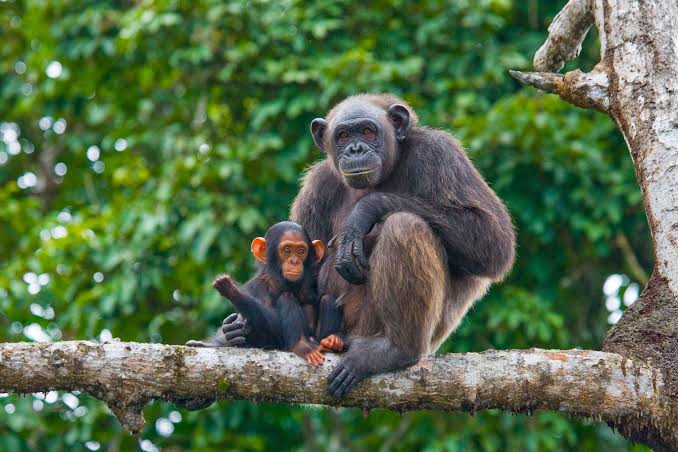
The chimpanzees of Mahale Mountains are not simply wildlife — they are the subjects of one of the longest-running primate studies in scientific history, known as individuals with names and documented histories spanning multiple generations, and the proximate reason that almost every visitor makes the considerable journey to this remote western Tanzania destination.
60 Years of Research — The Foundation of What You See
In 1965 — the same year that Jane Goodall's work at Gombe was gaining international recognition — Japanese primatologist Junichiro Itani and his student Toshisada Nishida established a research presence at Mahale. What began as a parallel investigation has continued, without interruption, for over 60 years. The research, conducted under the auspices of Kyoto University's Laboratory of Human Evolution Studies, has produced an incomparable scientific record of chimpanzee social behaviour, culture, health, and ecology.
The practical consequence of this 60-year research history is that every chimpanzee in the M-Group has a name, a known history, a documented family tree, and recorded behavioural characteristics. The current alpha male's rise to dominance is documented. The coalition politics that support or undermine the alpha's position are understood in detail. The specific territories, the food preferences in different seasons, and the travel routes through the forest are all part of the knowledge base that your guide draws on when tracking the group each morning.
🐒 Research Significance: Mahale's 60-year research record is one of the most important data sets in primatology. Among its specific contributions: the first documentation of chimpanzee warfare (lethal inter-group conflict), the first detailed record of chimpanzee medicinal plant use (eating specific leaves to treat intestinal parasites), and the long-term documentation of cultural transmission — behaviours that vary between communities and are passed from mothers to offspring rather than being genetically determined.
The M-Group Today
The M-Group currently numbers approximately 55 to 65 individuals — a community size that reflects both the natural dynamics of chimpanzee social structure and the specific history of this particular group. The group includes adult males (the politically dominant class), adult females with offspring, adolescents of both sexes, and infants.
- Alpha male: The highest-ranking male in the M-Group holds his position through a combination of physical strength, coalition building, and social intelligence. The alpha male's identity changes over time — each transition is documented in the research record and changes the social dynamics of the entire group.
- Adult females: Female chimpanzees are primarily focused on foraging and infant care. Females with infants are the most reliably interesting subjects for visitors — the relationship between mother and infant chimpanzee is immediately and intensely recognisable as parental.
- Infants: Baby chimpanzees are the most visually compelling subjects for most visitors — clinging to their mothers, playing, falling, and looking at the human observers with what appears to be genuine curiosity. An infant chimpanzee at arm's length from your camera lens is one of wildlife photography's most extraordinary opportunities.
- Adolescent males: The most boisterous group members — status-seeking young males practising the displays and coalitions that will determine their adult position in the hierarchy. Their energy and unpredictability make them the most entertaining subjects to watch.
Chimpanzee Behaviour You Will Observe
A chimpanzee trekking session at Mahale typically lasts 1 to 3 hours with the group — the time you are actually in the presence of the chimpanzees, after however long the morning tracking took to find them. Within that time, depending on the group's activity:
- Grooming: The most common chimpanzee social behaviour — individuals spending extended periods carefully grooming each other's fur. Grooming maintains social bonds, communicates trust, and serves a literal hygiene function. A grooming session between two adult males at close range is one of the most intimate wildlife observations available anywhere.
- Feeding: Mahale's forest provides an extraordinary variety of fig, palm, and other fruiting trees. Watching chimpanzees select and process food — choosing ripe fruit, using tools to extract insects, sharing food between coalition partners — reveals the complexity of their cognitive relationship with their environment.
- Tool use: Mahale chimpanzees use sticks to extract termites from mounds and leaves to scoop water from tree holes — behaviours that fall within the definition of tool use and are among the behaviours that distinguish the great apes from other primates. Your guide will point out tool use when it occurs.
- Social display: Male chimpanzees regularly perform charging displays — running bipedally through the forest, dragging branches, screaming — that communicate their status and test the reactions of other males. These displays, which can pass within a few metres of observers, are among the most viscerally exciting moments of any Mahale visit.
- Drumming: Adult males drum on the buttress roots of large trees to communicate their location and announce their presence. The sound — a deep, resonant boom that carries through the forest — is one of Mahale's most distinctive and most evocative auditory experiences.
- Play: Juvenile and adolescent chimpanzees play constantly — chasing, wrestling, swinging, mock-fighting. Their play behaviour is the most recognisably mammalian of any chimpanzee activity and the most accessible to human observers who find the social complexity of adult politics harder to read.
The 8-Metre Rule and Visitor Protocol
All Mahale chimpanzee trekking operates under a strict 8-metre minimum distance rule — visitors must remain at least 8 metres from the nearest chimpanzee at all times. This rule exists for two reasons: to protect the chimpanzees from human respiratory diseases (to which they are highly susceptible — a common cold can be fatal to an immunologically naive chimpanzee community), and to ensure that the chimpanzees' behaviour is not influenced by excessive human proximity.
In practice, the 8-metre rule is a minimum, not a maximum. Chimpanzees frequently approach closer than 8 metres of their own accord — moving along trails that pass through the observer group, dropping fruit near people, or simply sitting closer than the rule requires. When this happens, your guide manages the group's position to maintain compliance. The rule applies to the behaviour of the humans, not the chimpanzees.
- Maximum group size per trek: 6 visitors per chimpanzee trekking group — one of the most restrictive limits of any primate trekking programme in Africa, and a primary contributor to the quality of the Mahale experience
- No flash photography: Flash photography is strictly prohibited around the chimpanzees — it causes distress and disrupts normal behaviour
- Masks: All visitors trek wearing a face mask in the presence of chimpanzees — reducing respiratory disease transmission risk
- No eating or drinking near chimpanzees: Food and drink must be kept out of sight — chimpanzees associate human food smells with food sources and may approach aggressively
🐒 Disease Risk: Chimpanzees share approximately 98.7% of their DNA with humans. This extraordinary genetic similarity means that almost every human respiratory virus — from a common cold to influenza to COVID-19 — is potentially transmissible to chimpanzees. A single respiratory infection introduced to the M-Group could affect the entire community. The mask requirement, the 8-metre rule, and the prohibition on visiting if you have any respiratory symptoms are genuine health protection measures, not bureaucratic formalities.
CHIMPANZEE TREKKING AT MAHALE: WHAT ACTUALLY HAPPENS
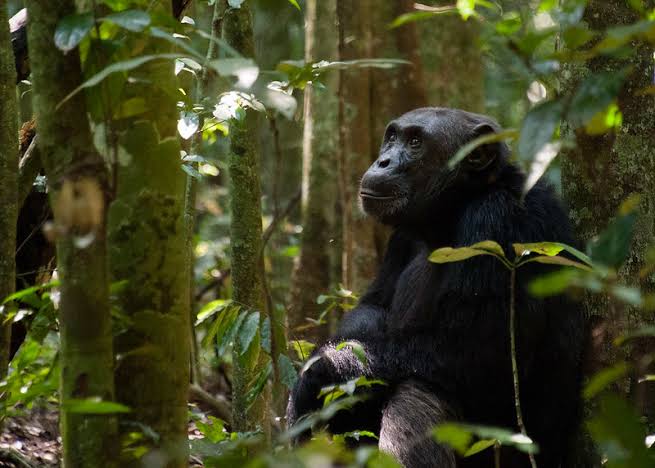
The chimpanzee trekking experience at Mahale is entirely different from the vehicle-based wildlife viewing of the Northern Circuit. There is no vehicle. There is no road. There is dense equatorial rainforest, a tracker who reads the forest, and the slowly building sound of chimpanzees getting closer. Understanding what to expect makes the experience more manageable — and more extraordinary.
The Pre-Dawn Tracking
Every Mahale trekking day begins before dawn. Trackers leave the lodge at first light — sometimes as early as 5:30 AM — to locate where the M-Group spent the night in their sleeping nests. Chimpanzees build new sleeping nests in the canopy each evening, and finding the morning nest location is the foundation of the day's tracking.
While the trackers are working, visitors have breakfast at the lodge. At approximately 7:30 to 8:00 AM, the guide receives radio contact from the trackers with the group's location, and the trek begins.
The Trek Itself
The trek from the lodge to where the chimpanzees are found varies from 30 minutes to 3 hours depending on where the group has moved during the night. This variability is one of the genuine wilderness qualities of the Mahale experience — unlike some primate trekking destinations where habituated animals are in predictable locations, the M-Group moves freely through a 1,613 km² park and their location each morning is genuinely unknown until the trackers find them.
- Terrain: The forest trails range from gentle lake-shore paths to steep mountain slopes with significant root and rock obstacles. The wet season adds mud. Good footwear is essential. Fitness is relevant — some mornings require 2 to 3 hours of moderately demanding uphill walking before finding the group.
- Pace: Your guide sets the pace based on the chimpanzees' location and movement. When tracking, the pace can be fast and purposeful. When near the group, movement slows to near-silence.
- What to carry: A small daypack with water (2 litres minimum), camera equipment, raincoat, mask, and a light snack. Walking poles are useful for steep terrain.
- Porter availability: Porters are available at Mahale to carry daypacks on the trek — strongly recommended for less fit trekkers or those with heavy camera equipment. Ask your lodge in advance.
Finding the Group — The Moment Everything Changes
There is a specific moment during the trek when the forest changes. The tracker stops, head cocked, listening. Then they signal — a quick gesture of the hand that means 'close.' The guide brings the group to silence. And then you hear them: the rustle of movement in the canopy overhead, the specific soft hooting that chimpanzees use in close contact, and then a large shape emerging from the undergrowth at eye level, moving directly toward your position.
The first minute with the chimpanzees is unlike any other wildlife encounter. The resemblance is the thing that catches you — the hands, the facial expressions, the way a juvenile picks up a leaf and examines it. You are not looking at an exotic animal. You are looking at a near-relation.
Time With the Group
Once the group is located, visitors are permitted a maximum of one hour with the chimpanzees in total per day. This limit is strictly enforced by TANAPA to minimise human impact on the group's behaviour and health. Within that hour:
- Position: Your guide positions the group to maximise visibility while maintaining the 8-metre rule. This requires constant adjustment as the chimpanzees move.
- Silence: You do not speak. Your guide communicates through gesture. The silence is part of what makes the encounter so powerful — you are a witness in the chimpanzees' world, not a visitor to a viewing platform.
- Photography: The hour passes very quickly when you are photographing. Decide before you enter the presence of the chimpanzees whether you want to spend the hour primarily experiencing or primarily photographing — you cannot do both optimally. Many visitors do the first day experiencing and the second day with camera strategy fully prepared.
- Behaviour observation: Your guide narrates quietly in your ear — identifying individuals, explaining relationships, contextualising behaviours. This running interpretation is what transforms the observation from 'seeing chimpanzees' into 'understanding chimpanzees.'
📸 Photography Strategy: For chimpanzee photography at Mahale: the forest light is variable and often low. Use a lens with at least f/2.8 maximum aperture, set ISO to Auto with a maximum of ISO 6400, and use continuous autofocus with animal eye detection if your camera supports it. A 70–200mm f/2.8 is the ideal single lens. A wide-angle backup (24–70mm) captures the forest context. Shoot in RAW — you will need to recover shadows in post-processing.
Multiple Trekking Days — Why You Need More Than One
The standard minimum recommendation for a Mahale visit is 3 nights (giving 3 trekking mornings). Here is why one trek is never enough:
- Day 1 trek: Orientation and overwhelm. The experience is so unlike anything else that the first hour with the chimpanzees is primarily processed emotionally rather than observationally. You are present but not yet settled.
- Day 2 trek: The forest is more familiar. The chimpanzees are slightly less surprising. You begin to notice individuals, to read the social dynamics, to understand the hierarchy. Photography improves dramatically as nerves settle.
- Day 3 trek: The finest trek for most visitors. The group may be in a completely different forest section. The experience is fully inhabited — you are there as a practised observer, not a startled newcomer. The specific encounter that most visitors describe as the defining moment of their Mahale visit typically happens on Day 3.
- 4+ nights: For serious wildlife photographers, researchers, or anyone for whom chimpanzee behaviour is a primary interest — additional nights allow the observation of a wider range of behaviours, different forest zones, and the unhurried pace that produces the finest photography.
OTHER WILDLIFE AT MAHALE MOUNTAINS NATIONAL PARK
The chimpanzees are the reason almost everyone visits Mahale, but the forest and lake shore support an extraordinary range of other wildlife that rewards attention beyond the trekking hours.
Other Primates
- Red colobus monkey (Procolobus rufomitratus): One of Africa's most beautiful primates — vivid red and black colouration, long limbs, and a distinctive howling call that fills the forest. Present throughout the Mahale forest in troops of 20 to 50 individuals. Frequently encountered during the chimpanzee trek — the M-Group actively hunts red colobus as a prey species, and finding a colobus troop often leads to the chimpanzees.
- Blue monkey (Cercopithecus mitis): Common in the forest canopy alongside the colobus. Less spectacular than the colobus but frequently encountered and a pleasant addition to the primate list.
- Yellow baboon (Papio cynocephalus): Present on the forest edge and lake shore areas. Large troops, bold, and the most entertaining primates to watch at the lodge.
- Red-tailed monkey (Cercopithecus ascanius): Present in the forest — identified by its distinctive red tail. Less common than the colobus and blue monkey but regularly seen.
- Angola colobus (Colobus angolensis): The black-and-white colobus species present in Mahale's higher forest zones — large, striking, and a photographic highlight of any forest walk above 1,000 metres.
Forest Mammals
- African leopard: Present in the Mahale forest but rarely seen — the dense vegetation and nocturnal habits mean leopard sightings are genuine and unexpected highlights. Tracks and signs are found regularly by trackers.
- African brush-tailed porcupine: Nocturnal — the sound of quills rattling is occasionally heard around the lodge at night.
- Giant forest hog (Hylochoerus meinertzhageni): Africa's largest wild pig — present in the forest but rarely encountered. A sighting is memorable.
- Bush pig (Potamochoerus larvatus): More commonly encountered than the giant forest hog — rooting through the forest floor near the lodge at dawn and dusk.
- Harvey's red duiker (Cephalophus harveyi): Small, reddish antelope of the forest floor. Occasionally seen on the trekking trails — very fast and very shy.
- African civet (Civettictis civetta): Nocturnal — sometimes seen in lodge spotlight checks after dark. Large, striking spotted coat.
- Ratel / Honey badger: Occasional sightings around the lodge area — bold and unpredictable.
Lake Shore Mammals
- Hippopotamus: Present along certain sections of the lake shore — your guide will brief you on current hippo locations before any water activity. Hippos at Mahale are typically in areas away from the lodge beaches.
- Sitatunga (Tragelaphus spekii): A semi-aquatic antelope that inhabits the swampy lake shore areas in the southern park sections. Tanzania's most water-adapted antelope.
- African clawless otter: Occasionally seen fishing in the lake shallows at dawn — long, streamlined body, swift in water.
MAHALE MOUNTAINS BIRDLIFE: A FOREST BIRDER'S DREAM
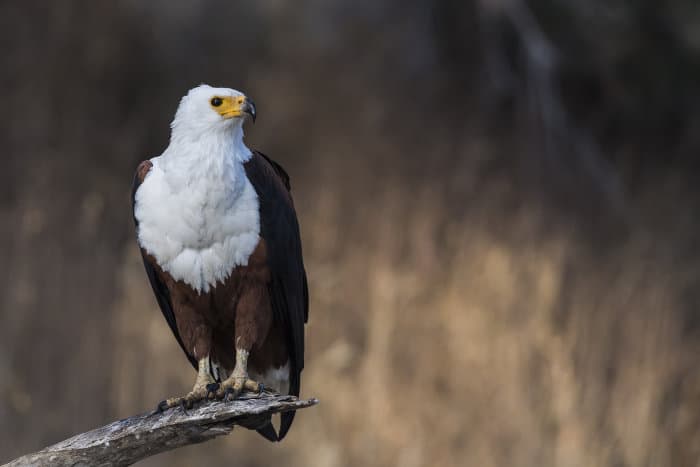
With over 350 bird species recorded in a park of 1,613 km², Mahale Mountains National Park is one of Tanzania's finest birding destinations — particularly for forest species that are absent or rare in the Northern Circuit parks. The combination of equatorial rainforest, montane forest, and lake shore habitats produces an extraordinary diversity of species concentrated in a relatively accessible area.
Why Mahale Birding is Special
Mahale's birdlife represents a completely different community from the Northern Circuit parks. While Tarangire has open woodland species and Lake Manyara has waterbirds, Mahale is defined by Afrotropical rainforest birds — species that require closed canopy forest, forest understory, or the edge zones between forest and lake. Many of these species are found nowhere else in Tanzania except the western forest parks.
Key Bird Species at Mahale
- African fish eagle (Haliaeetus vocifer): One of the most frequently heard and seen birds at Mahale — the iconic call over the lake is a constant accompaniment to the lodge experience. Breeding pairs nest in the large trees overhanging the lake shore.
- Palm-nut vulture (Gypohierax angolensis): Common at Mahale — feeds on the fruit of oil palms that fringe the lake shore. Unmistakable black and white plumage. One of Africa's most unusual raptors — almost entirely vegetarian.
- African crowned eagle (Stephanoaetus coronatus): The forest's apex avian predator — capable of taking prey as large as small duiker. Occasionally seen soaring above the forest canopy. A sighting is extraordinary.
- Crowned hornbill (Lophoceros alboterminatus): Common in the forest — large, noisy, and the most frequently photographed hornbill species at Mahale.
- African broadbill (Smithornis capensis): A forest understory specialist that performs a remarkable circular display flight — the wings produce a distinctive frog-like sound. Difficult to see but unmistakable when performing.
- Yellow-billed barbet (Trachyphonus purpuratus): Brilliantly coloured — purple, yellow, and red — in the forest canopy. A Mahale specialty.
- Livingstone's flycatcher (Erythrocercus livingstonei): An eastern African endemic found at Mahale — tiny, active, with orange underparts and constantly fanned tail.
- Western banded snake eagle: Perches prominently on dead branches above the forest — scans for snakes on the forest floor.
- Blue-breasted kingfisher (Halcyon malimbica): The most spectacular kingfisher at Mahale — large, vivid blue and chestnut, found in forest edge areas near the lake shore.
- African paradise flycatcher: The male's extraordinary long tail streamers in the forest dappled light is one of Mahale's finest photographic subjects.
- Grey-headed kingfisher: Common along the lake shore — dives from exposed perches into the shallows.
- Pied kingfisher: The hovering, diving kingfisher — common over the lake surface from the lodge terrace.
- White-headed lapwing: Found on sandy beaches near the lake shore — nests on exposed sand.
- Migratory waterbirds (November–April): The lake shore receives a range of Palaearctic migrant waders and waterbirds during the northern winter — adding significantly to the species list in the October to April window.
🦅 Birding Tip: The hour between 6:00 and 7:00 AM before the chimpanzee trek departs is Mahale's finest birding window. The forest dawn chorus from the lodge terrace — with African fish eagle calling over the lake, hornbills in the canopy, and kingfishers flashing over the water — is one of the finest sensory experiences the continent offers. Request a birding walk on any afternoon when the chimpanzee trek returns early.
BEST TIME TO VISIT MAHALE MOUNTAINS NATIONAL PARK
Mahale Mountains can be visited year-round but conditions — particularly for the chimpanzee trek and for the lake activities — vary significantly between seasons. Understanding the seasonal pattern is critical for planning.
Dry Season: June to October — Best Overall
The dry season is the recommended window for most Mahale visitors and the period when all three components of the experience — chimpanzee trekking, lake swimming, and forest birding — are at their best simultaneously.
- Chimpanzee trekking: The M-Group tends to be found at lower elevations in the dry season, reducing trek distances and making the chimpanzees more consistently accessible. Dry trails make the forest walking more comfortable. Forest visibility is slightly better with less undergrowth density.
- Lake Tanganyika: Water clarity peaks in the dry season — visibility of 15 metres or more is achievable in June through September. Lake surface is calmer in the mornings. Swimming and snorkelling are at their finest.
- Forest: The forest is slightly drier and more open, making movement easier and wildlife observation clearer.
- Weather: Warm days of 28–32°C on the lake shore. Cool to cold nights and early mornings on the higher forest trails. Cloud-free lake views are most consistent June–September.
- Crowd levels: Mahale never gets genuinely crowded — even at peak season the total daily visitor number is tiny. Peak season (July–September) sees slightly more bookings at the premier lodges.
- Booking requirements: Book 6–9 months ahead for July–September stays at the premier lodges — Greystoke Mahale in particular fills early.
Wet Season: November to May — Greener, More Challenging
The wet season brings significant challenges to the Mahale trekking experience but also some genuine advantages:
- Chimpanzee trekking: The M-Group moves to higher elevations in the wet season, following fruiting trees up the mountain slopes. Treks become longer and more physically demanding — 2 to 3 hour forest climbs before finding the group are not uncommon. Trails are muddy and slippery. However, the forest is extraordinarily lush and the chimpanzees are reliably present.
- Lake: More wind and waves. Lower visibility in the water (sedimentation from rain runoff). Swimming is still possible but snorkelling quality is reduced.
- Forest: The wet season forest is the most biodiverse and most photogenic — vivid green, dramatic light, extraordinary density. For serious photographers, the wet season forest has a quality unavailable in the dry months.
- Birding: November to April is the finest birding window — migratory species present, resident species in full breeding plumage, and the forest most acoustically alive.
- Price: Some lodges reduce rates in the green season. Fewer visitors mean more private experiences.
Month-by-Month Summary
- January–February: Wet season. Longer treks to higher elevations. Excellent forest birding. Lush photography. Reduced lake visibility.
- March–May: Peak rains — most challenging trekking conditions. Some lodges may be at reduced services. Not recommended as a primary target for first-time visitors.
- June: Transition to dry season. Conditions rapidly improving. Good availability. Excellent early dry season value.
- July–August: Peak season. Finest overall conditions. Chimpanzees at lower elevations, shorter treks, highest lake clarity. Book 6–9 months ahead.
- September: Excellent — similar quality to July–August with slightly reduced visitor numbers. One of the finest overall months.
- October: Short rains beginning. Conditions still generally good. Transition month.
- November–December: Rains building. Forest transformation beginning. Good birding. Increasing trek difficulty.
WHAT TO DO AT MAHALE MOUNTAINS NATIONAL PARK
Mahale is not a destination with a long activity menu — it is a destination with a small number of activities that are each extraordinary. The daily rhythm is deliberately simple: a morning chimpanzee trek, a midday on the lake, and an afternoon of forest walking, birding, or lake activities.
1. Chimpanzee Trekking — The Primary Activity
Described in full in Section 5. The defining experience of Mahale and the reason almost every visitor makes the journey. One trek per day, maximum 6 visitors per group, 1-hour maximum with the chimpanzees. Book a minimum of 3 nights to allow 3 trekking mornings.
2. Swimming and Snorkelling in Lake Tanganyika
The lake is safe for swimming in the designated beach areas around the lodges. The crystal-clear water, warm temperatures (26–28°C year-round), and vivid cichlid fish make it the finest freshwater swimming experience in Africa. Snorkelling equipment is provided by most lodges. The rocky areas immediately adjacent to the sandy beaches hold the highest fish diversity.
- Best snorkelling spots: The rocky outcropping areas at the ends of the lodge beaches — transition zones between sand and rock where cichlid diversity is highest
- Best time: Morning (7:00–9:00 AM before the wind picks up) or late afternoon (4:00–6:00 PM in calmer conditions)
- Depth: Good cichlid activity from 1–5 metres — no need for deep diving
3. Kayaking and Dhow Sailing
Most Mahale lodges offer kayaking along the lake shore — an extraordinary experience in itself, moving silently along the forested mountain shore with the Mahale peaks rising behind and the deep blue of the lake stretching to the Congo on the western horizon. Traditional dhow sailing excursions — in the same wooden sailing vessels that have worked this lake for centuries — are offered by several lodges.
- Kayaking: 1 to 3 hours. Gentle lake shore route along the park boundary. Excellent for birding (African fish eagle, kingfishers) and occasional otter sightings.
- Sunset dhow: The Lake Tanganyika sunset — the sun dropping behind the Congolese mountains on the western shore — is one of Africa's finest, and experiencing it from a traditional dhow on the open lake is unforgettable.
4. Forest Walking and Bird Walks
Afternoon guided forest walks — separate from the morning chimpanzee trek — explore different sections of the park's forest and focus on birding, plant identification, and general forest ecology. These walks are led by your lodge guide and cover 2 to 4 kilometres of forest trail over 2 to 3 hours.
- Best for: Birders, botanists, and anyone who wants more forest time beyond the morning trek
- What to see: Red colobus, blue monkeys, forest birds, orchids, medicinal plants used by the chimpanzees, and the extraordinary diversity of Mahale's figs and other fruiting trees
5. Village Visits — Mgambo Village
The fishing village of Mgambo, just south of the park boundary, provides a window into the lives of the communities that have coexisted with the Mahale chimpanzees for generations. A guided visit (arranged through your lodge) includes a walk through the village, an explanation of the fishing economy based on the lake's sardine (dagaa) harvest, and the opportunity to purchase locally made crafts.
- Ethical note: Adventures Seeker recommends only arranged, consented village visits where the community directly benefits from the tourism revenue. Ask your lodge to confirm the arrangement before visiting.
6. Fishing
Sport fishing for the lake's endemic cichlid species (catch and release) is available through some lodges. The lake also holds Nile perch, tiger fish, and the giant goliath tigerfish in deeper waters. Fishing excursions by boat are arranged through the lodge.
7. Sunset and Sunrise on the Lake
The Lake Tanganyika sunset and sunrise are among the finest in Africa. The western orientation of the park's lodge shoreline means that the sun sets directly over the lake — dropping below the silhouetted mountains of the Democratic Republic of Congo on the far shore, painting the lake in extraordinary colours. Early morning sunrise from the lodge terrace — first light illuminating the Mahale mountains above you while the lake is still in shadow — is equally extraordinary.
MAHALE MOUNTAINS ACCOMMODATION: LODGES ON THE LAKE
Mahale's accommodation is small, exclusive, and in several cases genuinely world-class. The park's remote location and limited access have attracted operators who invest in extraordinary lodge experiences — the combination of quality and setting at the best Mahale lodges is among the finest in Africa.
Greystoke Mahale — The Benchmark
Greystoke Mahale is consistently ranked among the finest lodges in Africa and the finest chimpanzee trekking base in the world. Built entirely from reclaimed dhow timbers and positioned on the lake shore within the park, it has six bandas (spacious open-fronted rooms with lake and forest views) and a dining and common area of extraordinary character. The lodge is solar-powered, uses lake water (filtered), and has a minimum environmental footprint. The food is outstanding — fresh fish from the lake, garden vegetables, and creative menus for a remote location.
- Category: Luxury
- Capacity: 12 guests maximum — the most exclusive major lodge in Tanzania
- Setting: Directly on the lake shore within the national park — the forest begins 30 metres behind the lodge
- Key feature: The finest chimp trekking guides in Mahale (employed directly, not shared with other lodges), the finest lake views, and a lodge atmosphere of genuine adventure character
- Approximate cost: USD $1,500–$2,200 per person per night (full board, all activities, excluding chimp permit and park entry fees)
- Booking: Book 9–12 months ahead for July–September. Fills completely for peak season.
Nomad Mahale — The Alternative Luxury
Nomad Mahale (operated by Nomad Tanzania) is the sister lodge to Greystoke in terms of quality and experience. Similar in style — dhow timber construction, lake shore position, small capacity — it provides a comparable experience at a slightly different price point and with Nomad's well-regarded guiding standards.
- Category: Luxury
- Capacity: Small — comparable to Greystoke
- Approximate cost: USD $1,200–$1,800 per person per night (full board, all activities)
- Key feature: Nomad's conservation focus and community engagement — the lodge actively supports the research programme and local fishing community employment
Kungwe Beach Lodge — The Accessible Option
Kungwe Beach Lodge provides a more affordable Mahale experience without compromising the fundamental quality of the chimpanzee trekking and lake activities. The lodge is simpler in design than Greystoke or Nomad but offers the same park access, the same permit system, and the same extraordinary setting.
- Category: Premium (mid-range for Mahale)
- Approximate cost: USD $600–$900 per person per night (full board, activities)
- Best for: Travellers who want the Mahale experience at a more accessible price point without the full luxury investment
Camp in the Park — Budget Option
Basic public camping is available within Mahale Mountains National Park for visitors who bring their own equipment. This option is rarely used by international visitors due to the logistics of getting camping equipment to a no-road destination, but it represents the most affordable format for adventurous travellers.
- Cost: USD $50 per person per night camping fee (in addition to park entry and chimp permit fees)
- Practicality: Requires bringing all equipment by boat. No services provided. Contact TANAPA Mahale office for current arrangements.
Adventures Seeker Note: We work directly with Greystoke Mahale, Nomad Mahale, and Kungwe Beach Lodge. Our recommendation for first-time Mahale visitors with a premium or luxury budget is Greystoke Mahale — its guides, food, setting, and atmosphere are the finest available in this destination. For guests where budget is a primary consideration, Kungwe Beach Lodge delivers the chimp trekking experience at a meaningfully lower price.
HOW MUCH DOES A MAHALE MOUNTAINS VISIT COST IN 2026?
Mahale is one of Tanzania's most expensive wildlife destinations — not because operators charge unjustified premiums but because the remote location, exclusive access, small-capacity lodges, and mandatory park fees create a cost structure that is genuinely higher than the Northern Circuit parks. Here is the honest, transparent breakdown.
Mandatory Government Fees Per Person
- Park entry fee: USD $100 per person per day — the highest in Tanzania
- Chimpanzee permit fee: USD $150 per person per trek
- Combined daily cost (entry + permit): USD $250 per person per day
- For a 3-night stay (3 trekking days): USD $750 per person in park fees alone
- For a 4-night stay (4 trekking days): USD $1,000 per person in park fees alone
Full Visit Cost (3 Nights, Per Person)
- Park entry fees (3 days × $100): USD $300
- Chimpanzee permit fees (3 treks × $150): USD $450
- Accommodation — Greystoke Mahale (3 nights, full board, all activities): USD $4,500 – $6,600
- Accommodation — Nomad Mahale (3 nights): USD $3,600 – $5,400
- Accommodation — Kungwe Beach Lodge (3 nights): USD $1,800 – $2,700
- Flights (Arusha → Kigoma → Mahale return, approximately): USD $600 – $1,200 per person
- Tips (guide, trackers, lodge staff — 3 nights): USD $150 – $250 per person
- TOTAL ESTIMATE (3 nights, Greystoke Mahale): USD $6,200 – $8,800 per person
- TOTAL ESTIMATE (3 nights, Nomad Mahale): USD $5,300 – $7,500 per person
- TOTAL ESTIMATE (3 nights, Kungwe Beach Lodge): USD $3,300 – $4,900 per person
Why the Cost is Justified
At $6,000 to $9,000 per person for 3 nights, Mahale is not inexpensive. But the cost perspective is important:
- Maximum daily visitors: Approximately 30–40 across all lodges combined — one of the most exclusive wildlife destinations in the world in terms of visitor numbers per unit of wildlife quality
- What you get: Three mornings with habituated chimpanzees — one of only a handful of places on Earth where this is possible — in a forest wilderness accessible only by boat, on the shore of the world's greatest freshwater lake, in a lodge that most guests describe as one of the finest they have stayed in anywhere
- Comparison: Rwanda's mountain gorilla trekking costs $1,500 per permit alone, plus lodge fees that rival Mahale's. Uganda's gorilla permits are $700 per person. Mahale's $150 per chimp trek is arguably the best value in habituated great ape trekking globally, given the exclusivity.
HOW TO GET TO MAHALE MOUNTAINS NATIONAL PARK
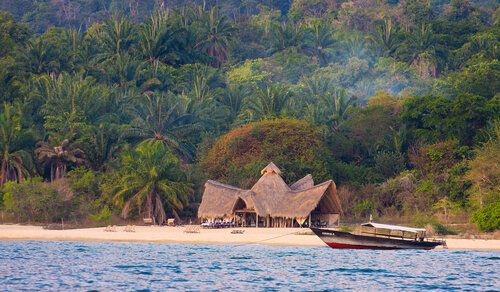
Getting to Mahale is part of the experience — the journey across Lake Tanganyika by boat, through one of the most remote landscapes in Tanzania, is itself an immersive transition into a different world. There are no roads to the park. All access is by air and then by boat.
Option 1: Charter Flight to Mahale Airstrip (Fastest and Most Comfortable)
The most efficient routing for most international visitors:
- Arusha → Mahale airstrip (direct charter): Approximately 2 hours by light aircraft. The most direct connection from Tanzania's Northern Circuit hub to Mahale. Available through several charter operators — Adventures Seeker coordinates this as part of the overall Tanzania itinerary.
- Dar es Salaam → Mahale airstrip (direct charter): Approximately 2.5 hours by light aircraft.
- Mahale airstrip → lodge by boat: A short lake transfer of 30–60 minutes from the airstrip to the lodge, depending on which property.
- Cost of charter: Approximately $600–$1,200 per person one way depending on aircraft size and routing — shared cost in a group makes this considerably more affordable per person
- Charter operators: Coastal Aviation, Air Excel — Adventures Seeker arranges all flight coordination
Option 2: Scheduled Flight to Kigoma then Lake Boat
The more affordable but more time-consuming routing:
- Arusha → Dar es Salaam → Kigoma (Air Tanzania or Precision Air scheduled): Approximately 3–4 hours total flight time with connection. Kigoma has a small commercial airport served by domestic airlines.
- Kigoma → Mahale by lake boat: Approximately 3–4 hours by motorised boat along the lake shore. The journey passes through traditional fishing villages and provides an extraordinary introduction to the scale and beauty of Lake Tanganyika.
- Kigoma overnight option: Some visitors spend one night in Kigoma (Jakobsen's Beach Hotel is the most reputable option) to allow an afternoon rest before the lake journey. Most guests prefer to proceed directly to Mahale.
- Total travel time from Arusha via this route: Approximately 8–12 hours including connections and the lake journey
The Lake Boat Journey
Whether arriving by charter flight with a short transfer or by scheduled flight via Kigoma, the final approach to Mahale is always by boat across the lake. This arrival — the lodge appearing on the beach at the base of the forested mountains, the water deep blue around the boat, the absolute absence of any other development in sight — is one of the finest arrival experiences in Africa. Arrive by early afternoon for the best chance of a late afternoon forest walk or lake swim before dinner.
🌊 Arrival Advice: Ask Adventures Seeker to arrange your Mahale arrival for no later than 2:00 PM. An early afternoon arrival allows a gentle forest walk (1–2 hours) to orientate yourself with the lodge's surrounding trails, a late afternoon swim or snorkel in the lake, and the lake sunset from the lodge terrace before dinner. Arriving after 4:00 PM compresses Day 1 significantly.
COMBINING MAHALE WITH THE REST OF TANZANIA
Mahale's remote location means it requires deliberate integration into a Tanzania itinerary. It is not a casual add-on — but it is entirely achievable as part of a comprehensive Tanzania trip that combines the Western Circuit with the Northern Circuit or Zanzibar.
The Classic Western Circuit: Mahale + Katavi
Mahale's most natural companion destination is Katavi National Park — Tanzania's most remote major game reserve, just 45 minutes by charter flight from the Mahale airstrip. Katavi is the antithesis of the crowded Northern Circuit parks: under 1,000 visitors per year, buffalo herds of 1,000, lion prides of 20 or more, and the extraordinary dry-season hippo spectacle where 200 to 400 hippos are compressed into a single shrinking river pool. Combining Mahale (3 nights) with Katavi (2–3 nights) creates the finest Western Circuit itinerary available in Tanzania.
- Days 1–3 (or 4): Mahale Mountains — 3 or 4 nights, 3 or 4 chimpanzee treks, lake activities.
- Day 4 (or 5): Charter flight Mahale → Katavi (45 minutes). Afternoon game drive — first buffalo herds and lion sightings.
- Days 5–6 (or 6–7): Katavi National Park — 2 full days. Dry-season hippo spectacle (July–October), lion prides, wild dogs, elephant herds.
- Day 7 (or 8): Charter flight Katavi → Arusha or Dar es Salaam. Onward connection to Zanzibar or international departure.
The Grand Tanzania: Northern Circuit + Western Circuit
For visitors with 12 to 14 days, the combination of the Northern Circuit (7 days) and the Western Circuit (5–6 days) represents the most complete Tanzania wildlife experience available:
- Days 1–7: Northern Circuit — Tarangire, Lake Manyara, Ngorongoro, Serengeti.
- Day 8: Fly Serengeti/Arusha → Mahale. Afternoon arrival, lake swim, sunset.
- Days 9–10: Mahale Mountains — 2 full chimpanzee trekking days.
- Day 11: Charter Mahale → Katavi. Afternoon game drive.
- Day 12: Full day Katavi.
- Day 13: Charter Katavi → Dar es Salaam → Zanzibar. Beach arrival.
- Day 14: Zanzibar — Stone Town and beach. International departure.
Mahale + Zanzibar (The Indian Ocean Combination)
For travellers whose priority is the combination of extraordinary primate experience and beach extension:
- Day 1: Arrive Dar es Salaam or Arusha.
- Days 2–4: Mahale Mountains (3 nights, 3 chimpanzee treks, lake activities).
- Day 5: Charter Mahale → Dar es Salaam. Overnight Dar es Salaam.
- Days 6–9: Zanzibar — Stone Town, Nungwi or Matemwe beach, Mnemba snorkelling, sunset dhow.
- Day 10: Depart Zanzibar.
The Gorilla and Chimp Circuit: Rwanda + Tanzania
For the ultimate primate experience combining mountain gorillas (Rwanda) with chimpanzees (Tanzania):
- Days 1–3: Rwanda — Kigali arrival, Volcanoes National Park gorilla trekking (2 treks, 2 nights).
- Day 4: Fly Kigali → Nairobi → Dar es Salaam → Kigoma (or charter to Mahale).
- Days 5–7: Mahale Mountains (3 nights, 3 chimpanzee treks).
- Days 8–9: Fly Mahale → Northern Circuit entry. 2 days Serengeti or Ngorongoro.
- Day 10: Depart.
Adventures Seeker: We plan and coordinate all Mahale combinations from our Arusha base — charter flights between Mahale, Katavi, the Northern Circuit airstrips, and Zanzibar are all within our operational network. A single contact, one team, seamless coordination across the most complex Tanzania itinerary.
MAHALE CONSERVATION: PROTECTING CHIMPANZEES AT THE EDGE OF THE WORLD
The Kyoto University Research Programme
The conservation of the M-Group at Mahale rests on a foundation of 60 years of continuous scientific monitoring — the longest-running chimpanzee study in Africa outside Gombe. The Kyoto University research team, which has maintained a presence at Mahale since 1965, has documented every birth, death, status change, and behavioural innovation in the M-Group across multiple generations. This data is the scientific basis for management decisions, health interventions, and conservation policy.
The research programme's most significant conservation contributions have included: the early identification of respiratory disease as a primary mortality risk, informing the mask requirement for all visitors; the documentation of inter-group conflict and its implications for population management; and the identification of the M-Group's home range, which provided the scientific basis for the park's protected area boundaries.
Disease — The Greatest Threat
Respiratory disease is the single greatest documented threat to the M-Group's long-term survival. The genetic similarity between chimpanzees and humans (98.7% shared DNA) makes chimpanzees highly susceptible to human respiratory viruses. An outbreak of measles, influenza, or a novel respiratory virus in the M-Group could kill a significant proportion of a community that represents over a decade of behavioural and genetic research investment.
The health protection protocols at Mahale — mandatory mask wearing, 8-metre minimum distance, prohibition on trekking for visitors with respiratory symptoms, separate staff and visitor health monitoring — are not bureaucratic inconveniences. They are the practical implementation of the conservation strategy that keeps the M-Group alive. The COVID-19 pandemic, which temporarily closed Mahale entirely, demonstrated how seriously TANAPA and the research community take this risk.
The Fishing Community and Conservation
The communities that fish Lake Tanganyika's shore adjacent to the park have coexisted with the Mahale chimpanzees for generations. The park's establishment in 1985 required the relocation of some communities from within the park boundary — a historically contentious process that has required ongoing management to maintain positive relationships between the park authority and the surrounding communities.
The lodges at Mahale employ local community members as guides, trackers, support staff, and boat operators. The dagaa (sardine) fishing industry on the lake provides the primary livelihood for most surrounding communities, and the park's strict management of the lake shore within its boundary creates some fishing access conflicts. These tensions are managed through TANAPA's community outreach programme and the direct employment provided by the tourism lodges.
The Future of Mahale's Chimpanzees
The M-Group's future is secure under current conditions — the park is well-managed, the research programme provides continuous monitoring, the visitor limits are respected, and the threat of poaching is low in this remote location. The longer-term challenges are disease, habitat connectivity (Mahale is an island of forest in a landscape increasingly converted to agriculture outside the park), and climate change impacts on the forest's fruiting patterns.
Every visitor to Mahale contributes directly to these conservation efforts through their park fees ($100/day), their permit fees ($150/trek), and the tourism income that funds both the park management and the lodge staff wages that provide economic alternatives to forest encroachment. There are few wildlife experiences in Africa where the connection between the money you spend and the wildlife you see is as direct and as clear as it is at Mahale.
MAHALE MOUNTAINS NATIONAL PARK FAQS: 18 QUESTIONS ANSWERED
What makes Mahale Mountains National Park special?
Mahale is the world's finest chimpanzee trekking destination — a combination of the largest habituated chimpanzee community in Africa (the M-Group, approximately 60 individuals), the finest lodge accommodation of any chimpanzee trekking destination, the extraordinary setting on the shore of Lake Tanganyika (the world's longest freshwater lake), and an absolute remoteness that creates an experience of genuine wilderness unavailable in more accessible parks. It is the only place on Earth where you can spend the morning with chimpanzees in equatorial rainforest and the afternoon swimming in clear freshwater with endemic cichlid fish.
How do I see chimpanzees at Mahale?
By booking a chimpanzee trekking permit ($150 per person per trek) and joining a morning guided trek with a maximum of 5 other visitors. Trackers locate the M-Group before dawn, and the guided group follows their radio directions to find the chimpanzees. Once found, visitors spend a maximum of 1 hour with the group at a minimum distance of 8 metres. The trek difficulty (duration and terrain) varies depending on where the group has moved during the night — from 30 minutes to 3 hours of walking.
How many nights should I spend at Mahale?
A minimum of 3 nights (3 trekking mornings) is strongly recommended. One night provides one trek — possible but insufficient to fully experience the M-Group's social dynamics or to recover from a difficult first-day trek. The third trekking morning is consistently described as the finest by most visitors — familiarity with the forest, settled nerves, and the full emotional engagement of a practised observer. Four nights is ideal for photographers and for anyone whose primary purpose is chimpanzee observation.
Is Mahale better than Gombe for chimpanzee trekking?
In the consistent experience of guides, researchers, and visitors who have trekked at both destinations: yes. Mahale's M-Group is larger (60 vs Gombe's smaller habituated groups), the forest is more extensive and more diverse, the accommodation is significantly better (Greystoke Mahale is one of Africa's finest lodges), the visitor numbers are more tightly controlled, and the addition of Lake Tanganyika swimming and snorkelling creates a complete experience that Gombe — on a more developed lake shore — cannot match. Gombe has Jane Goodall's historical fame. Mahale has the better contemporary experience.
Is Mahale better than Rwanda or Uganda for great ape trekking?
Mountain gorillas (Rwanda/Uganda) and chimpanzees (Mahale) offer fundamentally different experiences rather than directly comparable ones. Gorillas are larger, slower, and perhaps more visually overwhelming. Chimpanzees are faster, louder, more socially complex, and their resemblance to humans is more immediately striking at the level of facial expression and gesture. Rwanda gorilla permits cost $1,500 per person per trek — ten times Mahale's $150 chimpanzee permit. In terms of value for money, Mahale is extraordinary. In terms of complete Tanzania experience, Mahale and Rwanda are complementary rather than competitive.
Can I swim in Lake Tanganyika?
Yes — the lake is safe for swimming and snorkelling in the designated beach areas around the lodges. The water is warm (26–28°C year-round), crystal clear (visibility to 15 metres in dry season), free of saltwater, and free from crocodiles in the lodge areas. The extraordinary endemic cichlid fish — hundreds of species found nowhere else on Earth — provide snorkelling of a quality that rivals tropical ocean reef environments. Swimming in Lake Tanganyika after a morning chimpanzee trek is one of Africa's finest midday experiences.
How much does a Mahale visit cost?
The daily cost breakdown: park entry ($100) + chimpanzee permit ($150) = $250 per person per day in government fees. Lodge accommodation adds $600 to $2,200 per person per night depending on property. A 3-night Mahale visit at Greystoke Mahale (the finest lodge) costs approximately $6,200 to $8,800 per person including flights. A 3-night visit at Kungwe Beach Lodge (the most affordable quality option) costs approximately $3,300 to $4,900 per person including flights.
How long does it take to get to Mahale?
From Arusha: approximately 2 hours by direct charter flight to the Mahale airstrip, plus a 30 to 60 minute lake boat transfer to the lodge. From Dar es Salaam: approximately 3 to 4 hours by scheduled flight to Kigoma plus a 3 to 4 hour lake boat journey — total 6 to 8 hours. From Nairobi: a full day, requiring a Dar es Salaam connection. The inaccessibility is intentional and is a major contributor to the quality of the Mahale experience — it self-selects for committed visitors and creates the exclusivity that makes the destination extraordinary.
Do I need a visa for Mahale?
Tanzania e-Visa covers Mahale Mountains National Park — no separate visa is required. Apply at evisa.go.tz before departure ($50–$100 per person depending on nationality). Processing takes 3 to 10 business days. Apply a minimum of 3 weeks before travel.
What should I pack for Mahale?
Neutral-coloured, long-sleeved clothing for the trek (muted greens, browns, khaki — no bright colours). Waterproof hiking boots with ankle support. A good daypack (20–25 litres) with a 2-litre water capacity. Surgical or N95 masks (your lodge provides these but bringing your own is advisable). A telephoto lens (70–200mm f/2.8 recommended) for chimpanzee photography in low forest light. Swimwear for the lake. A light rain jacket — essential in all seasons. Binoculars for birding and canopy observation. DEET repellent for forest insects.
Is chimpanzee trekking safe?
Yes — the M-Group at Mahale is fully habituated, meaning the chimpanzees do not perceive humans as a threat and do not flee or show aggression toward visitors who follow the guide's instructions. The 8-metre minimum distance and the behaviour protocols are primarily for the chimpanzees' health protection (disease prevention) rather than visitor safety. The very occasional exceptions — a charging display that passes close to observers, or an excited juvenile that approaches — are managed by the guide. In 60 years of chimpanzee trekking at Mahale, no visitor has been seriously harmed by a chimpanzee.
What is the best time to visit Mahale?
June through October is the recommended dry season — the finest chimpanzee trekking conditions (shorter treks to lower-elevation groups), the best lake clarity for swimming and snorkelling, and the most reliable weather. July, August, and September are peak season — book 6 to 9 months ahead for these months. February is an excellent alternative (lush forest, good birding, fewer visitors) but involves longer treks to higher elevations where the chimpanzees have moved to follow fruiting trees.
Can children visit Mahale?
Children are generally accepted at most Mahale lodges but the chimpanzee trekking has specific restrictions — the minimum age for chimpanzee trekking is typically 15 years. The trek can be physically demanding (steep forest terrain for 1 to 3 hours) and the behaviour protocols (silence, distance, masks) require a level of composure that younger children typically cannot maintain. For families with children under 15, the lake activities, birding, and forest walks remain available without the trekking restriction. Confirm the specific age policy with your chosen lodge when booking.
What is the M-Group?
The M-Group is the habituated chimpanzee community at Mahale Mountains that has been continuously studied since 1965 and is the community available for visitor trekking. 'M-Group' refers to the specific social unit — a community of approximately 55 to 65 individuals with stable membership, a defined home range within the park, and a documented social hierarchy. The 'M' designation comes from the Japanese researchers' original group naming system. The M-Group's history — including dramatic events like the defeat and disappearance of the competing K-Group in the 1980s — is one of the most extensively documented in primate science.
Can I do Mahale and the Northern Circuit in one Tanzania trip?
Yes — and this is the most common format for visitors who want both the Northern Circuit's Big Five experience and the Western Circuit's chimpanzee trekking. The standard combination is 7 nights Northern Circuit followed by 3 to 4 nights at Mahale, connected by a charter flight from the Serengeti to the Mahale airstrip (approximately 2 hours). Adventures Seeker plans and operates both circuits as a single, connected itinerary from Arusha.
Is Mahale Mountains National Park worth the cost?
In the consistently expressed view of adventuresseeker.com clients who have visited Mahale: yes, emphatically. The experience of spending time with habituated chimpanzees in one of Africa's most remote and most beautiful wilderness settings — followed by an afternoon swimming in the world's longest freshwater lake — is not replicable anywhere else. The cost is high in absolute terms but the combination of exclusivity, ecological significance, and sensory extraordinary makes it justifiable for the right traveller. It is not the right destination for budget travellers — the park fees alone ($250/day) make it unavoidably expensive. For travellers with the budget and the inclination for an extraordinary experience, it is among the finest wildlife travel investments in the world.
How do I book Mahale through Adventures Seeker?
Contact adventuresseeker.com with your target dates, group size, which lodge tier you are considering (we recommend confirming this early as Greystoke fills many months ahead), and whether you want to combine Mahale with the Northern Circuit, Katavi, Zanzibar, or Rwanda gorilla trekking. We respond within 24 hours with a personalised Mahale itinerary, current lodge availability, charter flight options, and a full cost breakdown.
Plan Your Mahale Mountains Visit with Adventures Seeker
Mahale Mountains National Park is, by almost any measure, the most extraordinary wildlife destination in Tanzania — and Tanzania is the world's finest wildlife country. The chimpanzees of the M-Group, studied and known as individuals for 60 years, inhabit a forest wilderness that drops to the shore of a lake of extraordinary beauty and scientific significance. The experience of standing in that forest, at eye level with an adult male chimpanzee who looks back at you with genuine intelligence, is something that no amount of preparation fully describes. It simply happens, and it changes how you understand your place in the natural world.
Adventures Seeker connects Tanzania's Western and Northern Circuits from our Arusha base. We coordinate the charter flights, the lodge bookings, the park permits, and the community visits that make a Mahale visit logistically seamless. We combine Mahale with Katavi's big game, the Northern Circuit's Big Five, Rwanda's gorillas, and Zanzibar's beaches in single itineraries that represent the finest comprehensive Africa travel available.
If Mahale is on your list — if this is the trip you have been planning for years — contact us now. The finest lodges fill many months ahead, the permits are limited, and the forest is waiting.
Plan Your Mahale Visit: Contact adventuresseeker.com with your travel dates, group size, lodge preference, and any other Tanzania destinations you want to combine. We respond within 24 hours with a personalised Mahale itinerary, current availability at your preferred lodge, charter flight options from Arusha or Dar es Salaam, and a complete cost breakdown.
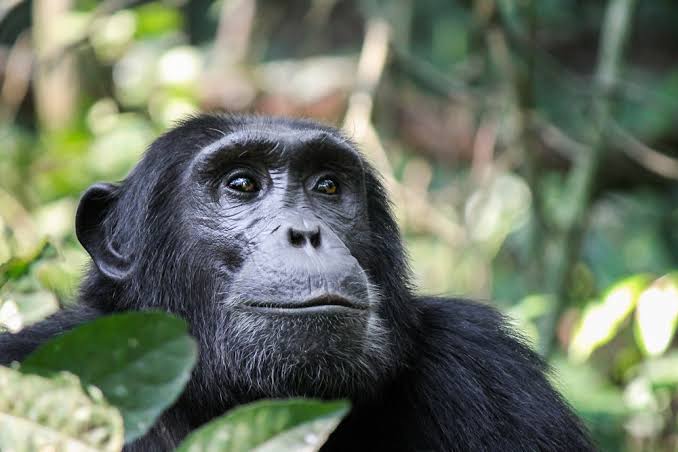
Quick Facts
Total Destinations
11
UNESCO Sites
7+
National Parks
16
Popular Destinations
Why Visit Tanzania?
- ✓World's largest wildlife migration
- ✓Home to Mount Kilimanjaro
- ✓Big Five game viewing
- ✓Pristine beaches & islands
- ✓Rich cultural heritage
Plan Your Adventure
Ready to explore Tanzania's iconic destinations? Get in touch with our travel experts to plan your perfect safari.
Request a custom itinerary for your next trip to Tanzania.
Our team of travel experts is here to help you create a custom itinerary for your next trip to Tanzania. We will work with you to create a itinerary that is tailored to your needs and budget.