
Mount Meru
There is a mountain in Tanzania that most people drive past on the way to something else. They can see it clearly from Arusha — a massive, forest-cloaked volcanic massif dominating the western sky — and they know it is significant. Africa's fifth-highest peak. A genuine 4,566-metre summit. A mountain with wildlife on its lower slopes and glaciers on its rim and a volcanic crater that dropped into the earth eight thousand years ago. And then they turn east toward Kilimanjaro and it disappears from their itinerary entirely.
This is Mount Meru's paradox and its gift. Famous enough that serious trekkers seek it out specifically, obscure enough that even at peak season its trails are quiet. Extraordinary enough to justify a 4-day climb in its own right, practical enough to transform as a Kilimanjaro acclimatisation platform. Wildlife-rich enough that every climbing group requires an armed ranger escort on the lower forested slopes, remote enough that that ranger's presence feels genuinely necessary rather than ceremonial.
Mount Meru is, in the considered opinion of adventuresseeker.com's team — who have guided trekkers to Socialism Peak across every season and from every level of experience — the finest 4-day mountain trek in East Africa. Not the highest. Not the most famous. The finest: in terms of scenery diversity, ecological richness, wildlife encounter, and the specific quality of its summit view, which places Kilimanjaro's snow-capped form across the plains below you at a distance and angle that makes the famous mountain look entirely different from how you have always pictured it.
This guide gives you everything you need to plan a Mount Meru climb in 2026 — the geology, the wildlife, the route day by day, the altitude and summit night reality, the best season, the real costs, what to pack, how to train, and exactly how Meru fits into the Tanzania safari and Kilimanjaro combination that makes northern Tanzania the finest adventure travel destination in Africa.
MOUNT MERU: QUICK FACTS
- Summit name: Socialism Peak — named during Tanzania's Ujamaa socialist era
- Summit altitude: 4,566 metres (14,980 feet) above sea level
- Africa ranking: Africa's fifth-highest peak after Kilimanjaro (5,895m), Mount Kenya (5,199m), Mawenzi (5,149m), and Mount Stanley (5,109m)
- Mountain type: Active stratovolcano — last significant eruption approximately 1910
- Location: Inside Arusha National Park, 35 km east of Arusha city, northern Tanzania
- Prominence: 3,170 metres — a free-standing massif with no significant connecting ridge to Kilimanjaro
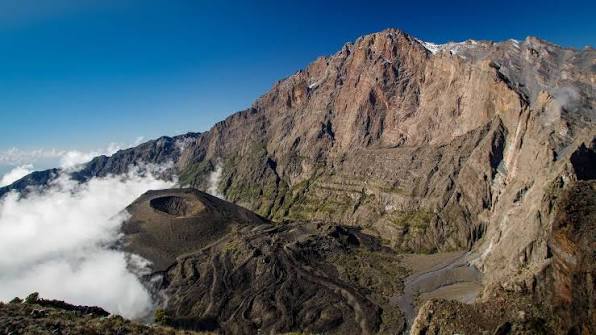
- Crater: A dramatic horseshoe-shaped crater formed approximately 8,000 years ago by a catastrophic eruption that destroyed the mountain's eastern wall
- Inner Cone: A smaller volcanic cone rising from the crater floor — this is the summit that trekkers approach on the final ascent
- Route: Momella Route — the only official trekking route, accessed through Arusha National Park Momella Gate
- Standard duration: 3 days minimum / 4 days recommended
- Technical difficulty: Non-technical — no ropes, harnesses, or specialist equipment required. Steep in places near the summit with rope assists on rock sections.
- Wildlife on trail: Buffalo and elephant on lower forested slopes — armed ranger escort mandatory for all groups
- Park entry fee: USD $45 per person per day (part of Arusha National Park)
- Rescue fee: USD $20 per climber (mandatory, paid at gate)
- Armed ranger fee: USD $23.80 per group per day (mandatory — not per person)
- Hut accommodation: Two mountain huts — Miriakamba Hut (2,514m) and Saddle Hut (3,566m)
- Annual climbers: Approximately 8,000–15,000 per year — a fraction of Kilimanjaro's 50,000
- Overall success rate: Approximately 80–85% (higher than Kilimanjaro's 65% average due to shorter duration and lower altitude)
- Nearest city: Arusha — 35 km west, approximately 40 minutes by road
- Nearest international airport: Kilimanjaro International Airport (JRO) — 30 km from Momella Gate
- Best combined with: Kilimanjaro (acclimatisation), Northern Circuit safari, Arusha National Park
- Management: Tanzania National Parks Authority (TANAPA) / Arusha National Park
WHY CLIMB MOUNT MERU? THE CASE FOR AFRICA'S FIFTH-HIGHEST PEAK
The Finest Kilimanjaro Acclimatisation in East Africa
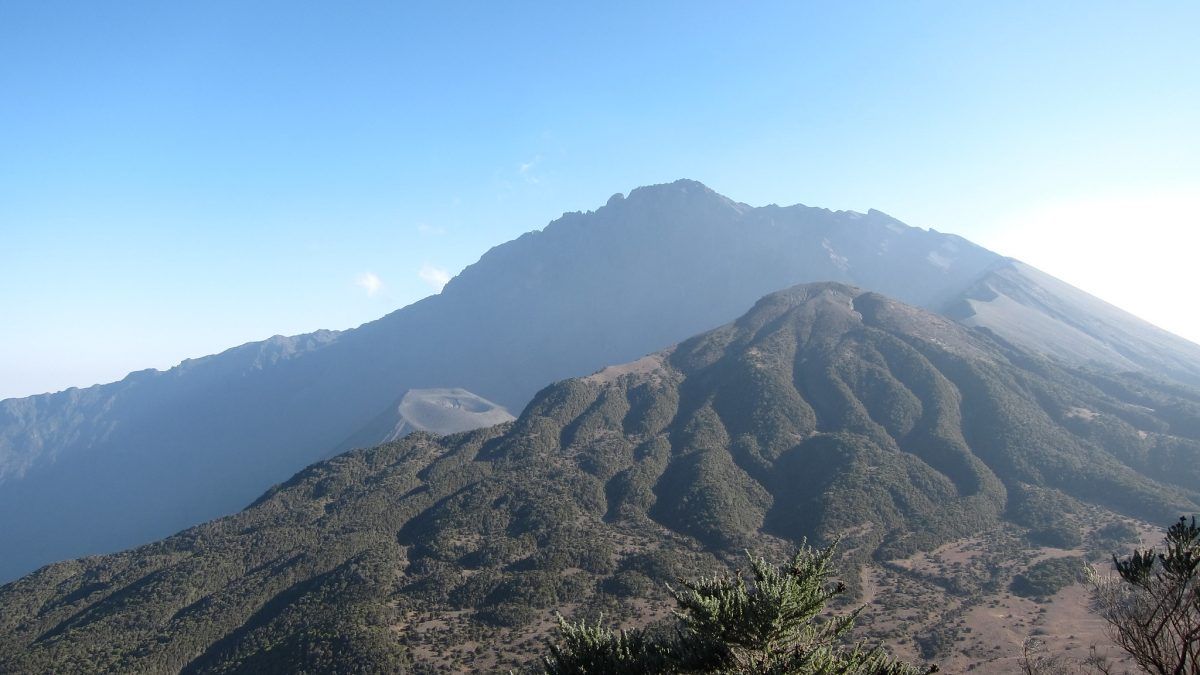
If you are planning to climb Kilimanjaro, Mount Meru is not merely a pleasant warm-up — it is the single most valuable preparation you can make. The Meru summit at 4,566 metres exposes your body to significant altitude — high enough to trigger meaningful acclimatisation responses including increased red blood cell production and respiratory adaptation — without the extreme demands of Kilimanjaro's 5,895 metres.
Trekkers who climb Meru (4 days) before Kilimanjaro (7–8 days) consistently report that the Kilimanjaro climb feels significantly easier. Altitude headaches are milder. Summit night is more manageable. The body has already begun the acclimatisation process that Kilimanjaro depends on. Multiple studies of Kilimanjaro summit success rates confirm that prior high-altitude exposure is among the most significant predictors of reaching Uhuru Peak.
🏔️ Acclimatisation Evidence: Trekkers who complete a 4-day Meru climb before Kilimanjaro consistently achieve summit success rates of 85–90% on Kilimanjaro — significantly above the overall average of 65%. The 4-day Meru acclimatisation window is precisely the right duration to trigger the physiological adaptations that Kilimanjaro's altitude demands.
A Complete Mountain Experience in Its Own Right
Mount Meru is not simply a training ground for Kilimanjaro — it is a world-class mountain trek that stands independently on every measure. Its four climate zones span tropical forest to Arctic summit. Its volcanic crater is one of East Africa's most dramatic geological features. Its wildlife — encountered at genuinely close range on an armed ranger-escorted trail — adds a dimension of wild Africa adventure unavailable on Kilimanjaro. And its summit view — Kilimanjaro's snow cap visible across the Arusha plains at dawn — is among the finest mountain panoramas in Africa.
Many trekkers who climb both Meru and Kilimanjaro describe Meru as the more memorable mountain experience. Not the more challenging or the more famous — the more alive. The forest is denser, the wildlife closer, the geology more dramatic, the crowds fewer, and the sense of genuine wilderness more complete.
Wildlife on the Trail — A Dimension Kilimanjaro Cannot Offer
This is Mount Meru's most distinctive characteristic and its most frequently cited differentiator from Kilimanjaro: you trek through wildlife. The lower forested slopes of the Momella Route support healthy populations of Cape buffalo and African elephant, and all climbing groups are escorted by an armed TANAPA ranger from the gate. Buffalo and elephant encounters on the trail are common — particularly on the first day between Momella Gate and Miriakamba Hut — and they transform the trekking experience entirely.
On Kilimanjaro, wildlife is limited to the forest zone in the first few hours of the first day — vervet monkeys, colobus monkeys, a few birds. By the heathland, the mountain is wild in the geological sense but empty of large mammals. On Meru, you spend your first full day in genuine big-game country, with an armed ranger making real-time decisions about approach and safe distance. The combination of mountain trekking and wildlife encounter is extraordinary and unique.
🌿 Wildlife Reality: Buffalo and elephant encounters on the Meru lower trail are not rare or exceptional — they are a standard expectation. Your armed ranger guide will have managed dozens or hundreds of these encounters and will position your group safely and efficiently. The presence of large wildlife on the trail is not a risk — it is an extraordinary feature of Mount Meru that makes it unlike any other major trekking peak in Africa.
Far Less Crowded Than Kilimanjaro
With approximately 8,000 to 15,000 trekkers per year compared to Kilimanjaro's 50,000, Meru feels genuinely uncrowded even at peak season. The two mountain huts — Miriakamba and Saddle — accommodate far fewer climbers than Kilimanjaro's crowded high camps. The summit approach has none of the convoy-of-headlamps quality that Kilimanjaro's peak-season summit nights produce. At Meru, even in August, you can spend hours on the trail without seeing another climbing group.
The Two-Mountain Summit View
The view from Socialism Peak at dawn is one of the finest summit panoramas in East Africa — and one that is entirely specific to Meru's position relative to Kilimanjaro. As the sky lightens from the east, Kilimanjaro's massive dome — 75 kilometres away across the Arusha plains — catches the first sunlight. The snows on Kilimanjaro's summit glow pink, then gold, then brilliant white as the sun rises. Below you, Meru's inner crater falls away in dramatic cliffs. The Arusha plains spread from 4,566 metres to the horizon. It is a view that Kilimanjaro climbers, standing on Uhuru Peak, cannot see — because you cannot see Meru from Kilimanjaro's summit the way you can see Kilimanjaro from Meru's.
MOUNT MERU'S GEOLOGY: AFRICA'S MOST DRAMATIC VOLCANIC CRATER
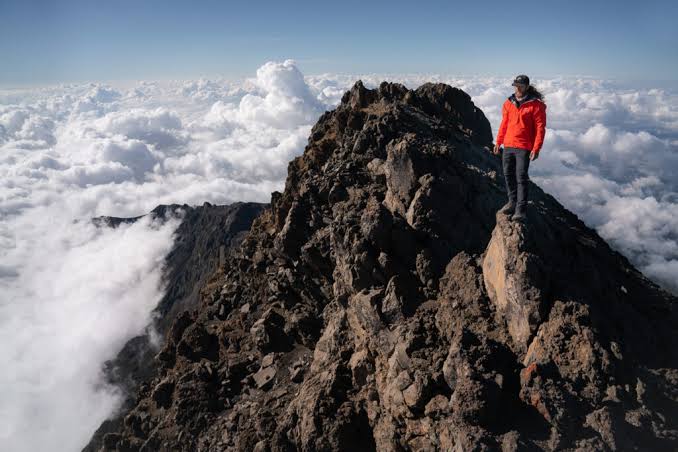
Mount Meru's geology is the foundation of everything that makes it extraordinary — the dramatic horseshoe-shaped crater, the inner cone summit, the forested lower slopes, and the five ecological zones that trekkers pass through from gate to summit.
The Ancient Eruption That Shaped Everything
Approximately 8,000 years ago, Mount Meru was a symmetrical volcanic cone estimated to have stood at approximately 5,500 metres — higher than the current summit. A catastrophic eruption triggered a massive eastward collapse of the mountain's eastern wall, sending an enormous debris avalanche across the plains toward the east. This single geological event created the dramatic horseshoe-shaped crater visible today — open on the eastern side, with the remaining western and southern walls forming a sheer crater rim of extraordinary beauty.
The debris from this eruption travelled as far as 50 kilometres east across the Arusha plains — geological deposits from the Meru debris avalanche have been identified in river sediments far from the mountain. The scale of the eruption and collapse was one of the most significant volcanic events in East Africa in the last 10,000 years.
Subsequent volcanic activity within the crater created the Inner Cone — a smaller volcanic formation rising from the crater floor that now forms the mountain's summit. This Inner Cone is what trekkers ascend on the summit night push, approaching the Socialism Peak crater rim from the south-west.
🏔️ Geological Scale: The Mount Meru debris avalanche 8,000 years ago was geologically comparable in scale to the 1980 Mount St Helens eruption in Washington State, USA. The resulting horseshoe crater — open to the east — is one of the finest examples of a volcanic sector collapse visible from ground level anywhere in Africa.
Active Volcano
Mount Meru is classified as an active volcano — it last erupted in 1910, producing lava flows and ash falls that affected the surrounding plains. Fumarolic activity (steam vents) is still present within the crater, confirming that the magmatic system beneath the mountain remains active. A future eruption is considered possible by geologists, though no imminent threat has been identified. The mountain is monitored by Tanzania's geological survey.
The volcanic activity history is visible throughout the trek — the red and black volcanic soils of the heathland zone, the ash deposits in the crater walls, and the steam wisps visible from the crater rim on cold mornings all confirm that Meru is a living geological feature, not merely a historical one.
The Five Ecological Zones
The change in vegetation from Momella Gate to Socialism Peak is one of the most dramatic ecological transitions on any East African mountain:
- Montane Forest (1,500–2,600m): Dense, cathedral-like montane forest dominated by large fig trees, wild mango, Cape chestnut, and podocarpus. The darkest and most atmospheric zone — home to colobus monkeys, baboons, and the buffalo and elephant that make the ranger escort necessary. Orchids and mosses cover the tree trunks. Waterfalls cascade from the upper slopes.
- Sub-Alpine Heathland (2,600–3,500m): The forest gives way to open moorland dominated by giant heather (Erica arborea) that grows to the height of small trees. Giant lobelia (Lobelia deckenii) and giant groundsel (Dendrosenecio johnstonii) create a surreal landscape that looks unlike any lowland environment. The first views of the crater wall and summit are revealed as the heathland opens.
- Alpine Moorland (3,500–4,000m): Vegetation becomes sparser and more specialised. Everlasting flowers (Helichrysum species) dot the rocky ground. The Saddle Hut at 3,566m sits in this zone, with extraordinary views across to the Inner Cone and down to the crater floor. Night temperatures in this zone drop to minus 5°C to minus 10°C.
- Alpine Desert (4,000–4,500m): Rock and volcanic ash with only the hardiest cushion plants surviving. The upper crater rim approach. Wind intensifies. Temperature fluctuations of 40°C between midday and pre-dawn are possible.
- Arctic Summit Zone (4,500–4,566m): The crater rim and Socialism Peak. No vegetation. Ice patches on the shaded north-facing walls. The view of Kilimanjaro to the east and the crater to the north-west dominates everything.
WILDLIFE ON MOUNT MERU: AFRICA'S ONLY WILDLIFE-RICH TREKKING PEAK
No other major mountain trek in Africa combines significant altitude with genuine big-game wildlife in the way that Mount Meru does. The lower slopes of the Momella Route pass through prime buffalo and elephant territory, and wildlife encounters on the trail are not occasional bonuses — they are standard expectations that every climbing group experiences.
Why There Is Wildlife on Mount Meru
Unlike Kilimanjaro, which is surrounded by agricultural land and human settlement that has reduced wildlife access to the lower slopes, Mount Meru sits entirely within Arusha National Park — a protected area that extends from the Momella Lakes at 1,500m to the summit at 4,566m. The national park boundary means that the forest zone of the Momella Route is genuine wildlife habitat rather than a human-modified transition zone. Buffalo, elephant, and their attendant predators range freely across the lower slopes and treat the trekking trail as simply one more path through their territory.
Cape Buffalo — The Primary Safety Consideration
Cape buffalo are the most commonly encountered large mammal on the Momella Route and the primary reason that an armed ranger escort is mandatory. Herds of 20 to 80 animals use the lower forest trails as movement corridors and watering routes, and individual bulls — older males that have separated from the main herd — are found throughout the forest zone at any time of day.
Buffalo on the Meru trail are typically not aggressive when approached correctly by an experienced ranger guide. They will often stop, assess the group, and then move off the trail. The critical skill is the ranger's ability to manage approach angles, sound discipline, and retreat protocols if a buffalo tests its position. Trekkers who follow ranger instructions completely have an entirely safe and extraordinarily memorable experience. Trekkers who fail to follow instructions create genuine risk.
- Where encountered: Primarily between Momella Gate (1,500m) and Miriakamba Hut (2,514m) — the lower forest zone. Occasionally encountered higher on the heathland transition.
- Time of day: Most active at dawn and dusk, but present on trail at any hour. Morning departures from Momella Gate frequently encounter buffalo within the first hour.
- Sound discipline: Your ranger will give specific instructions about silence when approaching buffalo. Sudden sounds cause unpredictable responses. Follow the ranger's hand signals without question.
African Elephant
Elephants are present on the lower slopes of Meru throughout the year, though encountered less frequently than buffalo on the trail itself. Family groups move between the lower forest and the agricultural land outside the park boundary, using the national park as core habitat. Individual bulls are more frequently encountered on the trail than breeding herds.
An elephant encounter on the Meru trail is one of the most memorable moments a trekker can experience. The forest amplifies the sounds of elephants before they become visible — the cracking of branches, the deep subsonic rumbles of elephant communication, the sound of feeding. Your ranger positions the group safely and allows observation from an appropriate distance.
- Where encountered: The lower forest zone between the gate and Miriakamba Hut, and occasionally along the forest-moorland transition
- Ranger protocol: Upwind positioning, stationary observation, controlled retreat if the elephant group approaches. Your ranger has managed dozens of these encounters.
Black-and-White Colobus Monkey
The montane forest of the Momella Route is prime colobus habitat, and troops of black-and-white colobus are encountered on most climbing days in the lower forest zone. These striking primates — coal-black bodies, flowing white mantle, long white tail — move through the canopy with extraordinary speed and agility, their deep whooping calls carrying through the forest well before they are visible.
Colobus sightings on the Meru trail have a quality not available on forest game drives: you are at ground level in their environment, the encounter is on foot, and the time spent watching is limited only by your willingness to stop. A colobus troop feeding in the fig trees alongside the trail at dawn is one of the Meru trail's most beautiful and most accessible wildlife moments.
Olive Baboon
Large troops of olive baboons — sometimes 50 or more animals — are common in the lower forest zone and around Miriakamba Hut. Baboons are entirely habituated to the trekking groups and will approach to investigate food smells. Keep all food in sealed containers when at the huts — baboons are opportunistic and bold.
Other Notable Wildlife
- Blue monkey (Cercopithecus mitis): Present in the forest canopy alongside colobus — the two species often share the same trees. Blue-grey colouration and continuous chattering call.
- Bushbuck (Tragelaphus scriptus): The elegant forest antelope — most often seen at dawn and dusk at the forest edge near the huts. Male bushbuck with their small spiral horns are particularly photogenic.
- Red duiker (Cephalophus harveyi): Small, russet-coloured forest antelope seen in the understorey. Tanzania endemic.
- Warthog: Common on the grassland areas around Momella Gate and the lower slopes.
- Mongoose (banded and dwarf): Family groups around the huts and forest edge.
- Porcupine: Nocturnal — the rattling of quills is occasionally heard around the huts at night.
- Birds: Over 400 species recorded in Arusha National Park including the forest zone — silvery-cheeked hornbill, Hartlaub's turaco, African paradise flycatcher, numerous sunbird species, and the White-naped raven which is commonly seen near the summit hut and crater rim.
🌿 Wildlife Guide Insight: The wildlife on the Meru trail is not managed for viewing convenience — these animals are genuinely wild, using the forest on their own terms. The armed ranger does not 'arrange' encounters. What the ranger provides is the expertise to manage those encounters safely when they happen organically. This is what makes the Meru wildlife experience so powerful: it is real.
THE MOMELLA ROUTE: MOUNT MERU'S ONLY TREKKING PATH — COMPLETE DAY-BY-DAY GUIDE
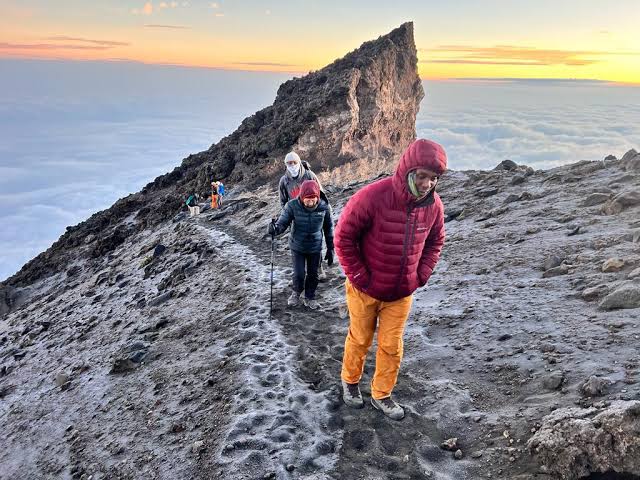
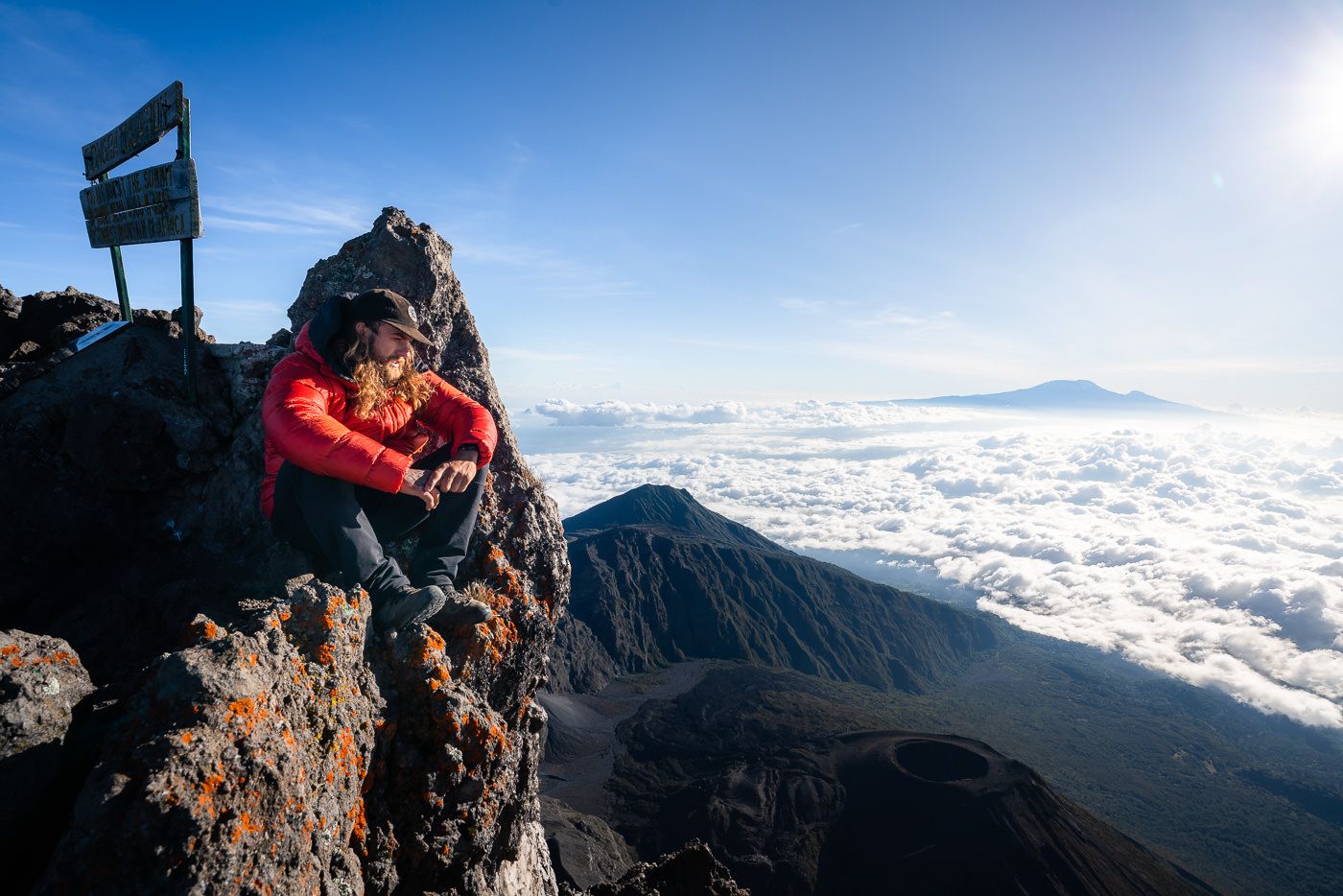
The Momella Route is the only officially permitted trekking route on Mount Meru, accessed exclusively through Arusha National Park's Momella Gate. The route is a linear ascent on the south-western side of the mountain, rising through the five ecological zones before the summit push from Saddle Hut. Descent uses the same path.
Route Overview
- Momella Gate altitude: 1,500 metres
- Miriakamba Hut: 2,514 metres (Day 1 camp)
- Saddle Hut: 3,566 metres (Day 2 camp — also summit launch point)
- Little Meru (acclimatisation excursion): 3,820 metres
- Socialism Peak (summit): 4,566 metres
- Total vertical gain (gate to summit): 3,066 metres
- Total distance (round trip): Approximately 55–60 kilometres
- Trek duration: 3 days (minimum, not recommended) or 4 days (standard, recommended)
- Technical sections: Fixed rope assists on the rock sections of the Inner Cone approach — non-technical but require use of hands
Day 1: Momella Gate (1,500m) to Miriakamba Hut (2,514m)
The first day is the wildest and in many ways the most extraordinary. The Momella Gate registration takes 30 to 45 minutes — time for the ranger to brief the group on wildlife protocol, demonstrate safe distances, and confirm communication procedures. Then you enter the forest.
The first hours of Day 1 are through dense montane forest on a well-maintained trail. The forest is immediately impressive — tall fig trees with enormous buttress roots, the calls of hornbills and turacos from the canopy, colobus monkeys visible in the upper branches. The trail gains altitude steadily but not dramatically — the gradient is gentle enough to feel manageable while the forest does the work of captivating attention.
- Wildlife zone: This is the primary buffalo and elephant zone. Your ranger leads the group and manages all wildlife encounters. Stay together, move at the ranger's pace, and follow hand signals silently.
- Duration: 3.5 to 5 hours depending on wildlife encounters and pace
- Elevation gain: 1,014 metres
- Waterfall viewpoint: Approximately 2 hours from the gate, a short detour leads to a forest waterfall — worth the 20-minute round trip
- Miriakamba Hut: The first hut sits in a clearing at 2,514m with spectacular views of the Inner Cone and the crater wall above. Buffalo are commonly seen in the meadow around the hut at dusk and dawn. The hut has dormitory-style sleeping, a dining area, and basic ablution facilities.
- Afternoon at Miriakamba: After arrival (typically early afternoon), most groups rest, eat, and then take a short acclimatisation walk around the hut meadow. The views of the crater wall and the Inner Cone at sunset from Miriakamba are extraordinary.
Day 2: Miriakamba Hut (2,514m) to Saddle Hut (3,566m) — Plus Little Meru Excursion (3,820m)
Day 2 is the acclimatisation day — the most important day of the entire climb for summit success. The main ascent from Miriakamba to Saddle Hut takes 3 to 4 hours through the heathland and sub-alpine moorland transition. The vegetation changes dramatically — the dense forest gives way to open heather moorland, then to the giant lobelia and giant groundsel that exist only on African high-altitude mountains. The views open up progressively as the tree canopy recedes.
- Saddle Hut (3,566m): The upper hut sits in the saddle between the main Meru crater wall and Little Meru (3,820m) — the secondary cone to the north-east. The location is dramatically exposed — views of the Inner Cone directly above, the crater wall to the west, and the Arusha plains beginning to appear below to the east.
Crucially important: the afternoon of Day 2 should be spent on the Little Meru acclimatisation excursion. This 1.5 to 2 hour walk (round trip from Saddle Hut) climbs to the summit of Little Meru at 3,820 metres — applying the 'climb high, sleep low' principle that is the cornerstone of high-altitude acclimatisation. You reach 3,820 metres, take in the views, then descend back to Saddle Hut at 3,566 metres for the night. The physiological benefit of this pattern — sleeping 250 metres below the day's high point — is significant.
- Little Meru view: From Little Meru at 3,820m, the complete inner crater of Meru is visible for the first time — a horseshoe of towering volcanic cliffs surrounding a crater floor 1,500 metres below. Kilimanjaro becomes visible to the south-east on clear afternoons. This is a preview of the summit view at a more manageable altitude.
- Evening at Saddle Hut: Dinner at 5:30 PM, bed by 7:00 PM. Sleep will be fragmented at this altitude — this is normal. The cold intensifies significantly after dark — sleeping bag warmth becomes the primary comfort variable.
🏔️ Most Critical Advice: The Little Meru afternoon walk on Day 2 is the single most important factor in summit success on Meru. Many trekkers skip it because they are tired after the Day 2 ascent. This is the wrong decision. The acclimatisation benefit of sleeping at 3,566m after reaching 3,820m is the difference between a manageable summit night and a genuinely difficult one. Never skip the Little Meru walk.
Day 3: Summit Night and Descent — Saddle Hut (3,566m) to Socialism Peak (4,566m) and Back to Miriakamba (2,514m)
Summit night on Meru begins with a 2:00 AM to 3:00 AM departure from Saddle Hut. The target is Socialism Peak at dawn — the same logic as Kilimanjaro's midnight departure, and for the same meteorological reason: the summit is clearest in the hour around sunrise, before cloud and wind build through the morning.
The Summit Approach in Detail
The first section from Saddle Hut to the base of the Inner Cone traverses the saddle and begins climbing the ridge toward the crater rim. The path is clear and well-worn, marked with cairns for night navigation. Temperature at departure is typically minus 5°C to minus 10°C, with wind chill making it feel colder. All layers must be on before leaving the hut.
The Inner Cone approach — the steep, rocky final section to the crater rim — includes several sections where fixed ropes have been installed to assist on the steeper rock faces. These are not technical climbing moves but they require use of hands and comfortable movement on rock. They are entirely manageable for any able-bodied trekker. Your ranger and guide will position the group carefully through these sections.
- 2:00–3:00 AM departure: Leave Saddle Hut fully layered. Headlamps on. Your guide leads, ranger at the rear.
- First two hours: Trail across the saddle and up the initial ridge. Cold and dark. The altitude is already being felt — you are at 3,566m at departure and climbing toward 4,000m in the first section.
- The rope sections: Approached approximately 3 to 4 hours into the summit night. Fixed ropes on steep volcanic rock. Your ranger demonstrates the technique. Move slowly and methodically.
- Ash Cone approach: Above the rope sections, the path moves up the ash and scree slopes of the Inner Cone — volcanic material that shifts underfoot, requiring careful foot placement.
- Socialism Peak crater rim: The crater rim is reached approximately 4 to 6 hours after leaving Saddle Hut. The inner crater drops away on the north side — a stunning volcanic amphitheatre. Kilimanjaro is visible to the south-east.
- Socialism Peak (4,566m): The actual summit — marked with a sign on the highest point of the crater rim. Dawn breaking over Kilimanjaro. Africa laid out below. The most extraordinary summit view in East Africa.
Descent to Miriakamba
After 10 to 20 minutes at the summit, descent begins. The descent from Socialism Peak to Saddle Hut typically takes 3 to 4 hours. After a brief rest and breakfast at Saddle Hut, the group continues down to Miriakamba Hut for the final night — a further 2 to 3 hours of descent through the heathland and into the forest.
- Knee protection: Trekking poles are essential for the descent. The volcanic scree and steep sections create significant knee impact. Use the poles actively from the first step of the descent.
- Wildlife on descent: Buffalo and elephant encounters are again possible on the lower trail back to Miriakamba. Stay alert and follow ranger protocols even when tired from summit night.
Day 4: Miriakamba Hut (2,514m) to Momella Gate (1,500m)
The final day is a straightforward 2 to 3 hour descent through the forest to the gate. Most groups arrive at Momella Gate by 10:00 to 11:00 AM. The certificate ceremony at the gate — where TANAPA staff present completion certificates to summiteers — provides a formal and satisfying conclusion to the climb. Tips for the guide, cook, and porters are distributed here.
- Certificate: All trekkers who reach Socialism Peak receive an official TANAPA summit certificate at the gate. A consolation certificate is available for those who reached Saddle Hut or Little Meru but did not summit.
- Transfer: Adventures Seeker collects all groups at the gate and transfers to Arusha or Moshi accommodation. Most trekkers arrive in Arusha or Moshi by midday, with a full afternoon for rest and recovery.
ALTITUDE, HEALTH, AND SAFETY ON MOUNT MERU
At 4,566 metres, Mount Meru reaches significant altitude — high enough to trigger Acute Mountain Sickness (AMS) in climbers who ascend too quickly. However, its altitude is substantially lower than Kilimanjaro's 5,895 metres, and the well-designed 4-day itinerary with the Little Meru acclimatisation day provides a sensible ascent profile that keeps AMS rates significantly below those seen on Kilimanjaro.
Altitude Sickness on Meru — What to Expect
Mild AMS symptoms are common above 3,000 metres and most Meru trekkers experience at least some headache and fatigue on Day 2 and the summit night. The key distinction is between manageable mild symptoms and the warning signs that require descent:
- Normal and expected: Mild headache manageable with paracetamol, reduced appetite, fatigue greater than the effort explains, slightly disturbed sleep at Saddle Hut.
- Requires guide consultation: Persistent headache not responding to medication and hydration, nausea or vomiting, dizziness affecting balance.
- Requires immediate descent: Severe persistent headache, repeated vomiting, loss of coordination or balance, confusion, gurgling sound in chest, shortness of breath at rest.
The 4-day itinerary with the Little Meru acclimatisation excursion is specifically designed to minimise AMS risk. The 3-day itinerary compresses acclimatisation and produces noticeably higher AMS rates — this is the primary reason we recommend 4 days rather than 3.
Prevention Protocol
- Choose 4 days not 3: The most effective single intervention. The extra day and the Little Meru acclimatisation walk dramatically reduce AMS risk.
- Pole pole — walk slowly: Your guide sets the pace. Follow it without trying to increase speed. This is the most common violation of altitude sickness prevention on both Meru and Kilimanjaro.
- Hydrate: 3 to 4 litres of water per day on the mountain. Dehydration worsens AMS symptoms significantly.
- Eat: Force yourself to eat even when appetite is reduced. High-carbohydrate foods are most efficiently metabolised at altitude.
- Diamox (acetazolamide): Consult your doctor before the climb. Many Meru trekkers use it prophylactically at 125mg twice daily. It is not a substitute for adequate days but provides additional protection for altitude-sensitive individuals.
- Avoid alcohol and sedatives: Both depress respiratory drive and worsen acclimatisation. Avoid completely on the mountain.
- Report symptoms immediately: Your guide performs daily health checks. Report any symptoms promptly — early intervention is always preferable to late management.
Wildlife Safety Protocol
The armed ranger escort is a legal requirement and a genuine safety measure. The following protocols apply throughout the trek:
- Walk in single file: The ranger leads and the guide/cook manages the rear. Do not spread out across the trail.
- Sound discipline near wildlife: Speak quietly or not at all when the ranger signals wildlife proximity. Do not use your phone or camera with loud shutter sounds without warning the group.
- Do not run: If a buffalo or elephant approaches, the ranger will direct a controlled retreat. Never run — running triggers a chase response.
- Follow hand signals immediately: Your ranger uses hand signals for stop, move, and retreat. Respond immediately without asking for explanation.
- Keep together: Never separate from the group. In dense forest, separating from the ranger creates genuine risk.
🏔️ Safety Record: Mount Meru's wildlife safety record for guided trekking groups is excellent. No deaths from wildlife encounters have been recorded in the park's trekking programme when proper ranger escort protocols were followed. The safety system is well-designed and well-implemented. Follow it completely.
BEST TIME TO CLIMB MOUNT MERU: MONTH-BY-MONTH GUIDE
Mount Meru can be climbed year-round but conditions vary significantly between seasons. The two dry seasons provide the best climbing conditions; the rainy seasons create challenging but not impossible alternatives for experienced trekkers.
The Two Peak Climbing Seasons
January and February (Short Dry Season): Excellent conditions. Clear skies, dry trails, and the finest views of Kilimanjaro from the summit — the January–February window consistently produces the clearest cross-continental views. Trail conditions are firm and fast. These months coincide with the calving season in the nearby Serengeti, making a combined Meru climb and calving season safari itinerary genuinely exceptional.
June to October (Long Dry Season): The most popular climbing season. Dry trails, cold nights (the coldest of the year in August and September), and reliable summit views. July and August are the peak months with the highest climber numbers — still far less busy than Kilimanjaro. September and October offer excellent conditions with slightly fewer climbers and similar summit success rates.
Month-by-Month Breakdown
- January: Excellent. Dry, clear, moderate temperatures. Some of the finest Kilimanjaro views from the summit. Low climber numbers relative to quality.
- February: Outstanding — the finest month for summit visibility. Clear skies, dry trails, cold but manageable. Forest wildlife active and frequently encountered.
- March: Long rains beginning. Trails becoming wet. Still feasible in early March but conditions deteriorating.
- April: Long rains at peak. Forest trails wet and muddy. Summit views frequently obscured. Not recommended for most trekkers.
- May: Rains continuing and easing late in the month. Lush, beautiful forest but challenging conditions. Better suited to experienced trekkers who accept compromised views.
- June: Dry season opening. Conditions improving rapidly from mid-June. Excellent by late June. Trails firm. Good choice for early dry-season trekkers.
- July: Excellent. Peak season — highest climber numbers of the year but still quiet compared to Kilimanjaro. Cold nights at Saddle Hut (minus 5 to minus 10°C).
- August: Outstanding. Clear skies, crisp air, best photography light. The coldest month at altitude. Peak forest wildlife activity at dawn.
- September: Excellent. Slightly fewer climbers than August. Still outstanding conditions. One of the finest months for the combined Kilimanjaro view from the summit.
- October: Very good. Dry season continuing. Conditions excellent in the first three weeks. Short rains may arrive late October.
- November: Short rains. Variable conditions. Trails can be wet. Feasible but not recommended as a primary target.
- December: Short rains tapering. Conditions improving through the month. Good from mid-December. Christmas period has higher climber numbers.
📅 Optimal Months: For the finest combination of trail conditions, summit visibility, and wildlife activity: February (dry, clear, lowest crowds, best Kilimanjaro view) and September (dry, excellent wildlife, slightly quieter than August). Both months align well with the Northern Circuit safari season and make excellent starting points for a combined Meru-and-safari itinerary.
MOUNT MERU CLIMBING COSTS 2026: COMPLETE BREAKDOWN
Mount Meru is significantly less expensive than Kilimanjaro — primarily because the lower altitude requires fewer days, the crew ratios are smaller, and the rescue/conservation fees are lower. However, the mandatory government fees make it more expensive than it might appear from an initial operator quote.
Mandatory Government Fees Per Climber
- Arusha National Park entry fee: USD $45 per person per day
- — 4-day climb total: USD $180 per climber
- — 3-day climb total: USD $135 per climber
- Rescue fee (mandatory): USD $20 per climber
- Armed ranger fee: USD $23.80 per group per day (4 days = $95.20 per group — note: per group not per person)
- Hut fee — Miriakamba: Approximately $35–$50 per person per night
- Hut fee — Saddle Hut: Approximately $35–$50 per person per night
- Total mandatory fees (4-day, solo trekker): Approximately $380–$420 per person
- Total mandatory fees (4-day, 2 trekkers sharing ranger fee): Approximately $320–$360 per person
Full Package Cost by Tier
- Budget package (4-day Meru, group format): USD $700 – $900 per person. Includes all park fees, basic crew (guide, cook, porter), hut accommodation, all meals on mountain. Shared ranger fee divided across group.
- Standard package (4-day Meru, semi-private): USD $900 – $1,200 per person. Good crew, experienced guide, quality food, private or semi-private format.
- Premium package (4-day Meru, fully private): USD $1,200 – $1,600 per person. Dedicated guide, private cook, maximum porter support, highest-quality mountain food, dedicated ranger escort.
What Varies Between Operator Tiers
- Guide experience and mountain knowledge: The most important variable. A guide who has made 200 Meru climbs knows the buffalo territories, the best wildlife viewpoints, the specific rope sections, and exactly when to turn back if conditions deteriorate.
- Food quality: Budget operators serve functional but basic meals. Premium operators bring fresh ingredients, variety, and hot meals at every stop.
- Porter-to-climber ratio: More porters mean faster camp setup, lighter individual loads, and better welfare for the crew.
- Equipment provided: Confirm the sleeping bag rating (must be minus 15°C or colder), tent quality, and dining shelter. Budget operators sometimes provide equipment rated for conditions less severe than summit night demands.
Tipping Guide
Tips are expected and important for crew welfare:
- Lead guide: USD $15–$20 per climber per day (4-day climb: $60–$80 per climber to the guide)
- Cook: USD $8–$12 per climber per day
- Porters: USD $6–$10 per climber per day
- Armed ranger (from TANAPA): USD $10–$15 per group per day — appreciated but not always expected
- Total tip budget (4-day climb, solo): Approximately $150–$220 — bring in USD cash for the gate ceremony
Mount Meru vs Kilimanjaro — Cost Comparison
- Mount Meru 4-day standard package: USD $900–$1,200 per person
- Kilimanjaro 7-day Machame standard package: USD $2,500–$3,500 per person
- Kilimanjaro 8-day Lemosho standard package: USD $2,800–$3,800 per person
- Cost saving of Meru vs Kilimanjaro: Approximately $1,500–$2,500 per person
For trekkers doing Meru as acclimatisation before Kilimanjaro, the combined cost is approximately $3,500–$5,000 per person — and the Kilimanjaro summit success rate improvement that Meru provides is worth significantly more than the additional cost of the 4-day climb.
HOW TO CHOOSE A MOUNT MERU CLIMBING OPERATOR
The quality of your Mount Meru experience is determined primarily by two factors: your guide's mountain knowledge and experience, and whether the crew welfare standards meet ethical minimums. Here are the specific questions to ask before booking:
Guide Qualifications
- KINAPA/TANAPA licensed: All Meru guides must hold a valid Tanzania National Parks Authority guide license. Ask to see the license number and verify it.
- Number of Meru climbs: Ask specifically. A guide who has made 50 or more Meru climbs has a fundamentally different depth of knowledge from one who has made 10.
- Wildlife management training: Given the buffalo and elephant presence on the trail, your guide should have specific wildlife encounter management training beyond the standard trekking guide certification.
- First aid certification: Wilderness first aid training is essential for any guide operating at altitude with wildlife present.
Equipment Standards
- Sleeping bag rating: Confirm the rating — minimum minus 15°C for summit night conditions. Bags rated at minus 5°C to minus 10°C are inadequate for Saddle Hut in July and August.
- Dining tent: Essential — eating in the open in cold, wind, and rain at 3,566m is genuinely miserable. Confirm a proper dining shelter is provided.
- Portable toilet tent: Not always included — ask. At Saddle Hut in cold conditions, a toilet tent is a significant comfort factor.
- Emergency communication: Does the guide carry a radio or satellite communicator for emergency contact with the gate? This is not universal on Meru — confirm.
Crew Welfare
- Porter wages: Ask what porters are paid per day. The ethical minimum is approximately USD $12–$15 per day, and reputable operators pay above this. Operators who cannot state a specific porter wage figure are often underpaying.
- Porter load limits: Maximum 20 kg per porter — the same standard applied by KPAP on Kilimanjaro. Ask whether this is enforced.
- Porter equipment: Do porters have adequate warm clothing, sleeping bags, and food for the conditions? Porters at Saddle Hut in August experience the same temperatures as climbers. An operator who provides good equipment for clients but not for crew is an operator to avoid.
Red Flags
- Park fee mathematics that does not add up: If the total quote is below the sum of mandatory government fees ($380–$420 per person for 4 days) plus basic crew wages, ask how the gap is being covered.
- Cannot name the guide: A reputable operator assigns specific guides. 'An experienced guide will be provided' is not an answer.
- 3-day itinerary strongly recommended: Operators who push the 3-day itinerary for budget reasons are prioritising their cost savings over your summit success rate. Always ask about the 4-day option and the acclimatisation rationale.
Adventures Seeker: TANAPA-licensed guides with 5–15 years of Meru experience. All crew wages above the ethical minimum. Minus 15°C sleeping bags provided. Dining tent on all climbs. Emergency radio carried. We can name your guide before you book, describe their specific Meru experience, and provide references from previous clients on the same route.
HOW TO PREPARE FOR MOUNT MERU: TRAINING GUIDE
Mount Meru demands significantly less preparation than Kilimanjaro — its shorter duration, lower summit altitude, and well-managed acclimatisation profile make it accessible to trekkers with a solid general fitness base. However, 'accessible' does not mean 'easy.' The summit night and the buffalo-patrolled forest trail of Day 1 both require specific preparation.
Physical Fitness Requirements
A successful Mount Meru climb requires:
- Sustained hiking capacity: The ability to walk 5 to 8 hours per day with a daypack over consecutive days. This is a multi-day endurance challenge, not a single-day athletic event.
- Aerobic base: A cardiovascular system capable of sustained moderate effort at altitude. Runners, cyclists, swimmers, and regular hikers are well-positioned. Gym-only fitness is inadequate without supplementary aerobic work.
- Knee health: The descent from Socialism Peak to Saddle Hut and then to Miriakamba involves significant downhill on volcanic scree. Knee health and eccentric leg strength matter more for the descent than the ascent.
- Core stability: Useful for balance on the rope sections of the Inner Cone approach and the uneven forest trail.
Recommended Training Programme (12 Weeks)
- Weeks 1–4 (Foundation): 3–4 cardiovascular sessions per week of 30–45 minutes. Begin weekend hikes of 2–3 hours. Establish a consistent aerobic base. Body weight squats and lunges 2× per week for leg strength.
- Weeks 5–8 (Build): Increase weekend hike duration to 4–6 hours. Add a second weekend hike if possible. Carry a weighted pack (8–10 kg) on hikes to simulate mountain conditions. Begin stair-machine sessions in the gym (30–40 minutes) as a supplement to outdoor hiking.
- Weeks 9–12 (Specific Preparation): One long hike per week of 6–8 hours with a weighted pack. Practice walking downhill on uneven terrain — this specific movement pattern is the one most trekkers are least prepared for. Add single-leg exercises (step-downs, single-leg squats) for knee stability.
- If doing Meru before Kilimanjaro: Add 4 additional weeks of training beyond the above schedule to prepare for the combined 11–12 day mountain effort.
Mental Preparation
- Summit night reality: The pre-dawn hours of summit night are the hardest. Cold, altitude, darkness, and fatigue combine at 4,000m. Knowing that this window is temporary — that dawn is coming and the summit is close — is the primary mental resource.
- Wildlife encounter composure: Some trekkers feel significant anxiety at the prospect of buffalo on the trail. Mental rehearsal of the ranger protocol — stop, be still, follow signals — reduces anxiety on the actual encounter.
- Accept the pace: Your guide will set a pace that feels almost comically slow. Accepting this pace early — rather than fighting it and then slowing down — is the most effective mental strategy for the entire climb.
MOUNT MERU PACKING LIST: WHAT YOU ACTUALLY NEED
Meru packing follows the same core principles as Kilimanjaro but with one important difference: the forest zone is genuinely wet (moss, waterfalls, heavy dew) while the summit zone is dry and cold. Your layering system must address both extremes, and waterproofing is more critical on Meru than on the drier Kilimanjaro routes.
The Layering System
- Base layer (moisture-wicking, long-sleeve): 2 sets — one to trek in, one to sleep in. Merino wool or synthetic. Worn continuously from Day 1 into the forest to summit night.
- Mid-layer (fleece): One medium-weight fleece jacket. For evenings at the huts and as an under-layer on cold summit sections.
- Down jacket (heavyweight, rated minus 15°C): The most critical item. Essential for summit night at temperatures of minus 10°C to minus 15°C. This is not a casual fleece — it must be a proper expedition-weight down jacket.
- Waterproof shell jacket (Gore-Tex or equivalent): More critical on Meru than Kilimanjaro — the forest zone is genuinely wet. Must be both waterproof and windproof. Seam-sealed.
- Waterproof shell trousers: Essential for the forest zone rain and the wind on the upper mountain.
- Summit night layering order: Base layer + fleece + down jacket + shell jacket. All four layers plus balaclava, insulated hat, insulated gloves, and gaiters from the moment you leave Saddle Hut at 2:00 AM.
Clothing Checklist
- Long-sleeve moisture-wicking tops: 2–3 (one always drying, one being worn)
- Hiking trousers (zip-off convertible): 2 pairs — the zip-off function is particularly useful on Meru where you transition from warm forest to cold summit
- Thermal base layer trousers: 1 pair — for sleeping and summit night
- Heavyweight down jacket: 1 — non-negotiable
- Mid-layer fleece: 1
- Waterproof shell jacket: 1 — non-negotiable
- Waterproof shell trousers: 1 pair
- Warm insulated hat (beanie): 2 — one will get wet in the forest zone
- Balaclava: 1 — for summit night face protection
- Sun hat (wide brim): 1 — for lower and mid-altitude UV protection
- Insulated gloves: 1 pair — for summit night
- Liner gloves: 1 pair — for forest zone and camp evenings
- Gaiters: 1 pair — essential for the ash and scree sections near the summit AND for keeping forest mud out of boot tops on Day 1
- Hiking socks (wool or synthetic): 5–6 pairs — feet get wet in the forest and need more frequent changes than on Kilimanjaro's drier routes
- Thermal socks: 2 pairs — for summit night
- Camp shoes or sandals: 1 pair — for the huts
Footwear
- Waterproof hiking boots (ankle support): Waterproofing is more critical on Meru than Kilimanjaro due to the wet forest zone on Day 1. A fully waterproof membrane (Gore-Tex) is essential. Ankle support is required for the rope sections near the summit. Break them in on at least 6–8 long hikes before the climb — never wear new boots on Meru.
Equipment
- Trekking poles (2): Essential — particularly for the forest trail where uneven roots and wet rocks create slip hazards, and for the descent from the summit.
- Daypack (25–30 litre): Carried by you during each day's walk. Waterproof cover essential.
- Main duffel bag (70–90 litre): Carried by your porter. Maximum 15 kg including sleeping bag and mat.
- Sleeping bag (minus 15°C rated): Your operator provides this if included in the package — confirm the rating. Do not accept a bag rated above minus 10°C for Saddle Hut in the dry season.
- Headlamp with extra batteries: Summit night requires a quality LED headlamp. Bring lithium batteries — they perform better in cold than alkaline.
- Sunglasses (UV400, wrap-around): The sun at altitude and on snow patches near the summit is intense. Dark lenses required.
- Water bottles (2 litres minimum): The forest zone is hot and humid — you will drink more in the first section than at altitude. Carry more water than you think you need. An insulated bottle or bladder hose prevents freezing on summit night.
- Camera with wildlife lens: A 100–300mm lens is ideal for wildlife encounters on the lower trail. Keep your camera accessible — buffalo and colobus encounters can be brief.
- Power bank (high capacity): No charging facilities at either mountain hut. Bring a 20,000 mAh power bank.
Health and Medications
- Diamox (acetazolamide) if prescribed: 125mg twice daily — consult your doctor before the climb
- Paracetamol and ibuprofen: For altitude headache management on summit night
- Blister plasters (Compeed): The wet forest on Day 1 creates hot spots earlier than dry conditions — pre-apply at any hint of friction
- Antiseptic cream and plasters: Basic wound care for cuts and abrasions
- Rehydration sachets: Useful after summit night when dehydration and electrolyte depletion are significant
- Insect repellent: Required in the lower forest zone — mosquitoes, particularly at dusk
- Sunscreen (SPF50+): Apply daily above the tree line
- Lip balm with SPF: Lips crack rapidly in cold, dry summit conditions
- Hand sanitiser: Handwashing at the huts is limited
- Personal medications: Sufficient for the climb plus several extra days in case of delays
MOUNT MERU ACCOMMODATION: MOUNTAIN HUTS AND BASE OPTIONS
On the Mountain — Miriakamba Hut (2,514m)
Miriakamba Hut is the first overnight stop on the Momella Route — reached at the end of Day 1's forest ascent. The hut complex includes dormitory-style sleeping rooms, a communal dining room, basic kitchen facilities (for the cook team), and long-drop toilet facilities. The hut sits in a clearing at the edge of the forest zone with outstanding views of the Inner Cone and the crater wall above.
- Capacity: Approximately 48 climbers in dormitory-style rooms
- Sleeping: Bunk beds with mattresses — bring your own sleeping bag (provided by your operator if included in package)
- Facilities: Long-drop toilets, outdoor water point (not potable — your cook uses purified water for all cooking and drinking)
- Wildlife at the hut: Buffalo are commonly seen in the meadow around Miriakamba at dusk and dawn. Remain inside or within the designated hut clearing after dark. Do not leave the hut compound without the ranger after dark.
- Booking: Pre-book through your operator — Adventures Seeker secures hut space at the time of package confirmation
On the Mountain — Saddle Hut (3,566m)
Saddle Hut is the high camp and the launch point for summit night. Smaller than Miriakamba, it sits in an exposed saddle between the main Meru crater wall and Little Meru with extraordinary 360-degree views. The temperature at Saddle Hut in the dry season regularly drops below minus 10°C after midnight — sleeping bag quality is critical here.
- Capacity: Approximately 24 climbers in smaller dormitory rooms
- Altitude: 3,566 metres — already higher than the top of the Alps
- Summit night departure: Most climbers leave Saddle Hut at 2:00 AM — dinner at 5:30 PM and sleep by 7:00 PM is the standard pre-summit routine
- Cold management: The dining area at Saddle Hut is heated by a wood stove — use it in the evenings. Layer up before leaving the dining room.
Pre and Post Climb — Arusha and Moshi
Most trekkers spend one or two nights in Arusha or Moshi before and after the Meru climb. Adventures Seeker coordinates accommodation at all levels:
- Hatari Lodge (Premium — adjacent to park): The finest base for Meru climbers. 35 minutes from Momella Gate, extraordinary Meru and Kilimanjaro views, boutique character. $400–$700 per person per night.
- Arusha Coffee Lodge (Luxury): Extraordinary boutique lodge on a working coffee estate in Arusha. 40 minutes from the gate. $400–$800 per person per night.
- Rivertrees Country Inn (Premium): Elegant riverside property, excellent food, 40 minutes from the gate. $250–$400 per person per night.
- Mount Meru Hotel (Comfort): Reliable city-centre Arusha hotel. 40 minutes from gate. $120–$220 per person per night.
- Springlands Hotel, Moshi (Comfort): The classic Kilimanjaro/Meru climber base in Moshi. Good food, large grounds, experienced staff. $80–$160 per person per night.
- Keys Hotel, Moshi (Premium): The finest hotel in Moshi — beautiful design, excellent restaurant, the best Kilimanjaro view of any town hotel. $200–$350 per person per night.
HOW TO GET TO MOUNT MERU / MOMELLA GATE
From Arusha City
- Distance: ~35 km / approximately 40 minutes by road
- Route: Arusha → Usa River → Ngare Nanyuki road → Momella Gate. Tarmac to Usa River, then murram (gravel) to the gate. 4WD recommended but not essential in dry season.
- Adventures Seeker transfer: All gate transfers are included in our Meru packages — a dedicated vehicle collects you from your Arusha hotel and delivers you to the gate for the 8:00–9:00 AM registration.
From Kilimanjaro International Airport (JRO)
- Distance from JRO to Momella Gate: ~30 km / approximately 35 minutes — JRO is actually closer to the park gate than Arusha city centre
- Arrival timing: Trekkers arriving at JRO on a morning flight can potentially begin the Meru climb the same day if the arrival is before 10:00 AM — confirm with Adventures Seeker when planning
From Moshi
- Distance from Moshi: ~60 km / approximately 1 hour
- Relevance: Kilimanjaro climbers based in Moshi who want to do Meru as acclimatisation can reach the gate within an hour
The Momella Gate Registration Process
- Arrival time: Aim to arrive at Momella Gate by 8:00–9:00 AM for the full registration process
- Registration: TANAPA staff check documentation, collect fees (if not pre-paid), assign the armed ranger, and brief the group on park regulations — typically 30–45 minutes
- Pre-registration: Adventures Seeker pre-registers all climbing groups and pre-pays applicable fees — the gate process for our clients is typically reduced to a brief ranger briefing and pack weight check
- Porter weight check: All porter loads are weighed at the gate — maximum 20 kg per porter is enforced. Overloaded bags are rebalanced before departure.
MOUNT MERU IN THE CONTEXT OF A TANZANIA ADVENTURE
Mount Meru's greatest practical advantage is its position within the Tanzania adventure itinerary — adjacent to Arusha, accessible from Kilimanjaro Airport, and naturally positioned as either a Kilimanjaro acclimatisation programme or as an independent trekking destination that combines seamlessly with the Northern Circuit safari.
The Primary Combination: Meru + Kilimanjaro
The finest use of Mount Meru for most trekkers who are planning a Kilimanjaro climb. The 4-day Meru climb provides the acclimatisation that makes Kilimanjaro more achievable, and the combined Meru-and-Kilimanjaro itinerary of 11 to 12 days produces summit success rates significantly above those achieved by trekkers who go straight to Kilimanjaro.
- Days 1–4: Mount Meru climb. Momella Gate → Miriakamba → Saddle Hut → Socialism Peak → Miriakamba → Momella Gate.
- Day 5: Recovery day in Moshi or Arusha. Rest, hydration, proper meals. One rest day between Meru descent and Kilimanjaro registration is minimum — two days is optimal.
- Day 6: Transfer to Kilimanjaro gate. Register and begin climb. Day 1 of Kilimanjaro route.
- Days 7–12 (or 13): Kilimanjaro climb — 6-day Machame or 7-day Lemosho. With Meru acclimatisation, summit success rates of 85–90% are achievable.
🏔️ Acclimatisation Window: The optimal window between Meru descent and Kilimanjaro gate arrival is 2 to 3 days. Too little rest (less than 1 day) leaves the body fatigued. Too long a gap (more than 5 days at low altitude) and some acclimatisation benefit is lost. 2 days of rest in Moshi — good food, gentle walks, proper sleep — is the ideal preparation for beginning Kilimanjaro.
The Independent Meru Trek (No Kilimanjaro)
For trekkers who want a world-class 4-day mountain experience without the demands of Kilimanjaro, Meru as a standalone trek is entirely satisfying. The summit at 4,566 metres is a significant achievement. The wildlife encounters are unique. The summit view of Kilimanjaro from Meru is, many argue, finer than the view from Kilimanjaro's own summit. And the 4-day format fits neatly into most holiday schedules.
- Day 1: Arrive JRO or Arusha. Transfer to Moshi or Arusha accommodation. Gear check and briefing with Adventures Seeker.
- Days 2–5: Mount Meru climb (4 days). Summit Day 3, descent Day 4.
- Day 6: Recovery day. Begin Northern Circuit safari or Zanzibar extension.
The Full Tanzania Adventure: Meru + Safari + Zanzibar
One of adventuresseeker.com's most popular combination itineraries — 14 to 16 days that cover everything Tanzania's north has to offer:
- Days 1–4: Mount Meru (4-day climb). Arrive JRO, transfer to Moshi, begin Momella Route.
- Day 5: Recovery in Arusha. Briefing for safari.
- Days 6–7: Tarangire National Park — elephant herds, baobabs, walking safari.
- Day 8: Lake Manyara — tree-climbing lions, flamingos, groundwater forest.
- Days 9–10: Ngorongoro Conservation Area — crater descent, Big Five, black rhino.
- Days 11–13: Serengeti National Park — Great Migration zone (season-dependent), lion prides, leopard kopjes.
- Day 14: Fly Serengeti → Zanzibar. Stone Town arrival.
- Days 15–16: Zanzibar — Momella Atoll snorkelling, beach, sunset dhow cruise. Depart.
Adventures Seeker: We plan and operate every component of this combination — Meru climb, safari, and Zanzibar — from our Arusha base. You have one team, one point of contact, and a seamless transition between every element. Contact adventuresseeker.com to build your personalised Meru combination itinerary.
MOUNT MERU CONSERVATION: PROTECTING AFRICA'S FIFTH-HIGHEST PEAK
Arusha National Park and TANAPA Management
Mount Meru is managed as part of Arusha National Park by Tanzania National Parks Authority (TANAPA). The park entry fees paid by every trekker — $45 per person per day — fund ranger patrols, trail maintenance, wildlife monitoring, and the ecological management of the mountain's forest zone. The mandatory armed ranger escort is simultaneously a safety measure and a conservation tool: rangers observe and report wildlife activity, monitor vegetation health, and enforce Leave No Trace protocols on the trail.
The Forest Zone — Tanzania's Closest Mountain Refuge
The montane forest of Mount Meru's lower slopes is one of the most ecologically significant forest zones in northern Tanzania — and one of the most threatened. The forest sits within the national park boundary, but it is entirely surrounded by rapidly expanding agricultural land, urban settlement, and charcoal-producing communities. The park boundary is under constant encroachment pressure on its southern and eastern edges as the Arusha city population grows.
TANAPA's management of the forest zone — maintaining patrol presence, enforcing the boundary, and monitoring wildlife corridors between Meru and the surrounding landscape — is critical for the survival of the buffalo and elephant populations that make the Meru trek distinctive. Without this management, the wildlife that is Meru's most extraordinary asset would rapidly reduce to unviable populations through habitat fragmentation.
Mount Meru as Arusha's Water Tower
The forest zone of Mount Meru is the primary water source for the entire Arusha region. Rainfall captured by the mountain's upper forest is released gradually through springs and streams that supply Arusha city, its agricultural hinterland, and the Momella Lakes ecosystem. The protection of the forest — which prevents the rapid runoff that deforested slopes produce — is a water security issue for hundreds of thousands of people beyond its significance as wildlife habitat.
Climate projections for northern Tanzania suggest increasing rainfall variability and more frequent drought conditions. The integrity of the Meru forest zone as a water-regulating landscape is therefore becoming more important, not less, as climate patterns shift.
Responsible Trekking
- Carry all waste off the mountain: Every piece of waste generated on the trek — food packaging, hygiene products, batteries — is carried down by the porter team. Nothing is left on the mountain.
- Stay on the trail: The alpine moorland and summit zone are extremely fragile. Off-trail footsteps damage vegetation that takes decades to recover. The trail markers exist for ecological reasons as much as navigational ones.
- No collection: No rocks, plants, volcanic soil, or other natural material may be removed from Arusha National Park.
- Wildlife distance: The armed ranger manages all wildlife approach distances. Do not attempt to approach buffalo, elephant, or any other wildlife independently.
- Support ethical operators: Choose operators who pay fair wages to porters and guides, provide adequate equipment for the crew, and operate within TANAPA regulations. The Meru experience is directly funded by the fees you pay and the operators you support.
MOUNT MERU FAQS: 18 QUESTIONS ANSWERED
How hard is it to climb Mount Meru?
Moderate to challenging — harder than most trekkers expect from a mountain whose fame is overshadowed by Kilimanjaro's. The summit altitude of 4,566 metres is high enough to cause significant altitude symptoms without proper acclimatisation. The rope sections near the summit require physical confidence on steep rock. The Day 1 forest trail is long and includes wildlife encounters that require composure. With proper fitness preparation, adequate training (12 weeks minimum), the 4-day itinerary, and a good guide, Meru is achievable by most physically fit adults who do not have prior high-altitude trekking experience.
Is Mount Meru harder than Kilimanjaro?
Different rather than simply harder or easier. Meru is steeper — particularly near the summit — and has more technical sections (rope assists on the Inner Cone approach). Its summit altitude is lower (4,566m vs 5,895m), which means the extreme altitude demands of Kilimanjaro's summit night do not apply. Meru has wildlife on the trail which Kilimanjaro does not. Overall, most trekkers describe Meru as physically demanding but more manageable than Kilimanjaro's summit night, and significantly more varied and interesting as a mountain environment.
Do I need a guide for Mount Meru?
Yes — Tanzania law requires all Meru trekkers to be accompanied by a TANAPA-licensed guide AND an armed ranger escort (mandatory due to buffalo and elephant presence). Solo trekking is prohibited. All legitimate Meru packages include both a guide and the armed ranger. This is not a bureaucratic formality — the wildlife on the lower trail makes the ranger escort a genuine safety necessity.
How many days does it take to climb Mount Meru?
The standard itinerary is 4 days: Day 1 Momella Gate to Miriakamba Hut, Day 2 Miriakamba to Saddle Hut plus Little Meru acclimatisation walk, Day 3 summit night and descent to Miriakamba, Day 4 descent to Momella Gate. A 3-day option exists but produces lower summit success rates and higher AMS rates due to compressed acclimatisation. We always recommend 4 days.
What is the summit success rate on Meru?
Approximately 80–85% of trekkers who choose the 4-day itinerary reach Socialism Peak. This is significantly higher than Kilimanjaro's overall 65% average and reflects the lower altitude and the well-designed acclimatisation profile of the standard 4-day route. The 3-day success rate is noticeably lower — approximately 65–70%.
When is the best time to climb Mount Meru?
The two dry seasons provide the best conditions: January–February (excellent, least crowded, finest Kilimanjaro views from the summit) and June–October (most popular, reliable conditions, coldest nights in July–August). February and September are the finest individual months. Avoid April and May (long rains) and November (short rains) unless you are an experienced trekker who accepts compromised views and wet trails.
How much does it cost to climb Mount Meru?
A 4-day standard package with Adventures Seeker costs approximately $900 to $1,200 per person, including all TANAPA fees, armed ranger, KINAPA-licensed guide, cook, porters, hut accommodation, and all meals on the mountain. Tips for the crew of approximately $150 to $220 are additional. The mandatory government fees alone account for approximately $380 to $420 per person — any quote significantly below this should raise questions about what is being omitted.
Is there wildlife on Mount Meru?
Yes — significantly more than on Kilimanjaro. The lower forest zone of the Momella Route passes through prime buffalo and elephant territory, and wildlife encounters on the trail are standard expectations. All groups are escorted by an armed TANAPA ranger. Colobus monkeys, baboons, blue monkeys, and numerous bird species including silvery-cheeked hornbill and Hartlaub's turaco are also encountered in the forest zone.
Why should I do Meru before Kilimanjaro?
Because the 4-day Meru climb at 4,566 metres provides exactly the altitude exposure your body needs to begin acclimatising for Kilimanjaro's 5,895 metres. Trekkers who climb Meru before Kilimanjaro consistently achieve summit success rates of 85–90% on Kilimanjaro — significantly above the overall average of 65%. The two rest days between Meru descent and Kilimanjaro gate arrival allow recovery while retaining the acclimatisation benefit. It is the single most effective Kilimanjaro preparation available.
What is Socialism Peak?
Socialism Peak is the official name for Mount Meru's summit at 4,566 metres — named during Tanzania's Ujamaa (African socialist) era under President Julius Nyerere in the 1960s and 1970s. It is marked with a summit sign on the highest point of the volcanic crater rim. The summit offers the most famous view of Kilimanjaro available from any point in Tanzania — looking south-east across the Arusha plains to Africa's highest peak, 75 kilometres away, at dawn.
Can I see Kilimanjaro from Mount Meru?
Yes — on clear mornings. The best viewing is at dawn from the summit or the upper crater rim, when Kilimanjaro's dome catches the first sunrise light and glows pink, then gold, then brilliant white across the plains. The dry season (June–October) and January–February provide the most reliable clear-sky conditions for this view. It is one of the finest cross-mountain views in East Africa.
How cold does it get on Mount Meru?
At Saddle Hut (3,566m) in the dry season (July–August), overnight temperatures regularly fall to minus 5°C to minus 10°C. Wind chill at the summit (4,566m) can make it feel like minus 15°C to minus 20°C on summit night. A sleeping bag rated to minus 15°C is the minimum for Saddle Hut in cold months. Summer (January–February) nights are slightly warmer but still cold at altitude — minus 3°C to minus 7°C at Saddle Hut.
Are there altitude sickness risks on Meru?
Yes — altitude sickness is a real risk at Meru's summit altitude of 4,566 metres. Approximately 75% of people ascending above 3,000 metres experience some AMS symptoms. The 4-day itinerary with the Little Meru acclimatisation walk is specifically designed to minimise this risk. Mild symptoms (headache, fatigue) are manageable and expected. Your guide monitors health daily. Severe symptoms require immediate descent — your guide has full authority to mandate this and will do so without hesitation.
What do I eat on the mountain?
Your cook prepares all meals at the huts — typically a hearty breakfast (porridge, eggs, toast, fruit, tea/coffee), a packed lunch for the trail (sandwiches, energy bars, fruit), and a three-course dinner (soup, main course, dessert). Meals on Adventures Seeker climbs use fresh ingredients where possible and high-calorie, high-carbohydrate formulations for optimal altitude nutrition. Bring personal snacks for between meals and summit night. Appetite decreases at altitude — force yourself to eat adequate portions regardless.
Can I climb Meru if I am not fit?
Not safely or successfully. Meru requires a solid aerobic fitness base and the capacity for sustained 5 to 8 hour hikes over consecutive days. It is not a casual walk. Trekkers who arrive without adequate fitness consistently struggle, have higher AMS rates, and have lower summit success rates. Begin a 12-week training programme before booking the climb. If in doubt about your fitness level, contact Adventures Seeker — we can honestly assess whether Meru is appropriate for you at your current fitness level.
How is Meru different from other African mountain treks?
Mount Meru is unique among Africa's major trekking peaks in combining significant altitude, genuine big-game wildlife on the trail, dramatic volcanic crater scenery, and proximity to Tanzania's safari circuit. No other major African mountain peak has buffalo and elephant on its standard trekking route. No other major African mountain offers the specific Kilimanjaro cross-mountain view available from Socialism Peak. And no other major African trekking peak can be combined with a world-class safari circuit within the same week.
Does adventuresseeker.com operate Meru climbs?
Yes. Adventures Seeker is based in Arusha — 35 minutes from Momella Gate — and has operated Mount Meru climbs for over a decade. Our guides are TANAPA-licensed Meru specialists with 5 to 15 years of experience on the Momella Route. We can name your guide before you book, describe their specific Meru experience, and provide references from previous clients. We combine Meru climbs with Northern Circuit safaris and Zanzibar extensions as single, seamless packages from our Arusha base. Contact us at adventuresseeker.com for a personalised Meru itinerary and cost breakdown.
Plan Your Mount Meru Climb with Adventures Seeker
Mount Meru is the mountain that most Tanzania visitors drive past. The ones who stop — who invest 4 days in the Momella Route, who meet a buffalo on the forest trail at dawn, who watch Kilimanjaro turn gold from Socialism Peak at sunrise — consistently describe it as the unexpected highlight of their entire Tanzania journey.
It is not the highest mountain in Africa. It is not the most famous. But it is the finest 4-day mountain trek on the continent: ecologically extraordinary, geologically dramatic, historically fascinating, and possessed of a summit view that Kilimanjaro's own climbers cannot see. And it sits 35 minutes from our Arusha office.
Whether you want Meru as the acclimatisation platform that makes Kilimanjaro possible, as a standalone trek combined with the Serengeti and Zanzibar, or simply as the mountain you have read about and decided deserves your attention — Adventures Seeker plans and operates every format from the ground up, with guides who know every section of the Momella Route and every season of the mountain.
Start Planning Your Meru Climb: Contact adventuresseeker.com with your target dates, group size, whether you plan to combine with Kilimanjaro, your fitness background, and any previous altitude experience. We respond within 24 hours with a personalised Meru itinerary, route recommendation, cost breakdown, and preparation guidance tailored to your specific profile.
Quick Facts
Total Destinations
11
UNESCO Sites
7+
National Parks
16
Popular Destinations
Why Visit Tanzania?
- ✓World's largest wildlife migration
- ✓Home to Mount Kilimanjaro
- ✓Big Five game viewing
- ✓Pristine beaches & islands
- ✓Rich cultural heritage
You May Also Like
Plan Your Adventure
Ready to explore Tanzania's iconic destinations? Get in touch with our travel experts to plan your perfect safari.
Request a custom itinerary for your next trip to Tanzania.
Our team of travel experts is here to help you create a custom itinerary for your next trip to Tanzania. We will work with you to create a itinerary that is tailored to your needs and budget.