
Mkomazi National Park
There are destinations in Tanzania that most visitors never hear about, and Mkomazi National Park is one of them. It sits in the north-east of the country, a two-hour drive from Arusha, sharing its eastern boundary with Kenya's famous Tsavo West National Park — part of the same vast semi-arid ecosystem that stretches across the border and supports some of East Africa's most dramatic wildlife. And yet Mkomazi receives a fraction of the visitors that Tsavo's Kenyan side attracts, which is precisely what makes it extraordinary.
Mkomazi National Park covers 3,245 square kilometres of semi-arid Maasai steppe and Acacia-Commiphora bushland — a landscape defined by open vistas, red volcanic soil, ancient baobab trees, and the distant silhouettes of the Pare and Usambara mountain ranges. It is not a park defined by density. It is a park defined by space, by solitude, by the specific qualities of an ecosystem that feels genuinely wild in a way that more frequently visited parks sometimes cannot.
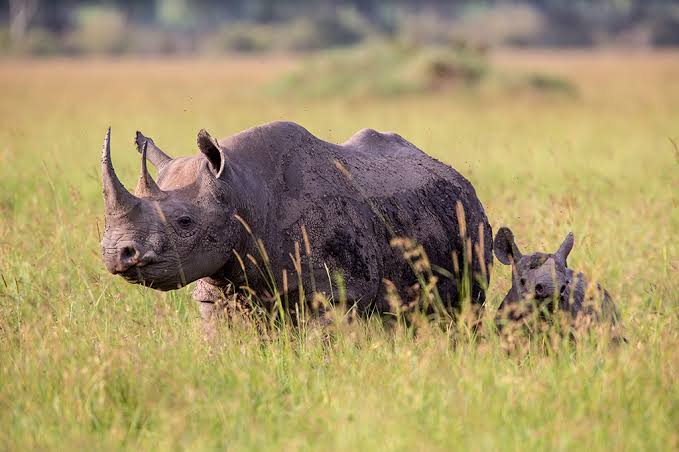
But the centrepiece of Mkomazi — the reason that conservation-minded travellers make the detour from the better-known Northern Circuit — is its black rhino sanctuary. In 1997, in partnership with the George Adamson Wildlife Preservation Trust, Tanzania reintroduced black rhinoceros to Mkomazi after decades of poaching had eliminated the species from the park. The sanctuary now holds a carefully managed and slowly growing population — one of the success stories of East African conservation and one of the few places in Tanzania where black rhino can be seen outside the Ngorongoro Crater.
This guide gives you everything you need to plan a Mkomazi National Park visit in 2026 — the landscape, the wildlife, the black rhino sanctuary, the African wild dog programme, the best time to visit, the practical logistics, the accommodation options, and how to combine Mkomazi with Kilimanjaro and the Northern Circuit in an itinerary that makes full use of its exceptional geographic position.
MKOMAZI NATIONAL PARK: QUICK FACTS
- Size: 3,245 km²
- Established: National Park status granted 2006 (previously a Game Reserve since 1951)
- Location: North-eastern Tanzania, Kilimanjaro and Tanga Regions — adjacent to Kenya's Tsavo West National Park
- Shared border: Shares its eastern boundary with Kenya's Tsavo West National Park — forming part of the same greater ecosystem
- Nearest city: Same (the nearest major town) — approximately 110 km / 1.5 hours from Arusha
- From Arusha: ~110 km / approximately 1.5–2 hours by road via Same town
- From Kilimanjaro International Airport (JRO): ~100 km / approximately 1.5 hours — one of the closest major parks to JRO
- From Moshi: ~85 km / approximately 1.5 hours
- Park entry fee: USD $35 per person per day (non-resident adult, 2026 — one of the most affordable major parks in Tanzania)
- Vehicle entry fee: USD $40 per vehicle per entry
- Black rhino sanctuary visit fee: USD $50 per person (separate fee for entering the sanctuary — paid in addition to park entry)
- Altitude range: 450 m (lowland plains) to 1,800 m (Pare Mountains escarpment)
- Ecosystem: Semi-arid Maasai Steppe — Acacia-Commiphora bushland and woodland
- Rainfall: Approximately 500–600 mm per year — semi-arid, highly seasonal
- Temperature: Hot year-round — 25–38°C in the lowlands; cooler near the mountains
- Black rhino population: Approximately 10–15 individuals in the sanctuary (growing slowly)
- African wild dog population: Present — one of Tanzania's wild dog conservation success stories
- Bird species: Over 450 recorded — including several species not found in the Northern Circuit
- Annual visitors: Very low — one of Tanzania's least-visited national parks
- Famous for: Black rhino sanctuary, African wild dogs, semi-arid wilderness, proximity to Kilimanjaro, near-zero crowds
- Best combined with: Kilimanjaro climb, Northern Circuit safari, Tsavo West Kenya
- Management: Tanzania National Parks Authority (TANAPA) in partnership with George Adamson Wildlife Preservation Trust (for rhino sanctuary)
WHY MKOMAZI NATIONAL PARK DESERVES TO BE ON YOUR TANZANIA ITINERARY
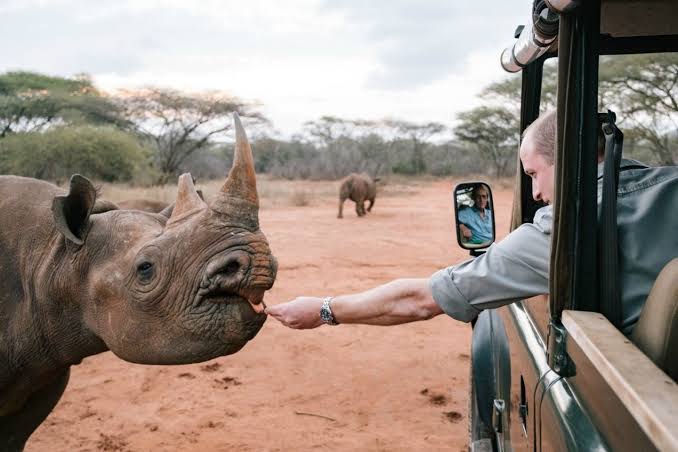
Mkomazi National Park is not the first park most Tanzania safari advisers recommend. It does not have the Great Migration. It does not have the Ngorongoro Crater's concentrated wildlife. It is not what comes to mind when someone says 'Tanzania safari.' And yet for a specific kind of traveller — one who values solitude, conservation stories, and the raw quality of a genuinely uncrowded African wilderness — Mkomazi consistently delivers an experience that the more famous parks simply cannot replicate.
One of the Only Places in Tanzania to See Black Rhino Outside Ngorongoro
The black rhinoceros was once widespread across Tanzania's landscapes. Poaching for the international horn trade in the 1970s and 1980s devastated populations across East Africa, leaving Tanzania with fewer than 100 animals by the late 1980s. Today, Tanzania's black rhino population has slowly recovered to approximately 130 to 150 individuals — but almost all of them live in the Ngorongoro Crater and in closely managed sanctuaries.
Mkomazi's black rhino sanctuary is one of the few places outside the Ngorongoro Crater where visitors can see black rhinoceros in Tanzania. The sanctuary was established in 1997 in partnership with the George Adamson Wildlife Preservation Trust — the same organisation founded by the conservationist famous for Born Free — and the rhinos that live there represent one of the most carefully managed and most intensively monitored populations in East Africa. Visiting the sanctuary is not simply a wildlife experience. It is a direct encounter with one of conservation's most important success stories.
🦏 Rhino Conservation Context: At the peak of East African poaching in the 1970s–1980s, black rhino numbers fell from an estimated 70,000 in 1970 to fewer than 2,500 by 1995. Tanzania's population was reduced to approximately 50 individuals. The Mkomazi sanctuary's population of 10–15 animals, individually monitored and protected by 24-hour armed rangers, represents a significant contribution to the species' slow recovery.
African Wild Dogs — A Rare Conservation Success
African wild dogs are one of Africa's most endangered large carnivores — their total continental population is estimated at fewer than 6,600 individuals and declining. They are also among the most spectacular and most misunderstood of Africa's predators: pack hunters of extraordinary efficiency, with a complex social structure and a level of cooperative behaviour that consistently surprises observers.
Mkomazi's wild dog population is part of a conservation reintroduction programme that began in the 1990s in partnership with the George Adamson Wildlife Preservation Trust. The park's semi-arid landscape and large area provide ideal habitat, and the programme has produced one of Tanzania's more reliable wild dog viewing opportunities. Encountering a pack of African wild dogs on a morning game drive in Mkomazi — watching their extraordinary cooperative hunting or their enthusiastic social greeting ceremonies at the den — is among the most exciting wildlife experiences available in Tanzania's north-east.
Complete Solitude — Tanzania's Most Private Major Park
Mkomazi receives a fraction of the visitors of the Northern Circuit parks. On any given day in peak season, you may drive for hours without seeing another vehicle. This quality of solitude — of having a 3,245 km² wilderness essentially to yourself — is increasingly rare in East African safari destinations and is itself a significant reason to visit. The same wildlife that would feel crowded at a Northern Circuit park feels genuinely wild in Mkomazi's empty landscape.
The Kilimanjaro Combination — Tanzania's Most Underused Pairing
Mkomazi's greatest geographic asset is its proximity to Kilimanjaro International Airport (100 km, 1.5 hours) and to the Kilimanjaro climbing base towns of Moshi (85 km) and Arusha (110 km). This position makes it the natural companion destination for Kilimanjaro climbers who have completed the summit and want a wildlife experience before or after the mountain — without the longer drive to Tarangire or Serengeti. A 2-day Mkomazi game safari followed by a Kilimanjaro climb, or vice versa, is one of Tanzania's finest adventure combinations and one that almost no visitors currently make.
📌 Geographic Advantage: Mkomazi shares its eastern boundary with Kenya's Tsavo West National Park — giving the combined ecosystem an area of over 24,000 km². Wildlife, including elephants and predators, moves freely between the two countries across this unfenced boundary. A Mkomazi visit effectively provides access to the northern edge of one of East Africa's largest wildlife ecosystems.
MKOMAZI'S LANDSCAPE: THE SEMI-ARID STEPPE OF NORTH-EASTERN TANZANIA
Mkomazi's landscape is defined by the specific ecological character of the semi-arid Maasai Steppe — a vegetation zone that extends across much of north-eastern Tanzania and into southern Kenya. It is a landscape of red volcanic soil, silver-grey acacia thornbush, ancient baobab trees of enormous girth, seasonal rivers lined with riverine forest, and the distant backdrop of mountain ranges that give the park its most dramatic visual dimension.
The Acacia-Commiphora Bushland
The dominant vegetation type in Mkomazi is Acacia-Commiphora bushland — a semi-arid plant community defined by drought-adapted trees and shrubs that have evolved to survive the long dry seasons characteristic of this landscape. Acacia species provide the classic flat-topped silhouettes of the East African savannah. Commiphora species — the myrrh and frankincense relatives — produce the resinous, aromatic quality that gives the dry-season Mkomazi landscape its specific scent.
This vegetation type is less productive for wildlife viewing than the open grasslands of the Serengeti because the dense bush provides cover that makes animals harder to spot. But it also produces specific wildlife behaviours — animals using the bush for shade and concealment, predators hunting in closer country, and the specific bird community associated with Acacia-Commiphora that cannot be found in more open habitats.
- Key wildlife of the bushland: Lesser kudu, gerenuk, fringe-eared oryx, dikdik, impala, elephant, lion, leopard
- Photography character: Different from the open-country photography of the Serengeti. Animals partially obscured by bush. More intimate, closer-range encounters. Better for behaviour shots than landscape shots.
The Pare Mountains and Usambara Escarpment
The Pare Mountains rise steeply from the park's western boundary — a dramatic wall of highland rising to over 1,800 metres that provides both the visual backdrop for Mkomazi's landscape and the ecological gradient that creates the park's habitat diversity. The mountains capture rainfall that the lowland plains do not receive, creating riparian corridors of riverine forest along the streams that descend from the highlands into the park.
The Usambara Mountains are visible to the south — another ancient block mountain range whose biological diversity has made them a globally recognised biodiversity hotspot. The interface between the semi-arid steppe and the highland forest zones creates transition habitats that support species from both communities.
Seasonal Rivers and Waterholes
The Mkomazi River and several seasonal tributaries provide the primary water infrastructure for the park's wildlife. In the dry season, the river systems concentrate wildlife in the same way that the Tarangire River does further west — predators follow prey to predictable water points, creating reliable game viewing along the river corridors. Constructed waterholes in the interior of the park also concentrate wildlife, particularly elephants and their attendant predator species, in the dry season.
Baobab Trees
Ancient baobab trees are scattered throughout Mkomazi's landscape — enormous, smooth-barked giants whose hollow trunks provide shelter and water storage in the dry savannah. Some of Mkomazi's baobabs are estimated to be over 1,000 years old, their vast circumferences dwarfing the acacia thornbush that surrounds them. The baobab's ecological role in this dry landscape mirrors its role in Tarangire — keystones of the ecosystem that provide food, water, and shelter for dozens of species.
🌿 Baobab Ecology: Mkomazi's baobabs are the same species as Tarangire's ancient giants — Adansonia digitata, the African baobab. In the dry season, elephants excavate their trunks to access stored water and eat the nutritious soft wood. This 'baobab mining' behaviour is a clear demonstration of elephant intelligence and ecological impact — and is reliably observable in Mkomazi during the dry season.
MKOMAZI'S BLACK RHINO SANCTUARY: A CONSERVATION STORY
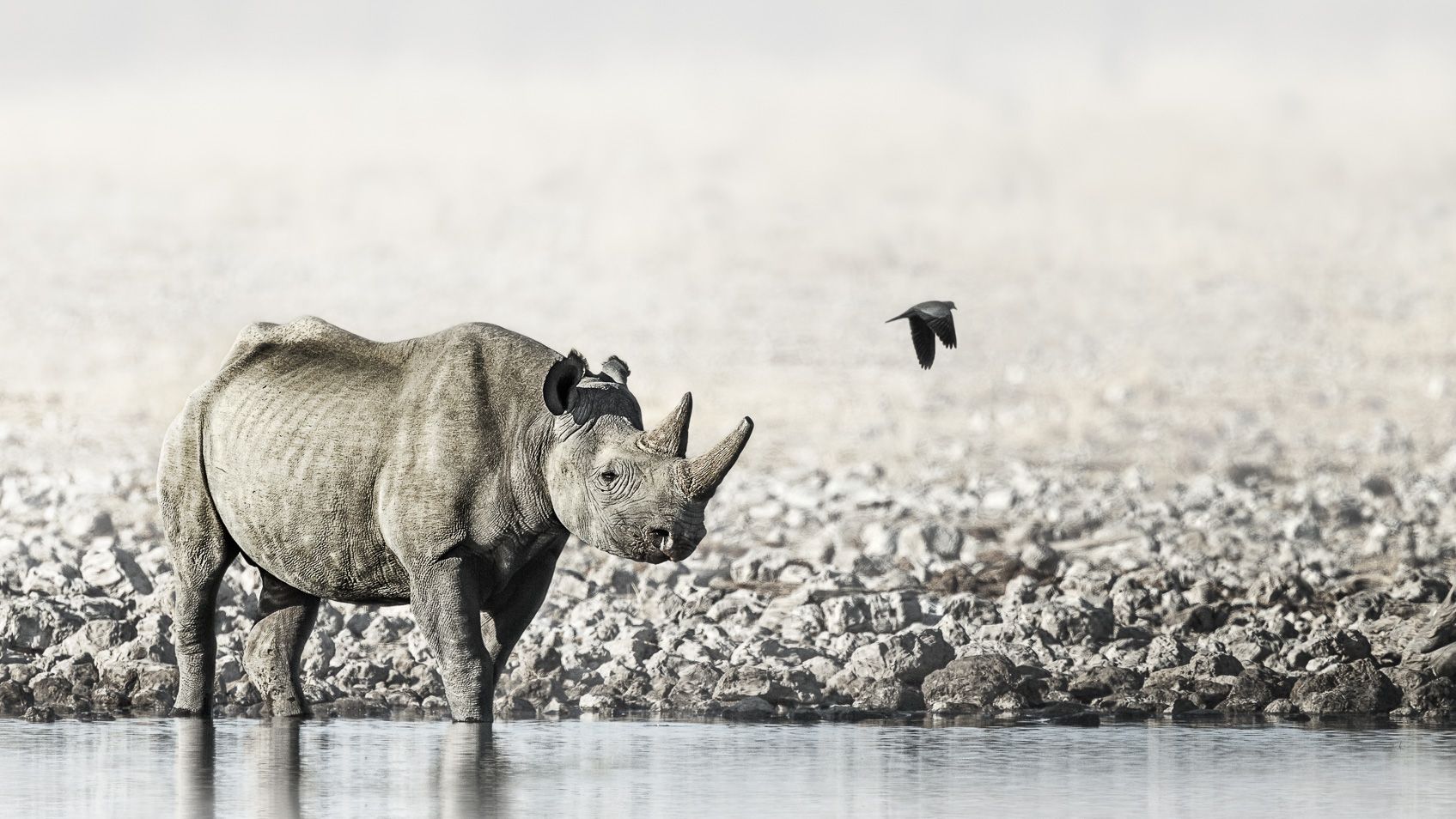
The Mkomazi Black Rhino Sanctuary is the park's most important and most celebrated conservation feature — a fenced sanctuary within the national park where a small but growing population of black rhinoceros lives under intensive protection and management. Understanding the sanctuary's history, its current status, and what a visit involves is essential preparation for anyone visiting Mkomazi.
The History of the Sanctuary
By the early 1990s, black rhino had been effectively eliminated from Mkomazi and from most of Tanzania's northern parks through poaching. The George Adamson Wildlife Preservation Trust — established in memory of the conservationist who dedicated his life to wildlife in Kenya and Tanzania — identified Mkomazi's semi-arid landscape as suitable habitat for black rhino reintroduction and began the process of establishing a sanctuary in partnership with TANAPA.
The first black rhinos were translocated to Mkomazi from Kenyan and South African sanctuaries in 1997. The animals were introduced into a fenced sanctuary of approximately 45 square kilometres within the park's eastern section — large enough to provide genuine wilderness experience for the rhinos while allowing intensive anti-poaching protection and veterinary monitoring. Since 1997, the population has grown slowly through natural reproduction, and several calves born in the sanctuary represent the first black rhinos to be born in this area in decades.
- Sanctuary area: Approximately 45 km² of fenced rhino habitat within the 3,245 km² park
- Current population: Approximately 10–15 individuals — numbers change with births and management transfers
- Monitoring: Each individual is known and monitored by rangers and veterinary staff. Regular health assessments are conducted.
- Anti-poaching: 24-hour armed ranger patrols within and around the sanctuary. The Mkomazi sanctuary has not lost a rhino to poaching since its establishment.
- Management partner: George Adamson Wildlife Preservation Trust — a UK-based conservation charity whose field operations include the Mkomazi sanctuary and several other East African projects
Visiting the Rhino Sanctuary
Visiting the black rhino sanctuary within Mkomazi National Park requires a separate permit ($50 per person) in addition to the standard park entry fee. The visit is conducted in a park vehicle with a sanctuary ranger who has detailed knowledge of the current rhino locations and behaviours.
Sanctuary visits are conducted in the early morning when the rhinos are most active and most likely to be in accessible locations. The semi-arid landscape within the sanctuary — open enough for good visibility, with specific waterholes and salt licks that attract the rhinos at predictable times — makes sightings more reliable than wild rhino encounters in unfenced populations.
- Sighting probability: High — significantly higher than wild rhino encounters in unfenced populations. The sanctuary's small size and ranger knowledge of individual rhino locations mean that sightings occur on the majority of visits.
- Distance from rhinos: Closer than most rhino encounters in other parks — sanctuary visits in appropriate vehicles with knowledgeable rangers can produce sightings at 30 to 50 metres.
- What to observe: Black rhino grazing, dust-bathing, wallowing at waterholes, and occasionally the dramatic interactions between individuals — black rhinos are solitary and territorial, and encounters between individuals produce characteristic displays.
- Photography: The sanctuary's semi-open landscape and the rangers' ability to position the vehicle relative to known rhino locations produces some of Tanzania's finest rhino photography opportunities outside the Ngorongoro Crater.
- Time allocation: Allow 2 to 3 hours for the sanctuary visit — including travel to and from the sanctuary gate and time with the rhinos.
🦏 Black vs White Rhino: The rhinos at Mkomazi are black rhinoceros (Diceros bicornis) — the smaller, more aggressive, and more endangered of Africa's two rhino species. Despite the name, both black and white rhinos are actually grey. The difference lies in mouth shape: the black rhino has a pointed, prehensile lip for browsing on shrubs and trees; the white rhino has a wide, flat mouth for grazing grass. Black rhinos are solitary, notoriously bad-tempered, and genuinely dangerous. This is a rhino that commands respect.
MKOMAZI NATIONAL PARK WILDLIFE: COMPLETE SPECIES GUIDE
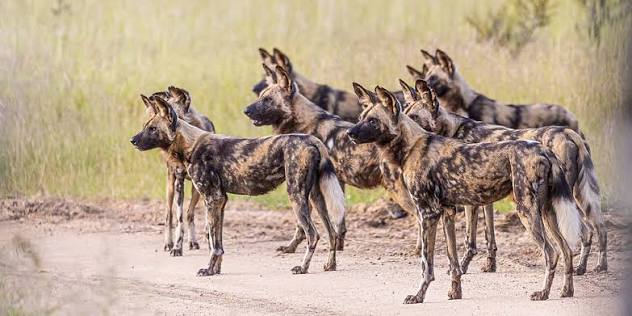
Mkomazi's wildlife is defined by the semi-arid landscape that shapes it — species adapted to drought, heat, and the specific vegetation structure of Acacia-Commiphora bushland. The park shares its wildlife community with the adjacent Tsavo ecosystem in Kenya, meaning some species here are rare or absent in Tanzania's Northern Circuit parks.
African Wild Dog — Mkomazi's Most Exciting Predator
The African wild dog (Lycaon pictus) is one of the continent's most endangered carnivores and one of Mkomazi's most extraordinary wildlife assets. Tanzania holds one of Africa's largest wild dog populations — estimated at 1,300 individuals — and Mkomazi's programme, which began with a reintroduction effort in the 1990s, has established a resident pack or packs in the park.
Wild dogs are the most efficient hunters in Africa by success rate — their cooperative pack hunting produces a kill on approximately 80% of hunts, compared to lions' 30% and cheetahs' 40–50%. They hunt in the early morning and late afternoon, using exceptional stamina to pursue prey over long distances rather than the ambush techniques of most African predators. A wild dog hunt in Mkomazi's semi-open bushland — watching the pack coordinate seamlessly over several kilometres of terrain — is one of East Africa's most extraordinary wildlife spectacles.
- Pack social behaviour: Wild dog packs are highly democratic social units. Every pack member, including subordinates, gets to eat from the kill. Packs regurgitate food for members who missed the hunt (including pups, the sick, and animals that stayed at the den). This cooperative feeding behaviour is unique among Africa's large carnivores.
- Greeting ceremonies: Wild dogs begin every morning with an extraordinary greeting ceremony — the pack members running toward each other, vocalising with a distinctive twittering call, and engaging in excited mutual touching and licking. These ceremonies function as social bonding and coordination before the hunt.
- Best viewing time: Dawn (6:00–8:30 AM) when packs are most active. Your guide will attempt to locate the pack's current denning area or likely travel corridor.
- Sighting probability: Not guaranteed — wild dogs range over enormous territories and their location on any given day is genuinely unpredictable. Radio-tracking by the conservation programme improves sighting rates for guests whose lodges coordinate with the research team.
🌿 Wild Dog Conservation: African wild dogs have been eliminated from most of their historical range — they are extinct in 25 of the 39 countries they historically occupied. Tanzania's population is one of the continent's most significant. The Mkomazi reintroduction programme, which brought dogs from the Selous and Ruaha populations to establish a north-eastern Tanzania presence, has produced one of conservation's more quietly celebrated successes.
Elephant
Elephants are present throughout Mkomazi — moving freely across the unfenced boundary with Tsavo West in Kenya, following seasonal water availability and the fruiting cycles of the park's trees. In the dry season, elephant herds concentrate at the park's waterholes and river systems, producing the concentrated viewing opportunities familiar from Tarangire, though at smaller herd sizes.
Mkomazi's elephants tend to be less habituated to vehicles than those in the Northern Circuit parks, giving encounters a quality of wildness that Tarangire's highly habituated populations sometimes lack. A herd approaching a waterhole in the late afternoon — moving cautiously, ears spread, assessing the human presence before committing to drinking — is an elephant encounter at its most genuinely atmospheric.
- Herd sizes: Smaller than Tarangire's dry-season aggregations — typically 10 to 50 animals rather than the 200–400 of peak Tarangire season
- Cross-border movement: Many of Mkomazi's elephants spend time in Tsavo West — their movement patterns span the Kenya-Tanzania border
- Best areas: The Mkomazi River corridor and the constructed waterholes in the park's interior
Lion
Lions are present in Mkomazi but less reliably encountered than in the Serengeti or Ngorongoro. The dense Acacia-Commiphora bushland provides excellent cover for resting prides and makes spotting challenging compared to the open plains of the Northern Circuit. However, experienced guides who know the park's specific pride territories and preferred resting sites produce lion sightings on the majority of full-day game drives.
- Best strategy: River corridor areas and the edges of the open plains near waterholes — particularly at dawn when prides are returning from overnight hunts
- Typical pride size: Smaller than Serengeti prides — 4 to 12 individuals is typical in the bushland habitat
Leopard
Leopards are well-represented in Mkomazi's dense bushland and riverine forest corridors — the habitat suits them better than open savannah. They are difficult to spot in the thick vegetation but are encountered regularly by experienced guides who know the specific river crossings, kopje areas, and large trees that Mkomazi's leopards favour. A leopard sighting in Mkomazi is reliably described as one of the finest in Tanzania due to the close-range encounters that the bush habitat enables.
Lesser Kudu — Mkomazi's Most Distinctive Antelope
The lesser kudu (Tragelaphus imberbis) is one of Africa's most beautiful antelopes and one that is rarely seen on the Northern Circuit — its range is largely confined to the Acacia-Commiphora zones of northern Tanzania and southern Kenya. At Mkomazi, lesser kudu are a regular and rewarding sight: the male's spiral horns, striking white throat stripes, and elegant body pattern make it one of the finest photographic subjects in the park.
- Where found: Dense Acacia-Commiphora bushland throughout the park — particularly the river corridor areas and the base of the Pare Mountains
- Behaviour: Highly alert and shy — they typically reveal themselves briefly before melting back into the bush. The bush habitat requires patience and sharp eyes.
- Comparison with greater kudu: Lesser kudu is significantly smaller than Tarangire's greater kudu, with tighter spiral horns and more vivid body striping. Both are extraordinary but the lesser kudu is the rarer and more sought-after sighting for committed wildlife enthusiasts.
Gerenuk — The Giraffe-Necked Antelope
The gerenuk (Litocranius walleri) is one of Africa's most immediately recognisable and most unusual antelopes — an extraordinarily long-necked species that stands on its hind legs to browse the upper branches of acacia trees, a behaviour that gives it access to food sources unavailable to other antelopes. Mkomazi is one of Tanzania's most reliable locations for gerenuk sightings, and their extraordinary feeding posture — standing bipedally at full stretch, neck extended, browsing at 2 metres height — is one of the park's most photogenic wildlife moments.
- Where found: Throughout the Acacia-Commiphora bushland — particularly dense acacia thickets and dry watercourse areas
- Photography: The standing feeding posture demands a clear background. Dawn drives produce the best light for gerenuk photography in the open acacia areas.
Fringe-Eared Oryx
The fringe-eared oryx (Oryx beisa callotis) — a subspecies of the beisa oryx distinguished by its black-fringed ears — is one of the semi-arid steppe's most dramatic large antelopes. Their long straight horns (used as weapons in dominance fights), striking black and white facial markings, and ability to survive in extremely dry conditions make them one of the icons of East Africa's arid-zone wildlife. Mkomazi is one of the most reliable places in Tanzania to see this species.
Other Notable Wildlife
- Giraffe (Maasai): Present throughout — the acacia woodland provides excellent browsing. Less numerous than in the Northern Circuit but encounters feel more intimate in the quieter park.
- Buffalo: Herds present, particularly in the river corridor areas. Smaller aggregations than the Northern Circuit.
- Zebra (plains): Common on the more open grassland sections of the park.
- Warthog: Abundant and entertaining throughout the park.
- Dik-dik (Kirk's): The tiny antelope specialist of the dense bush — monogamous pairs, enormous eyes, and a distinctive alarm call. One of the park's most frequently encountered small species.
- Waterbuck: Near the river systems and permanent waterholes.
- Impala: Common in the transitional areas between dense bush and more open grassland.
- Cheetah: Occasional sightings on the more open plains sections — not a reliable target but a genuine possibility.
- Hyena (spotted): Present — particularly near the park's waterholes and prey concentration areas.
- Jackal (black-backed): Common — frequently seen at dawn on the more open plains.
- Python: African rock pythons are present in the riverine forest areas — occasionally encountered basking in the early morning.
- Monitor lizard (Nile): Large individuals along the river banks — Africa's largest lizard.
MKOMAZI BIRDLIFE: 450+ SPECIES IN TANZANIA'S MOST UNDERRATED BIRDING PARK
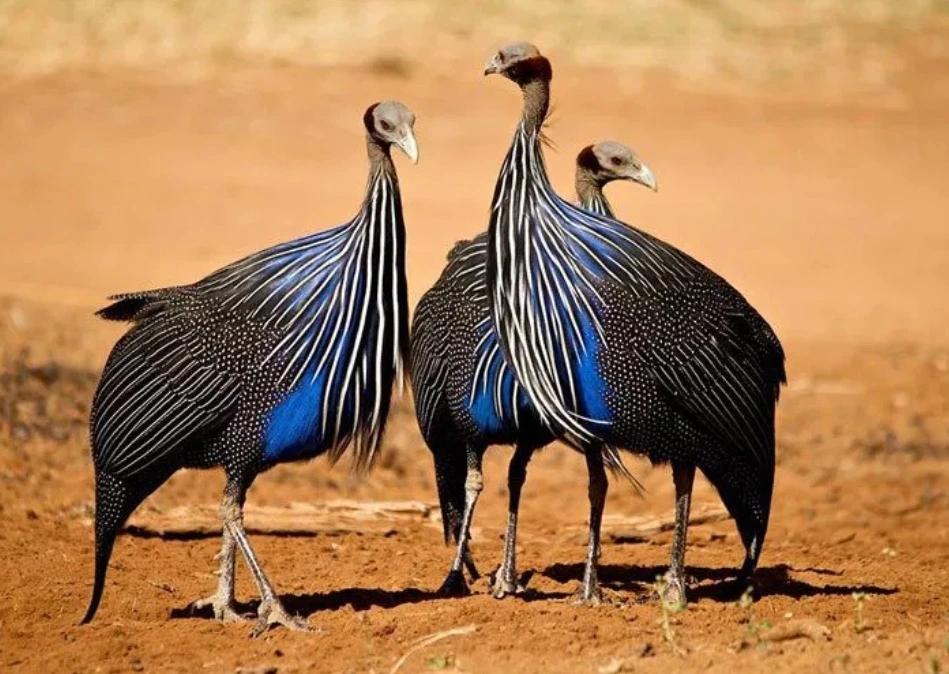
With over 450 bird species recorded, Mkomazi National Park is one of Tanzania's finest birding destinations — and one of its least-known. The park's position at the intersection of the semi-arid Maasai Steppe and the highland escarpment zones supports bird communities that include species from both arid and highland ecological communities, several of which are not found in the Northern Circuit parks.
Why Mkomazi is Special for Birding
The Acacia-Commiphora bushland of Mkomazi supports a suite of arid-zone bird specialists — species that are absent or rare in the more frequently visited parks of the Northern Circuit. Additionally, the proximity to the Pare and Usambara Mountains introduces highland species in the transitional zones near the escarpment. The combination of these two communities in a single park creates exceptional species diversity for a semi-arid destination.
Key Bird Species at Mkomazi
- Vulturine guineafowl (Acryllium vulturinum): The most spectacular guineafowl in Africa — cobalt blue breast, long hackle feathers, and a snake-like head. A Mkomazi specialty and an immediate photographic target. Found in the semi-arid bushland throughout the park.
- Somali ostrich (Struthio molybdophanes): The recently recognised species split from the common ostrich — the males have blue-grey neck and thigh colouring rather than the pink of the southern ostrich. Mkomazi is one of Tanzania's most reliable locations.
- Martial eagle (Polemaetus bellicosus): Africa's largest eagle — hunts monitor lizards, small antelope, and large birds. Perches prominently on high trees scanning large open areas.
- Bateleur eagle (Terathopius ecaudatus): The acrobatic eagle of the open savannah — its distinctive rocking flight and brilliant red facial skin make it unmistakable overhead.
- Secretary bird (Sagittarius serpentarius): Strides the more open grassland sections of the park hunting snakes and large insects — one of Africa's most distinctive large birds.
- Kori bustard (Ardeotis kori): The world's heaviest flying bird — common on the open plains of Mkomazi.
- Yellow-necked spurfowl (Pternistis leucoscepus): The distinctive East African bushland francolin — loud, conspicuous, and frequently flushed from the roadside vegetation.
- Lilac-breasted roller (Coracias caudatus): Tanzania's most photogenic bird — abundant throughout the park from elevated perches.
- Von der Decken's hornbill (Tockus deckeni): The characteristic hornbill of the East African semi-arid zone — male with striking red bill. Named after the German explorer Karl Klaus von der Decken.
- Northern red-billed hornbill (Tockus erythrorhynchus): Common at all levels of the bushland — often seen associating with dwarf mongooses.
- Verreaux's eagle (Aquila verreauxii): The magnificent black eagle of rocky terrain — seen soaring along the Pare Mountains escarpment. Specialises in rock hyrax.
- Pale chanting goshawk (Melierax poliopterus): The characteristic raptor of the East African bushland — frequently perches on high dead branches overlooking open areas.
- Three-banded courser (Rhinoptilus cinctus): A cryptic nocturnal wader of the dry bushland — seen on roads at dusk and dawn.
- Fischer's starling (Lamprotornis fischeri): A semi-arid zone starling specialist — metallic green with a white eye. Mkomazi is one of its most accessible Tanzania locations.
- White-bellied go-away bird (Corythaixoides leucogaster): Noisy and conspicuous in the Acacia-Commiphora bushland — the alarm call alerts other species to predators.
- Migratory species (November–April): Palaearctic migrants arrive in significant numbers, adding waders, raptors, and passerines to the species list. The dry bushland receives steppe eagle, lesser kestrel, and numerous warbler species.
🦅 Birding Tip: Request a dedicated birding game drive from your lodge guide rather than combining birding with general game driving. The arid-zone specialists of Mkomazi — particularly the vulturine guineafowl, the Fischer's starling, and the lesser kudu-associated bird community — require slow, deliberate searching in specific habitat types that a general game drive pace does not allow. A 4-hour birding drive starting at 6:00 AM produces significantly better species lists than a general drive covering the same time.
BEST TIME TO VISIT MKOMAZI NATIONAL PARK
Mkomazi's semi-arid climate creates a seasonal pattern that differs from the Northern Circuit parks. The park's lower rainfall (500–600 mm per year compared to the Serengeti's 800–1,000 mm) means shorter rains, longer dry seasons, and a wildlife concentration dynamic that rewards dry-season visits particularly strongly.
Dry Season: June to October — Best Overall
The dry season is the recommended window for most Mkomazi visits. The semi-arid landscape, already relatively dry, concentrates to its extreme in the dry months — waterholes and river pools become the only reliable water for enormous areas, and wildlife, including the key species of rhino, wild dog, and elephant, converges predictably on these points.
- Black rhino sanctuary: Best visited in the dry season when vegetation is sparser and the rhinos use waterholes and salt licks more predictably. Sighting probability peaks June–September.
- African wild dogs: Denning season (pups present) typically March to August, making June–August the finest window for extended wild dog observation — packs range closer to the den and pups are visible.
- Elephants: Concentrate at waterholes and river systems. Most reliable dry-season encounters in August and September.
- Game driving conditions: Red volcanic dust in the dry season. Vegetation is open and sparse — maximum visibility. Hot (32–38°C midday) but cool mornings and evenings.
- Birds: Resident species excellent year-round. Migratory species absent June–October.
- Crowds: Minimal — Mkomazi is quiet year-round but dry season sees the most visitors (still tiny numbers by Northern Circuit standards).
Short Rains: November and December
The short rains in November and December transform Mkomazi briefly — the landscape greens rapidly, bird diversity increases dramatically as migrants arrive, and the baby animal season begins for many species. November and December are genuinely excellent months at Mkomazi, combining good resident wildlife with the visual quality of a greening landscape and the excitement of the first migratory bird arrivals.
- Wildlife: Good — resident species active, elephant herds beginning to disperse, predators abundant
- Birds: Outstanding — migratory species arriving, resident breeders most vocal
- Landscape: Dramatic transition from dust to green. Photographic conditions excellent.
Long Rains: March to May
The long rains are Mkomazi's most challenging season — roads can become difficult, visibility is reduced by vegetation density, and the wildlife disperses widely as water is available everywhere. However, the park is extraordinarily green, virtually empty of other visitors, and the wild dog denning season produces its most photogenic pup-observation opportunities.
- Best for: Wild dog den visits (pups most active), birding (peak diversity), absolute solitude
- Challenges: Some roads difficult after rain, heat and humidity higher than dry season
- Price: Lowest of the year — excellent value for the right traveller
Month-by-Month Quick Reference
- January–February: Dry but with migratory birds present. Good rhino viewing. Wild dog pups beginning to appear. Good overall.
- March–May: Long rains. Wild dog denning season. Excellent birding. Some road challenges. Very low visitor numbers.
- June: Dry season opening. Conditions rapidly improving. Wild dog pups active. Good availability.
- July–August: Peak dry season. Best overall conditions. Wild dog pups growing. Elephants at waterholes. Excellent.
- September: Outstanding — excellent conditions, fewer visitors than August. One of the finest months.
- October: Still excellent. Short rains approaching. Good conditions throughout most of the month.
- November–December: Short rains. Landscape greening. Excellent birding. Baby animals. Good overall.
WHAT TO DO AT MKOMAZI NATIONAL PARK
1. Game Drives
Standard 4WD game drives are the primary activity at Mkomazi. The park's road network covers the main wildlife areas — the river corridor, the open plains, the baobab woodland sections, and the approaches to the rhino sanctuary. A full-day game drive (6:30 AM to 6:30 PM with a midday rest) covers the park's primary zones and produces the most comprehensive wildlife encounter.
- Dawn drive (recommended first priority): 6:30 AM departure. The first two hours of light are the most productive — wild dogs active, predators returning from overnight hunts, elephants at waterholes. The Mkomazi dawn, with the Pare Mountains silhouetted against a pale sky and the calls of yellow-necked spurfowl and vulturine guineafowl filling the air, is extraordinary.
- Full day vs half day: A full day is strongly recommended to cover the park's spread and to allow time at the rhino sanctuary and the river corridor. A half day is a minimum viable visit but leaves significant wildlife territory unexplored.
- Private vehicle essential: Mkomazi has almost no shared safari infrastructure. A private vehicle with a knowledgeable guide is the standard and recommended format.
2. Black Rhino Sanctuary Visit
Described in full in Section 4. The sanctuary visit requires a separate permit ($50 per person) and is conducted in a park vehicle with a sanctuary ranger. Allow 2 to 3 hours for the full sanctuary experience including briefing, transfer, rhino encounter, and return. Book through your lodge in advance — not all visits are possible every day depending on rhino locations and ranger availability.
3. Walking Safaris
Guided walking safaris are available at Mkomazi with an armed ranger — one of the few Northern Circuit-adjacent parks where walking is permitted within the park boundary. The semi-arid landscape is well-suited to walking: the vegetation is open enough to see approaching wildlife at safe distances, the terrain is relatively flat in the lowland sections, and the tracking possibilities — reading the red volcanic soil for elephant tracks, lion pugmarks, and wild dog movement patterns — add a dimension to the Mkomazi experience unavailable from a vehicle.
- Duration: 2 to 4 hours — morning start strongly recommended
- Fitness requirement: Moderate — the lowland terrain is manageable for most adults
- Wildlife encounters: Gerenuk, lesser kudu, dik-dik, warthog, giraffe, and occasionally elephant at close range — encounters that are qualitatively different from vehicle-based viewing
- Arrange through: Your lodge or directly with TANAPA Mkomazi — armed ranger must be assigned in advance
4. Night Game Drive
Night game drives are available in the concession areas outside the park boundary — not within the national park itself, where night driving is prohibited. Some lodges arrange night drives in private land adjacent to the park, producing nocturnal wildlife encounters including leopard, aardvark, serval, African wildcat, civets, genets, and bushbabies. Ask your specific lodge about current night drive availability.
5. Cultural Visit — Same Town
The town of Same — the main service centre for the Mkomazi area — sits at the base of the Pare Mountains and has a small but authentic market, a mixture of Pare and Maasai cultures, and the agricultural landscapes of the mountain foothills. A guided visit to Same town or to a Maasai boma in the surrounding communal land provides cultural context that complements the park experience. Arrange through your lodge for a responsible, community-benefiting visit.
6. Birding Walks and Drives
Dedicated birding sessions — either on foot or by vehicle — are available and strongly recommended for serious birders. The vulturine guineafowl, Fischer's starling, and Somali ostrich are species that require specific habitat knowledge and patient searching. A specialist birding guide (request in advance from your lodge or through Adventures Seeker) dramatically increases species encounter rates.
MKOMAZI NATIONAL PARK ACCOMMODATION: LODGE GUIDE
Mkomazi National Park has limited but improving accommodation infrastructure — a reflection of its status as a relatively newly designated national park (2006) in a less-visited region. The accommodation options available represent a range from basic public camping to a small number of genuine safari lodges.
Babu's Camp
Babu's Camp is the primary private safari lodge serving Mkomazi National Park — a small, well-managed property located on the park boundary that provides comfortable accommodation and experienced guides specifically familiar with Mkomazi's wildlife and the rhino sanctuary. The camp has a genuinely personal, unpretentious character that suits the spirit of the park itself.
- Category: Comfort — honest, well-run, unpretentious
- Setting: Park boundary — direct access to the park without a long transfer
- Guides: The most Mkomazi-experienced guides available — their knowledge of the rhino sanctuary schedule and the wild dog territories is the primary practical asset of staying here
- Approximate cost: USD $180 – $320 per person per night (full board)
- Booking: Through Adventures Seeker — confirm current availability as the camp has limited rooms
Mkomazi Rhino Camp
A simple tented camp associated with the rhino sanctuary operations — offering basic but functional accommodation with the significant advantage of proximity to the sanctuary and daily access to rhino briefings from sanctuary rangers. Best suited to travellers whose primary objective is the black rhino and who are comfortable with basic facilities.
- Category: Budget-comfort
- Key advantage: Closest accommodation to the rhino sanctuary — morning sanctuary visits are earliest possible from this base
- Approximate cost: USD $100 – $180 per person per night
Same Hotel (Same Town)
For travellers on a tight budget or those visiting Mkomazi as a short day trip or overnight from Kilimanjaro, the hotels in Same town provide the most affordable base. Same is approximately 30 minutes from the park gate — a manageable distance for early morning gate access.
- Category: Budget
- Distance from gate: ~30 km / 30–40 minutes from Same town to the main Mkomazi gate
- Approximate cost: USD $30 – $80 per person per night
Public Camping
TANAPA operates public campsites within Mkomazi National Park for visitors with their own equipment. Basic facilities. Contact TANAPA's Mkomazi field office for current campsite locations and booking procedures. The camping experience in Mkomazi — in a park this quiet and this raw — is genuinely extraordinary for the right adventurous traveller.
- Cost: USD $30–$50 per person per night (camping fee in addition to park entry)
Adventures Seeker Note: Mkomazi accommodation is limited and some properties require advance booking. We recommend Babu's Camp for visitors who want a comfortable lodge base with knowledgeable Mkomazi-specialist guides. For visits combining Mkomazi with Kilimanjaro or the Northern Circuit, we coordinate accommodation across the entire itinerary from our Arusha base.
MKOMAZI NATIONAL PARK COSTS 2026: COMPLETE GUIDE
Mkomazi is one of Tanzania's most affordable national parks in terms of entry fees — making it excellent value for the wildlife and conservation experience it delivers, particularly when combined with the higher-cost Northern Circuit parks.
Park Entry Fees
- Adult non-resident entry fee: USD $35 per person per day — the most affordable of Tanzania's major national parks
- Child (5–15 years) non-resident: USD $17.50 per person per day
- Child under 5 years: Free
- Vehicle entry fee: USD $40 per vehicle per entry
- Black rhino sanctuary visit fee: USD $50 per person (in addition to park entry — paid for the sanctuary visit separately)
- Camping fee (public sites): USD $30–$50 per person per night
Full 2-Day Mkomazi Visit Cost (Per Person, Couple in Private Vehicle)
- Park entry fee (2 days × $35): USD $70 per person
- Vehicle entry fee ($40 / 2 passengers): USD $20 per person
- Rhino sanctuary fee (1 visit): USD $50 per person
- Safari vehicle and guide (2 days, private): USD $200–$300 per person
- Accommodation (2 nights, Babu's Camp, full board): USD $360–$640 per person
- Tips (guide + lodge staff, 2 days): USD $50–$80 per person
- TOTAL ESTIMATE (2-day visit, Babu's Camp): USD $750–$1,160 per person
- TOTAL ESTIMATE (2-day visit, budget camping): USD $390–$560 per person
Mkomazi vs Other Northern Circuit Parks — Fee Comparison
- Mkomazi entry fee: $35/day — lowest of all major Tanzania national parks
- Arusha National Park entry fee: $45/day
- Tarangire / Manyara / Ngorongoro / Serengeti entry fee: $70/day
- Mahale Mountains entry fee: $100/day
Mkomazi's $35 per person per day entry fee makes it the most affordable entry point in the Tanzania national park system — and the $50 rhino sanctuary fee brings the combined daily cost to $85 per person, still significantly below the $70 standard entry fee of the main Northern Circuit parks even with the sanctuary included.
HOW TO GET TO MKOMAZI NATIONAL PARK
By Road from Arusha — The Standard Route
Mkomazi is accessible by road from Arusha — the most direct route follows the A104 tarmac road south-east toward Moshi and then Same, before turning north to the park gate. The road is good tarmac throughout with no significant 4WD requirement except within the park itself.
- Arusha → Mkomazi main gate (via Same): ~110 km / approximately 1.5–2 hours
- Moshi → Mkomazi main gate: ~85 km / approximately 1.5 hours
- Kilimanjaro International Airport (JRO) → Mkomazi: ~100 km / approximately 1.5 hours — one of the shortest transfers of any major Tanzania park to JRO
- Road surface to gate: Good tarmac throughout — no 4WD required until inside the park
- Inside the park: Murram (gravel) and seasonal tracks — 4WD required, especially after rains
By Road from Moshi (Post-Kilimanjaro Route)
For Kilimanjaro climbers based in Moshi who want to add Mkomazi after their summit, the drive is 85 kilometres and takes approximately 1.5 hours. This is the most natural and most underused combination in the Tanzania north-east — Kilimanjaro summit followed by a 2-day Mkomazi game safari before heading to Arusha for the Northern Circuit.
By Air
There is no commercial airstrip currently serving Mkomazi directly. Charter flights can land at Same airstrip (approximately 30 km from the park gate) for groups that prefer not to drive. Contact Adventures Seeker for current charter options if road access is not preferred.
From Kenya — Tsavo West Connection
For travellers arriving from Kenya, Mkomazi can be accessed from the Kenyan side of the shared ecosystem via Same town. The road from Nairobi to Same via Voi takes approximately 4 to 5 hours. This cross-border routing is practical for travellers doing a combined Kenya-Tanzania itinerary that includes Tsavo West and Mkomazi as a linked ecosystem experience.
- Nairobi → Voi → Same → Mkomazi gate: ~4.5–5.5 hours by road
- Tanzania entry at Same border crossing: Standard Tanzania e-Visa required — apply in advance at evisa.go.tz
COMBINING MKOMAZI WITH KILIMANJARO AND THE NORTHERN CIRCUIT
Mkomazi's greatest practical asset is its geographic position — between Kilimanjaro and the Northern Circuit, close to all three, and naturally incorporated into either as a day trip, an overnight, or a 2-day addition.
Option 1: Mkomazi + Kilimanjaro (The North-East Tanzania Adventure)
The most natural and most underused Tanzania combination. Mkomazi before Kilimanjaro gives trekkers a wildlife experience at the start of their trip. Mkomazi after Kilimanjaro provides a gentle recovery activity after the mountain effort.
- Day 1: Arrive JRO. Transfer to Mkomazi (1.5 hours). Afternoon game drive — first wildlife. Overnight Babu's Camp.
- Day 2: Dawn game drive. Rhino sanctuary visit (morning). Afternoon wild dog territory drive. Overnight Babu's Camp.
- Day 3: Early morning game drive. Transfer to Moshi (1.5 hours). Kilimanjaro gate registration. Begin climb Day 1.
- Days 4–9 (or 4–10): Kilimanjaro climb (6-day Machame or 7-day Lemosho).
- Final day: Descent and gate certificate. Transfer to Arusha or JRO. Depart or begin Northern Circuit.
Option 2: Arrival Day Mkomazi — Day 1 of Northern Circuit
For visitors arriving at JRO on a morning flight who are not beginning the main Northern Circuit until the following day:
- Arrive JRO by 10:00 AM. Clear immigration and customs.
- Transfer directly to Mkomazi gate (1.5 hours from JRO). Arrive gate by noon.
- Afternoon game drive — rhino sanctuary visit or general game drive. 4 hours in the park.
- Exit gate by 5:30 PM. Transfer to Arusha (2 hours). Dinner and overnight.
- Begin Northern Circuit the following morning.
Option 3: Post-Northern Circuit Mkomazi Before Departure
For visitors completing the Northern Circuit who fly out of JRO and have a final free day:
- Complete Northern Circuit. Return to Arusha.
- Day before departure: Early morning Mkomazi game drive (gate opens 6:00 AM, 2 hours from Arusha).
- Rhino sanctuary visit. Return to Arusha by 2:00 PM.
- Rest, shopping, farewell dinner. Transfer to JRO for evening or night flight.
Option 4: Mkomazi + Northern Circuit + Kilimanjaro (10–14 Days)
- Days 1–2: Mkomazi (2 nights) — rhino, wild dogs, elephants.
- Days 3–4: Tarangire (2 nights) — elephant herds, baobabs.
- Day 5: Lake Manyara (1 day). Overnight Ngorongoro rim.
- Day 6: Ngorongoro Crater descent. Overnight rim.
- Days 7–8: Serengeti (2 nights).
- Day 9: Return to Arusha/Moshi. Begin Kilimanjaro prep.
- Days 10–16: Kilimanjaro 7-day Lemosho Route. Summit and descent.
- Day 17: Recovery. Transfer to JRO. Depart.
Adventures Seeker: We plan Mkomazi as part of any Tanzania itinerary from our Arusha base — the park's proximity to JRO, Moshi, and Arusha means it integrates naturally into Kilimanjaro, Northern Circuit, and arrival/departure day formats. Contact adventuresseeker.com for a personalised itinerary that includes Mkomazi.
MKOMAZI CONSERVATION: WHERE TOURISM DIRECTLY FUNDS RECOVERY
From Game Reserve to National Park — The Rehabilitation Story
Mkomazi's conservation history is one of Tanzania's most significant and most complex. The area was gazetted as a game reserve in 1951 but was heavily settled by pastoral communities — Maasai and Pare peoples whose livestock grazing had significantly degraded the ecosystem by the 1980s. In 1988, the Tanzanian government evicted the pastoral communities from the reserve — a deeply controversial action that displaced thousands of people and remains contested to this day — and began a process of ecosystem rehabilitation.
The rehabilitation process, which included the reintroduction of wildlife species, intensive anti-poaching, and infrastructure development, was supported significantly by the George Adamson Wildlife Preservation Trust and several international conservation organisations. In 2006, Mkomazi was upgraded from a game reserve to a national park — the highest protection status in Tanzania's protected area hierarchy.
The George Adamson Wildlife Preservation Trust
The George Adamson Wildlife Preservation Trust (GAWPT) has been Mkomazi's primary conservation partner since the early 1990s. Named for the conservationist whose life was documented in the book and film Born Free, the Trust was founded by Tony Fitzjohn — Adamson's protégé — to continue conservation work in East Africa. The Trust's specific contributions to Mkomazi include:
- Black rhino sanctuary establishment (1997): The physical infrastructure, the animal translocations, the anti-poaching programme, and the veterinary monitoring system
- African wild dog reintroduction: The 1990s programme that established the first wild dog population in north-eastern Tanzania
- Road and water infrastructure: Constructed roads, dams, and water points that make the park accessible and improve wildlife distribution
- Anti-poaching operations: Intelligence networks, ranger training, and patrol systems that have kept both the rhino sanctuary and the general park free from significant poaching
The Rhino Breeding Programme
The Mkomazi black rhino programme is specifically focused on breeding as well as protection. The sanctuary's small population has produced calves since its establishment — each birth is documented and celebrated as a conservation milestone. Long-term, the programme aims to establish a self-sustaining population large enough to contribute individuals to other conservation sites in Tanzania — a 'source population' that contributes to the broader recovery of the species.
Every visitor who pays the $50 sanctuary fee is directly funding the anti-poaching patrols, veterinary monitoring, and sanctuary management that keeps this programme operational. The connection between tourism revenue and rhino survival at Mkomazi is among the most direct in Tanzania's conservation landscape.
Community Relations — An Ongoing Challenge
The communities displaced during Mkomazi's rehabilitation process have not disappeared — they live in the areas surrounding the park boundary and have complex, ongoing relationships with the park's management. The displacement created genuine hardship and resentment that cannot be dismissed. TANAPA and GAWPT work with surrounding communities through employment (rangers, guides, support staff), community development projects, and benefit-sharing mechanisms that direct a portion of tourism revenue to community projects.
The relationship between wildlife conservation and local communities at Mkomazi is an honest reflection of the broader tension in African conservation — between the international value of wildlife and the local economic needs of people who live alongside it. Visiting Mkomazi as a thoughtful traveller means being aware of this tension rather than simply celebrating the conservation outcomes that sometimes came at genuine human cost.
MKOMAZI NATIONAL PARK FAQS: 15 QUESTIONS ANSWERED
What is Mkomazi National Park famous for?
Mkomazi National Park is famous for three things: its black rhinoceros sanctuary — one of the only places in Tanzania outside the Ngorongoro Crater to see black rhino; its African wild dog population — part of a reintroduction programme and one of Tanzania's most reliable wild dog viewing opportunities; and its status as Tanzania's closest major national park to Kilimanjaro International Airport, making it an exceptionally convenient first or last day addition to any Tanzania itinerary.
Can I see black rhino at Mkomazi?
Yes — the Mkomazi Black Rhino Sanctuary holds approximately 10 to 15 individuals and offers guided sanctuary visits for a $50 per person fee (in addition to the standard $35 park entry). Sighting probability is high — significantly better than wild rhino encounters in unfenced areas — because the sanctuary rangers know the current location and movement patterns of each individual animal. The sanctuary is visited in a park vehicle with a specialist ranger in the early morning when rhinos are most active.
How much does it cost to visit Mkomazi?
Park entry is $35 per person per day — the lowest of any major Tanzania national park. The black rhino sanctuary visit adds $50 per person. A 2-day visit including entry, rhino sanctuary, private vehicle and guide, and accommodation at Babu's Camp costs approximately $750 to $1,160 per person. Budget camping options bring this significantly lower. Mkomazi represents outstanding value for the wildlife and conservation experience it delivers.
How far is Mkomazi from Arusha?
Approximately 110 km from Arusha — about 1.5 to 2 hours by road via Same town. From Kilimanjaro International Airport (JRO), the distance is about 100 km (1.5 hours), making Mkomazi the closest major national park to the airport in Tanzania. From Moshi (the Kilimanjaro base town), it is 85 km — approximately 1.5 hours.
Is Mkomazi good for African wild dogs?
Yes — Mkomazi is one of Tanzania's more reliable wild dog viewing locations, with resident packs established through the George Adamson Wildlife Preservation Trust's reintroduction programme. However, wild dog sightings are never guaranteed — the animals range over enormous territories and their location on any given day is unpredictable. The denning season (approximately March to August) is the most reliable viewing window, when packs move less and spend more time near the den site. Radio-tracking by the conservation team significantly improves sighting rates for guest vehicles that coordinate with the programme.
What other wildlife can I see at Mkomazi?
Beyond black rhino and wild dogs, Mkomazi's key species include elephant (cross-border herds moving freely with Tsavo West Kenya), lion, leopard, lesser kudu (rare on the Northern Circuit, reliable at Mkomazi), gerenuk (standing bipedally to browse acacia), fringe-eared oryx, giraffe, buffalo, cheetah (occasional), abundant warthog, Kirk's dik-dik, and over 450 bird species including the spectacular vulturine guineafowl, Somali ostrich, Fischer's starling, and a full suite of Acacia-Commiphora specialists not found in the Northern Circuit parks.
When is the best time to visit Mkomazi?
June through October is the best overall window — the dry season concentrates wildlife at waterholes, produces the best rhino sanctuary conditions, includes the wild dog denning period, and offers the clearest game driving visibility. July to September is peak season (still very quiet compared to Northern Circuit parks). November and December are excellent for birding and landscape photography as the short rains transform the landscape. March to May is the most challenging season but produces the finest wild dog pup observation opportunities.
Can I combine Mkomazi with a Kilimanjaro climb?
Yes — and this is one of Tanzania's most natural and most underused combinations. Mkomazi is 85 km (1.5 hours) from Moshi, the Kilimanjaro climbing base, making it the perfect 2-day wildlife safari either before the climb (as an energetic opening) or after (as a gentle recovery activity). The Kilimanjaro-Mkomazi combination uses the same geographic base (Moshi or JRO area) and requires no significant additional travel time. Adventures Seeker builds this combination into Kilimanjaro itineraries on request.
Is Mkomazi suitable for families with children?
Yes — the park's lower entry fee ($35/day vs $70 at other parks) makes it more budget-friendly for families, the rhino sanctuary visit is particularly engaging for children, and the black rhino, wild dog, and gerenuk encounters are vivid and memorable for young visitors. The park's quiet roads and low traffic make it a comfortable family game driving destination. Walking safaris with children depend on the children's ages — confirm with your guide.
What makes Mkomazi different from the Northern Circuit parks?
Four things distinguish Mkomazi from the Northern Circuit parks. First: the black rhino sanctuary — accessible only at Mkomazi and Ngorongoro Crater in Tanzania. Second: the African wild dog programme — one of Tanzania's more reliable wild dog viewing opportunities. Third: the Acacia-Commiphora species community — lesser kudu, gerenuk, fringe-eared oryx, vulturine guineafowl, and Fischer's starling are all species rarely or never seen in the Northern Circuit. Fourth: complete solitude — visiting Mkomazi on a busy day may mean being the only vehicle in a 3,245 km² park.
Does Mkomazi have the Big Five?
Mkomazi has four of the Big Five reliably: black rhinoceros (in the sanctuary), elephant, lion, and leopard. Buffalo are present but less abundant than in the Northern Circuit. The 'fifth' varies depending on how you count — both lion and leopard are present. The park is best understood not as a Big Five destination but as a specialist destination for black rhino conservation, African wild dogs, and arid-zone species that complement the Northern Circuit experience.
How is Mkomazi connected to Tsavo West in Kenya?
Mkomazi shares its entire eastern boundary (approximately 100 km) with Kenya's Tsavo West National Park. The boundary is unfenced — wildlife, including elephants, lions, and wild dogs, moves freely between the two countries. This connectivity means Mkomazi is effectively the northern Tanzania extension of the Tsavo ecosystem — one of the largest wildlife areas in East Africa at over 24,000 km² combined. Cross-border elephant movements are well-documented, and the Mkomazi-Tsavo ecosystem functions as a single ecological unit despite the international boundary.
What accommodation is available at Mkomazi?
Accommodation options include Babu's Camp (the primary private lodge — comfort tier, approximately $180–$320 per person per night), the Mkomazi Rhino Camp (basic tented camp near the sanctuary, approximately $100–$180 per person per night), hotels in Same town (budget, $30–$80 per person per night, 30 minutes from the gate), and public camping within the park ($30–$50 per person per night, own equipment required). Accommodation infrastructure is limited compared to the Northern Circuit — book in advance, particularly for Babu's Camp.
Is Mkomazi worth visiting?
For the right traveller — yes, emphatically. Mkomazi rewards visitors who value conservation significance, complete solitude, and species diversity over the density-driven game viewing of the Northern Circuit. The black rhino sanctuary is a genuinely moving conservation experience. The African wild dogs are one of East Africa's most spectacular predator encounters. The lesser kudu and gerenuk are species that Northern Circuit visitors often never see. And the quality of having a 3,245 km² national park essentially to yourself — on any day, in any season — is increasingly rare in Africa. For conservation-minded travellers who appreciate what they are seeing in its proper context, Mkomazi consistently exceeds expectations.
How do I book Mkomazi through Adventures Seeker?
Contact adventuresseeker.com with your travel dates, group size, whether you are combining Mkomazi with Kilimanjaro or the Northern Circuit, and your preferred accommodation tier. We respond within 24 hours with a personalised Mkomazi itinerary, accommodation availability, vehicle and guide arrangements, and a clear cost breakdown. For Kilimanjaro combinations, we coordinate the full sequence from gate to summit and back to the plains.
Plan Your Mkomazi National Park Visit with Adventures Seeker
Mkomazi National Park is Tanzania's most honest conservation destination. It does not promise the Great Migration. It does not guarantee a Big Five morning. What it promises is this: a genuinely wild landscape of red volcanic soil and ancient baobabs, where an armed ranger takes you to within 40 metres of a black rhinoceros that was reintroduced by conservationists who believed — against the evidence of the 1980s — that this species could recover. Where a pack of African wild dogs, established in these bushlands through a decade of effort, greets each other at dawn with extraordinary energy before hunting with extraordinary precision. Where the vulturine guineafowl walks through the acacia in its cobalt blue and the gerenuk stands on its hind legs in the thorn trees and there is no other vehicle for as far as you can see.
This is what Tanzania safari can be when you look beyond the famous parks. Adventures Seeker has been building Mkomazi into Tanzania itineraries from our Arusha base for years — combining it with Kilimanjaro for north-east Tanzania adventure specialists, building it into Northern Circuit itineraries as an arrival-day experience, and recommending it to returning visitors who have done the Serengeti and want something that reminds them why Africa matters.
Tell us your dates and your interests. We will put together the Mkomazi itinerary that fits.
Plan Your Mkomazi Visit: Contact adventuresseeker.com with your travel dates, group size, whether you want to combine with Kilimanjaro or the Northern Circuit, and your accommodation preference. We respond within 24 hours with a personalised itinerary and cost breakdown.
Quick Facts
Total Destinations
11
UNESCO Sites
7+
National Parks
16
Popular Destinations
Why Visit Tanzania?
- ✓World's largest wildlife migration
- ✓Home to Mount Kilimanjaro
- ✓Big Five game viewing
- ✓Pristine beaches & islands
- ✓Rich cultural heritage
You May Also Like
Plan Your Adventure
Ready to explore Tanzania's iconic destinations? Get in touch with our travel experts to plan your perfect safari.
Request a custom itinerary for your next trip to Tanzania.
Our team of travel experts is here to help you create a custom itinerary for your next trip to Tanzania. We will work with you to create a itinerary that is tailored to your needs and budget.