
Lake Manyara National Park
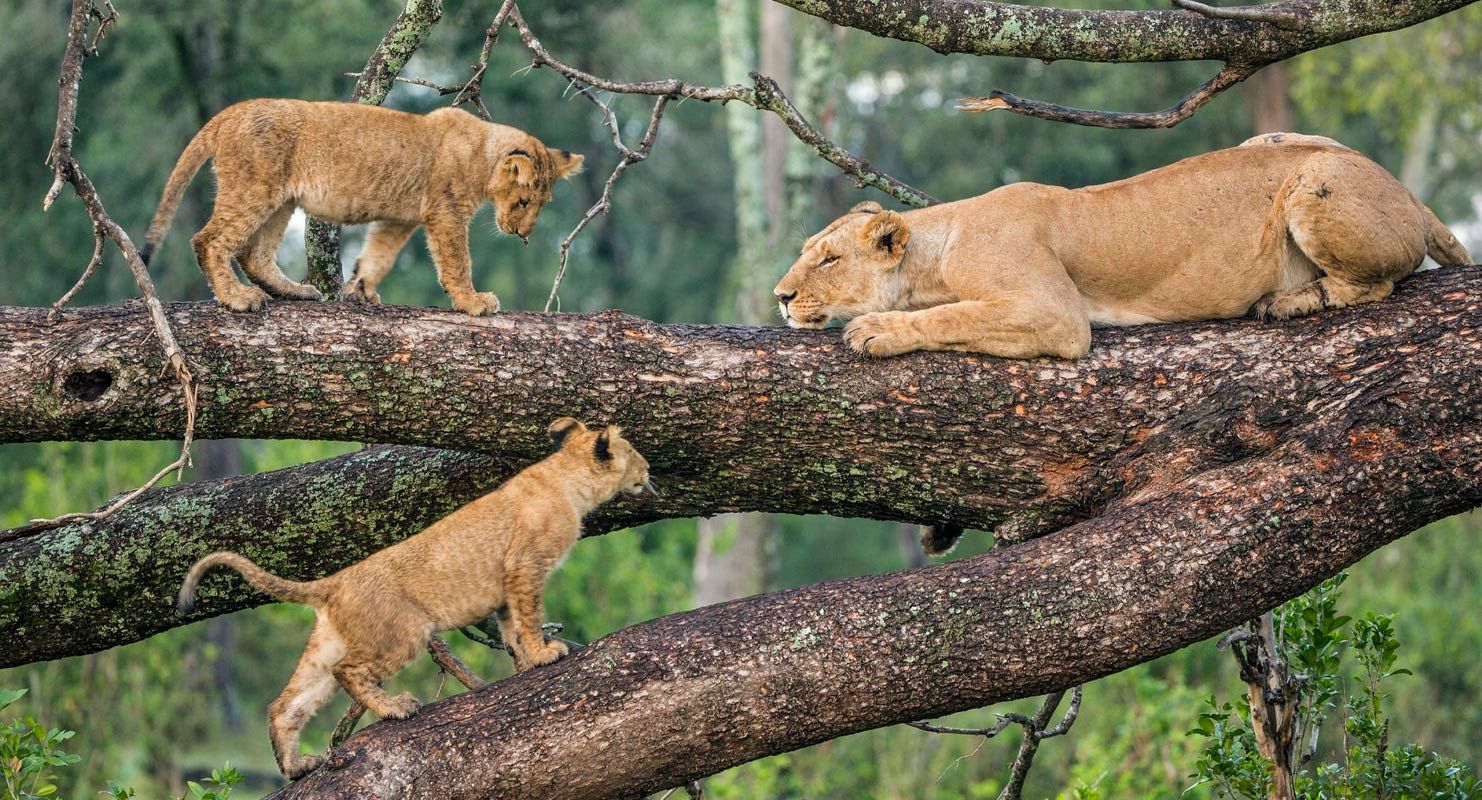
Lake Manyara National Park is Tanzania's most compact and most underestimated safari destination. At just 648 square kilometres — smaller than the city of Houston — it packs a remarkable density of ecosystems, species, and landscapes into a space that most Northern Circuit itineraries cover in a single day. And yet that single day consistently produces encounters that visitors remember for years: a pride of lions draped through the branches of a fig tree six metres above the ground, a wall of ten thousand flamingos lifting from a pink lake, a herd of elephants emerging silently from the groundwater forest into bright afternoon sun.
Manyara sits at the base of the Great Rift Valley escarpment — a 600-metre cliff wall that defines the western boundary of the park and creates one of East Africa's most dramatic backdrops. Ernest Hemingway, after visiting in the 1930s, called it 'the most beautiful lake in Africa.' The Maasai name for the lake — Manyara, meaning place of the Apocynum plant — gives the park its name and hints at the deep indigenous ecological knowledge embedded in this landscape.
This guide covers everything you need to know about Lake Manyara National Park in 2026: its six distinct habitat zones, its most famous wildlife (including the tree-climbing lions that appear in almost no other location on Earth), its extraordinary flamingo and birdlife, the best time to visit, and how to position it correctly within a Northern Circuit itinerary. It is written by the team at adventuresseeker.com, based in Arusha, who have guided visitors through Manyara's groundwater forest and along its lake shore across every season.
LAKE MANYARA NATIONAL PARK: QUICK FACTS
- Total Area
- Size: 648 km² (including approximately 230 km² of lake surface)
- Land Area
- Size: Approximately 418 km² of terrestrial habitat
- Lake Area
- Size: Approximately 230 km² (varies significantly with seasonal rainfall)
- UNESCO Status
- Biosphere Reserve (designated in 1981)
- Ramsar Status
- Wetland of International Importance, recognized for its critical waterbird habitat
- Established
- 1960
- Location
- Northern Tanzania, Manyara Region, at the base of the Great Rift Valley escarpment
- Altitude
- Ranges from 960 m at the lake shore to 1,800 m at the top of the escarpment
- Park Entry Fee
- USD $70 per non-resident adult per day (2026)
- Vehicle Entry Fee
- USD $40 per vehicle per entry
- Distance from Arusha
- Approximately 130 km (around 2 hours by road)
- Distance from Karatu / Ngorongoro
- Approximately 35 km (around 40 minutes by road)
- Nearest Town
- Mto wa Mbu ("River of Mosquitoes"), a vibrant market town located at the park entrance
- Annual Rainfall
- Approximately 600–700 mm per year
- Temperature
- Generally 20–30°C throughout the year, making it warmer than the Ngorongoro Crater rim
- Bird Species
- Over 400 recorded species, reflecting its importance as a Ramsar Wetland
- Famous For
- Tree-climbing lions, flamingos, lush groundwater forest, elephants, and exceptional birdwatching
- Best Combined With
- Tarangire National Park, Ngorongoro Crater, and Serengeti National Park as part of the Northern Circuit
- Park Layout
- A long, narrow park stretching approximately 50 km from north to south, with a maximum width of 13 km
- Crowd Level
- Moderate—typically busier than Tarangire National Park but quieter than Serengeti National Park
LAKE MANYARA'S GEOGRAPHY: SIX HABITATS IN ONE PARK
Lake Manyara National Park's most extraordinary characteristic is its habitat diversity. In a park just 50 kilometres long and rarely more than 13 kilometres wide, six completely distinct ecosystems are stacked against each other — compressed by the Rift Valley escarpment on the west and the lake on the east into an unusually dense ecological band. A single day-long game drive passes through all six.
- Groundwater Forest
- Location: Immediately inside the main gate
- Key Wildlife: Elephant, baboon, blue monkey, bushbuck
- Key Feature: Dense evergreen forest sustained by underground springs, creating the park's darkest and most atmospheric habitat
- Bushed Grassland
- Location: North of the groundwater forest
- Key Wildlife: Buffalo, wildebeest, zebra, impala, giraffe
- Key Feature: Open grassland with scattered acacia trees, forming a transition between the forest and the lake
- Acacia Tortilis Woodland
- Location: Central section of the park
- Key Wildlife: Tree-climbing lions, leopard, impala, giraffe
- Key Feature: Classic flat-topped acacia woodland, famous as the preferred habitat of Lake Manyara's tree-climbing lions
- Lake Shore
- Location: Eastern edge along Lake Manyara
- Key Wildlife: Flamingos, pelicans, hippos, and a variety of wading birds
- Key Feature: Alkaline shoreline supporting one of the park's richest waterbird habitats
- Open Floodplain
- Location: Southern sections near seasonal rivers
- Key Wildlife: Elephant, buffalo, crocodile, hippo
- Key Feature: Seasonal floodplains that become especially productive for wildlife during the dry season
- Rift Valley Escarpment
- Location: Western boundary of the park (not accessible by vehicle)
- Key Wildlife: Klipspringer, baboon, and birds of prey
- Key Feature: A dramatic 600-meter-high cliff forming the park's western backdrop and offering spectacular scenery
The Groundwater Forest
The first habitat you enter after passing through the main gate is the most distinctive in the park: a dense, cathedral-like groundwater forest fed by underground springs that seep from the base of the Rift Valley escarpment. This forest exists in a semi-arid region because of the reliable underground water supply — a geological quirk that creates a lush, dark, permanently green woodland in an otherwise dry landscape.
The canopy is high and dense, dominated by large fig, mahogany, and fever tree species. The light is filtered and green. The sounds change immediately from the open savannah sounds outside the gate — birdsong from species that require forest cover, the crashing of elephants through undergrowth, the whooping of baboons in the canopy. The contrast with the open grassland that most Tanzania safari travellers expect creates an immediate sense of having entered a completely different world.
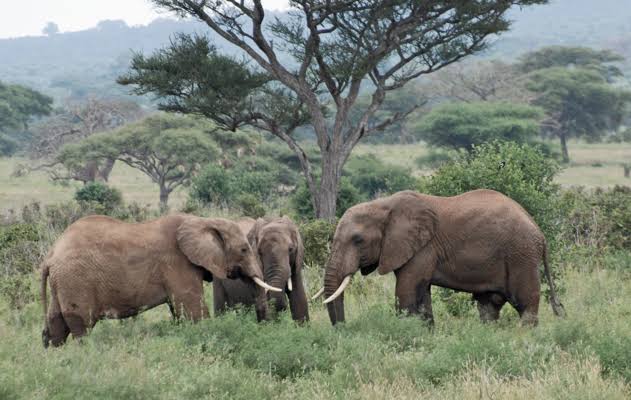
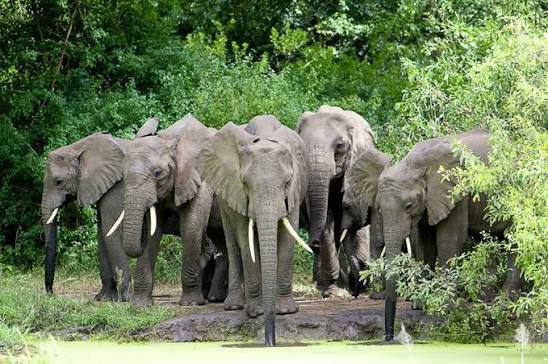
- Elephant encounters: The groundwater forest produces some of the closest and most intimate elephant encounters in Tanzania. Family groups move through the trees at ranges of 10 to 20 metres from vehicles, with small calves partially obscured by undergrowth and large matriarchs keeping watchful eyes on the safari vehicles.
- Blue monkeys: Lake Manyara's blue monkey population lives primarily in the groundwater forest. Large troops — sometimes 40 or more individuals — move through the canopy overhead. They are genuinely blue-grey in colouration and entirely different from the more common vervets outside the forest.
- Photography: The groundwater forest is dramatically different photographically from any other Tanzania habitat. Dark, dappled light, rich green backgrounds, and close-range animals produce images unlike any from the open savannah parks.
The Lake Shore and Alkaline Flats
Lake Manyara is a shallow alkaline soda lake — part of the chain of Rift Valley soda lakes that extends from Ethiopia to Tanzania. The alkaline chemistry of the water (high pH, rich in sodium carbonate and other minerals) prevents most freshwater fish and vegetation from surviving but supports extraordinary blooms of the blue-green algae Spirulina platensis — the primary food source of lesser flamingos. The lake's size fluctuates dramatically with rainfall: in wet years it can cover 230 square kilometres; in drought years it can reduce to a fraction of that.
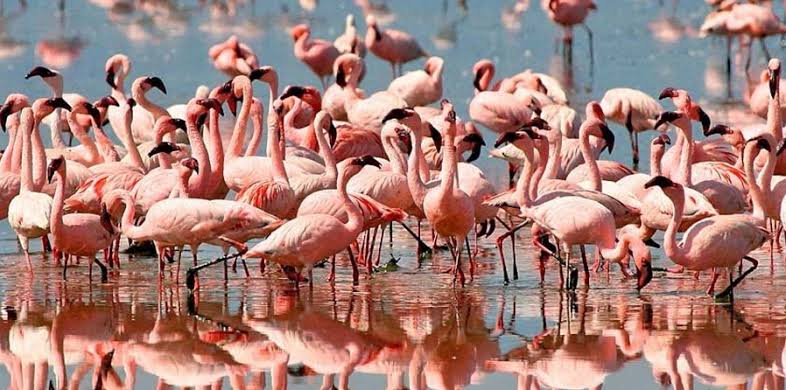
The lake shore is the park's most productive zone for birds, providing habitat for up to 2 million flamingos at peak times (though typical sightings range from thousands to tens of thousands), large flocks of great white pelicans, African spoonbills, yellow-billed storks, various herons and egrets, and an extraordinary diversity of wading birds. The hippo pools along the lake's northern shore are permanent year-round features.
🌊 Lake Facts: Lake Manyara is one of Tanzania's Great Rift Valley soda lakes. Its alkaline chemistry — pH above 9 — makes it inhospitable to most aquatic life but creates the perfect environment for Spirulina algae, which feeds the flamingo populations that make the lake famous. The lake has no outlet — water only leaves through evaporation.
The Acacia Tortilis Woodland — Tree-Climbing Lion Habitat
The central section of the park is dominated by classic East African acacia woodland — flat-topped umbrella acacias (Acacia tortilis) and yellow-barked fever trees standing in open grassland. This is the habitat that most visitors associate with the 'Africa' of their imagination. It is also the zone where Lake Manyara's most famous wildlife curiosity lives: the tree-climbing lions that have made the park internationally known.
The acacia woodland also provides habitat for large impala herds, giraffe browsing the upper canopy, waterbuck near the seasonal streams, and the occasional leopard sighting in larger fig trees near water sources. Buffalo herds move through the woodland in the morning before retreating to shade by midday.
LAKE MANYARA WILDLIFE: COMPLETE SPECIES GUIDE
The Tree-Climbing Lions — Lake Manyara's Most Famous Phenomenon
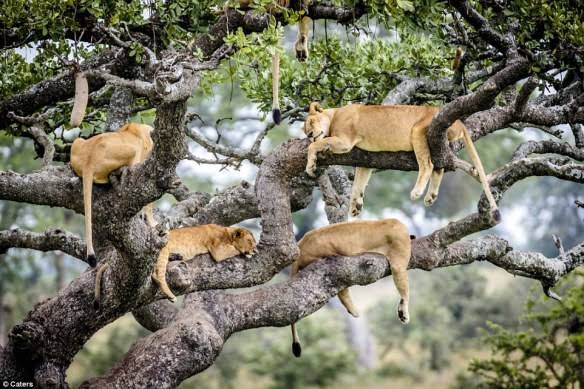
Lake Manyara National Park is one of only three places in the world where lions regularly climb trees and rest in the branches — the others being Ishasha in Uganda's Queen Elizabeth National Park and, occasionally, in areas of Tanzania's Ruaha and Tarangire parks. The Manyara tree-climbing behaviour is the most famous, the most photographed, and the most sought-after of these rare populations.
The lions of Lake Manyara have been observed resting in trees since at least the early 20th century. They use specific species — primarily large fig trees, fever trees, and occasionally acacias — and return to the same trees repeatedly across generations, suggesting that the behaviour is culturally transmitted within specific pride lineages rather than a species-wide instinct.
Why Do Manyara Lions Climb Trees?
The exact reason for tree-climbing behaviour in Manyara's lions remains scientifically debated. Several explanations have been proposed:
- Biting flies: The most widely cited hypothesis. The groundwater forest and lake shore areas support high densities of tsetse flies and biting Stomoxys flies. These insects concentrate near ground level. A lion in a tree, six metres above the ground, is above the flight zone of these insects — giving a significant comfort advantage.
- Temperature regulation: A breeze in the tree canopy can reduce ambient temperature by several degrees compared to the ground on a hot afternoon — providing thermal relief that lions elsewhere find in shade.
- Better view: An elevated position gives a lion a commanding view of the surrounding grassland — useful for spotting approaching prey or rival predators.
- Cultural transmission: Cubs learn the behaviour from their mothers and older pride members. Once established in a pride's tradition, it perpetuates. Prides that have never developed the behaviour do not spontaneously begin climbing.
🦁 Sighting Strategy: Tree-climbing lion sightings are not guaranteed — it is a natural behaviour, not a performance. The best strategy is to begin with the groundwater forest at dawn, work through the acacia woodland by mid-morning, and specifically check large fig trees along the stream lines and seasonal watercourses in the central park. Your guide should know the specific trees used by currently active prides. Sightings are most common in the morning before temperatures peak.
Are Tree-Climbing Lion Sightings Guaranteed?
No — and any operator or guide who guarantees this is being dishonest. The lions rest in trees when they choose to, not on a schedule. However, the specific prides that use specific trees do so with considerable regularity, and a guide with current Manyara knowledge — who has driven the park in the days before your visit — knows which trees are currently occupied. Typical sighting success rates for a full-day Manyara visit with an experienced, knowledgeable guide are approximately 50–65%. The morning session (6:00–10:00 AM) is significantly more productive than the afternoon for tree-climbing lions.
Even without a tree-climbing sighting, Lake Manyara's lions are commonly seen on the ground — resting under fever trees, near the hippo pool, and along the lake shore. The tree-climbing is the extraordinary bonus on top of reliable ground-level lion encounters.
Elephants
Lake Manyara has a long and well-documented elephant population — the subject of Iain Douglas-Hamilton's pioneering 1960s study on elephant social structure that transformed scientific understanding of elephant behaviour and led directly to major conservation programmes. The park's elephants are still present in significant numbers, and the groundwater forest produces extraordinarily intimate encounters with family groups at close range.
Manyara's elephants tend to be more active in the early morning and late afternoon, retreating into the dense forest during the heat of the day. Dawn drives through the groundwater forest consistently produce elephant encounters at 10 to 30 metres — close enough to hear the rumbling communication between family members and the deep, rhythmic sound of an elephant eating.
- Family groups: Lake Manyara's elephant population includes several stable family groups matriarch-led by well-known individuals. Some of these lineages trace back to animals studied by Douglas-Hamilton in the 1960s.
- Bulls: Older males are occasionally seen in the southern floodplain area and around the lake shore.
Hippos
The hippo pool at the northern end of Lake Manyara — accessible early in the game drive circuit — is one of the park's most reliable and entertaining wildlife features. A large resident pod of 50 to 100 hippos occupies this permanent pool year-round. The best viewing is in the early morning when hippos are returning from nocturnal grazing and jostling for pool positions, and again in the late afternoon when social activity increases. The pool is viewable from a vehicle pull-off at close range — hippos at 20 to 30 metres with no barrier between you and them.
Buffalo
Large buffalo herds — sometimes 200 to 400 animals — are a feature of Lake Manyara's open grassland and bushed floodplain. In the dry season, herds concentrate near the lake shore and the permanent streams that flow from the escarpment. Buffalo in Manyara are typically more skittish than those in the Serengeti or Ngorongoro, reflecting lower tourism habituation, which makes encounters feel more genuinely wild.
Giraffe
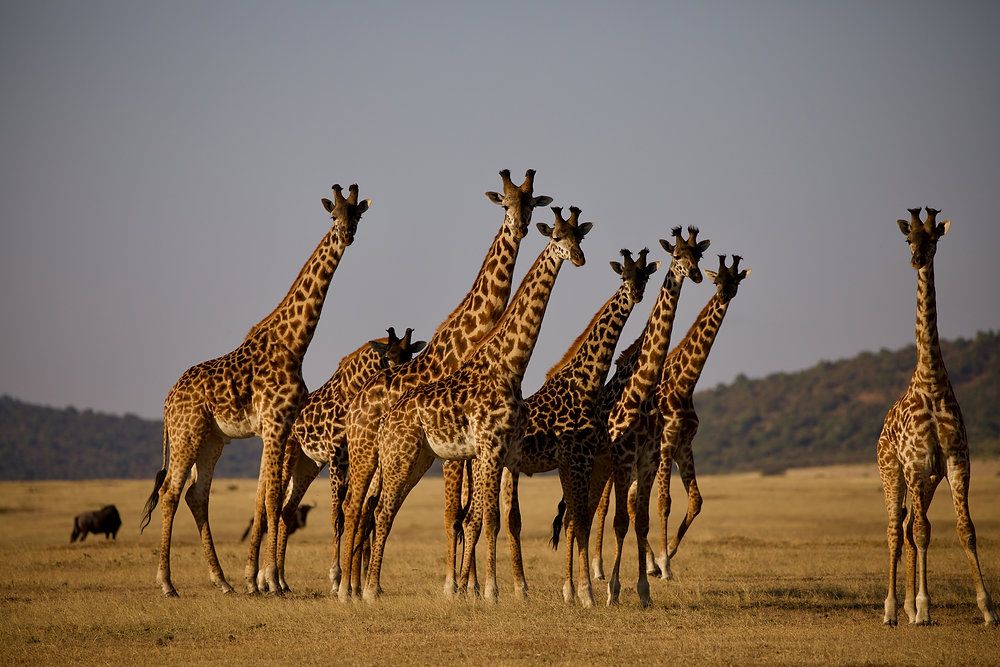
Maasai giraffe are abundant throughout the acacia woodland zone of Lake Manyara. Their height advantage — browsing on the upper canopy of acacia trees — makes them visible from considerable distances and allows them to be incorporated into almost every game drive. Giraffe in the foreground of the Rift Valley escarpment is one of Manyara's most striking photographic compositions.
Other Notable Mammals
- Olive Baboon
- Population Status: Very common
- Best Location: Groundwater forest and woodland
- Notes: Large troops are frequently seen along the entrance road
- Blue Monkey
- Population Status: Common
- Best Location: Groundwater forest canopy
- Notes: A Lake Manyara specialty, largely restricted to forest habitats
- Vervet Monkey
- Population Status: Very common
- Best Location: Throughout the park
- Notes: Well habituated and commonly seen near picnic areas
- Impala
- Population Status: Abundant
- Best Location: Acacia woodland and grassland
- Notes: Often found in large female herds led by a single dominant male
- Waterbuck
- Population Status: Common
- Best Location: Near rivers, streams, and other water sources
- Notes: Easily recognized by the white ring on its rump and distinctive musky scent
- Kirk's Dik-dik
- Population Status: Present
- Best Location: Dense bush near the forest
- Notes: Tiny antelope typically seen in lifelong monogamous pairs
- Wildebeest
- Population Status: Seasonal
- Best Location: Open grassland
- Notes: Small resident population; not part of the Great Migration
- Plains Zebra
- Population Status: Common
- Best Location: Open grassland and lake shore
- Notes: Frequently grazes alongside wildebeest and impala
- Warthog
- Population Status: Common
- Best Location: Open grassland
- Notes: Easily identified by its characteristic tail held upright while running
- Mongoose (Banded & Dwarf)
- Population Status: Present
- Best Location: Edges of the groundwater forest
- Notes: Social species usually seen moving in family groups through the undergrowth
- Leopard
- Population Status: Present but rare
- Best Location: Dense woodland and large fig trees
- Notes: Occasionally sighted, but not considered a reliable species to target in Lake Manyara
- Cheetah
- Population Status: Very rare
- Best Location: Open grassland
- Notes: An occasional visitor and not a dependable sighting for most safaris
LAKE MANYARA FLAMINGOS AND BIRDLIFE: A BIRDER'S PARADISE
Lake Manyara's Ramsar Wetland designation reflects the extraordinary importance of the lake and its surrounding habitats for waterbirds. More than 400 species have been recorded in the park — a figure that rivals Tanzania's largest parks — compressed into an area a fraction of their size. For birders, Lake Manyara delivers more species per hour of game driving than any other park in the Northern Circuit.
The Flamingos
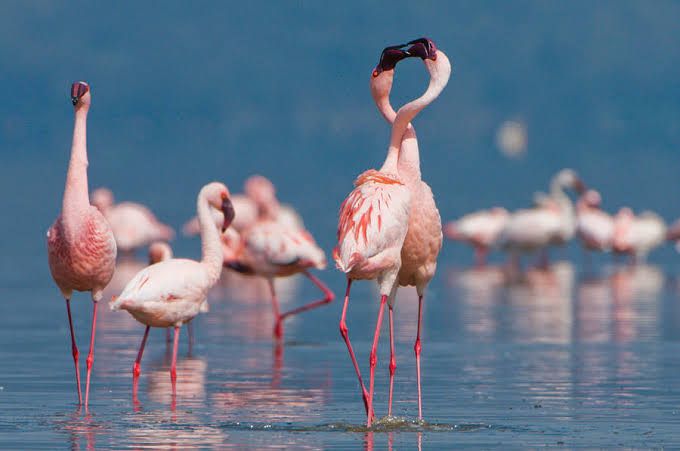
Lake Manyara is one of East Africa's most important flamingo sites. Both lesser and greater flamingos use the lake, attracted by the alkaline chemistry that supports their food sources. At peak concentrations — typically between November and April when water levels and algae conditions are optimal — the flamingo numbers can reach into the hundreds of thousands, creating the vivid pink spectacle visible from the rim of the Rift Valley escarpment above.
- Lesser flamingo (Phoeniconaias minor): The more numerous species at Manyara. Filter-feeds on Spirulina algae using its highly specialised bent bill. The pink colouration derives from carotenoid pigments in the algae.
- Greater flamingo (Phoenicopterus roseus): Larger, paler, and less numerous. Feeds on invertebrates in the lake mud rather than algae. Identifiable by its pinkish-white plumage and strongly curved pink and black bill.
- Peak viewing: November to April — coinciding with higher water levels and algae blooms. Numbers can fluctuate dramatically: the flamingos move between Manyara, Ngorongoro's Lake Magadi, and other Rift Valley lakes (Natron, Eyasi) according to water conditions.
- Viewing strategy: Drive the lake shore road at dawn for the best light on the flamingo flocks. The early morning calm before wind ripples the water allows extraordinary reflections of the pink birds against the mirrored lake surface.
🌊 Flamingo Numbers: At peak concentration, Lake Manyara has hosted more than 1 million flamingos simultaneously — making it one of the largest flamingo gatherings in the world. Numbers vary enormously year to year with rainfall and lake level. Even at low concentrations (tens of thousands), the sight of flamingos on Lake Manyara with the escarpment behind is extraordinary.
Key Bird Species at Lake Manyara
- Lesser Flamingo (Phoeniconaias minor)
- Habitat: Lake shore and shallow waters
- Best Months: November–April
- Notes: Numbers peak during the wet season, with some birds remaining year-round
- Greater Flamingo (Phoenicopterus roseus)
- Habitat: Lake shore
- Best Months: November–April
- Notes: Less numerous than the lesser flamingo and feeds mainly on aquatic invertebrates
- Great White Pelican (Pelecanus onocrotalus)
- Habitat: Open lake and shorelines
- Best Months: Year-round
- Notes: Large flocks often perform spectacular cooperative fishing
- African Spoonbill (Platalea alba)
- Habitat: Shallow lake margins
- Best Months: Year-round
- Notes: Easily recognized by its distinctive spoon-shaped bill
- Yellow-billed Stork (Mycteria ibis)
- Habitat: Lake shores and rivers
- Best Months: Year-round
- Notes: Hunts by sweeping its open bill through shallow water
- Saddle-billed Stork (Ephippiorhynchus senegalensis)
- Habitat: Lake margins and rivers
- Best Months: Year-round
- Notes: Africa's tallest stork, notable for its striking multicolored bill
- Grey Crowned Crane (Balearica regulorum)
- Habitat: Grasslands near the lake
- Best Months: Year-round
- Notes: Known for elegant courtship dances and excellent photographic opportunities
- African Fish Eagle (Haliaeetus vocifer)
- Habitat: Lake margins and large fig trees
- Best Months: Year-round
- Notes: Its iconic call is a signature sound of the African wilderness
- Goliath Heron (Ardea goliath)
- Habitat: Lake margins and shallow water
- Best Months: Year-round
- Notes: The world's tallest heron, specializing in catching large fish
- White-backed Night Heron
- Habitat: Dense vegetation along the water's edge
- Best Months: Year-round
- Notes: A nocturnal species that roosts in waterside trees during the day
- Kori Bustard (Ardeotis kori)
- Habitat: Open grassland
- Best Months: Year-round
- Notes: The world's heaviest flying bird
- Lilac-breasted Roller (Coracias caudatus)
- Habitat: Acacia woodland
- Best Months: Year-round
- Notes: One of Tanzania's most colorful and photographed birds
- Superb Starling (Lamprotornis superbus)
- Habitat: Throughout the park
- Best Months: Year-round
- Notes: Abundant and easily recognized by its iridescent plumage
- Silvery-cheeked Hornbill
- Habitat: Groundwater forest
- Best Months: Year-round
- Notes: Large forest hornbill with a loud, distinctive call
- Mottled Spinetail
- Habitat: Groundwater forest
- Best Months: Year-round
- Notes: Fast-flying forest specialist rarely encountered elsewhere
- Lesser Masked Weaver
- Habitat: Woodland and lake edge
- Best Months: Breeding season: November–February
- Notes: Builds elaborate hanging nests suspended above water
- European Migratory Raptors
- Habitat: Grassland and woodland
- Best Months: November–April
- Notes: Includes Steppe Eagle, Montagu's Harrier, and European Hobby during the northern winter
- African Marsh Harrier
- Habitat: Reed beds along the lake
- Best Months: Year-round
- Notes: Hunts by flying low over reeds in search of waterbirds and small mammals
🦅 Birding Tip: Lake Manyara is the finest birding park in the Northern Circuit by species-per-hour metric. Combine a standard game drive with deliberate birding stops at three key locations: (1) the groundwater forest entrance for forest species, (2) the hippo pool area for waterbirds, and (3) the lake shore drive for flamingos and wading birds. A knowledgeable birding guide transforms a general safari into a record-breaking species list.
BEST TIME TO VISIT LAKE MANYARA NATIONAL PARK
Lake Manyara National Park is productive year-round — its diversity of habitats means there is always something exceptional to observe regardless of season. What changes between months is which specific highlights are at their peak, and how wet the roads and grasslands are.
- January
- Wildlife Highlights: Lions, elephants, and hippos excellent
- Flamingos: Building
- Birding: Good
- Road Access: Good
- Crowds: Moderate
- Rating: ⭐⭐⭐⭐
- February
- Wildlife Highlights: All mammals excellent; dry conditions
- Flamingos: Good
- Birding: Good
- Road Access: Good
- Crowds: Moderate
- Rating: ⭐⭐⭐⭐⭐
- March
- Wildlife Highlights: Good mammal viewing; rains beginning
- Flamingos: Very Good
- Birding: Excellent
- Road Access: Variable
- Crowds: Low
- Rating: ⭐⭐⭐⭐
- April
- Wildlife Highlights: Heavy rains; forest birds spectacular
- Flamingos: Peak
- Birding: Outstanding
- Road Access: Muddy
- Crowds: Very Low
- Rating: ⭐⭐⭐
- May
- Wildlife Highlights: Lush landscapes; rains easing; excellent forest wildlife
- Flamingos: Peak
- Birding: Outstanding
- Road Access: Improving
- Crowds: Very Low
- Rating: ⭐⭐⭐
- June
- Wildlife Highlights: Dry season begins; grassland viewing excellent
- Flamingos: High
- Birding: Very Good
- Road Access: Good
- Crowds: Low
- Rating: ⭐⭐⭐⭐
- July
- Wildlife Highlights: Excellent overall; tree-climbing lions active
- Flamingos: Moderate
- Birding: Very Good
- Road Access: Excellent
- Crowds: Moderate
- Rating: ⭐⭐⭐⭐⭐
- August
- Wildlife Highlights: Peak season; all wildlife excellent
- Flamingos: Moderate
- Birding: Good
- Road Access: Excellent
- Crowds: Moderate
- Rating: ⭐⭐⭐⭐⭐
- September
- Wildlife Highlights: Very good; lower lake levels expose more shoreline
- Flamingos: Moderate
- Birding: Good
- Road Access: Excellent
- Crowds: Low
- Rating: ⭐⭐⭐⭐⭐
- October
- Wildlife Highlights: Good; lake transitioning; tree-climbing lions visible
- Flamingos: Building
- Birding: Good
- Road Access: Good
- Crowds: Low
- Rating: ⭐⭐⭐⭐
- November
- Wildlife Highlights: Short rains; flamingos returning; peak bird activity
- Flamingos: Very Good
- Birding: Outstanding
- Road Access: Variable
- Crowds: Low
- Rating: ⭐⭐⭐⭐
- December
- Wildlife Highlights: Drying conditions; excellent wildlife; festive season
- Flamingos: Very Good
- Birding: Very Good
- Road Access: Good
- Crowds: Moderate
- Rating: ⭐⭐⭐⭐
Key Seasonal Highlights
Dry Season (June–October — Best Overall): The dry season is the most reliable window for mammal viewing in Lake Manyara. Vegetation thins, lake levels drop (exposing more shore for waterbirds and hippos), and the tree-climbing lions are most reliably encountered in the acacia woodland. Roads are in excellent condition. Bird diversity is slightly lower than the wet season, but mammal sightings compensate.
Green Season (November–April — Best for Birds and Flamingos): The rains transform Lake Manyara dramatically. The groundwater forest becomes intensely lush. Migratory birds from Europe and Asia arrive in large numbers (November–April), dramatically increasing species diversity. Flamingo concentrations peak between November and April. The downside is that some roads within the park can become muddy and temporarily impassable after heavy rain.
April and May: The long rainy season produces the park's most challenging road conditions but also its lowest prices, smallest visitor numbers, and extraordinary forest birding. For birders willing to deal with mud and intermittent access, April and May in Lake Manyara can produce species lists that rival any other month.
February: Often the finest overall month — the short dry period of January and February coincides with excellent mammal activity, good flamingo numbers beginning to build, and the lush green landscape left from the November–December short rains. Prices are moderate and visitor numbers are manageable.
SAFARI ACTIVITIES AT LAKE MANYARA NATIONAL PARK
1. Game Drives
Lake Manyara's game drive circuit follows the park's elongated shape — a roughly linear route from the main gate in the north through the groundwater forest, acacia woodland, lake shore, and southern floodplain before returning north on the same road. The park's compactness means a full circuit covers all six habitats in a single 4-to-6-hour drive.
- Dawn drive (recommended): Begin at the gate as it opens (6:00 AM). The groundwater forest is at its most atmospheric in early morning light — mist still on the lake, birds calling from the canopy, elephants active near the forest edge. The first two hours are consistently the most productive.
- Full day vs half day: A half-day drive (4 hours) covers the park's primary highlights. A full day allows a more leisurely pace, more time at sightings, a picnic lunch at the lake shore, and a higher chance of both morning and afternoon lion encounters. Full day strongly recommended if this is your only visit to Manyara.
- Private vehicle advantage: The park's narrow roads and limited passing places make a private vehicle significantly more comfortable than a shared one. Request a pop-top Land Cruiser for maximum photography angles.
2. Night Game Drive (External Concession)
Night drives are not permitted within Lake Manyara National Park boundaries. However, some properties in the Manyara Ranch Conservancy — a community wildlife area adjacent to the park — offer nocturnal game drives on their land. Night drives in this area can produce serval, porcupine, lesser galago (bush baby), African wildcat, and occasionally lion and leopard. Arrange through your operator before arrival — not available through standard park access.
3. Walking Safari (Manyara Ranch)
Walking is not permitted within Lake Manyara National Park itself. The adjacent Manyara Ranch Conservancy offers guided walking safaris with armed rangers — a different experience from any vehicle-based Manyara visit. The dry thornbush landscape of the ranch hosts giraffe, zebra, wildebeest, and occasional predators viewable on foot.
4. Birdwatching
For serious birders, Lake Manyara is the finest Northern Circuit park. The combination of groundwater forest species (silvery-cheeked hornbill, trumpeter hornbill, mottled spinetail, various sunbirds, African paradise flycatcher) with lake shore waterbirds (flamingo, pelican, goliath heron, spoonbill) and open woodland raptors produces a species list that can exceed 100 species in a single full day with a knowledgeable birding guide.
- Request a birding specialist: adventuresseeker.com can assign a guide with specific birding expertise for Manyara visits — guides who know the calls, the specific trees for forest species, and the shore locations for peak waterbird concentrations. A general safari guide will miss significant species.
- Bring a bird field guide: The Birds of Tanzania (Stevenson & Fanshawe) or the East Africa regional equivalent is the standard reference. Your guide will know birds by call and sight — the field guide helps you identify and record what you encounter.
5. Mto wa Mbu Village Visit
The town of Mto wa Mbu ('River of Mosquitoes') sits directly outside the park's main gate and is one of the most ethnically diverse small towns in Tanzania — home to people from over 120 different tribes, brought together by the trading and agricultural economy that has developed around the park and the Rift Valley agriculture. A guided walk through the village market, the irrigation channels, and the banana and rice farms gives cultural context to the landscape you are about to enter.
- What to see: The colourful market with produce from across Tanzania, the irrigation channels watering crops from the escarpment springs, local restaurants serving ugali and grilled meat, and the extraordinary mix of traditional dress and everyday modern life.
- Duration: 1–2 hours, ideally on arrival before entering the park
- Arrange through: Your operator — not independently, to ensure a knowledgeable guide and fair economic benefit to the community
6. Cycling Safari (Outside Park Boundary)
Several operators offer cycling experiences in the Manyara area — through banana plantations, along the base of the escarpment, and past Maasai bomas in the surrounding landscape. This is not a wildlife activity but a cultural and landscape immersion that adds a completely different dimension to a Manyara stop, particularly for families with teenagers or active travellers who want movement between game drives.
7. Canopy Walk (Manyara Tree Lodge Area)
The andBeyond Manyara Tree Lodge operates a private forest canopy walk for its guests — a series of rope bridges through the groundwater forest canopy at height. This gives an entirely different perspective on the forest environment, particularly for birding (canopy species are often impossible to see from below) and for the experience of moving through the treetops where the monkeys live. Available to Manyara Tree Lodge guests only — not open to day visitors.
LAKE MANYARA ACCOMMODATION: LODGE AND CAMP GUIDE
Lake Manyara accommodation falls into three broad categories: lodges on the Rift Valley escarpment rim above the park (dramatic views, cooler temperatures), lodges in the forest near the park entrance, and properties at Mto wa Mbu town level (most practical and affordable). None are inside the park itself.
- andBeyond Lake Manyara Tree Lodge
- Location: Inside park — forest
- Tier: Ultra-Luxury
- Key Feature: Treehouse-style suites built among fig trees, private decks, canopy experience, and an exclusive atmosphere
- Approx. Cost/Night pp: USD $1,000–$2,000
- Lake Manyara Serena Safari Lodge
- Location: Escarpment rim
- Tier: Premium
- Key Feature: Clifftop swimming pool with panoramic lake views and polished service
- Approx. Cost/Night pp: USD $280–$550
- Lake Manyara Hotel
- Location: Escarpment rim
- Tier: Comfort
- Key Feature: Classic lake views, well-positioned property with spacious but more traditional facilities
- Approx. Cost/Night pp: USD $150–$280
- Manyara Wildlife Camp
- Location: Near gate, forest edge
- Tier: Comfort
- Key Feature: Simple tented camp with convenient location and an authentic safari feel
- Approx. Cost/Night pp: USD $100–$200
- Kirurumu Tented Lodge
- Location: Escarpment rim
- Tier: Premium
- Key Feature: Eco-focused lodge with excellent views, sustainable practices, and locally managed hospitality
- Approx. Cost/Night pp: USD $250–$500
- Chem Chem Safari Lodge
- Location: Manyara area
- Tier: Luxury
- Key Feature: Private conservancy experience, walking safaris, exclusive setting, and intimate service
- Approx. Cost/Night pp: USD $700–$1,400
- Ngorongoro Farm House
- Location: Karatu (approximately 30 minutes away)
- Tier: Comfort
- Key Feature: Colonial farm atmosphere, excellent food, and convenient base for Lake Manyara and Ngorongoro
- Approx. Cost/Night pp: USD $150–$350
- Panorama Safari Camp
- Location: Escarpment rim
- Tier: Comfort
- Key Feature: Affordable crater and lake views, reliable accommodation, and good food
- Approx. Cost/Night pp: USD $100–$200
- Gibbs Farm
- Location: Karatu (approximately 30 minutes away)
- Tier: Premium
- Key Feature: Historic coffee estate with exceptional cuisine, gardens, swimming pool, and a unique countryside experience
- Approx. Cost/Night pp: USD $300–$600
How to Choose
- For the most extraordinary experience: andBeyond Lake Manyara Tree Lodge is built in the canopy of ancient fig trees inside the park boundary — the only in-park accommodation in Manyara. Guests fall asleep to the sounds of the forest and open their private deck at dawn to forest birds at eye level. This is a genuinely unique lodge experience.
- For the best views: Lake Manyara Serena Safari Lodge or Kirurumu Tented Lodge on the escarpment rim provide panoramic views across the entire park and lake — the same perspective that Hemingway had when he called it 'the most beautiful lake in Africa.'
- For best value: Panorama Safari Camp or Manyara Wildlife Camp offer comfortable, honest accommodation at prices that leave budget for the parks themselves.
- For families: Ngorongoro Farm House or Gibbs Farm in nearby Karatu — both family-friendly, with grounds for children, excellent food, and a 30-minute drive to the Manyara gate.
- For Manyara as a day stop: Many Northern Circuit itineraries use Manyara as a half-day or full-day park en route between Tarangire and Ngorongoro, without an overnight stay. This is perfectly valid — a full-day game drive starting at dawn covers the park comprehensively without requiring a night.
adventuresseeker.com Accommodation Advice: We recommend staying at least one night near Lake Manyara to enable a dawn game drive at the gate opening — the single most productive time window in the park. If your itinerary does not allow a Manyara overnight, enter the gate as early as possible on a transit day. We can build this into your Northern Circuit itinerary seamlessly.
LAKE MANYARA NATIONAL PARK COSTS 2026
Park Entry Fees (Fixed)
- Adult Non-Resident Entry Fee
- Cost: USD $70.00 per person per day
- Child (5–15 Years) Non-Resident Entry Fee
- Cost: USD $35.00 per person per day
- Child Under 5 Years
- Cost: Free
- Vehicle Entry Fee
- Cost: USD $40.00 per vehicle per entry
- Camping — Public Campsites
- Cost: USD $50.00 per person per night
- Camping — Special Campsites
- Cost: USD $100.00 per person per night
Typical Cost Structure: 1-Day Lake Manyara Visit (Per Person)
- Park Entry Fee (1 day)
- Cost: USD $70.00 per person
- Vehicle Entry Fee (Private Vehicle / 2 Passengers)
- Cost: USD $20.00 per person
- Safari Vehicle and Guide (Private, 1 day)
- Cost: USD $150–$250 per person
- Accommodation (1 night, Comfort Tier)
- Cost: USD $120–$250 per person
- Meals
- Cost: Included in most lodge rates
- Tips (Guide + Lodge Staff, 1 day)
- Cost: USD $25–$40 per person
Total Estimate
- 1-Day Visit — Comfort Tier
- Total: USD $385–$630 per person
- 1-Day Visit — Premium Tier
- Total: USD $550–$900 per person
Lake Manyara vs Other Northern Circuit Parks: Cost Comparison
- Lake Manyara
- Entry Fee/Day: USD $70 per person
- Extra Fees: None
- Typical 1-Night Lodge (Comfort): USD $120–$280 per person/night
- Overall Cost Level: Lower than Serengeti and Ngorongoro
- Tarangire
- Entry Fee/Day: USD $70 per person
- Extra Fees: None
- Typical 1-Night Lodge (Comfort): USD $180–$350 per person/night
- Overall Cost Level: Similar to Lake Manyara
- Ngorongoro
- Entry Fee/Day: USD $70 per person
- Extra Fees: USD $295 per vehicle crater descent
- Typical 1-Night Lodge (Comfort): USD $200–$400 per person/night
- Overall Cost Level: Higher — crater descent adds significant additional cost
- Serengeti
- Entry Fee/Day: USD $70 per person
- Extra Fees: USD $40 per vehicle entry
- Typical 1-Night Lodge (Comfort): USD $180–$500 per person/night
- Overall Cost Level: Variable — widest range of accommodation options and pricing
💡 Cost Note: Lake Manyara is the most affordable park in the Northern Circuit on a per-day basis — no crater descent fee, no special permits. Its compact size means a single day covers the full park. For budget-conscious travellers, Manyara delivers exceptional wildlife value, particularly for birding and elephants, at the lowest gate cost of any Northern Circuit destination.
HOW TO GET TO LAKE MANYARA NATIONAL PARK
By Road from Arusha — Standard Route
Lake Manyara is the closest major national park to Arusha, making it a natural first or last stop on any Northern Circuit itinerary. The road is predominantly good tarmac with a short gravel section near the park gate.
- Arusha → Lake Manyara Main Gate (Mto wa Mbu)
- Distance / Time: ~130 km / approximately 2 hours by road
- Road Condition: Mostly tarmac
- Lake Manyara Gate → Karatu (Ngorongoro Access Town)
- Distance / Time: ~35 km / approximately 40 minutes
- Lake Manyara Gate → Ngorongoro Crater Rim
- Distance / Time: ~70 km / approximately 1.5 hours
- Lake Manyara Gate → Tarangire National Park Gate
- Distance / Time: ~100 km / approximately 1.5 hours via Makuyuni Junction
- Road Surface
- Tarmac road from Arusha to Mto wa Mbu
- Murram (gravel) roads from the park gate into Lake Manyara National Park
- 4WD Requirement
- Required inside the park, especially during the wet season
By Air
Lake Manyara has its own small airstrip approximately 2 km from the main gate. Domestic light aircraft services connect it with Arusha (approximately 20–25 minutes), Serengeti airstrips (approximately 45–60 minutes), and Zanzibar (approximately 90 minutes via connection). Flying into Manyara is the fastest option for travellers who want to maximise park time or who are connecting from the Serengeti.
- Lake Manyara airstrip → park gate: ~5 minutes by vehicle (your operator collects you)
- Arusha → Lake Manyara airstrip: ~20–25 minutes by light aircraft
- Seronera (Serengeti) → Lake Manyara: ~45 minutes by light aircraft
- Airlines serving Manyara: Coastal Aviation, Air Excel, Auric Air — scheduled and charter
Lake Manyara's Position in the Northern Circuit
Lake Manyara fits naturally between Tarangire (east) and Ngorongoro (west) on the standard Northern Circuit route. Most 7-day Northern Circuit itineraries include it as a full-day or half-day stop — entering at the gate after Tarangire and exiting in the afternoon to drive to Karatu or directly to the Ngorongoro rim. The park can also be visited as an add-on day trip from Karatu/Ngorongoro if the circuit is run in the opposite direction.
LAKE MANYARA IN THE NORTHERN CIRCUIT: ITINERARY OPTIONS
Option 1: Lake Manyara as a Half-Day Transit Stop
For shorter itineraries (5–6 days), Manyara is often used as a productive transit stop between Tarangire and Ngorongoro. Entering the gate at 6:00 AM, completing a 4-hour game drive (groundwater forest, acacia woodland, hippo pool, lake shore), and exiting by midday allows a comfortable afternoon drive to the Ngorongoro rim.
- 05:30 AM
- Activity: Depart Tarangire lodge or Karatu accommodation
- 06:00 AM
- Activity: Enter Lake Manyara gate — morning drive through the groundwater forest
- 07:00 AM
- Activity: Visit hippo pool and acacia woodland — search for tree-climbing lions
- 08:30 AM
- Activity: Explore the lake shore — flamingos, pelicans, and waterbirds
- 09:30 AM
- Activity: Open grassland circuit — buffalo, giraffe, zebra, and wildebeest sightings
- 10:30 AM
- Activity: Exit the park; picnic or lunch stop at Mto wa Mbu
- 11:30 AM
- Activity: Drive to Ngorongoro crater rim (approximately 1.5 hours)
- 01:00 PM
- Activity: Arrive at Ngorongoro rim lodge, afternoon rest, and crater rim walk
Option 2: Lake Manyara as a Full Day with Overnight
Spending a full day and one night at Lake Manyara is significantly more rewarding — it allows a dawn drive, a midday rest, and an afternoon drive back through the park with completely different light and different animal activity. This is the recommended format for birders and for anyone visiting in November–April when flamingo concentrations are at their peak.
- Day 1 — Afternoon
- Activity: Arrive in the Lake Manyara area. Explore Mto wa Mbu village and relax.
- Overnight: Manyara lodge
- Day 2 — Dawn (6:00 AM)
- Activity: Enter the park early. Explore the groundwater forest, hippo pool, and acacia woodland. Search for tree-climbing lions.
- Overnight: Manyara lodge
- Day 2 — Midday
- Activity: Visit the lake shore for birdwatching and flamingo viewing. Enjoy a picnic lunch and rest at the lodge.
- Day 2 — Afternoon
- Activity: Second park entry for an afternoon game drive. Experience the lake shore in golden light with opportunities to see elephants and buffalo.
- Overnight: Manyara lodge
- Day 3 — Morning
- Activity: Depart for Ngorongoro Crater or Karatu.
- Overnight: Ngorongoro rim
Option 3: Classic 7-Day Northern Circuit Including Manyara
- Day 1 — Arusha → Tarangire
- Activity: Afternoon game drive — elephant herds, ancient baobabs, and python sightings
- Overnight: Tarangire lodge
- Day 2 — Tarangire National Park
- Activity: Full-day safari — explore the Tarangire River area where wildlife density peaks
- Overnight: Tarangire lodge
- Day 3 — Tarangire → Lake Manyara
- Activity: Morning Tarangire game drive. Afternoon Lake Manyara safari — groundwater forest, hippos, flamingos, and birdlife
- Overnight: Manyara lodge
- Day 4 — Lake Manyara → Ngorongoro
- Activity: Dawn Lake Manyara game drive — search for tree-climbing lions. Drive to the Ngorongoro crater rim
- Overnight: Ngorongoro rim
- Day 5 — Ngorongoro Crater
- Activity: Full crater descent — Big Five viewing, black rhino, lions, hippos, and high wildlife concentration
- Overnight: Ngorongoro rim
- Day 6 — Ngorongoro → Serengeti
- Activity: Visit Olduvai Gorge. Continue through Naabi Hill Gate. Afternoon Serengeti game drive
- Overnight: Serengeti camp
- Day 7 — Serengeti → Arusha
- Activity: Morning game drive. Return to Arusha or continue with a flight to Zanzibar
- Overnight: Arusha / departure
LAKE MANYARA CONSERVATION: PROTECTING THE ALKALINE HEART OF THE RIFT
Ramsar Wetland Status
Lake Manyara's designation as a Ramsar Wetland of International Importance recognises its critical role as a staging and breeding ground for waterbirds across the East African flyway. The lake's alkaline chemistry creates a unique ecosystem that supports flamingo populations, pelicans, and wading bird species that depend on this specific habitat type. Changes in the lake's water chemistry, level, or surrounding land use have direct consequences for these populations — and for the park's defining spectacles.
Iain Douglas-Hamilton's Elephant Research
Lake Manyara National Park has a unique place in the history of wildlife science. In 1965, Oxford zoologist Iain Douglas-Hamilton began a four-year study of the park's elephant population that became the foundation of modern elephant biology. His work — identifying individual elephants by ear patterns, documenting their social structure, communication, family relationships, and intelligence — transformed the scientific and public understanding of elephants entirely. His 1972 book 'Among the Elephants' remains one of the most important works in conservation literature.
The families Douglas-Hamilton documented still have descendants in Manyara today. The conservation movement that his work inspired — and the ban on ivory trade that followed — is directly traceable to the research begun at this park. Visiting Lake Manyara's elephants means encountering a population whose scientific lineage is one of the longest-studied in Africa.
Water Level Management and Conservation Challenges
Lake Manyara's water level fluctuates significantly — from a near-full lake to dramatically shrunken shorelines — according to rainfall in the Ngorongoro highlands and the broader catchment. This natural variation is the primary driver of flamingo and waterbird concentrations. Climate change is creating increasingly unpredictable water level patterns, which affects the timing and reliability of peak flamingo spectacles.
Agricultural pressure and irrigation demand from the rapidly growing Mto wa Mbu area and the Karatu agricultural highlands increasingly compete with the park's water supply. TANAPA and the government of Tanzania are working with NGOs and local community groups to manage these competing demands. Tourism revenue from the park provides the economic argument for protecting the watershed that feeds it.
Community Conservation — Manyara Ranch
The Manyara Ranch Conservancy — a 22,000-acre community wildlife area between Lake Manyara National Park and Tarangire National Park — provides a wildlife corridor connecting two otherwise isolated parks. Managed in partnership between the African Wildlife Foundation and the local Maasai community, the ranch allows wildlife to move freely between Manyara and Tarangire, dramatically increasing the effective range of both parks' ecosystems. The ranch also generates direct income for the Maasai community through conservation fees and lodge revenue.
LAKE MANYARA NATIONAL PARK FAQS: 14 QUESTIONS ANSWERED
Is Lake Manyara National Park worth visiting?
Yes — particularly as part of the Northern Circuit. Manyara's compact size and extraordinary habitat diversity deliver a different experience from any other park in Tanzania: the groundwater forest is unique in northern Tanzania, the tree-climbing lions are found in almost no other location on Earth, the flamingo spectacle can be extraordinary, and the birding is the finest in the Northern Circuit by species-per-hour. The park is also the least expensive entry point on the Northern Circuit, making it excellent value for the experience it delivers.
What is Lake Manyara famous for?
Lake Manyara National Park is famous for three things: its tree-climbing lions (one of only three places in the world where this behaviour is documented), its flamingo populations (potentially millions of birds on the alkaline lake during peak months), and its extraordinary habitat diversity (six completely different ecosystems in a park just 50 km long). It was also the site of Iain Douglas-Hamilton's pioneering elephant social behaviour research in the 1960s.
Can I see tree-climbing lions at Lake Manyara?
Tree-climbing lions are possible but not guaranteed — it is a natural behaviour, not a managed performance. Success rates with an experienced, specialist Manyara guide are approximately 50–65% on a full-day visit. The behaviour is most common in the early morning in the acacia woodland zone. Even without tree-climbing lions, Manyara's lions are commonly seen on the ground throughout the park. Manage expectations accordingly — the tree-climbing sighting is an extraordinary bonus, not a certainty.
When is the best time to see flamingos at Lake Manyara?
Flamingo concentrations peak between November and April, when water levels are higher and the Spirulina algae blooms that lesser flamingos feed on are most productive. Numbers can fluctuate dramatically — flamingos move between Lake Manyara, Ngorongoro's Lake Magadi, Lake Natron, and Lake Eyasi according to water conditions. Some flamingos are present year-round, but peak spectacles are most likely in the November–April window. The best photography light for flamingos is at dawn when the water is calm and the escarpment is reflected in the lake.
How many days should I spend at Lake Manyara?
One full day with a dawn game drive is the standard and sufficient format for most visitors. A half-day transit stop is possible for shorter itineraries. Two days is recommended for serious birders (to cover both the groundwater forest species and the lake shore waterbirds thoroughly) and for visitors who want the maximum chance of a tree-climbing lion sighting. The park is compact enough that a single full day covers every habitat zone.
Is Lake Manyara good for birding?
Outstanding. With over 400 species recorded in a park of 648 km², Lake Manyara delivers the highest species-per-hour birding rate of any Northern Circuit park. The combination of groundwater forest species (silvery-cheeked hornbill, various sunbirds, flycatchers), lake shore waterbirds (flamingo, pelican, stork, heron, spoonbill), and woodland species (raptors, rollers, bustards) means a serious full-day birding effort can record 100+ species. Request a guide with specific birding expertise from adventuresseeker.com.
What is the groundwater forest at Lake Manyara?
The groundwater forest is the first habitat you enter through the main gate — a dense, high-canopy forest fed by underground springs that seep from the base of the Rift Valley escarpment. It exists in an otherwise semi-arid landscape because of this reliable underground water supply. It is unlike any other habitat in the Northern Circuit: dark, lush, high-canopied, and home to elephants, blue monkeys, bushbuck, and forest bird species that cannot be found in the open savannah parks. The forest is particularly atmospheric at dawn.
Why do lions climb trees at Lake Manyara?
The exact reason remains scientifically debated. The most widely accepted explanation is relief from biting insects — the groundwater forest and lake shore support high densities of tsetse and Stomoxys flies that concentrate near ground level. A lion in a tree is above this insect zone. Temperature regulation (accessing breeze), improved visibility for hunting, and cultural transmission within specific pride lineages are also proposed. The behaviour is established in specific prides and transmitted from mothers to cubs — prides that have never developed it do not spontaneously begin.
How long is the game drive at Lake Manyara?
A standard full-day game drive at Lake Manyara takes 6 to 8 hours including stops — covering the main gate, groundwater forest, hippo pool, acacia woodland, lake shore road, and southern floodplain. A half-day drive (4 hours) covers the northern section of the park — groundwater forest, hippo pool, acacia woodland, and the northern lake shore — which includes all the primary highlights. The park has a single main road running its length, making the circuit straightforward.
How does Lake Manyara compare to Tarangire?
They are complementary rather than comparable — each excels at different things. Tarangire is defined by elephant herds (200–300 animals in the dry season), ancient baobab trees, and a longer, more complex game drive circuit in a much larger park. Lake Manyara is defined by habitat diversity, the tree-climbing lions, flamingos, and superior birding in a compact format. Both are essential to the Northern Circuit experience. In itineraries with only one day between them, prioritise Tarangire in dry season (June–October) for elephants, and prioritise Manyara for birding and flamingos (November–April).
Is Lake Manyara safe?
Yes. Lake Manyara National Park is a well-managed, professionally operated national park. Standard safari safety rules apply: remain in your vehicle unless at designated exit points. The park's compact size and well-maintained road circuit make it one of the most straightforward in Tanzania to navigate safely. Malaria prophylaxis is essential throughout northern Tanzania including Lake Manyara.
Can I combine Lake Manyara with the Serengeti?
Yes — Lake Manyara is a natural first or last stop on the Northern Circuit, which connects Tarangire, Manyara, Ngorongoro, and the Serengeti in a single route. Most standard Northern Circuit itineraries of 5 days or more include Lake Manyara either as a transit stop or an overnight. The park is 2 hours from Arusha and approximately 1.5 hours from the Ngorongoro rim, sitting naturally between the eastern entry point (Kilimanjaro/Arusha) and the western Serengeti destination.
What should I bring to Lake Manyara?
Binoculars are essential — particularly important at Manyara given the birding quality. A telephoto lens (100–400mm) for wildlife photography. Neutral-coloured clothing. A wide-angle or mid-range lens for the groundwater forest (tight spaces don't suit a 400mm). A field guide to birds of East Africa is strongly recommended for birders. Insect repellent — the forest and lake shore support biting insects. Sunscreen for the open lake shore sections.
Is Lake Manyara good for families?
Yes. The park's compact size, accessible wildlife, and the entertaining hippo pool and monkey sightings in the groundwater forest make it particularly suitable for families with children. The tree-climbing lion possibility adds an element of excitement that appeals to younger visitors. The park's shorter game drive duration (compared to the Serengeti) is more manageable for children's attention spans. Several family-friendly lodges operate in the Manyara area and nearby Karatu. Always inform your operator of children's ages when booking.
Plan Your Lake Manyara Safari with Adventures Seeker
Lake Manyara National Park rewards travellers who engage with it on its own terms — not as an introduction to the 'real' Northern Circuit parks, but as a world-class destination in its own right. The groundwater forest at dawn is one of Tanzania's finest sensory experiences. The flamingo spectacle on a clear morning, with the escarpment reflected in the alkaline water, is among the most beautiful natural scenes in East Africa. And the tree-climbing lion, glimpsed through binoculars in the canopy of a fig tree six metres above the acacia grassland, is the kind of encounter that makes you rethink what you thought you knew about wildlife.
At adventuresseeker.com, we build Lake Manyara into every Northern Circuit itinerary with the attention it deserves — not as a half-day tick between Tarangire and Ngorongoro, but as a destination with its own rhythm, its own specialist knowledge requirements, and its own unique capacity to surprise even experienced safari travellers.
Get Your Northern Circuit Quote: Visit adventuresseeker.com to request a personalised Northern Circuit itinerary that includes Lake Manyara with the right timing, the right guide, and the right lodge for your travel dates and budget. We respond within 24 hours with a detailed day-by-day plan and full cost breakdown.
Quick Facts
Total Destinations
11
UNESCO Sites
7+
National Parks
16
Popular Destinations
Why Visit Tanzania?
- ✓World's largest wildlife migration
- ✓Home to Mount Kilimanjaro
- ✓Big Five game viewing
- ✓Pristine beaches & islands
- ✓Rich cultural heritage
You May Also Like
Plan Your Adventure
Ready to explore Tanzania's iconic destinations? Get in touch with our travel experts to plan your perfect safari.
Request a custom itinerary for your next trip to Tanzania.
Our team of travel experts is here to help you create a custom itinerary for your next trip to Tanzania. We will work with you to create a itinerary that is tailored to your needs and budget.