
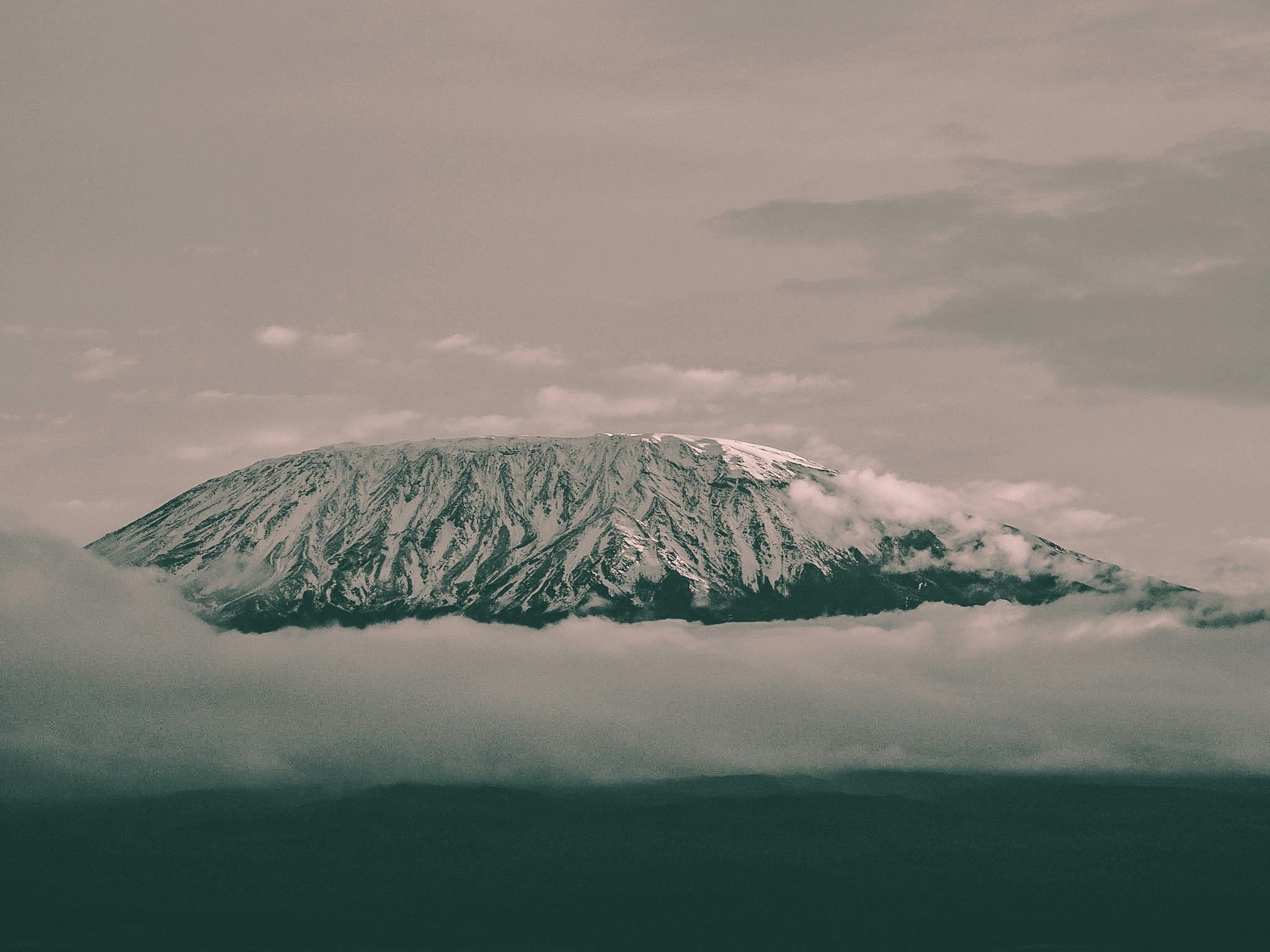
Mount Kilimanjaro
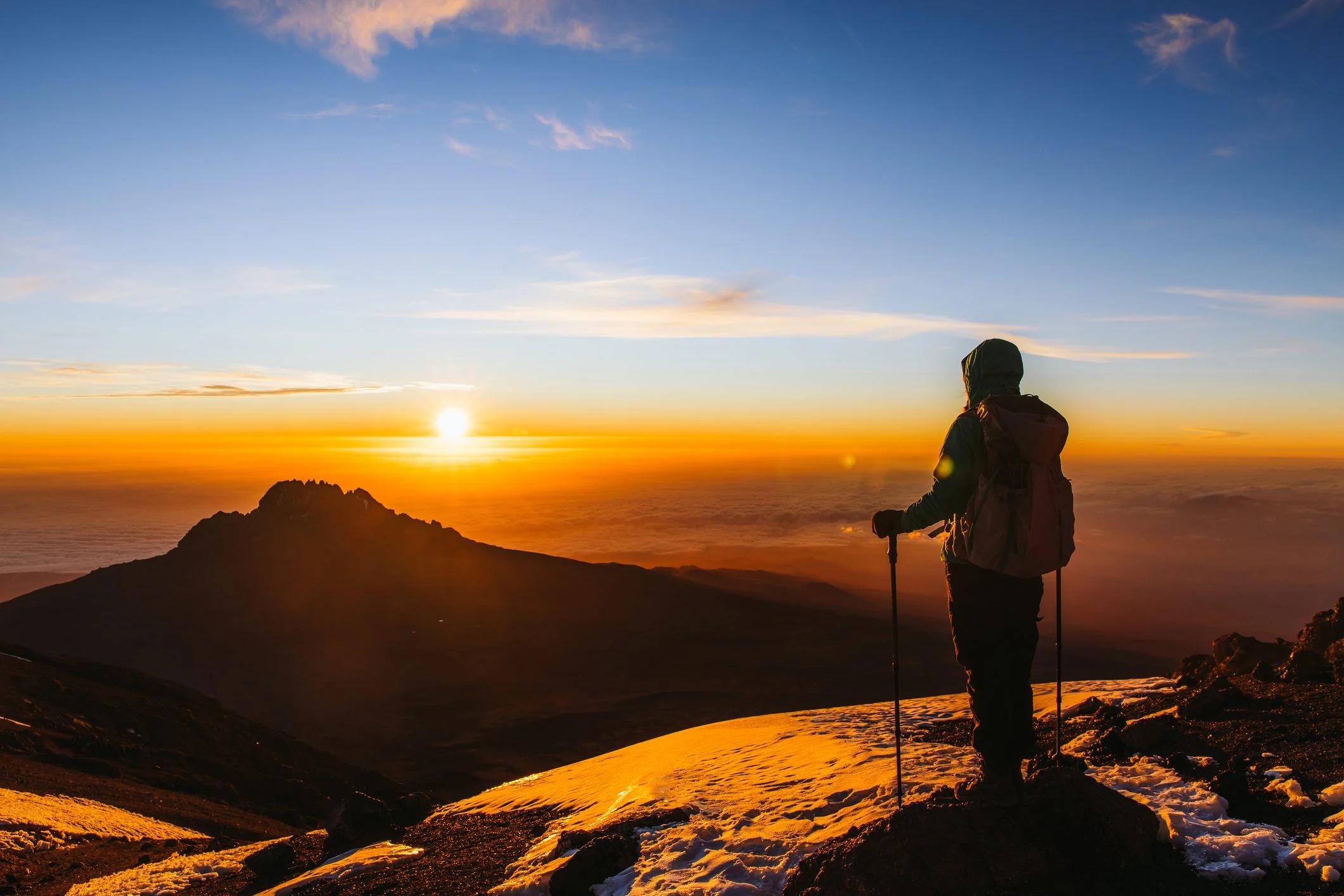
There is a moment on every Kilimanjaro climb that nobody tells you about in advance. It comes somewhere on the summit night, at around 5,000 metres, when the cold is absolute and the darkness is complete and the only sound is your own breathing and your boots on the volcanic scree. You look up and see the Milky Way above you — a river of stars so dense it looks solid — and you look down and see the lights of the towns of Tanzania spread across the darkness of the continent below. And you understand, in a way that no photograph or documentary has ever quite communicated, where you are. You are on the roof of Africa. You are on the highest point on the continent. And you put it there, one step at a time.
Mount Kilimanjaro is Africa's tallest mountain at 5,895 metres above sea level and one of the world's most accessible high-altitude summits. It is a free-standing volcanic massif that rises from the savannah plains of northern Tanzania — visible on clear mornings from as far as 200 kilometres away — with no technical climbing required. No ropes. No crampons. No prior mountaineering experience. Just boots, determination, and the discipline to walk slowly, breathe deeply, and trust the process of acclimatisation.
Every year, approximately 50,000 people attempt to climb Kilimanjaro. Roughly 65% of them reach Uhuru Peak — the highest point on the summit crater rim. The ones who succeed almost all share three things: they chose the right route, they had the right number of days, and they climbed with a guide and team who knew the mountain. The ones who do not succeed almost always chose too few days, moved too fast, or underestimated the seriousness of altitude.
This guide gives you everything you need to plan a successful Kilimanjaro climb in 2026 — the routes, the realistic costs, the best seasons, the altitude sickness reality, the summit night hour-by-hour, what to pack, how to train, and how to combine the climb with the Tanzania safari that Kilimanjaro's location makes so naturally available. It is written by the team at adventuresseeker.com, based in Arusha at the mountain's foot, who have guided climbers to the summit and back down across every route and every season.
MOUNT KILIMANJARO: QUICK FACTS
- Summit name: Uhuru Peak — 'uhuru' means freedom in Swahili
- Summit altitude: 5,895 metres (19,341 feet) above sea level
- Mountain type: Stratovolcano — last eruption approximately 360,000 years ago; still geologically active (fumaroles in crater)
- Location: Kilimanjaro Region, north-eastern Tanzania — 330 km south of the equator
- Distance from Arusha: ~90 km east / approximately 90 minutes by road
- Nearest town: Moshi — 50 km south of the mountain, the primary base for climbers
- National Park: Kilimanjaro National Park — UNESCO World Heritage Site (1987)
- Park entry fee: USD $70 per person per day (non-resident adult, 2026)
- Rescue fee (mandatory): USD $20 per person per climb — paid at registration
- Conservation fee: USD $70 per person for the full climb
- Number of routes: 7 officially recognised routes, of which 6 are ascent routes and 2 are descent routes
- Most popular route: Machame Route ('Whiskey Route') — chosen by approximately 35% of climbers
- Easiest route: Marangu Route ('Coca-Cola Route') — the only route with hut accommodation
- Most scenic route: Lemosho Route — widest wilderness approach, highest acclimatisation profile
- Climb duration: 5 to 9 days depending on route and acclimatisation schedule chosen
- Overall success rate: Approximately 65% reach Uhuru Peak
- Success rate (8-day routes): Approximately 85–90% with proper acclimatisation schedule
- Annual climbers: Approximately 50,000 attempts per year
- Three volcanic peaks: Kibo (5,895m / Uhuru Peak), Mawenzi (5,149m), Shira (3,962m)
- Five climate zones: Cultivation, Rainforest, Heathland/Moorland, Alpine Desert, Arctic Summit
- Glaciers: Remnant glaciers on the summit — retreating significantly due to climate change; may be gone by 2040
- Best combined with: Tanzania Northern Circuit safari, Zanzibar beach extension
WHY CLIMB KILIMANJARO? THE CASE FOR AFRICA'S HIGHEST SUMMIT
The World's Most Accessible High-Altitude Summit
Kilimanjaro's extraordinary appeal is rooted in a remarkable fact: it is the highest summit on the continent of Africa, and yet it requires no technical climbing skills whatsoever. There are no ropes, no harnesses, no ice axes, no crampons, no fixed anchors. The routes to Uhuru Peak are mountain hiking trails — extraordinarily demanding ones, at extraordinary altitude, but trails nonetheless. This means that any physically fit person who can walk 8 to 10 hours per day over several consecutive days has the potential to stand on the roof of Africa.
This accessibility makes Kilimanjaro unique among the Seven Summits — the highest peaks on each continent. Everest requires years of high-altitude mountaineering experience and months of preparation. Denali requires technical glacier skills. Aconcagua is a serious mountaineering objective. Kilimanjaro asks only for good physical fitness, the right number of acclimatisation days, and the mental resilience to keep walking when every cell in your body wants to stop.
Five Ecosystems in One Climb
Kilimanjaro offers something no other major mountain on Earth provides: a journey through five completely distinct climate zones from tropical savannah to Arctic summit within a single ascent. The ecological transitions on Kilimanjaro are as dramatic as anything on the planet:
- Cultivation Zone (800–1,800m): Coffee and banana plantations, dense tropical vegetation, small villages. The world you leave behind.
- Rainforest Zone (1,800–2,800m): Dense montane forest with colobus monkeys in the canopy, exotic birdlife, dramatic waterfalls, and permanent cloud cover. Mosses, ferns, and ancient trees create an atmosphere of extraordinary primordial beauty.
- Heathland and Moorland Zone (2,800–4,000m): The forest gives way to open moorland dominated by giant heather, strange-looking giant lobelia, and the extraordinary giant groundsel (Dendrosenecio). These plants — which look like something from a science fiction film — exist only at altitude on Kilimanjaro and a handful of other African mountains.
- Alpine Desert Zone (4,000–5,000m): Vegetation disappears almost entirely. The landscape is volcanic scree, red and grey rock, and the occasional hardy plant species. The air is thin. The temperature fluctuates by 40°C between noon and midnight. This is where altitude becomes the primary challenge.
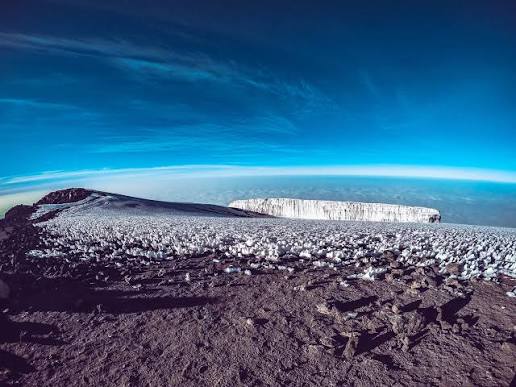
- Arctic Summit Zone (5,000–5,895m): Ice, rock, and sky. The glaciers that once covered the entire summit are now remnant formations — the Northern Icefield and the Furtwängler Glacier — but they are still present and extraordinary. The crater rim, the caldera floor, and Uhuru Peak itself are places of complete, silent, overwhelming beauty.
🏔️ Ecological Fact: The climate zones you pass through on Kilimanjaro span the equivalent of travelling from the equator to the Arctic in six days. The temperature change between the gate and the summit can exceed 50°C — you will depart in tropical heat and arrive at temperatures of minus 20°C on summit night.
The Seven Summits Connection
Kilimanjaro is one of the Seven Summits — the highest peak on each of the seven continents. For mountaineers pursuing the Seven Summits challenge, Kilimanjaro is typically the first or second ascent — chosen for its accessibility as a foundation climb before attempting more technically demanding peaks. Completing Kilimanjaro gives climbers their first experience of prolonged high-altitude exposure, summit night cold, and multi-day expedition logistics — all in a framework that remains achievable for a physically fit non-technical climber.
The Combination with Tanzania Safari
Kilimanjaro's location in northern Tanzania makes it uniquely combinable with a safari experience available nowhere else on Earth. The mountain sits 90 minutes from Arusha — the gateway city for the Northern Circuit's safari parks. A standard combined itinerary does Kilimanjaro first (7–8 days on the mountain), then transitions directly to a Northern Circuit safari (Serengeti, Ngorongoro, Tarangire) and potentially a Zanzibar beach extension. The contrast between the brutal beauty of the Arctic summit and the warm wildlife richness of the Serengeti, experienced within days of each other, is one of travel's most extraordinary juxtapositions.
THE 7 KILIMANJARO ROUTES: COMPLETE COMPARISON
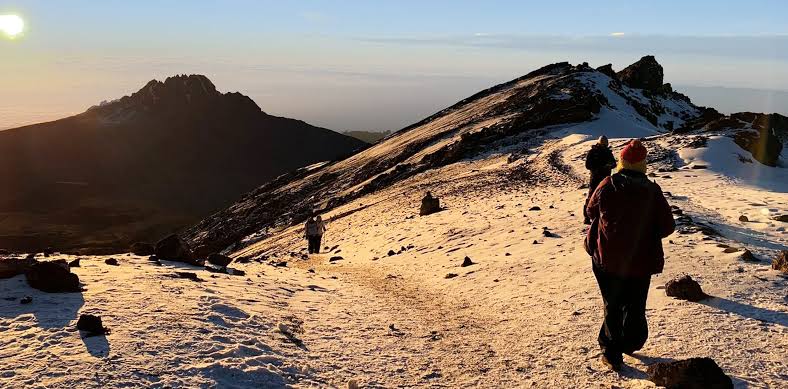
Choosing the right route is the most important planning decision in a Kilimanjaro climb. The route determines your acclimatisation profile, your scenery, your crowd level, your camping conditions, and — most critically — your likelihood of reaching the summit. Here is the honest breakdown of every route.
Route 1: Machame Route — The Most Popular
The Machame Route — nicknamed the 'Whiskey Route' for being harder than the gentler Marangu 'Coca-Cola Route' — is the most popular route on Kilimanjaro, chosen by approximately 35% of all climbers. It approaches the mountain from the south-west, offering a more varied and more scenic landscape than Marangu and a better acclimatisation profile when done over 7 days.
- Duration: 6 days (minimum — poor success rates) or 7 days (recommended)
- Distance: Approximately 62 km round trip
- Highest camp: Barafu Camp at 4,673 m — the standard launch point for summit night
- Scenery: Excellent — traverses the Shira Plateau, passes the Lava Tower (4,642m), descends into the Barranco Valley, and crosses the iconic Barranco Wall
- Traffic: The busiest route on the mountain — popular sites can feel crowded
- Success rate (7 days): Approximately 80–85%
- Accommodation: Tented camping throughout
- Best for: First-time Kilimanjaro climbers who want scenery and a reasonable acclimatisation profile
- Key highlight: The Barranco Wall — a dramatic but non-technical scramble up a 300-metre cliff face that most guides rate as the most spectacular section of any Kilimanjaro route
Route 2: Lemosho Route — The Best Overall
The Lemosho Route is the finest overall Kilimanjaro experience — the widest wilderness approach, the most diverse scenery, the best acclimatisation profile, and the lowest crowd density of any major route. It approaches from the west through pristine montane forest, crosses the vast Shira Plateau, and joins the Machame Route at the Lava Tower for the final approach to the summit.
- Duration: 7 days (minimum — recommended) or 8 days (optimal acclimatisation)
- Distance: Approximately 70 km round trip
- Highest camp: Barafu Camp at 4,673 m
- Scenery: Outstanding — the best of any route. Pristine western forest, Shira Plateau views, Lava Tower, Barranco Valley, and summit glaciers
- Traffic: Lower than Machame — the western approach sees significantly fewer climbers
- Success rate (8 days): Approximately 85–90% — the highest of any standard route
- Accommodation: Tented camping throughout
- Best for: Climbers who want the best possible experience, best scenery, and best summit success rate
- Key highlight: The Shira Plateau — a vast, high-altitude plateau at 3,800–3,900 m with extraordinary views of Kibo's western face and complete wilderness solitude
⭐ Our Recommendation: If you are choosing a route for the first time and can invest 8 days, choose Lemosho. It gives you the finest scenery, the best acclimatisation, the most wilderness experience, and the highest summit success rate of any route. The additional day and the approach from the west make it a fundamentally better experience than Machame for minimal extra cost.
Route 3: Marangu Route — The Most Accessible
The Marangu Route — nicknamed the 'Coca-Cola Route' for being the gentlest approach — is Kilimanjaro's oldest and most famous route. It is the only route with permanent hut accommodation rather than camping, and the only route where the ascent and descent use the same path. This familiarity and comfort makes it the most popular choice for climbers who prioritise comfort over acclimatisation profile — but its shorter standard duration produces Kilimanjaro's lowest summit success rates.
- Duration: 5 days (standard — poor success rates) or 6 days (better acclimatisation)
- Distance: Approximately 72 km round trip (same path up and down)
- Highest camp: Kibo Hut at 4,703 m — the standard Marangu summit launch point
- Scenery: Good but less varied — follows a single route throughout
- Traffic: Highest of any route — the most used trail on the mountain
- Accommodation: Permanent huts with dormitory-style sleeping — the only route with huts
- Success rate (5 days): Approximately 50–55% — the lowest on the mountain
- Success rate (6 days): Approximately 65–70% — significantly better with an extra acclimatisation day
- Best for: Climbers who prefer hut accommodation over camping; less experienced trekkers who want the most manageable logistics
- Key limitation: The 5-day standard schedule does not allow sufficient acclimatisation for most climbers. If choosing Marangu, always book the 6-day option.
🏔️ Marangu Reality: The Marangu Route's low success rate is entirely a function of its standard 5-day schedule — not the route itself. A 6-day Marangu with an acclimatisation day at Horombo Hut produces summit success rates comparable to Machame. Never book the 5-day Marangu if summit success matters to you.
Route 4: Rongai Route — The Northern Approach
The Rongai Route is the only approach from the north, entering the mountain from the Kenyan border side and offering a completely different perspective on Kilimanjaro. The northern approach is drier and more remote than the southern routes, with fewer climbers and a landscape that feels genuinely wild throughout.
- Duration: 6 days (standard) or 7 days (recommended)
- Distance: Approximately 65 km
- Highest camp: School Hut at 4,750 m — the highest camp on the mountain
- Scenery: Different from southern routes — drier, more austere, distinctive northern approach views
- Traffic: Low — one of the quietest routes on the mountain
- Success rate (7 days): Approximately 75–80%
- Accommodation: Tented camping
- Best for: Climbers who want a quieter, more remote experience; dry-weather preference (Rongai is more sheltered from the southern rains)
- Key highlight: The first view of Kibo's northern face from the crater approach is uniquely dramatic — a perspective not available on any southern route
Route 5: Northern Circuit — The Longest and Most Remote
The Northern Circuit is Kilimanjaro's newest and longest route — a full circumnavigation of the mountain before the final summit push. Taking 9 days, it is the route with the highest acclimatisation profile and the highest summit success rate of any route, but its length and cost make it a specialist choice.
- Duration: 9 days — the longest route on the mountain
- Distance: Approximately 98 km — the longest route
- Highest camp: School Hut at 4,750 m
- Scenery: Outstanding and uniquely comprehensive — the full circumnavigation sees all faces of the mountain
- Traffic: Very low — the quietest major route
- Success rate (9 days): Approximately 90%+ — the highest of any route
- Accommodation: Tented camping
- Best for: Experienced trekkers with ample time; climbers who want maximum summit success probability; those who want the complete Kilimanjaro experience
Route 6: Shira Route
The Shira Route approaches from the west like Lemosho but begins at a higher altitude (the Shira Gate at 3,500m), which means it skips the lower forest zone and has a compressed lower-altitude acclimatisation period. For this reason, most operators now prefer the Lemosho Route, which joins the same path at the Shira Plateau but provides a better lower-altitude acclimatisation start.
- Duration: 7 days
- Best for: Climbers who have previously trekked at altitude and want a quicker approach; not recommended as a first Kilimanjaro route
- Key limitation: Begins too high for optimal acclimatisation — the lower forest zone provides valuable gradual altitude gain that Shira skips
Route 7: Umbwe Route — The Steepest and Most Demanding
The Umbwe Route is the most direct, most demanding, and most beautiful approach on Kilimanjaro — a steep, dramatic ridge route through dense forest that gains altitude faster than any other path. It is also the route with the lowest success rates because its speed of ascent allows minimal acclimatisation.
- Duration: 6 days minimum — not recommended for first-time climbers
- Scenery: Extraordinary — the ridge route through the southern forest is among the most dramatic approaches on the mountain
- Traffic: Very low — rarely used compared to Machame and Lemosho
- Success rate: Lower than other routes due to rapid altitude gain
- Best for: Experienced high-altitude trekkers only; not suitable as a first Kilimanjaro attempt
BEST TIME TO CLIMB KILIMANJARO: MONTH-BY-MONTH GUIDE
Kilimanjaro can be climbed year-round — there is no period when the mountain is officially closed. But conditions vary significantly between seasons, and choosing the right time dramatically improves both your experience on the mountain and your probability of reaching the summit.
The Two Peak Climbing Seasons
January to March (Long Dry Season — Best Overall): The first peak season. Dry, cold, and clear. Summit views are at their most spectacular. The mountain is busy with climbers but not overcrowded. Temperatures are cold but manageable. January and February are the finest months of this window — March begins to show the approach of the long rains. This is the season when the glaciers and snowfields are at their most photogenic.
June to October (Second Dry Season — Most Popular): The second and most popular peak season, coinciding with the Northern Circuit safari season. Conditions are excellent — dry, clear, and cold. July and August are the busiest months on the mountain, with the highest climber numbers and the most traffic on popular routes like Machame and Marangu. September and October are slightly quieter with equally good conditions.
Month-by-Month Breakdown
- January: Excellent. Dry, cold, clear summit views. One of the finest months. Busy but not peak crowding.
- February: Outstanding — the finest month on the mountain. Clearest skies, most dramatic summit views, cold but dry. Moderate crowds.
- March: Good in early March. Long rains arrive progressively through the month. Avoid late March.
- April: Long rains at full force. Wet, muddy, poor visibility. Not recommended. Some operators suspend climbs.
- May: Rains continuing. Challenging conditions — cold, wet, poor views. Not recommended for most climbers.
- June: Second dry season opens. Conditions improving rapidly. Good climbing by mid-June. Crowds building but not peak.
- July: Excellent conditions. Peak season — highest climber numbers of the year. Cold, dry, clear.
- August: Peak season. Outstanding conditions but mountain at its most crowded. Popular campsites busy.
- September: Excellent. Slightly fewer climbers than August. Conditions remain outstanding — one of the best value months.
- October: Very good. Crowds dropping. Conditions still excellent in the first three weeks. Short rains may arrive late October.
- November: Short rains. Variable conditions. Not recommended for most climbers.
- December: Short rains tapering. Conditions improving through the month. Good from mid-December. Christmas-New Year period busy.
📅 Timing Advice: For the best Kilimanjaro experience in 2026 or 2027: February is the finest single month — clearest skies, most dramatic glacial photography, and moderate crowds. September combines excellent conditions with lower climber numbers than peak July–August. Both months align well with the Northern Circuit safari season for a combined Kilimanjaro-and-safari itinerary.
ALTITUDE SICKNESS ON KILIMANJARO: THE COMPLETE GUIDE
Altitude sickness — Acute Mountain Sickness (AMS) — is the single most important factor determining summit success on Kilimanjaro. It is not a sign of weakness, poor fitness, or inadequate preparation. It is a physiological response to reduced oxygen availability at altitude, and it affects elite athletes and casual hikers alike. Understanding it is the most critical part of Kilimanjaro preparation.
What Altitude Sickness Is
At sea level, each breath delivers oxygen to your lungs at normal atmospheric pressure. At 5,895 metres — Kilimanjaro's summit — the atmospheric pressure is approximately 50% of sea level. Your lungs receive roughly half the oxygen per breath that they do at sea level. Your body can adapt to this reduced oxygen availability through the process of acclimatisation — producing more red blood cells, optimising oxygen transport, and adjusting breathing patterns. But acclimatisation takes time. Too much altitude too quickly overwhelms the body's adaptive capacity.
Acute Mountain Sickness affects approximately 75% of people who ascend above 3,000 metres rapidly. Most cases are mild. But AMS can progress to High Altitude Pulmonary Oedema (HAPE — fluid in the lungs) or High Altitude Cerebral Oedema (HACE — fluid on the brain). HAPE and HACE are medical emergencies that require immediate descent. This is why the presence of trained guides and a clear descent protocol is not a luxury on Kilimanjaro — it is a safety necessity.
Symptoms of Altitude Sickness
Mild AMS symptoms — which affect most Kilimanjaro climbers to some degree and are manageable:
- Headache — the first and most common symptom
- Fatigue and weakness beyond what the physical effort explains
- Loss of appetite and mild nausea
- Dizziness or lightheadedness
- Difficulty sleeping — fragmented, shallow sleep at altitude is normal
Severe AMS symptoms — which require immediate descent and medical attention:
- Severe, persistent headache not relieved by paracetamol or ibuprofen
- Vomiting (repeated, not just nausea)
- Loss of coordination, stumbling, inability to walk in a straight line
- Confusion, disorientation, or personality changes
- Persistent dry cough, shortness of breath at rest
- Gurgling or rattling sound in the chest — immediate HAPE emergency
🏔️ The Golden Rule: Never ascend with symptoms of AMS that are worsening. The only cure for altitude sickness is descent. Experienced Kilimanjaro guides know exactly when a climber must descend and have both the authority and the physical capacity to make that happen — a porter-assisted descent can reach lower altitude within hours. Guides who push sick climbers upward are dangerous. Never climb with a guide or operator who suggests 'pushing through' worsening AMS.
How to Prevent Altitude Sickness
The following measures significantly reduce AMS risk and improve summit success rates:
- Choose more days: This is the single most effective intervention. An 8-day Lemosho has a summit success rate of 85–90%. A 5-day Marangu has 50–55%. The extra days cost more but they are the most valuable investment in your climb.
- Climb high, sleep low: The most important acclimatisation principle. Routes that include a high-point excursion followed by a descent to a lower camp for the night (such as the Lava Tower day on Machame and Lemosho) exploit this principle. Your body acclimatises during sleep — sleeping at a lower altitude than your highest point of the day maximises the adaptation.
- Walk slowly — pole pole: 'Pole pole' (pronounced poleh poleh) means 'slowly slowly' in Swahili and is the most common phrase you will hear from your guides on Kilimanjaro. The instinct is to walk at your normal hiking pace. The correct pace is significantly slower. Your guide sets the pace — follow it without exception, even when it feels almost comically slow.
- Hydrate aggressively: Dehydration at altitude worsens AMS symptoms significantly. Drink 3–4 litres of water per day on the mountain regardless of thirst. Urine colour is a reliable hydration indicator — aim for pale yellow throughout the climb.
- Eat properly: Appetite decreases at altitude. Force yourself to eat even when you do not feel hungry — your body needs the energy. High-carbohydrate foods are more efficiently metabolised at altitude than protein or fat.
- Acetazolamide (Diamox): A prescription medication that stimulates breathing and accelerates acclimatisation. Many Kilimanjaro climbers use it prophylactically. Consult your doctor before travel — it is a sulfonamide-based drug with contraindications and side effects (increased urination, tingling in the extremities). Not a substitute for adequate days on the mountain.
- Avoid alcohol and sedatives: Both depress respiratory drive and worsen acclimatisation. Avoid alcohol completely on the mountain. Avoid sleeping pills — disrupted altitude sleep is normal and preferable to chemically suppressed breathing.
- Stay warm: Hypothermia and altitude sickness interact badly. Staying warm reduces physiological stress. Layer up earlier than you think necessary, particularly on summit night.
💊 Diamox Note: Acetazolamide (Diamox) is commonly prescribed for Kilimanjaro climbers at 125mg twice daily (half the standard dose — adequate for prophylaxis with fewer side effects). Consult your doctor or travel medicine clinic at least 4 weeks before your climb. Not everyone should take it — your doctor will advise based on your health profile and allergy history.
The Kilimanjaro Medical Team
All regulated Kilimanjaro climbs include a guide team with wilderness first aid training. Adventures Seeker's guides carry pulse oximeters (to measure blood oxygen saturation — the primary real-time indicator of AMS severity), emergency oxygen, and Diamox for emergency treatment. Your guide performs daily health checks and makes the call on whether you continue upward or must descend. Trust that process — it exists to keep you safe, not to rob you of the summit.
WHAT TO EXPECT ON KILIMANJARO: DAY-BY-DAY REALITY
Most Kilimanjaro planning guides describe the route. What follows describes the experience — the physical and emotional reality of what you encounter on the mountain from gate to Uhuru Peak and back.
Days 1–2: The Forest and the Ascent into Cloud
The climb begins at the gate — Machame Gate, Lemosho Gate, or Marangu Gate depending on your route — typically at 8:00–9:00 AM after a detailed registration process. The first hours take you through cultivated land and into the dense montane rainforest. This section is often deceptively manageable — the altitude is relatively low, the terrain is well-maintained trail, and the excitement of finally being on the mountain provides energy that the subsequent days will test.
By afternoon of Day 1, most climbers are in the forest zone — dense, green, humid, and frequently cloudy. Blue monkeys appear in the canopy. Colobus monkeys call from the higher branches. The guides move at a pace that will feel frustratingly slow to most Western hikers. Follow it anyway.
- Day 1 camp altitude (Machame/Lemosho): Approximately 3,000 m. First night above 3,000 m — some climbers experience light AMS symptoms.
- Physical reality: Long (6–8 hours), wet in the forest zone, but manageable. The excitement carries you.
- Emotional reality: Elation. You are finally on the mountain. The team is energetic. The forest is extraordinary. Everything feels possible.
Days 2–3: Moorland and the Giant Plants
The forest zone gives way to heathland and moorland as you climb above the cloud line. On clear mornings, the summit becomes visible for the first time — impossibly far above. The vegetation transforms: heather becomes giant heather, then gives way to the surreal giant lobelia and giant groundsel that exist only on African high-altitude mountains. The landscape looks alien. The air is noticeably thinner.
- Key experience: The emergence from the cloud base. Above the cloud, you are in brilliant sunshine with the cloud sea below you — one of the most beautiful moments of the entire climb.
- Physical reality: Legs are working now. The pace is slower. The altitude is beginning to assert itself.
- Emotional reality: Growing awe at the landscape. First real awareness that this is not just a long hike.
Day 3–4: The High Point Excursion and Acclimatisation
On Lemosho and Machame, this is the day of the Lava Tower — a dramatic volcanic formation at 4,642 m that serves as the route's high-point acclimatisation excursion. You climb to the Tower for lunch, then descend to the Barranco Valley (3,960 m) for the night. This 'climb high, sleep low' day is the most important acclimatisation day on the entire route — the day that separates those who summit from those who do not.
On this day, many climbers experience their first real altitude symptoms: headache, loss of appetite, slight nausea. This is normal and expected. The descent to Barranco Camp typically resolves most symptoms. Your guide will monitor you and adjust plans if needed.
- The Barranco Wall (next morning): From Barranco Camp, the route ascends the Barranco Wall — a 300-metre near-vertical cliff that is not technical but is exposed and dramatic. It requires using hands as well as feet in places. It is the most exciting section of the Machame route and is entirely manageable for any able-bodied climber regardless of age.
- Physical reality: The hardest non-summit day. Altitude is asserting itself. Appetite is reduced. Sleep is fragmented.
- Emotional reality: This is where determination matters more than fitness. The romance of the mountain has been replaced by the reality of the altitude. The team's support becomes critical.
Day 4–5: The High Camps — Karanga and Barafu
The route crosses the southern face of the mountain — increasingly exposed, windswept, and austere as vegetation disappears. The high camps at Karanga (4,035 m) and Barafu (4,673 m — the summit launch camp) are at altitudes where the body is working hard simply to maintain normal function. Meals taste less appealing. Sleep is light and interrupted. Breathing is conscious rather than automatic.
At Barafu Camp, dinner is served early (5:00–6:00 PM) and climbers are ordered to sleep by 7:00 PM for a midnight or 1:00 AM summit night departure. Sleep at Barafu is superficial for most people — anxiety about summit night, altitude, and cold all combine to produce fitful, fragmented rest. This is normal. You do not need deep sleep to summit. You need rest.
- Barafu altitude: 4,673 m — already higher than the highest point in the Alps
- Physical reality: Everything feels harder. Simple tasks take longer. Appetite is minimal. Cold is constant.
- Emotional reality: Quiet determination. Most climbers at Barafu have an inward quality — they are saving energy, both physical and emotional, for what comes next.
Summit Night: The Most Important 8 Hours
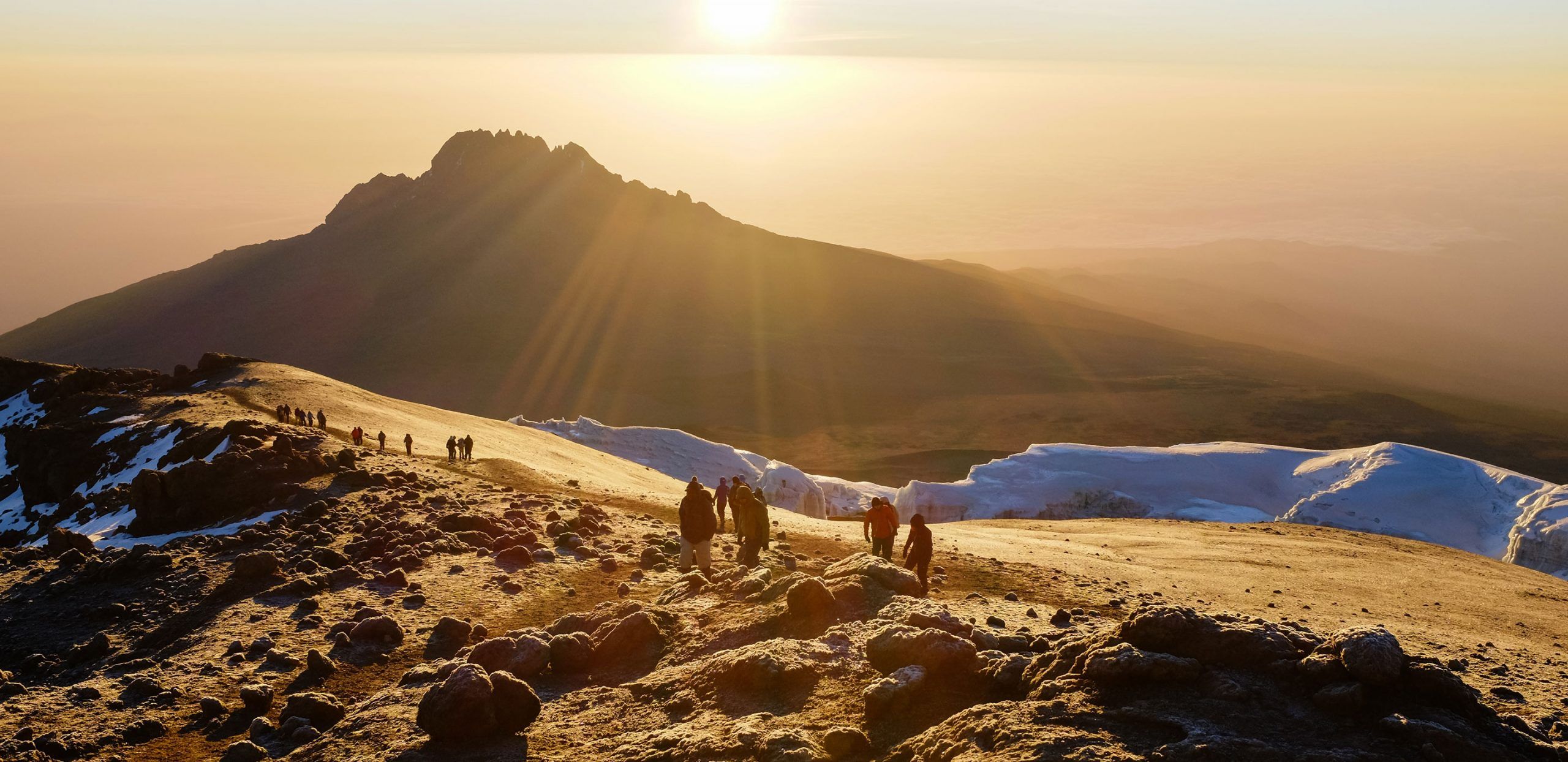
Summit night is the defining experience of a Kilimanjaro climb — and the most challenging. Departure is typically at midnight or 1:00 AM. The reasons for the night departure are meteorological: the summit is typically clearest at dawn, before the cloud and wind that builds through the morning. By departing in the middle of the night, you reach the crater rim at sunrise — the single most celebrated moment in Kilimanjaro climbing.
The first thing you notice stepping out of your tent at midnight is the cold. At Barafu in mid-winter, temperatures can reach minus 15°C to minus 20°C, with wind chill making it feel lower. Layer up completely before leaving camp. Every layer you have should be on your body before you take the first step.
The ascent to the crater rim (Stella Point at 5,756 m) takes 5 to 7 hours from Barafu. The gradient is relentless — switchbacks up volcanic scree and then snow — and the altitude means that every step requires considerably more effort than the same step at sea level. Your guide sets the pace: genuinely, painfully slow. Follow it without deviation.
- Midnight to 3:00 AM: Headlamps in a line in the darkness. The cold is intense. The path is scree and volcanic ash, then packed snow on the upper section. The mountain above is invisible in the dark.
- 3:00 AM to 5:00 AM: The hardest hours. Altitude and cold peak simultaneously. This is the period with the highest dropout rate — climbers who turn back on summit night typically do so in this window. Your guide's presence and the group's momentum carry you.
- 5:00 AM approaching Stella Point: The sky begins to lighten to the east. The crater rim becomes visible. The effort intensifies for the final 200 metres to Stella Point.
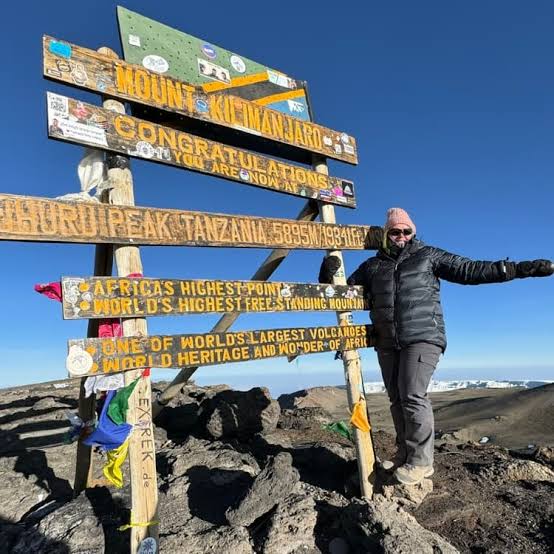
- Stella Point (5,756 m) to Uhuru Peak (5,895 m): From the crater rim, Uhuru Peak is 139 metres higher along the crater edge — approximately 45 minutes of walking in thin air, cold, and extraordinary beauty. The glaciers are to your left. The crater is below you. Africa is laid out beneath the clouds to the horizon.
- Uhuru Peak: The summit. A volcanic rock with a weathered yellow sign. The roof of Africa. Most climbers cry. Many cannot explain why. The photographs do not capture it.
🏔️ Summit Reality: At Uhuru Peak, your body is functioning at approximately 50% of its sea-level oxygen capacity. Every climber who reaches the summit has earned it. Spend 10–20 minutes at the peak — take photographs, absorb the view, register that you have done it. Then begin the descent immediately. The longer you stay at altitude, the harder the descent becomes.
The Descent: Down in a Day
The descent from Uhuru Peak to the base camp gate is typically completed in a single long day — the body recovers altitude symptoms rapidly as oxygen levels increase with descent. What took 6 days to ascend is completed in 1.5 to 2 days going down. Most climbers descend from Uhuru Peak to Mweka Camp (3,090 m) on the day of summit, resting there for one final night before reaching Mweka Gate the following morning.
The descent is physically demanding in a completely different way from the ascent — the knees bear the impact of hours of steep downhill on volcanic scree, and the legs are already fatigued from summit night. Trekking poles are essential for knee protection on the descent. Many climbers find the descent more physically uncomfortable than the climb itself.
HOW MUCH DOES CLIMBING KILIMANJARO COST IN 2026?
Kilimanjaro is one of the world's most expensive mountain treks — not because operators charge excessive margins, but because the mandatory park fees, rescue fees, and crew wages (guides, assistant guides, cooks, porters) are fixed and significant. Understanding exactly where your money goes helps you evaluate quotes accurately.
Mandatory Park and Government Fees (Per Climber)
These fees are fixed by Tanzania National Parks Authority (TANAPA) and apply to every climber regardless of operator or budget:
- Park entry fee: $70 USD per person per day (a 7-day climb = $490)
- Rescue fee (mandatory): $20 USD per climb
- Conservation fee: $70 USD per climb
- Total mandatory government fees for a 7-day climb: Approximately $630 per climber
- Total mandatory government fees for an 8-day climb: Approximately $700 per climber
Any quote below these figures is either inaccurate or excludes park fees — the most common form of misleading Kilimanjaro pricing.
Crew Costs — Where Most of Your Money Goes
A private Kilimanjaro climb requires a minimum mandated crew that typically includes:
- Lead guide (1): Your primary climbing guide — KINAPA-licensed, altitude-trained, pulse oximeter-equipped
- Assistant guide(s) (1–2): Additional support depending on group size
- Cook (1): Prepares all meals on the mountain from raw ingredients
- Porters (typically 4–7 per climber): Carry all equipment, food, and camp infrastructure. The International Porter Protection Group (IPPG) and Kilimanjaro Porters Assistance Project (KPAP) set minimum weight limits (20 kg per porter), wage standards, and equipment requirements. Ethical operators comply with and exceed these standards.
Crew wages, food, accommodation (off-mountain), and tips represent a significant portion of every Kilimanjaro package price. Operators who quote dramatically below-market rates are typically cutting costs on crew wages, porter welfare, or equipment quality.
Full Cost by Package Type
- Budget operator (7-day Machame or Marangu): $1,800 – $2,500 per person. Minimal crew ratios, shared tents, basic equipment. Success rates typically lower due to reduced guide attention.
- Mid-range operator (7-day Machame or 8-day Lemosho): $2,500 – $3,500 per person. Good equipment, adequate crew ratios, experienced lead guide, quality food. The most popular tier.
- Premium operator (8-day Lemosho or Northern Circuit): $3,500 – $5,000 per person. Private porters, experienced guides with 5+ years Kilimanjaro experience, high-quality private tents and sleeping equipment, comprehensive acclimatisation monitoring.
- Luxury operator (any route, private): $5,000 – $8,000+ per person. Fully private climb, private dining tent, highest-quality sleeping systems, satellite communication, private vehicle support.
What Should and Should Not Vary Between Operators
Some costs vary legitimately between operators. Others should not:
- Should vary: Equipment quality, tent quality, food variety and quality, guide experience level, crew-to-climber ratios, acclimatisation monitoring systems, emergency communication equipment
- Should NOT vary: Park entry fees ($70/day — fixed), rescue fee ($20 — fixed), conservation fee ($70 — fixed), KPAP porter welfare standards (mandatory)
- Red flag: Any operator whose total quote is below the sum of mandatory park fees plus basic crew wages. Mathematical impossibility — someone is being underpaid.
💰 Cost Advice: The most cost-effective Kilimanjaro decision is choosing more days. The cost difference between a 6-day and 8-day Lemosho is approximately $200–$400. The summit success rate difference is 20–30 percentage points. Invest in days before investing in equipment upgrades or accommodation upgrades.
Tips — Mandatory but Often Overlooked
Crew tipping is a significant and expected component of every Kilimanjaro climb. The Kilimanjaro Porters Assistance Project publishes recommended tip guidelines that are widely followed:
- Lead guide: $20–$25 USD per climber per day (7-day climb: $140–$175 per climber)
- Assistant guide: $15–$20 USD per climber per day
- Cook: $10–$15 USD per climber per day
- Porters: $8–$12 USD per climber per day
- Total tip budget (7-day climb, 2 climbers): Approximately $600–$900 total, divided among the crew at the gate on descent
Tips are distributed at the gate ceremony at the end of the descent — a moving tradition where the full crew gathers and the lead guide announces tips to the group. Bring the full tip amount in USD cash. Under-tipping is widely noted and affects crew welfare directly.
HOW TO CHOOSE A KILIMANJARO OPERATOR: WHAT ACTUALLY MATTERS
Kilimanjaro operator quality varies enormously — from deeply ethical, experienced companies that genuinely invest in guide training, porter welfare, and equipment quality, to budget operators who undercut on crew wages and equipment to win on price. Your choice affects your summit probability, your safety, and the livelihoods of the crew who carry your pack.
KINAPA Licensing
All Kilimanjaro operators and guides must be licensed by KINAPA (Kilimanjaro National Parks Authority). Guides carry laminated KINAPA licenses that confirm their certification level. Ask to see your guide's KINAPA license at the gate. An operator who cannot confirm their guides are KINAPA-licensed is operating illegally.
KPAP Partner Status
The Kilimanjaro Porters Assistance Project (KPAP) monitors operator compliance with porter welfare standards — minimum wages, maximum loads (20 kg), adequate clothing, food, and accommodation for the crew. KPAP partner status indicates that an operator has been audited and confirmed to meet these standards. Ask any Kilimanjaro operator whether they are a KPAP partner. Adventures Seeker is KPAP-compliant — our porter wages, load limits, and crew equipment exceed the minimum standards.
Guide-to-Climber Ratio
The guide-to-climber ratio significantly affects your safety and summit success rate. A single guide managing 8 climbers cannot provide the individual attention that AMS monitoring and summit night management require. Adventures Seeker maintains a maximum ratio of 1 lead guide per 4 climbers, with additional assistant guides on larger groups.
Equipment Standards
Ask specifically what sleeping system, tent, and personal equipment the operator provides. Critical equipment items to confirm:
- Sleeping bags: Rated to at least minus 20°C for summit night — not minus 10°C which is inadequate
- Tents: Four-season mountain tents, not cheap dome tents that collapse in high wind
- Dining tent: A covered eating space is essential — dining in the open in cold, wind, and rain on the mountain is genuinely miserable
- Portable toilet tent: Available with most operators — not always standard. Ask
- Pulse oximeters: Essential for AMS monitoring. Your guide should take daily readings and document them
- Emergency oxygen: Should be carried on the mountain
Rescue Protocol
Before booking, ask your operator to describe their descent protocol. What triggers a mandatory descent? Who makes the call? How long does a porter-assisted emergency descent take from each camp? A clear, confident answer demonstrates that the operator takes safety seriously. Vague or evasive answers are a red flag.
Adventures Seeker Kilimanjaro: KINAPA-licensed guides. KPAP-compliant porter standards. Maximum 4:1 climber-to-lead-guide ratio. Daily pulse oximetry. Emergency oxygen carried on all climbs. Minus 20°C sleeping bags and four-season tents. Full rescue protocol briefed at gate. Arusha-based office — speak to us directly before and after your climb.
HOW TO TRAIN FOR KILIMANJARO: A REALISTIC PREPARATION GUIDE
Kilimanjaro does not require the training of a mountaineer, but it does require significantly more preparation than most trekking holidays. The combination of multi-day physical effort and high altitude creates demands on the body that fitness alone cannot fully prepare you for. Here is what actually helps.
What You Are Training For
A Kilimanjaro climb involves:
- 6 to 8 days of continuous trekking, typically 5–9 hours per day
- Accumulated altitude gain of approximately 4,000 metres from gate to summit
- Summit night of 8–10 hours at high altitude in severe cold
- Total distance of 60–100 km depending on route
- Mental and emotional resilience as much as physical capacity
The mountain does not reward speed or athletic power — it rewards aerobic base fitness, mental determination, and the ability to walk steadily for very long periods at a controlled pace. Training accordingly.
Cardiovascular Base (Most Important)
Build a strong cardiovascular base over at least 3 months before your climb:
- Running or cycling: 3–4 sessions per week of 30–60 minutes at moderate intensity. Heart rate should be sustainable for the full duration. Build gradually over 3 months.
- Long hikes: Weekend hikes of 4–8 hours over varied terrain. This is the most specific training for Kilimanjaro — the demands of multi-hour sustained aerobic effort cannot be replicated in any other way. Carry a weighted pack (10–15 kg) to simulate climbing conditions.
- Stair climbing: The best gym substitute for uphill hiking. 30–45 minutes of stair machine work at moderate resistance provides excellent Kilimanjaro-specific training.
- Swimming: Excellent low-impact cardiovascular conditioning. Good supplementary training, particularly for those with joint issues.
Strength and Leg Conditioning
- Squats and lunges: Quad and glute strength for the descent — the knees bear significant load going downhill for hours. Eccentric squats (slow descent phase) specifically prepare the knees for downhill load.
- Step-ups: Box or stair step-ups with weight simulate the repetitive uphill stepping of the mountain.
- Single-leg exercises: Trail running and hiking are unilateral activities — single-leg squats and step-downs develop the stability needed for uneven terrain.
High-Altitude Exposure (Optional but Valuable)
If time and budget allow, any pre-climb high-altitude exposure is valuable:
- A prior trek above 3,500 m: Hiking in the Alps, Andes, Himalayas, or even Drakensberg. Any prior experience at altitude provides neurological and physiological adaptation.
- Altitude tents: Available for rent from specialist sports suppliers. Sleeping in a reduced-oxygen environment for 4–6 weeks before the climb provides measurable acclimatisation benefits. An expensive but effective option for serious climbers.
- Pre-Kilimanjaro acclimatisation trek: For climbers particularly concerned about altitude, a 2-day pre-climb trek on the lower slopes of Kilimanjaro (to 3,000–3,500 m and back) provides a controlled acclimatisation stimulus before the main climb begins.
Mental Preparation
Kilimanjaro is as much a mental challenge as a physical one. The summit night, in particular, tests willpower, pain tolerance, and the ability to continue when every instinct says stop:
- Develop a mantra: A simple repeated phrase used during difficult moments on the mountain. Many experienced climbers find 'pole pole' itself is sufficient — the act of repeating the guide's instruction maintains mental focus.
- Visualise the hard moments: Mental rehearsal of the 3:00 AM low point on summit night — the cold, the fatigue, the desire to turn back — helps climbers navigate through it when it arrives.
- Accept discomfort: Kilimanjaro is going to be uncomfortable. Cold, altitude headache, disrupted sleep, reduced appetite — these are not failures or signs of weakness. They are the experience. Approaching them with acceptance rather than resistance dramatically improves the mental experience.
🏃 Training Timeline: Ideally begin your Kilimanjaro training programme 16 weeks (4 months) before your climb date. The most important training metric is the number of consecutive multi-hour hiking days you can complete — not gym metrics. Three consecutive 6-hour hiking days with a weighted pack is better preparation than six months of treadmill sessions.
KILIMANJARO PACKING LIST: WHAT YOU ACTUALLY NEED
Kilimanjaro packing has one cardinal rule: do not overpack. Every kilogram in your daypack is a kilogram you carry at altitude. Your porters carry the main duffel (maximum 15 kg) — you carry a daypack with items needed during the day's walk (typically 5–8 kg). Pack precisely, not comprehensively.
The Layering System — Non-Negotiable
Kilimanjaro's temperature range across the five climate zones is approximately 35°C at the gate to minus 20°C on summit night. The layering system that manages this range:
- Base layer (moisture-wicking): Merino wool or synthetic long-sleeved top and long-sleeved base layer trousers. Worn every day and on summit night. Two sets — one to wear, one to sleep in.
- Mid-layer (insulating): Fleece jacket or lightweight down jacket. For evenings at camp and as a layer under the shell on cold days.
- Down jacket (heavy): A serious down jacket rated to minus 10°C or colder — essential for summit night. This is not a casual fleece. It must be a proper expedition-weight insulated jacket.
- Shell layer (waterproof and windproof): A quality Gore-Tex or equivalent waterproof-breathable jacket and trousers. Must be both waterproof and windproof — wind chill at altitude is as dangerous as rain.
- Summit night layering order: Base layer + mid-layer + down jacket + waterproof shell. All four layers, plus gloves, balaclava, and summit hat, from the moment you leave Barafu Camp.
Clothing Checklist
- Long-sleeved moisture-wicking tops: 2–3
- Hiking trousers (convertible): 2 pairs
- Thermal base layer trousers: 1 pair
- Mid-layer fleece: 1
- Heavyweight down jacket: 1 — non-negotiable
- Waterproof shell jacket: 1 — non-negotiable
- Waterproof shell trousers: 1 pair
- Warm hat (beanie): 2 — one gets wet
- Balaclava: 1 — for summit night face protection
- Sun hat (wide brim): 1 — for lower and mid-altitude sun
- Gloves (insulated): 1 pair — for summit night
- Liner gloves: 1 pair — for camp evenings and cold days
- Gaiters: 1 pair — for summit night scree and snow
- Hiking socks (wool or synthetic): 4–5 pairs — feet get wet in forest zone
- Thermal socks: 1–2 pairs — for summit night
- Underwear: 4–5 pairs
- Camp shoes or lightweight sandals: 1 pair — for wearing at camp to rest feet from hiking boots
Footwear
- Hiking boots (waterproof, ankle support): The single most important piece of kit. Must be waterproof, broken-in before the climb (not new), and provide solid ankle support. Lightweight trail runners are inadequate for Kilimanjaro's summit scree and snow.
- Break-in requirement: Wear your boots on at least 6–8 long hikes before Kilimanjaro. New boots on Kilimanjaro produce blisters that make the summit night genuinely torturous.
Equipment
- Trekking poles (2): Essential — particularly for the descent. Reduce knee strain by 20–30% on steep downhill sections. Adjust to your height and practice using them before the climb.
- Daypack (25–35 litre): Carried by you during each day's walk. Waterproof cover essential.
- Main duffel bag (80–100 litre): Carried by your porter. Maximum 15 kg including sleeping bag and mat.
- Sleeping bag (rated to minus 20°C): Do not compromise on this. A sleeping bag rated to minus 10°C is inadequate for summit night. Your operator may provide this — confirm the rating before accepting.
- Headlamp with extra batteries: Summit night requires a quality headlamp. LED headlamps are preferred — cold temperatures drain batteries faster than normal. Carry lithium batteries which perform better in cold.
- Sunglasses (UV400, polarised): The sun at altitude on snow and glacier is intense enough to cause snow blindness. Dark, wrap-around lenses are required above 4,000 m.
- Water bottles and/or hydration system: 2 litres minimum capacity. An insulated hydration bladder hose prevents freezing on summit night. Nalgene bottles are reliable and easy to keep warm under insulating layers.
- Water purification tablets or filter: Camp water is typically treated by the cook but having personal purification capability adds security.
- Camera equipment: Keep cameras and batteries close to your body in cold — cold kills batteries rapidly. A chest harness or inside-jacket pocket is better than a pack.
Health and Medications
- Prescribed Diamox (if your doctor recommends): 125–250 mg twice daily as directed
- Paracetamol and ibuprofen: For altitude headache management
- Throat lozenges: The dry air at altitude produces a persistent dry throat
- Blister plasters (Compeed or similar): Multiple sizes. Apply preemptively at first hint of friction
- Antiseptic cream and plasters: Cuts and blisters on the mountain need basic wound care
- Antihistamine: For insect bites in the lower forest zone
- Hand sanitiser: Handwashing facilities at camps are limited
- Sunscreen (SPF 50+): Applied daily above the cloud line — altitude UV intensity is extreme
- Lip balm with SPF: Lips crack and burn rapidly at altitude
- Personal medications: Sufficient supply for the climb plus several extra days
WHERE TO STAY: MOSHI AND ARUSHA ACCOMMODATION FOR KILIMANJARO CLIMBERS
Kilimanjaro climbers use two base cities: Moshi — the closest town to the mountain (50 km south) — and Arusha — the safari capital 90 km from the mountain. Your choice depends on which gate your route uses and whether you are combining the climb with a safari.
Moshi — The Kilimanjaro Base
Moshi is the primary base for most Kilimanjaro climbers. The town sits at the mountain's southern foot with clear views of the summit on cloudless mornings. It is quieter and more characterful than Arusha, with a strong climber culture, good restaurants, and a range of accommodation from budget guesthouses to boutique lodges.
- Keys Hotel Moshi: Premium. The finest hotel in Moshi — beautifully designed property with excellent food and the best Kilimanjaro view of any hotel in town. Ideal for post-climb recovery.
- Kibo Palace Hotel: Comfortable. Reliable mid-range property with pool and good restaurant. Popular with climbing groups.
- Springlands Hotel: Comfortable. Longstanding climber favourite. Large grounds, good food, well-connected with local operators.
- Buffalo Hotel: Budget. Simple, clean, well-managed. Good for climbers prioritising cost over comfort.
- Kilimanjaro Mountain Lodge (Machame area): Premium. Boutique lodge at the mountain's base — an extraordinary setting at 1,800 m with views across the coffee plantations and forest to the summit.
Arusha — For Safari Combinations
If combining Kilimanjaro with a Northern Circuit safari, Arusha is the natural hub. The city is 90 km from Kilimanjaro and the departure point for all major Northern Circuit safari itineraries. Adventures Seeker's office is Arusha-based — all combined Kilimanjaro-and-safari itineraries are planned and coordinated from here.
- Arusha Coffee Lodge: Luxury. Stunning boutique lodge on a working coffee estate — one of Tanzania's finest pre/post-climb hotels.
- Rivertrees Country Inn: Premium. Beautiful riverside property 15 minutes from Arusha city — quiet, elegant, excellent food.
- Mount Meru Hotel: Comfort. Reliable city-centre hotel, walking distance from Arusha facilities.
- Ilboru Safari Lodge: Comfort. Friendly, well-run, popular with safari groups and independent climbers.
Post-Climb Recovery
Plan at least one full rest day in Moshi or Arusha after your descent before beginning a safari or travelling onward. The body needs time to recover from the altitude, sleep deprivation, and physical effort of the climb. Specific post-climb recovery advice:
- Sleep: The first night at low altitude produces extraordinarily deep, restorative sleep — your body catching up from days of altitude-disrupted rest. Allow yourself to sleep as long as needed.
- Appetite: Returns immediately after descent. Eat well and hydrate. The caloric deficit accumulated on the mountain can be significant.
- Knees: Expect 2–3 days of knee soreness, particularly descending stairs. Ibuprofen and rest are sufficient for most climbers.
- Emotional processing: Many climbers find the day after summit produces a complex mix of elation, emotional release, and unexpected flatness. This is normal. The summit experience is genuinely significant and the body's stress response does not fully wind down until after descent.
COMBINING KILIMANJARO WITH A TANZANIA SAFARI AND ZANZIBAR
Kilimanjaro and the Northern Circuit safari are natural partners — they depart from the same geographic hub (Arusha), they appeal to the same adventurous traveller, and the contrast between summiting Africa's highest peak and watching lions on the Serengeti is one of travel's most compelling juxtapositions. Here are the most popular combination formats.
The Logic of the Kilimanjaro-Safari Order
Always do Kilimanjaro before the safari — not after. The reasons are both physical and experiential:
- Physical recovery: After Kilimanjaro, your legs need rest from sustained uphill effort but you are otherwise healthy and able. A safari game drive — where you sit in a comfortable vehicle — is the perfect activity during leg recovery.
- Altitude clearance: Kilimanjaro's altitude clears from your body within 24–48 hours of descent. The safari provides the rest period during which this clearance completes.
- Experiential build: Kilimanjaro is supremely challenging. The safari is exhilarating in a completely different way. Doing Kilimanjaro first means you arrive on safari with the summit achieved, your energy restored, and your appetite for extraordinary experience completely renewed.
- Weather alignment: Both Kilimanjaro climbing season and safari season peak in the same windows (January–March and June–October). Doing them sequentially within the same trip aligns both with their optimal conditions.
Itinerary Option 1: 14 Days — Kilimanjaro (7 days) + Northern Circuit Safari (7 days)
- Days 1–7: Kilimanjaro climb — Lemosho or Machame Route. Arrive at JRO, transfer to Moshi or Arusha. Register at gate. 6 days of climbing + 1 descent day.
- Day 8: Descent to gate. Transfer to Arusha. Rest day. Recovery meal and debrief. Overnight Arusha.
- Day 9: Tarangire National Park — elephant herds, baobabs. Overnight Tarangire.
- Day 10: Lake Manyara — groundwater forest, tree-climbing lions, flamingos. Overnight Manyara area.
- Day 11: Ngorongoro — rim arrival, afternoon walk. Overnight Ngorongoro rim.
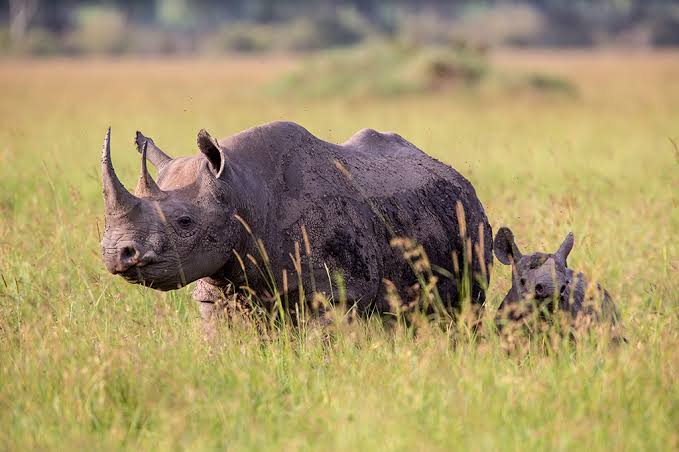
- Day 12: Ngorongoro Crater — dawn descent, Big Five morning, black rhino. Drive to Serengeti. Overnight Serengeti.
- Day 13: Serengeti — full day game drive, lion prides, leopard kopjes, migration (seasonal). Overnight Serengeti.
- Day 14: Morning Serengeti drive. Fly to Zanzibar or return JRO. Depart.
Itinerary Option 2: 17 Days — Kilimanjaro (8 days) + Safari (7 days) + Zanzibar (2 days)
- Days 1–8: Kilimanjaro — 8-day Lemosho Route (best acclimatisation, highest success rate).
- Day 9: Descent and rest day Arusha.
- Days 10–11: Tarangire (2 nights) — elephant herds, walking safari, Python Rock.
- Day 12: Lake Manyara full day. Overnight Manyara.
- Days 13–14: Ngorongoro (2 nights, 2 crater descents).
- Days 15–16: Serengeti (2 nights) — central + seasonal zone.
- Day 17: Morning game drive. Fly Seronera → Zanzibar. Beach arrival. Overnight Zanzibar.
- Day 18: Zanzibar — Stone Town or Mnemba Atoll snorkelling. Sunset dhow cruise. Depart.
Itinerary Option 3: 10 Days — Quick Combination (Kilimanjaro 6 days + Safari 4 days)
For travellers with limited time who want both experiences at their minimum viable duration:
- Days 1–6: Kilimanjaro — 6-day Machame Route (minimum recommended). Gate Day 1; summit and descent Day 6.
- Day 7: Recovery day Arusha.
- Day 8: Tarangire full day.
- Day 9: Ngorongoro — rim arrival and crater descent (same day if arriving by 9 AM at gate).
- Day 10: Serengeti morning drive. Return JRO. Depart.
📋 Combination Note: Adventures Seeker plans and operates both the Kilimanjaro and safari components of all combination itineraries from our Arusha base. You have a single point of contact, a single team, and a coordinated handover between the mountain and the game drive vehicle. This continuity is a significant advantage over booking the two components with separate operators.
KILIMANJARO CONSERVATION: THE MOUNTAIN AND ITS FUTURE
Kilimanjaro National Park — UNESCO World Heritage Site
Kilimanjaro National Park was designated a UNESCO World Heritage Site in 1987 — recognised for its outstanding universal value as a free-standing volcanic massif with extraordinary ecological diversity and scientific significance. The park covers approximately 1,688 square kilometres on the mountain above the 2,700 m contour, managed by KINAPA (Kilimanjaro National Parks Authority) under TANAPA.
The mandatory park fees paid by every climber — approximately $630 to $700 per person per climb — fund ranger patrols, trail maintenance, ecosystem management, and the waste management systems that keep the mountain's ecosystems intact. Climbing Kilimanjaro is one of the more direct forms of conservation tourism: your fees directly fund the protection of what you have come to experience.
The Retreating Glaciers
Kilimanjaro's glaciers have retreated by approximately 85% since 1912 when the first comprehensive survey was conducted. The iconic icecap that defined the mountain's silhouette for centuries is disappearing at a rate that most climate scientists predict will render the summit glacier-free by 2040 to 2050 under current warming projections. The Northern Icefield and the Furtwängler Glacier — still present and extraordinary — may be among the last generations of climbers to see them as they are now.
The causes of glacier retreat on Kilimanjaro are complex and debated scientifically — local deforestation reducing moisture supply, regional temperature increases, and global climate patterns all contribute. What is not debated is the trajectory. Climbing Kilimanjaro now means seeing the mountain at one of its most ecologically significant moments — a landscape in the process of fundamental transformation.
🏔️ Glacier Note: If you summit Kilimanjaro in 2026 or 2027, you are among the last generations to see its glaciers in their current form. This is not a reason for grief — it is a reason to go, to witness, and to carry the experience back into the world. The mountain itself will endure; its glaciers are on borrowed time.
Leave No Trace and Responsible Climbing
KINAPA maintains strict Leave No Trace protocols on Kilimanjaro:
- All waste is carried off the mountain: Porters carry all rubbish generated by the team from gate to gate. Nothing is left on the mountain — not even food scraps.
- Human waste management: Long-drop toilets at established camps. Portable toilet tents for camps without facilities. Adventures Seeker carries portable waste bags for routes with limited camp infrastructure.
- Stay on the trail: Off-trail movement is prohibited except at established viewpoints. The alpine desert and summit zones are extremely fragile — footsteps off the path cause damage that takes decades to recover.
- No picking: No plants, rocks, volcanic soil samples, or any other natural material may be removed from the national park. This applies even to small stones as souvenirs.
- No drone flying: Drones are prohibited within Kilimanjaro National Park without prior KINAPA written permission.
Porter Welfare — A Non-Negotiable Ethical Standard
Kilimanjaro's porters — the men and women who carry equipment, food, and camp infrastructure to make every climb possible — have historically been exploited by unethical operators: underpaid, overloaded, and inadequately equipped for the cold conditions above 4,000 m. The Kilimanjaro Porters Assistance Project (KPAP) has campaigned for decades to establish and enforce minimum standards.
When you book with a KPAP-compliant operator, you are directly supporting porter welfare standards that include: maximum load limits of 20 kg per porter, minimum daily wages published and enforced, adequate clothing and sleeping equipment for all crew, and sufficient food for the climbing team. Always ask whether your operator is KPAP-compliant before booking. The cheapest Kilimanjaro quotes are cheap because someone — usually the porter — is being paid less than they should be.
MOUNT KILIMANJARO FAQS: 18 QUESTIONS ANSWERED
How hard is it to climb Mount Kilimanjaro?
Harder than most people expect, but achievable for most physically fit adults. The difficulty is not technical — Kilimanjaro requires no ropes, harnesses, or climbing skills. The challenge is altitude, sustained multi-day physical effort, and the mental resilience required on summit night when exhaustion and cold combine at maximum altitude. The most common reason for failure is too few days and therefore insufficient acclimatisation — a problem that can be entirely solved by choosing the right route and duration.
What is the summit success rate on Kilimanjaro?
Approximately 65% of all Kilimanjaro climbers reach Uhuru Peak. This overall rate includes the many climbers who choose 5-day Marangu (50–55% success) and 6-day Machame (70–75% success). Climbers who choose 8-day Lemosho or Northern Circuit achieve success rates of 85–90%. The relationship between days on the mountain and summit success is the clearest finding in all Kilimanjaro research.
Which is the best route up Kilimanjaro?
For most climbers making their first attempt: the 8-day Lemosho Route. It provides the widest wilderness approach, the most diverse and spectacular scenery, the best acclimatisation profile of any standard route, and success rates of 85–90%. The additional cost and day compared to Machame are entirely justified by the improved experience and summit probability. For climbers who want hut accommodation rather than camping: the 6-day Marangu (not 5-day).
How many days do I need to climb Kilimanjaro?
The minimum recommended duration depends on the route: Machame Route minimum 7 days (not 6), Lemosho Route minimum 7 days (8 is better), Marangu Route minimum 6 days (not 5), Rongai Route minimum 7 days, Northern Circuit 9 days. The extra days cost more but they dramatically improve summit success rates and reduce the risk of altitude sickness. Choosing too few days is the most expensive mistake on Kilimanjaro — you pay for the full climb and then do not reach the summit.
Do I need experience to climb Kilimanjaro?
No technical climbing experience is required. Kilimanjaro is a mountain hiking trail — extraordinarily demanding, at extraordinary altitude, but a trail. Previous multi-day trekking experience is helpful but not mandatory. Previous high-altitude experience above 3,000 metres is genuinely valuable for understanding how your body responds to altitude. What matters most is a solid aerobic fitness base, adequate training (begin 16 weeks before), the right number of days, and a good guide.
What is the best time of year to climb Kilimanjaro?
The two peak seasons are January–March and June–October. February is widely considered the finest single month — clearest skies, best summit views, and moderate crowds. September combines excellent conditions with fewer climbers than peak July–August. The rainy seasons (April–May long rains and November short rains) produce more challenging conditions — wet trails, poor visibility, and higher risks at altitude. Kilimanjaro can be climbed year-round but April and May are not recommended.
How much does it cost to climb Kilimanjaro?
The total cost for a 7 to 8 day climb ranges from approximately $1,800 to $5,000 per person depending on route, operator tier, and group size. This includes mandatory government fees ($630–$700 per person), crew wages, accommodation, food, and equipment hire. Tips of approximately $300–$450 per climber for a 7-day climb are additional. Budget operators at $1,800 are technically possible but typically reflect compromises on crew welfare, equipment quality, or guide experience that affect both safety and summit success.
What happens if I get altitude sickness on Kilimanjaro?
Your guide monitors your health daily using a pulse oximeter and the Lake Louise AMS scoring system. Mild symptoms (headache, fatigue, reduced appetite) are managed with rest, hydration, and paracetamol. If symptoms worsen or do not improve, your guide will recommend or mandate descent. A porter-assisted emergency descent can reach lower altitude within 2–4 hours from any camp. Adventures Seeker guides carry emergency oxygen and Diamox for emergency treatment. The descent decision is made by your guide, not by you — trust the process.
Can I climb Kilimanjaro without a guide?
No. Tanzania law requires all Kilimanjaro climbers to be accompanied by a KINAPA-licensed guide. Solo climbing is prohibited. This rule exists for both safety and conservation reasons — the mountain's terrain and altitude create risks that an unaccompanied climber cannot adequately manage, and unguided movement damages the fragile alpine ecosystem. All legitimate Kilimanjaro packages include at minimum one licensed lead guide.
What should I eat on Kilimanjaro?
Your camp cook prepares all meals — typically three meals per day plus snacks. Meals on well-run Kilimanjaro climbs are surprisingly good: soup, pasta, rice dishes, porridge, eggs, fruit, bread, and fresh vegetables where possible. At altitude, appetite decreases. Force yourself to eat adequate portions even when not hungry — your body needs the calories. High-carbohydrate foods are most efficiently metabolised at altitude. Avoid alcohol completely on the mountain. Bring personal snacks (energy bars, nuts, dried fruit, sweets) for between meals and summit night.
How do I get to Kilimanjaro from Arusha?
Kilimanjaro is approximately 90 km east of Arusha by road — approximately 90 minutes in a 4WD vehicle. Adventures Seeker provides all transfers between Arusha and the mountain gate(s). Kilimanjaro International Airport (JRO) is located between Arusha and Moshi, making it the most convenient arrival point for both Kilimanjaro climbers and Northern Circuit safari guests.
What is summit night really like?
Cold, dark, slow, and extraordinary. You leave camp between midnight and 1:00 AM, typically at minus 10°C to minus 15°C with wind chill. The path is volcanic scree and snow, ascending relentlessly in the beam of your headlamp. The pace is slower than any walking you have done in your life. The hardest hours are between 3:00 and 5:00 AM — exhaustion and cold peak simultaneously. Then the sky begins to lighten to the east. The crater rim appears above you. And then you reach Stella Point and see the full panorama of the summit for the first time. And you walk the 45 minutes to Uhuru Peak along the crater rim with Africa laid out below you and the glaciers gleaming beside you. It is the most extraordinary 8 hours of most climbers' lives.
How do I prepare for the cold on Kilimanjaro summit night?
Layer everything you have. The layering order for summit night from base to outer: moisture-wicking long-sleeve base layer + thermal long-sleeve + fleece mid-layer + heavyweight down jacket + waterproof shell jacket. On legs: thermal base layer + fleece trousers or insulated trousers + waterproof shell trousers. Hands: liner gloves + insulated summit gloves. Head: balaclava + thermal hat + waterproof jacket hood. Feet: thermal socks + thick wool hiking socks. Nothing optional. If in doubt, add another layer before leaving camp.
Can older climbers summit Kilimanjaro?
Yes — age is not a limiting factor for Kilimanjaro in the way it is for technical mountaineering. The oldest recorded summitter was in their eighties. What matters is current cardiovascular fitness, joint health (particularly knees for the descent), and overall physical capacity for sustained multi-day aerobic effort. Many climbers over 60 summit Kilimanjaro successfully. Pre-climb medical clearance from your doctor is strongly recommended for climbers over 60 or with any cardiovascular, respiratory, or orthopaedic conditions.
Is there mobile phone signal on Kilimanjaro?
Variable. Signal exists at the lower camps (Machame Camp, Shira Camp) on some Tanzanian networks. Above 3,500 m, signal becomes unreliable. The summit has no reliable signal. Adventures Seeker carries satellite communication on all climbs for emergency contact.
Can I rent equipment for Kilimanjaro in Arusha or Moshi?
Yes. Equipment rental is available in both Arusha and Moshi for items that are expensive to buy for a single climb — sleeping bags, trekking poles, crampons (for icy conditions), and gaiters. However, rental quality varies significantly. Adventures Seeker provides all equipment for climbers who book our packages — sleeping bags, sleeping mats, tents, dining equipment, and cooking equipment are included. You bring your personal clothing, boots, and daypack.
What happens at the summit? How long can I stay?
At Uhuru Peak (5,895 m), you have approximately 10 to 20 minutes before beginning descent. Your guide will take photographs at the famous yellow summit sign, and many climbers spend a few minutes absorbing the view and the moment before the descent protocol begins. Staying longer than 20 minutes at the summit is not advised — the body is oxygen-depleted, descent begins recovery, and every minute at the summit delays the return to life-sustaining altitude.
Is Kilimanjaro worth it?
This is the question we are asked most often after the climb — and the answer is universally yes, from climbers who reached the summit and climbers who did not. The mountain delivers an experience that has no equivalent in ordinary life: five ecosystems in six days, summit night in the most extreme physical conditions most people ever voluntarily experience, and a summit view that places you physically above 99.9% of the African continent. The question is not whether Kilimanjaro is worth it. It is: are you ready?
Plan Your Kilimanjaro Climb with Adventures Seeker
Kilimanjaro is not a mountain that rewards complacency. The climbers who reach Uhuru Peak do so because they chose the right number of days, trained appropriately, listened to their guide, climbed slowly, and came prepared for the cold. The climbers who do not reach it typically violated one of those principles — usually the first one.
At adventuresseeker.com, we plan Kilimanjaro climbs from our Arusha base — 90 minutes from the mountain's gate. Our guides are KINAPA-licensed, with 5 to 15 years of Kilimanjaro experience across every route and every season. Our porters are KPAP-compliant. Our equipment meets expedition standards. And every climb we plan includes the number of days we honestly believe gives you the best chance of standing at 5,895 metres with Africa below you.
We also plan the safari and Zanzibar extension that turns a Kilimanjaro climb into the complete Tanzania experience — coordinated from the same Arusha office, operated by the same team, and designed as a single, seamless journey from gate to summit to savannah to beach.
Start Planning Your Kilimanjaro Climb: Visit adventuresseeker.com and tell us your target dates, how many days you have available, your fitness level and any prior high-altitude experience, your preferred route (or ask us to recommend), group size, and whether you want to combine with a safari or Zanzibar. We respond within 24 hours with a personalised climbing itinerary, route recommendation, cost breakdown, and preparation guidance.
Quick Facts
Total Destinations
11
UNESCO Sites
7+
National Parks
16
Popular Destinations
Why Visit Tanzania?
- ✓World's largest wildlife migration
- ✓Home to Mount Kilimanjaro
- ✓Big Five game viewing
- ✓Pristine beaches & islands
- ✓Rich cultural heritage
You May Also Like
Plan Your Adventure
Ready to explore Tanzania's iconic destinations? Get in touch with our travel experts to plan your perfect safari.
Request a custom itinerary for your next trip to Tanzania.
Our team of travel experts is here to help you create a custom itinerary for your next trip to Tanzania. We will work with you to create a itinerary that is tailored to your needs and budget.