
Tarangire National Park
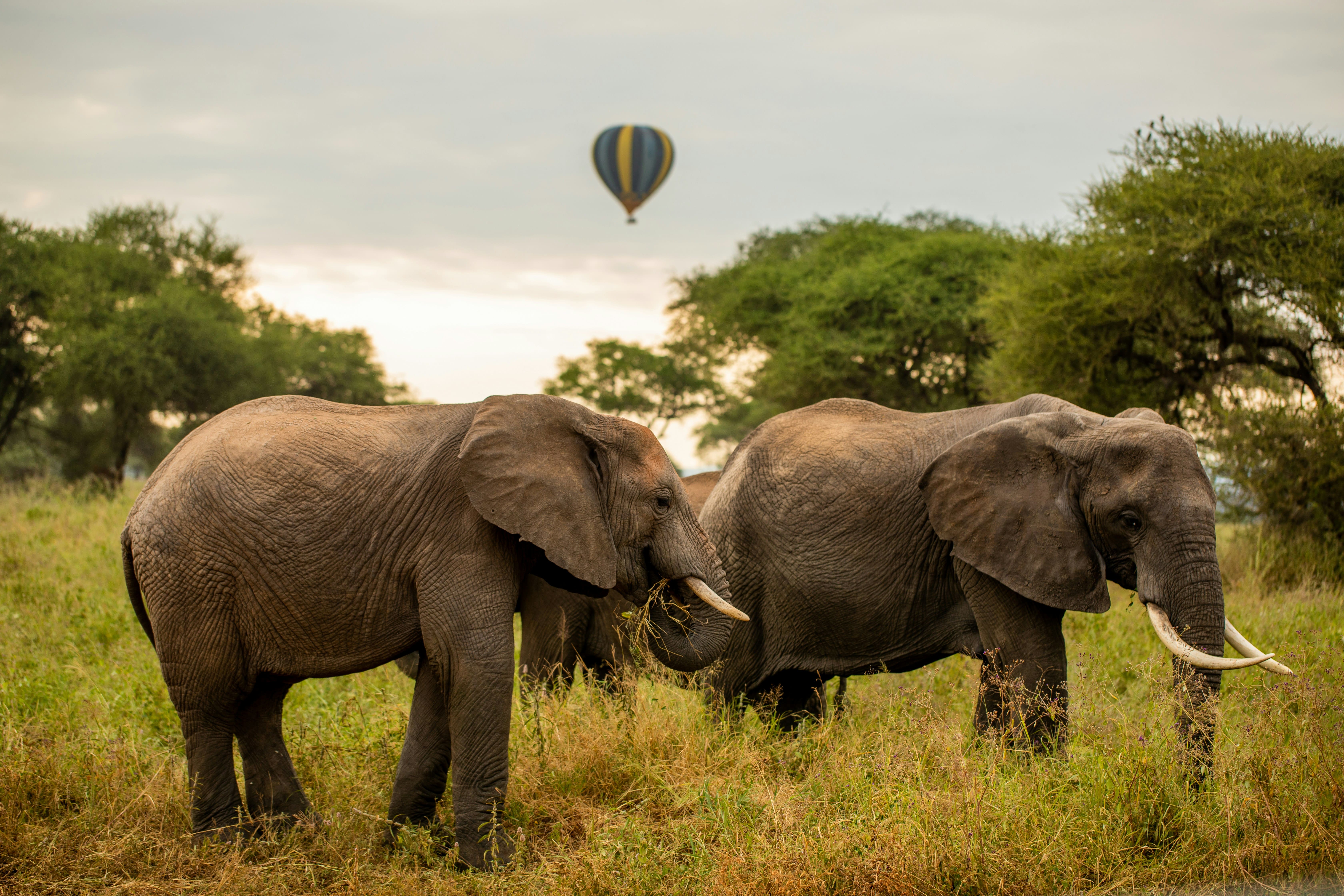
There is a moment that every first-time Tarangire visitor experiences, and it is almost always at the Tarangire River in the dry season: rounding a bend in the road and finding themselves looking at what appears to be a grey, moving hillside — which resolves, as the dust settles, into a herd of three hundred elephants. Not thirty. Not a hundred and thirty. Three hundred. Moving together, calling to each other, calves tucked between adult legs, bulls moving at the periphery, the matriarch leading the column down the bank to drink.
Tarangire National Park is Tanzania's most underrated major destination. It sits just two hours from Arusha — the closest Northern Circuit park to the safari capital — and it consistently delivers wildlife experiences that rival the Serengeti at its peak. The Tarangire River, the only permanent water source for hundreds of kilometres during the dry season, becomes a magnet that draws every large mammal in the region, concentrating them in densities that staggers even visitors who have been on dozens of safaris.
But Tarangire is more than elephants. Its landscape is defined by the ancient African baobab — trees of extraordinary size and age, some over a thousand years old, whose vast, water-storing trunks and reaching branches create a setting unlike any other park in Tanzania. Its bird list of 550+ species makes it one of Africa's finest birding parks. Its pythons, found at 'Python Rock' in concentrations found nowhere else in East Africa, are a specialist attraction with no equivalent. And its reputation for being quieter and less crowded than the Serengeti and Ngorongoro makes every encounter feel more private, more intimate, and more genuinely wild.
This guide gives you everything you need to plan a Tarangire safari in 2026 — the landscape, the wildlife, the baobabs, the best timing, the activities, the accommodation options across all tiers, real costs, and how to position Tarangire within a Northern Circuit itinerary that makes the most of what this extraordinary park delivers.
TARANGIRE NATIONAL PARK: QUICK FACTS
- Size
- 2,850 km²
- Established
- 1970 (previously a game-controlled area from 1957)
- Location
- Northern Tanzania, Manyara Region — south of Lake Manyara
- Coordinates
- 3°50′S, 36°00′E
- Altitude
- 1,000–1,370 m above sea level
- Park Entry Fee
- USD $70 per person per day (non-resident adult, 2026)
- Vehicle Entry Fee
- USD $40 per vehicle per entry
- Distance from Arusha
- Approximately 130 km (around 2 hours by road) — the closest major park on Tanzania's Northern Circuit
- Distance from Lake Manyara
- Approximately 100 km (around 1.5 hours) via Makuyuni Junction
- Nearest Town
- Kwa Kuchinja — a small junction town near the main entrance
- Annual Rainfall
- Approximately 600–650 mm per year, with distinct wet and dry seasons
- Temperature
- Generally 20–35°C, hottest during the dry season
- Elephant Population
- Around 3,000 elephants — the largest concentration in northern Tanzania
- Bird Species
- Over 550 recorded species, making Tarangire one of Africa's premier birdwatching destinations
- Famous For
- Massive elephant herds, ancient baobab trees, Python Rock, exceptional birdlife, and outstanding dry-season wildlife viewing
- Best Time to Visit
- June to October, when wildlife gathers around the Tarangire River during the dry season
- Best Combined With
- Lake Manyara National Park, Ngorongoro Conservation Area, and Serengeti National Park as part of the Northern Circuit
- Unique Features
- Python Rock, giant baobab trees over 1,000 years old, and spectacular dry-season wildlife concentrations around permanent water sources
- Annual Visitors
- Approximately 80,000–100,000 visitors per year, significantly fewer than Serengeti or Ngorongoro
- Management
- Tanzania National Parks Authority (TANAPA)
TARANGIRE'S LANDSCAPE: THE PARK THAT SURPRISES EVERYONE
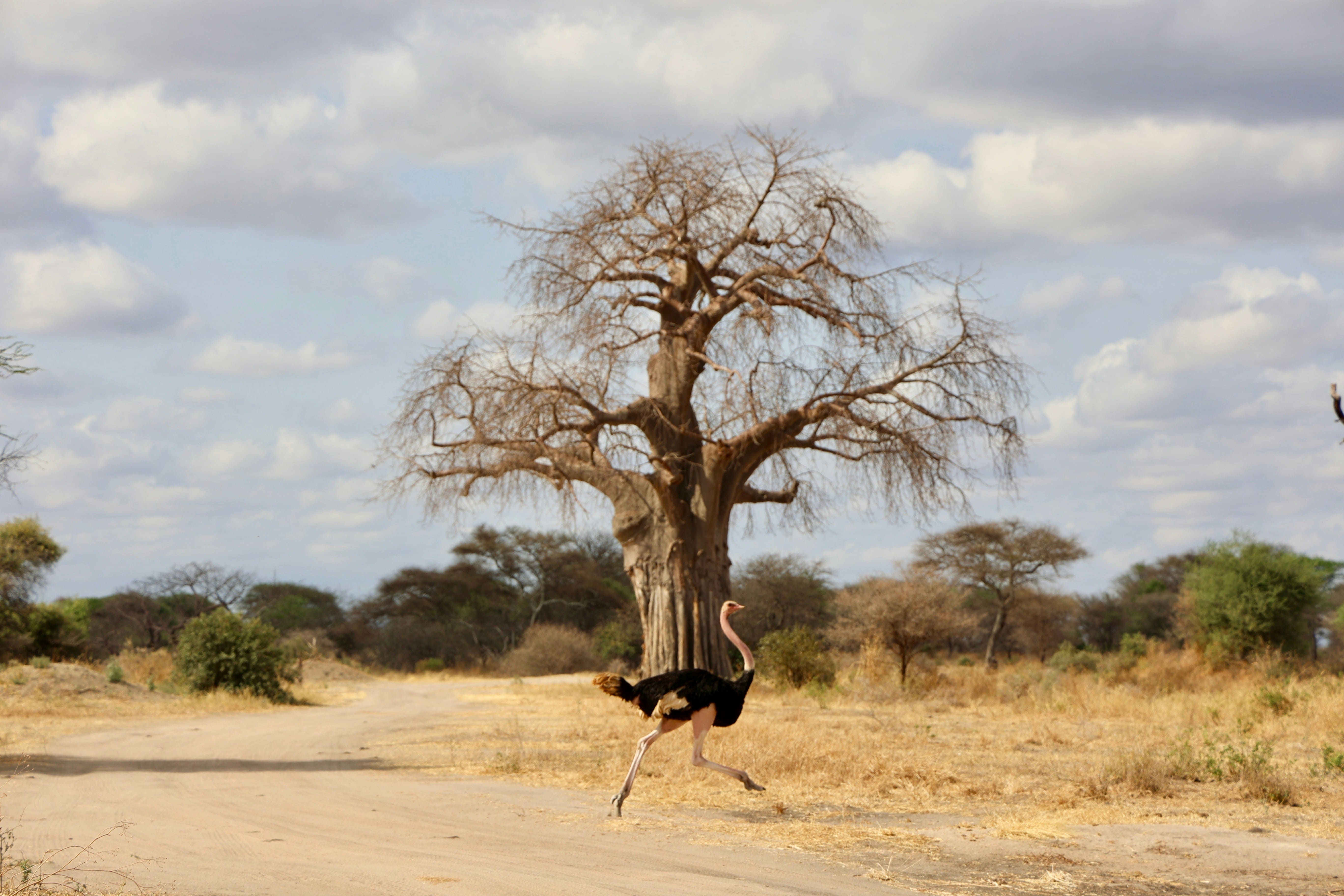
Tarangire National Park's landscape is unlike any other in Tanzania. While the Serengeti is defined by open, rolling grassland and the Ngorongoro by its volcanic bowl, Tarangire is a world of ancient baobab woodland, riverine acacia forest, seasonal swamps, and the long, winding channel of the Tarangire River — a permanent lifeline in a semi-arid landscape that draws wildlife in extraordinary concentrations during the dry season.
The Tarangire River — The Heart of the Park
The Tarangire River is the defining ecological feature of the park and the reason the dry-season wildlife spectacle here is unmatched in northern Tanzania. Rising in the highlands to the south, the river flows northward through the park before emptying into Lake Burunge at the northern boundary. During the wet season (November–May), water is available across the landscape and wildlife disperses widely. During the dry season (June–October), the river becomes the only reliable water source for an enormous area, and the migration of wildlife toward it concentrates animals in numbers that overwhelm first-time visitors.
Standing on the Tarangire River bank in August — watching five separate elephant herds approach the water simultaneously from different directions, their dust trails visible from kilometres away — is the single most powerful dry-season wildlife encounter in northern Tanzania. The river does not simply attract wildlife: it is the axis around which the entire park's ecological cycle rotates.
🌳 River Ecology: The Tarangire River is permanent but changes dramatically by season. In the wet season it runs clear and fast. In the dry season it slows and shrinks, but its banks retain subsurface water that elephants and other large mammals can access by digging in the sand. This water-finding behaviour — elephants digging up to a metre deep with their feet and trunks — is a uniquely observable behaviour at Tarangire not easily seen elsewhere.
The Six Habitat Zones
- Riverine Acacia Forest
- Location: Along the Tarangire River banks
- Key wildlife: Elephants, lions, leopards, impalas, and hippos
- Key feature: Dense riverine vegetation that supports one of the park's highest predator concentrations
- Acacia–Commiphora Woodland
- Location: Central Tarangire National Park (the park's most extensive habitat)
- Key wildlife: Elephants, giraffes, zebras, buffalo, and African wild dogs
- Key feature: Classic dry savannah woodland dominated by iconic baobab trees
- Baobab Woodland
- Location: Throughout the park, with varying densities
- Key wildlife: Elephants, which use the trees for food and shelter, along with dry-season predators
- Key feature: Ancient baobab trees, some estimated to be over 1,000 years old, create one of Tanzania's most distinctive landscapes
- Seasonal Swamps (Silale Swamp)
- Location: Northern section of the park near Lake Burunge
- Key wildlife: Elephants, buffalo, hippos, crocodiles, and numerous waterbirds
- Key feature: Outstanding wildlife during the wet season and excellent birdwatching in the dry season
- Open Floodplain Grassland
- Location: Eastern sections near the Tarangire River
- Key wildlife: Wildebeest, zebras, hartebeest, and oryx
- Key feature: Important dry-season grazing grounds for large herbivores
- Rocky Outcrops (Python Rock Area)
- Location: Southern Tarangire National Park
- Key wildlife: Rock pythons, leopards, klipspringers, and hyraxes
- Key feature: Home to the famous Python Rock, one of the best-known sites for observing rock pythons in Tanzania
The Ancient Baobabs — Tarangire's Defining Feature
No landscape in Tanzania is more immediately recognisable than Tarangire's baobab woodland. The African baobab (Adansonia digitata) — sometimes called the 'tree of life' or the 'upside-down tree' because its bare dry-season branches resemble roots — grows to extraordinary dimensions in Tarangire. Some individuals are estimated at over 1,000 years old, with trunk circumferences exceeding 20 metres and heights reaching 25 metres. Their vast, smooth, silver-grey bark catches and holds the golden light of sunrise and sunset in ways that create the most photographically distinctive landscapes in any Tanzania park.
The baobabs are not merely scenery — they are ecological keystones. Their flowers are pollinated by bats and large insects after dark. Their fruit — hard, melon-like pods containing cream of tartar and vitamin-rich pulp — is eaten by elephants, baboons, bushbuck, and humans. Their trunks store water that elephants access by gouging with their tusks during drought. Their hollows house owls, hornbills, and small mammals. And their root systems anchor the thin, rocky soils of the park against erosion.
🌳 Baobab Age: The oldest baobabs in Tarangire are estimated at 800 to 1,000 years old — predating Columbus's voyage to the Americas, predating the construction of most European cathedrals, alive during the medieval Swahili trading era of the East African coast. Standing next to one of these trees and processing the duration of its existence is one of Africa's great humbling experiences.
TARANGIRE'S ELEPHANTS: AFRICA'S GREATEST DRY-SEASON SPECTACLE
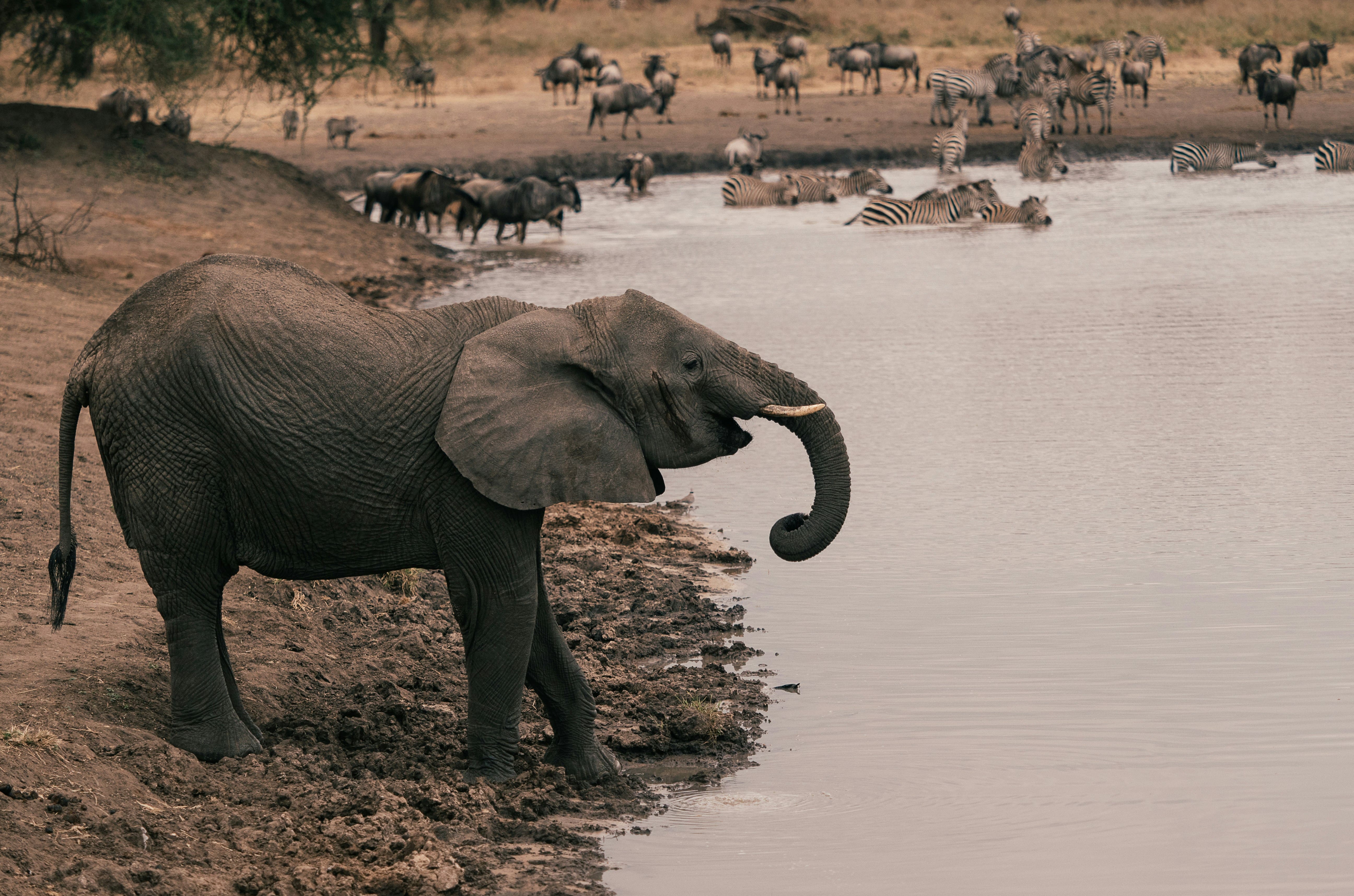
If there is a single experience that defines Tarangire National Park above all others, it is the elephants. Not a handful of individuals. Not a family group of twelve. But herds of 200, 300, sometimes 400 animals converging on the Tarangire River in August and September — the largest elephant concentrations in northern Tanzania and one of the greatest elephant spectacles in Africa.
Why Tarangire Has Tanzania's Greatest Elephant Herds
The Tarangire ecosystem supports an estimated elephant population of 3,000 to 6,000 individuals — the largest in northern Tanzania by a significant margin. During the wet season (November–May), these elephants disperse widely across the Tarangire-Manyara ecosystem, using water sources throughout the region. As the dry season progresses and water sources outside the park dry up, the elephants converge on the Tarangire River — the only permanent water in an enormous area. By August and September, this convergence produces the concentrations that make Tarangire unique.
The elephant herds at Tarangire in the dry season operate at a different scale from anywhere else in northern Tanzania. The Serengeti has elephants — approximately 6,000 across its vast area. But in a large park, 6,000 elephants are distributed across 14,763 square kilometres. At Tarangire's river in August, you can see 300 elephants within a single visual field from a single vantage point on the river bank. The concentration is what makes the experience transformative.
- January–February
- Elephant concentration: Low to Moderate (widely dispersed)
- Location: Throughout the park and surrounding ecosystem
- Experience quality: Family groups are spread out, offering more intimate sightings
- March–May
- Elephant concentration: Low (dispersed during the rains)
- Location: Across the wider Tarangire ecosystem
- Experience quality: Smaller groups exhibiting typical wet-season behavior
- June
- Elephant concentration: Increasing as the dry season begins
- Location: Gradually moving toward the Tarangire River
- Experience quality: Herds begin gathering, making sightings more frequent
- July
- Elephant concentration: High, with herds of 50–100 elephants
- Location: Along the Tarangire River and riverine woodlands
- Experience quality: Outstanding opportunities to observe large elephant herds
- August
- Elephant concentration: Peak, with herds of 200–400 elephants
- Location: Tarangire River banks
- Experience quality: The best elephant viewing season in Northern Tanzania
- September
- Elephant concentration: Peak, with herds of 150–300 elephants
- Location: Around the river and permanent waterholes
- Experience quality: Exceptional viewing, with only a slight reduction from August
- October
- Elephant concentration: Moderate to High as the rains approach
- Location: Tarangire River and surrounding woodlands
- Experience quality: Excellent sightings as herds gradually begin to disperse
- November–December
- Elephant concentration: Moderate (dispersing with the rains)
- Location: Throughout the park following rainfall
- Experience quality: Good opportunities to observe active family groups in greener landscapes
Understanding Elephant Behaviour at the River
Watching elephants at the Tarangire River is not a passive experience — it is an education in elephant social complexity. Each herd that arrives at the river is a family unit led by a matriarch, and the interactions between arriving family groups, between adults and calves, and between family groups and bachelor bulls reveal the full depth of elephant social intelligence.
- Matriarch leadership: The eldest female in each family group leads the herd to the river, choosing the timing and approach route based on decades of experience. Younger females and calves follow in a precise social order. Watching the matriarch make decisions — changing direction, pausing to assess, communicating through subsonic rumbles — is a privileged observation of extraordinary animal intelligence.
- Calf behaviour: Calves in large dry-season herds display the full range of elephant developmental behaviour: nursing, play-fighting, attempting to drink (a skill that takes months to master — calves initially drown their trunks before learning to use them correctly), and sheltering beneath adult legs when uncertain.
- Bull behaviour: Large bulls, often in musth (a periodic state of heightened testosterone producing highly aggressive behaviour and distinctive temporal gland secretions), move at the edges of family groups. Encounters between musth bulls and family groups, or between competing musth bulls, can produce dramatic displays of dominance.
- Elephant digging: In the dry season, elephants dig in the sandy river bed with their feet and trunks to access subsurface water when the river surface is insufficient. This extraordinary behaviour — creating wells that other species also use — is a clear demonstration of elephant tool use and ecological impact.
🐘 Best Elephant Strategy: Position your vehicle on a high bank overlooking the Tarangire River between 7:00 AM and 10:00 AM in August or September. Drink coffee. Wait. The herds will come to you. Your guide will know the specific bank sections where multiple herds converge simultaneously. Moving constantly in search of elephants at Tarangire is unnecessary — the elephants come to the river, and patience at the right vantage point produces encounters that active searching never matches.
Elephant Photography at Tarangire
Tarangire offers elephant photography opportunities unavailable at any other park in the Northern Circuit. The combination of close-range large herds, the baobab tree backdrop, the golden dry-season light, and the river-bank setting creates the conditions for elephant images of extraordinary impact. Key technical advice:
- Lens choice: A 70–200mm lens is optimal at Tarangire — herds are often large enough to fill a wide frame, and tighter focal lengths produce more compelling compositions than a 400mm when photographing 100 animals simultaneously.
- Backlighting: Dawn drives produce elephant silhouettes against the rising sun at the river — one of Africa's most striking photographic compositions. Position yourself with the sun rising behind the herd.
- Dust: Dry-season elephant herds raise visible dust clouds that add atmosphere and depth to wide-angle shots. A polarising filter reduces haze.
- Vertical compositions: Baobab trees are vertical subjects. Compose elephants beneath them in portrait orientation to emphasise scale.
TARANGIRE WILDLIFE: BEYOND THE ELEPHANTS
Tarangire's elephant spectacle is the headliner, but the park's wildlife extends far beyond its largest species. The dry-season concentration effect that draws elephant herds to the river does the same for every other large mammal in the ecosystem — creating a wildlife density that rivals many more famous parks.
Lion
Tarangire supports a healthy lion population — estimated at 50 to 70 individuals in the park — that follows the dry-season prey concentrations to the river. Prides in Tarangire tend to be slightly smaller than those in the Serengeti but are frequently encountered near the river and along the main game drive circuit. The riverine acacia forest along the river bank is the most productive lion habitat — dense enough for ambush hunting of the large prey concentrations near water.
Tarangire's lions have an unusual characteristic noted by guides and researchers: the park supports a small population of tree-climbing lions, similar to those at Lake Manyara — thought to be linked to the same biting fly pressure that drives the Manyara behaviour. Sightings of tree-climbing lions at Tarangire are rarer than at Manyara but do occur, typically in the large fig trees along the southern river sections.
- Best area: Riverine acacia woodland along the Tarangire River and the southern game drive circuit toward Boundary Hill
- Best time: Dawn — prides are often near kills at daybreak
Leopard
Leopards are present throughout Tarangire but are difficult to spot in the dense acacia and baobab woodland. The most reliable leopard habitat is the large fig trees along the Tarangire River, where individuals are occasionally spotted resting in the branches during the heat of the day. Leopard sightings in Tarangire are genuine highlights — less frequent than in the Serengeti's kopje country but rewarding precisely because of their rarity.
African Wild Dog
Tarangire is one of Tanzania's better northern circuit parks for African wild dog sightings — a consequence of the park's lower visitor numbers and the wild dogs' preference for less-pressured areas. Packs range widely through the acacia-commiphora woodland and are most often encountered on early morning drives in the central and southern park sections. Sightings are unpredictable but occur regularly for guests spending two or more nights in the park.
- Best season: June–October, when packs are denning or have recent pups
- Best strategy: Ask your guide to radio-contact rangers and other guides who may have pack locations from the previous day
Buffalo
Large buffalo herds — sometimes 500 to 1,000 animals in the dry season — converge on the Tarangire River alongside the elephant herds. Buffalo-elephant interactions at the water are extraordinary: the two largest terrestrial species in the ecosystem sharing cramped river-bank space, negotiating access by a combination of dominance and tolerance. Buffalo bachelor herds of old bulls ('dagga boys') wallow in the muddy river shallows throughout the day in the dry season.
Giraffe (Maasai)
Tarangire's Maasai giraffe population is one of the largest in the Northern Circuit — the acacia woodland provides ideal giraffe browsing habitat, and the trees are tall enough to require the full extension of the giraffe's considerable neck. Photographing giraffes against the backdrop of a 1,000-year-old baobab is one of Tarangire's most iconic compositions. Giraffe are seen on virtually every game drive throughout the park.
Greater Kudu and Other Rare Antelope
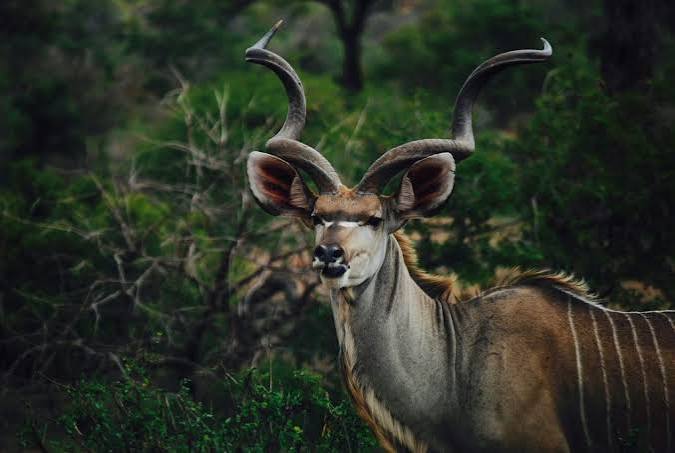
Tarangire is one of the few Northern Circuit parks where the greater kudu — one of Africa's most beautiful antelope — is reliably encountered. The male greater kudu's spiral horns (up to 1.8 metres long) and elegant striped flanks make it one of Africa's most striking photographic subjects. Fringe-eared oryx, also rare in the Northern Circuit, are present in Tarangire's drier southern areas. Gerenuk — the giraffe-necked antelope that stands on its hind legs to browse — is occasionally seen in the thorny scrub of the southern park.
Python Rock — Africa's Most Extraordinary Reptile Encounter
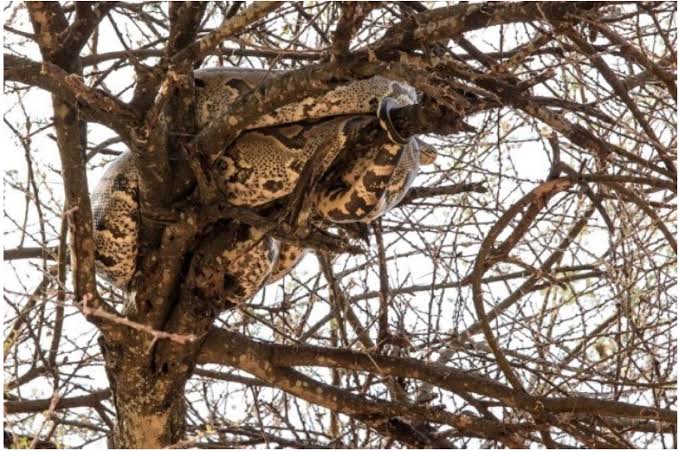
Python Rock is one of Tarangire National Park's most unique and least anticipated wildlife encounters. A specific rocky outcropping in the park's southern section is used as a den site by African rock pythons (Python sebae) — Africa's largest snake, capable of exceeding 5 metres in length. In the dry season, multiple pythons (sometimes 5 to 8 individuals) bask on and around the rock simultaneously — a concentration of large pythons that has no equivalent in East Africa and few parallels anywhere in Africa.
The pythons use the rock for thermoregulation and as a secure den site, returning to it year after year. They are entirely non-aggressive toward stationary safari vehicles at the established viewing distance. A large rock python coiled on a boulder in the morning sun, head raised and scales catching the light, is one of Tarangire's most photogenic and most surprising wildlife encounters.
- Size: Adult African rock pythons at Python Rock range from 3 to over 5 metres. They prey on medium-sized mammals including impala, warthog, and young zebra, swallowing prey whole.
- Best months: June to October — pythons are most active and most visible at the rock in the dry season
- Location: Southern game drive circuit, approximately 40 km from the main gate — requires a full-day drive to reach
🌳 Python Rock Rarity: The concentration of African rock pythons at Python Rock is unique in East Africa. Pythons are solitary animals that rarely tolerate proximity to conspecifics — the shared den at Python Rock represents an extraordinary exception to normal python behaviour, driven by the specific thermal and security properties of this particular rock formation.
Other Notable Wildlife
- Plains Zebra
- Status: Abundant
- Best area: Open grasslands and river banks
- Notes: Large herds gather during the dry season, often alongside wildebeest
- Blue Wildebeest
- Status: Common
- Best area: Grasslands and river areas
- Notes: Resident population; not part of the Great Migration herds
- Impala
- Status: Very abundant
- Best area: Acacia woodlands throughout the park
- Notes: One of the most numerous antelope species, often seen in large mixed herds
- Waterbuck
- Status: Common
- Best area: Near rivers and swamps
- Notes: Easily recognized by the distinctive white ring around the rear; adapted to aquatic habitats
- Eland
- Status: Occasional
- Best area: Open woodlands and southern areas
- Notes: Africa's largest antelope, known for its impressive size
- Coke's Hartebeest
- Status: Common
- Best area: Open grasslands
- Notes: Fast-running antelope often found alongside zebra
- Warthog
- Status: Common
- Best area: Open grasslands
- Notes: Famous for running with its tail raised like a flag
- Cheetah
- Status: Present
- Best area: Open grassland areas
- Notes: Less common than in Serengeti, but occasional sightings are possible
- Spotted Hyena
- Status: Common
- Best area: Near rivers and prey concentration areas
- Notes: Large clans often follow elephant and buffalo herds
- African Wild Dog
- Status: Present
- Best area: Central and southern woodland areas
- Notes: Considered one of the best Northern Circuit parks for wild dog sightings after Ruaha
- Hippopotamus
- Status: Present
- Best area: Tarangire River pools
- Notes: Found in small numbers around permanent water pools
- Nile Monitor Lizard
- Status: Common
- Best area: River banks
- Notes: Africa's largest lizard, growing up to 2 metres long
- Nile Crocodile
- Status: Present
- Best area: Tarangire River
- Notes: Found in smaller numbers compared with populations in Nyerere and Serengeti rivers
TARANGIRE BIRDING: ONE OF AFRICA'S TOP 10 BIRDING PARKS
With over 550 bird species recorded, Tarangire National Park is one of the finest birding destinations in Africa — a claim that stands independently of its mammal attractions. The park's combination of semi-arid acacia-commiphora woodland, riverine forest, seasonal swamps, and baobab savannah supports a bird community of extraordinary diversity, including several East African endemics and near-endemics found nowhere else on the Northern Circuit.
Why Tarangire is Special for Birding
Several factors combine to make Tarangire a birding park of exceptional quality. The semi-arid woodland habitat type — acacia-commiphora bush — is underrepresented in other Northern Circuit parks and supports species that birders travel specifically to find. The Silale Swamp in the park's northern section provides wetland habitat that attracts waterbirds from across the region. And the park's proximity to the Maasai Steppe — a vast dry-land ecosystem to the south and east — means Tarangire serves as an important transition zone between highland and lowland bird communities.
Key Tarangire Bird Species
- Ashy Starling (Cosmopsarus unicolor)
- Habitat: Acacia woodland
- Best months: Year-round
- Notes: Tanzania near-endemic species found almost nowhere else; one of Tarangire's specialty birds
- Rufous-Tailed Weaver (Histurgops ruficauda)
- Habitat: Acacia woodland
- Best months: Year-round
- Notes: Tanzania endemic with large colonial nests; mainly found in Tanzania and a few surrounding locations
- Yellow-Collared Lovebird (Agapornis personatus)
- Habitat: Acacia and mixed woodland
- Best months: Year-round
- Notes: Tanzania endemic; large flocks of hundreds can gather during the dry season
- Northern White-Crowned Shrike
- Habitat: Acacia–Commiphora woodland
- Best months: Year-round
- Notes: Cooperative breeder; groups defend territories with loud calls
- Martial Eagle (Polemaetus bellicosus)
- Habitat: Open woodland
- Best months: Year-round
- Notes: Africa's largest eagle, hunting monitor lizards and small mammals
- Bateleur Eagle (Terathopius ecaudatus)
- Habitat: Open woodland
- Best months: Year-round
- Notes: Easily recognized by its red face and impressive soaring ability
- Kori Bustard (Ardeotis kori)
- Habitat: Open grassland
- Best months: Year-round
- Notes: The world's heaviest flying bird, often seen walking across open plains
- Secretary Bird (Sagittarius serpentarius)
- Habitat: Open grassland
- Best months: Year-round
- Notes: Long-legged predator that hunts snakes while walking through tall grass
- Lilac-Breasted Roller (Coracias caudatus)
- Habitat: Acacia woodland
- Best months: Year-round
- Notes: Tanzania's most photographed bird due to its brilliant colors
- Superb Starling (Lamprotornis superbus)
- Habitat: Throughout the park
- Best months: Year-round
- Notes: Common and strikingly colorful; one of the most photographed birds in East Africa
- Red-and-Yellow Barbet (Trachyphonus erythrocephalus)
- Habitat: Termite mounds
- Best months: Year-round
- Notes: Distinctive red, yellow, and black coloring; nests inside termite mounds
- D'Arnaud's Barbet
- Habitat: Acacia woodland and open bush
- Best months: Year-round
- Notes: Northeast African endemic with a spotted body and yellow facial markings
- Black-Bellied Bustard
- Habitat: Open short-grass plains
- Best months: Year-round
- Notes: Known for display behavior from termite mounds and its striking black belly
- African Hoopoe (Upupa africana)
- Habitat: Open woodland and camp areas
- Best months: Year-round
- Notes: Famous for its magnificent crest and long curved bill used for probing the ground
- Bare-Faced Go-Away Bird
- Habitat: Acacia woodland and thornbush
- Best months: Year-round
- Notes: Loud alarm caller whose "g'way" call warns other animals of predators
- Eurasian Migrants (Raptors, Waders)
- Habitat: All habitats
- Best months: November–April
- Notes: Seasonal visitors including Steppe Eagles, Lesser Kestrels, European Bee-eaters, and various waders
- Waterbirds (Silale Swamp)
- Habitat: Silale Swamp in northern Tarangire
- Best months: November–May
- Notes: Excellent wetland birding with yellow-billed storks, saddle-billed storks, ibises, and duck species
- Lappet-Faced Vulture (Torgos tracheliotos)
- Habitat: Open areas near animal kills
- Best months: Year-round
- Notes: Africa's largest vulture and a dominant scavenger around carcasses
🦅 Birding Tip: Ask adventuresseeker.com for a guide with specific Tarangire birding knowledge before booking. The Ashy Starling, Rufous-tailed Weaver, and Yellow-collared Lovebird are Tanzania endemics that birders travel specifically to see — a specialist birding guide who knows the specific trees and territories of these species will produce sightings that a general safari guide may not. Tarangire is worth a dedicated birding day beyond the standard game drive.
BEST TIME TO VISIT TARANGIRE NATIONAL PARK
Tarangire's seasonal rhythm is more pronounced than any other Northern Circuit park. The difference between the wet-season and dry-season experience is not merely a matter of road conditions or vegetation density — it is a fundamentally different wildlife spectacle driven by the concentration of water. Understanding this rhythm is essential to timing your visit correctly.
- January
- Wildlife highlight: Good mammal viewing with green landscapes
- Elephant herds: Small–Medium
- Roads: Good
- Birding: Good
- Crowds: Low
- Rating: ⭐⭐⭐⭐
- February
- Wildlife highlight: Excellent mammal viewing; calving season in nearby Ndutu
- Elephant herds: Small–Medium
- Roads: Good
- Birding: Good
- Crowds: Low
- Rating: ⭐⭐⭐⭐
- March
- Wildlife highlight: Good wildlife viewing as rains begin
- Elephant herds: Dispersing
- Roads: Variable
- Birding: Very Good
- Crowds: Low
- Rating: ⭐⭐⭐
- April
- Wildlife highlight: Lush landscapes; heavy rains; wildlife widely dispersed
- Elephant herds: Widely spread
- Roads: Muddy
- Birding: Outstanding
- Crowds: Very Low
- Rating: ⭐⭐⭐
- May
- Wildlife highlight: Late rains; excellent birding; wildlife still spread out
- Elephant herds: Dispersing
- Roads: Improving
- Birding: Outstanding
- Crowds: Very Low
- Rating: ⭐⭐⭐
- June
- Wildlife highlight: Dry season begins; elephant herds gather near the river
- Elephant herds: Large herds
- Roads: Excellent
- Birding: Very Good
- Crowds: Low
- Rating: ⭐⭐⭐⭐
- July
- Wildlife highlight: Excellent viewing with herds of 100–200 elephants around the river
- Elephant herds: Very Large
- Roads: Excellent
- Birding: Good
- Crowds: Moderate
- Rating: ⭐⭐⭐⭐⭐
- August
- Wildlife highlight: Peak elephant season — herds of 200–400 elephants along the river
- Elephant herds: Peak (200–400)
- Roads: Excellent
- Birding: Good
- Crowds: Moderate
- Rating: ⭐⭐⭐⭐⭐
- September
- Wildlife highlight: Outstanding wildlife viewing with slightly smaller elephant concentrations
- Elephant herds: Very Large
- Roads: Excellent
- Birding: Good
- Crowds: Low
- Rating: ⭐⭐⭐⭐⭐
- October
- Wildlife highlight: Good wildlife viewing as herds begin dispersing before rains
- Elephant herds: Large
- Roads: Good
- Birding: Improving
- Crowds: Low
- Rating: ⭐⭐⭐⭐
- November
- Wildlife highlight: Short rains begin; wildlife disperses; excellent bird activity
- Elephant herds: Dispersing
- Roads: Variable
- Birding: Very Good
- Crowds: Low
- Rating: ⭐⭐⭐
- December
- Wildlife highlight: Good mammal viewing with improving conditions
- Elephant herds: Moderate
- Roads: Good
- Birding: Good
- Crowds: Moderate
- Rating: ⭐⭐⭐⭐
The Best Window: June to October
The dry season from June to October is when Tarangire delivers its most extraordinary wildlife spectacle. As water sources outside the park dry up across the Tarangire-Manyara ecosystem, wildlife concentrates on the Tarangire River in a progressive build-up that peaks in August and September. The landscape transitions from lush green to golden and dusty, vegetation thins revealing animals that would be hidden in green-season grass, and the park roads become firm and fast — allowing full access to all zones including the southern Python Rock circuit.
August and September: The absolute peak months for elephant concentrations. Herds of 200 to 400 animals have been recorded at the river simultaneously. Every waterhole in the park is a gathering point for multiple species. The park is also significantly less crowded than the Serengeti at the same peak season — visitor numbers are a fraction of those in the more famous parks.
June: The dry season opens. Wildlife is excellent and improving. Prices are lower than peak July–September. Good availability at lodges. A genuinely excellent compromise month.
October: Transitional month — still outstanding elephant viewing as herds prepare to disperse with the approaching rains. Prices beginning to ease from peak. Often underrated by visitors who only focus on July–August.
The Green Season: November to May
The wet season transforms Tarangire dramatically. The landscape turns vivid green, the river runs full and fast, and the elephant herds disperse across the broader ecosystem. Wildlife is not absent — resident species remain throughout the year — but the concentration effect that makes August extraordinary simply does not exist when water is available everywhere.
What the green season offers: Extraordinary birding (migratory species present, Silale Swamp productive), lush photographic landscapes for those who prefer green backgrounds, very low visitor numbers, and lodge prices that can be 30–45% lower than peak season. For birders specifically, November and December (as migrants arrive) and April and May (as resident breeders are most active) are outstanding.
April and May: The deep low season — some camps close, roads can be difficult, and elephant herds are widely dispersed. But for the right traveller — a serious birder or anyone who wants Tarangire entirely to themselves at budget prices — these months have genuine appeal.
SAFARI ACTIVITIES AT TARANGIRE NATIONAL PARK
1. Game Drives
Tarangire's game drive circuit is longer and more varied than Lake Manyara's, reflecting the park's larger size. The main circuit from the gate covers the northern and central park sections — the Tarangire River, the major baobab woodland areas, and the swamp zones — in a full day. The southern circuit, which includes the Python Rock area, requires an early start and a long day or a second day in the park.
- North circuit (recommended for 1 day): Main gate → riverine woodland → Tarangire River bank → baobab woodland → Silale Swamp → return. Approximately 6–8 hours. Covers elephants, lions, giraffe, baobabs, birds.
- South circuit (requires 2 days or full day start): Adds the Boundary Hill area and Python Rock to the north circuit. Approximately 10–12 hours total for both circuits. Essential for python enthusiasts and complete Tarangire experience.
- Private vehicle recommendation: As with all Tanzania safari parks, a private vehicle is significantly better than a shared one. Tarangire's river bank encounters — where you may want to stay for 2 hours watching elephant herds — are impossible to enjoy fully in a shared vehicle with other passengers on a schedule.
🌅 River Bank Strategy: In August and September, position your vehicle on the Tarangire River bank before 7:00 AM and stay until at least 10:00 AM. Do not feel pressure to move constantly — the elephants will come to you. Guides who know the specific river bank sections where multiple herds converge simultaneously will position you correctly. The best waterhole and river encounters at Tarangire come to those who wait, not those who chase.
2. Walking Safari
Several camps in Tarangire — particularly Oliver's Camp and Little Oliver's Camp — operate guided walking safaris within the park. Tarangire is one of the finest walking safari parks in northern Tanzania: the semi-arid bush, the open acacia woodland, and the relatively gentle terrain make it accessible for most fitness levels, and the resident wildlife (elephants, giraffe, lion, buffalo) produces walking encounters of extraordinary intensity when encountered on foot.
Walking safaris in Tarangire are conducted by licensed, armed walking guides with years of experience in the park. The experience of approaching a giraffe at 30 metres on foot — observing its heartbeat visible in the neck vessels, its extraordinary eyes at close range — is not available from any vehicle and represents one of Tanzania's finest wildlife experiences.
- Duration: 2 to 4 hours — morning starts (6:00–6:30 AM) before heat builds
- Fitness: Moderate — no technical terrain but 5–10 km of walking at pace
- Available through: Oliver's Camp (walking safari specialist), Little Oliver's Camp, and some other operators with specific walking permits
3. Night Game Drive
Night drives are available in private concession areas adjacent to Tarangire — not within the national park boundaries, where they are prohibited. Several camps (including Oliver's Camp in its private concession) operate night drives that reveal Tarangire's nocturnal wildlife: lions on the move between territories, leopards hunting in the acacia, serval cats in the tall grass, porcupines, honey badgers, African civets, and the extraordinary eyeshine of bush babies in the torch beam.
- Available through: Camps with private concession access — ask adventuresseeker.com to confirm night drive availability when booking
4. Fly Camping
Fly camping — spending a night under the stars on a simple mattress and fly sheet deep in the bush, with no camp walls between you and the African wilderness — is available in Tarangire through specialist operators including Oliver's Camp. The experience of falling asleep to the sound of lions calling across the Tarangire floodplain, with nothing overhead but the Milky Way, is one of Tanzania's most extraordinary adventures. Fly camping at Tarangire is conducted under full ranger escort and is entirely safe for guests who embrace the experience.
5. Cultural Visit — Maasai Boma
The Tarangire ecosystem is surrounded by Maasai communal land, and several operators offer visits to authentic Maasai boma (homesteads) outside the park boundary. The Maasai in this area maintain traditional pastoralist lives alongside the wildlife of the Tarangire-Manyara ecosystem. Visits arranged through responsible operators — with direct community benefit and prior community consent — provide cultural context that transforms the subsequent wildlife experience.
6. Silale Swamp
The Silale Swamp in the park's northern section is a seasonal wetland that provides critical habitat for waterbirds and is particularly productive in the wet season (November–May). During the dry season it contracts significantly but retains pools that attract elephants, buffalo, and hippos. In the wet season, the swamp hosts yellow-billed stork, saddle-billed stork, African spoonbill, various duck species, and dozens of wading bird species. It is the park's primary birding hotspot and a must-visit for serious birders.
TARANGIRE ACCOMMODATION: LODGE AND CAMP GUIDE
Tarangire's accommodation options range from basic public campsites to some of Tanzania's finest tented camps. Unlike the Ngorongoro rim, where lodges overlook the landscape but are outside it, most Tarangire accommodation is inside the park boundary — putting guests directly in the wildlife environment. Falling asleep to elephants feeding outside your tent and waking to lions calling at dawn is a standard Tarangire experience at well-positioned camps.
- Oliver's Camp
- Location: Inside Tarangire National Park — southern area
- Tier: Premium
- Key feature: Walking safari specialist offering night drives, fly camping, and an intimate safari experience
- Approx. cost/night per person: $500–$900
- Little Oliver's Camp
- Location: Inside Tarangire National Park — southern area
- Tier: Premium
- Key feature: Smaller sister camp to Oliver's Camp with an exclusive atmosphere and the same walking safari program
- Approx. cost/night per person: $450–$850
- Tarangire Treetops
- Location: Inside Tarangire National Park — north-central area
- Tier: Luxury
- Key feature: Unique treehouse-style rooms built among baobab trees, creating an extraordinary setting
- Approx. cost/night per person: $600–$1,200
- Sanctuary Swala Camp
- Location: Inside Tarangire National Park — central area
- Tier: Luxury
- Key feature: Elegant tented camp with private pools, excellent guiding, and an intimate atmosphere
- Approx. cost/night per person: $700–$1,400
- Tarangire Sopa Lodge
- Location: Inside Tarangire National Park — northern area
- Tier: Comfort
- Key feature: Large reliable lodge with hilltop views, good scenery, and consistent service
- Approx. cost/night per person: $180–$350
- Lemala Mpingo Ridge
- Location: Inside Tarangire National Park — hilltop location
- Tier: Premium
- Key feature: Hilltop tented camp with panoramic views, excellent guiding, and a small exclusive feel
- Approx. cost/night per person: $450–$750
- Chem Chem Lodge
- Location: Ngorongoro Conservation Area / Lake Manyara area (adjacent to Tarangire)
- Tier: Luxury
- Key feature: Exclusive private conservancy offering walking safaris and strong community conservation focus
- Approx. cost/night per person: $700–$1,400
- Tarangire River Camp
- Location: Inside Tarangire National Park — near the river
- Tier: Comfort
- Key feature: River-adjacent location, simple accommodation, and excellent access to river wildlife
- Approx. cost/night per person: $120–$250
- Maramboi Tented Camp
- Location: Lake Burunge — northern boundary area
- Tier: Comfort
- Key feature: Lakeside setting with excellent birdlife, affordable pricing, and convenient location between Lake Manyara and Tarangire
- Approx. cost/night per person: $120–$230
- Kuro Tarangire Camp
- Location: Inside Tarangire National Park — central area
- Tier: Comfort
- Key feature: Simple, well-run camp with good elephant access and a budget-friendly safari experience
- Approx. cost/night per person: $100–$200
How to Choose
- For walking safaris and the complete Tarangire experience: Oliver's Camp or Little Oliver's Camp — the walking safari specialists in Tanzania's northern circuit, with unmatched guide expertise in the southern park and private concession access for night drives.
- For the most extraordinary accommodation experience: Tarangire Treetops — rooms literally built inside and around massive baobab trees. The experience of sleeping in a baobab is unique in Tanzania.
- For best overall luxury: Sanctuary Swala Camp — elegant, intimate, excellent food and guiding, private pool in a bush setting.
- For best value on the Northern Circuit: Tarangire Sopa Lodge — reliable, well-positioned, consistent food quality, and prices significantly lower than the premium camps.
- For a budget stay without compromising position: Kuro Tarangire Camp or Tarangire River Camp — honest, straightforward, inside the park with good wildlife access.
adventuresseeker.com Recommendation: We assess every Tarangire lodge on quality, guiding standards, food, vehicle condition, and value annually. Our recommendations are based on current guest experience — not annual brochure updates. Tell us your group size, budget, and whether walking safaris interest you, and we will match you to the right property.
HOW TO GET TO TARANGIRE NATIONAL PARK
By Road from Arusha — Standard Route
Tarangire is the closest major national park to Arusha — just 130 kilometres and approximately 2 hours by road on a combination of good tarmac and gravel. It is the natural first stop on the Northern Circuit for visitors arriving at Kilimanjaro International Airport.
Tarangire National Park — Getting There
- Arusha → Tarangire Main Gate (Kwa Kuchinja)
- Distance / Time: ~130 km / 2 hours
- Route: Arusha → Makuyuni → Tarangire Gate
- Tarangire Gate → Lake Manyara Gate
- Distance / Time: ~100 km / 1.5 hours
- Route: Via Makuyuni
- Tarangire Gate → Ngorongoro Crater Rim
- Distance / Time: ~190 km / 3 hours
- Route: Via Karatu and the Ngorongoro Highlands
- Kilimanjaro International Airport (JRO) → Tarangire
- Distance / Time: ~170 km / 2.5 hours
- Route: JRO → Arusha → Makuyuni → Tarangire
- Road Surface
- Good tarmac roads up to Makuyuni
- Gravel roads continue toward the park gate
- A 4WD safari vehicle is recommended
- Best Arrival Time
- Arrive by midday to enjoy an afternoon game drive on Day 1
- Afternoon drives are ideal for spotting elephants, wildlife near the river, and sunset landscapes
By Air
Tarangire has its own airstrip (Kuro airstrip) accessible by light aircraft from Arusha (approximately 25–30 minutes) and connections from Serengeti airstrips and Zanzibar. Flying is particularly valuable for visitors who want to arrive early and begin game driving immediately rather than spending 2 hours in a vehicle from Arusha.
- Arusha → Kuro airstrip (Tarangire): ~25–30 minutes by light aircraft
- Seronera (Serengeti) → Tarangire: ~50 minutes by light aircraft (via connection)
- Airlines: Coastal Aviation, Air Excel, Auric Air — scheduled and charter services
- Transfer to camp from airstrip: Your lodge/camp arranges the vehicle transfer (typically included)
Tarangire in the Northern Circuit
Tarangire sits naturally at the eastern entry point of the Northern Circuit — the first park encountered when arriving from Arusha or Kilimanjaro. The standard Northern Circuit sequence is: Arusha → Tarangire → Lake Manyara → Ngorongoro → Serengeti. Tarangire's position as the opening park means it sets the tone for the entire circuit — and when elephants deliver their dry-season spectacle, it sets a high bar that every subsequent park must meet.
TARANGIRE IN THE NORTHERN CIRCUIT: ITINERARY OPTIONS
Option 1: 1-Night Tarangire (Minimum)
For itineraries of 5 days or fewer, one night at Tarangire is the standard format — enough for an afternoon game drive on arrival and a full dawn-to-midday drive the following morning before moving to Lake Manyara.
Tarangire National Park — Suggested Itinerary
- Day 1 Afternoon
- Activity: Arrive at Tarangire Gate. Afternoon game drive exploring the Tarangire River, elephant herds, ancient baobabs, and giraffe sightings
- Overnight: Tarangire lodge/camp
- Day 2 Dawn
- Activity: 6:00 AM morning game drive focusing on the river banks during peak elephant activity. Predator search and visit to Python Rock if time allows
- Overnight: —
- Day 2 Midday
- Activity: Exit Tarangire by noon and continue to Lake Manyara (approximately 1.5 hours drive)
- Overnight: Lake Manyara area
Option 2: 2-Night Tarangire (Recommended)
Two nights allows a full north circuit, a full south circuit including Python Rock, and two dawn game drives at the Tarangire River. This is the recommended minimum for experiencing Tarangire properly — particularly in the dry season when elephant numbers justify extended time.
Tarangire National Park — 3-Day Itinerary
- Day 1 Afternoon
- Activity: Arrive at Tarangire. Afternoon game drive exploring the river banks, elephant herds, and baobab woodland
- Overnight: Tarangire camp
- Day 2 Full Day
- Activity: Dawn river drive (peak elephant activity between 6:00–10:00 AM). Midday rest at camp. Afternoon game drive through the southern circuit toward Boundary Hill
- Overnight: Tarangire camp
- Day 3 Dawn
- Activity: Full southern circuit exploration including Python Rock, Silale Swamp, and riverine forest. Exit the park around midday
- Overnight: Lake Manyara / Ngorongoro area
Option 3: Classic 7-Day Northern Circuit Starting with Tarangire
- Day 1 — Arusha → Tarangire
- Activity: Afternoon game drive exploring the Tarangire River, elephant herds, and baobab landscapes
- Overnight: Tarangire lodge
- Day 2 — Tarangire
- Activity: Full-day safari including dawn river drive, southern circuit exploration, and visit to Python Rock
- Overnight: Tarangire lodge
- Day 3 — Tarangire → Lake Manyara
- Activity: Morning game drive in Tarangire. Afternoon exploration of Lake Manyara’s groundwater forest, hippos, flamingos, and wildlife
- Overnight: Lake Manyara area
- Day 4 — Lake Manyara → Ngorongoro
- Activity: Dawn game drive in Lake Manyara searching for tree-climbing lions and birdlife. Continue to Ngorongoro Crater rim
- Overnight: Ngorongoro rim
- Day 5 — Ngorongoro Crater
- Activity: Full crater descent for a Big Five experience, including opportunities to see black rhino and dense wildlife populations
- Overnight: Ngorongoro rim
- Day 6 — Ngorongoro → Serengeti
- Activity: Visit Olduvai Gorge. Continue through Naabi Hill Gate with an afternoon Serengeti game drive
- Overnight: Serengeti camp
- Day 7 — Serengeti → Arusha
- Activity: Morning game drive. Return to Arusha or continue with a flight connection to Zanzibar
- Overnight: Arusha / departure
Option 4: 3-Night Tarangire Focus (Specialist Itinerary)
For elephant enthusiasts, serious birders, or walking safari devotees who want to experience Tarangire completely.
- Day 1 Afternoon
- Activity: Arrive at Tarangire. Afternoon river drive focusing on elephants, baobabs, and giraffes
- Overnight: Oliver's Camp / Sanctuary Swala
- Day 2
- Activity: Full-day safari exploring the northern circuit and river banks in the morning. Afternoon walking safari experience in a private concession
- Overnight: Oliver's Camp
- Day 3
- Activity: Optional dawn fly camping experience. Explore the southern circuit including Python Rock and Boundary Hill. Birdwatching focus at Silale Swamp
- Overnight: Oliver's Camp
- Day 4 Morning
- Activity: Final dawn river drive. Depart Tarangire and continue toward Lake Manyara or the Ngorongoro area
- Overnight: Ngorongoro area
TARANGIRE CONSERVATION: PROTECTING THE ELEPHANT ECOSYSTEM
The Tarangire-Manyara Ecosystem
Tarangire National Park does not exist in isolation — it is the protected core of a vast, interconnected ecosystem spanning approximately 20,000 square kilometres and including Lake Manyara National Park, the Manyara Ranch Conservancy, and extensive Maasai communal lands to the south and east. The elephant herds that concentrate at the Tarangire River in the dry season disperse across this entire ecosystem in the wet season — requiring the entire 20,000 km² to be functional for their survival.
This ecosystem-scale dependency means that conservation in Tarangire is fundamentally about managing the broader landscape — not just the national park boundary. Agriculture, human settlement, and livestock grazing in the dry-season dispersal areas threaten the survival of the elephant population that makes Tarangire unique.
The Tarangire Elephant Project
The Tarangire Elephant Project has been conducting long-term research on the park's elephant population since 1993 — one of the longest-running elephant studies in Africa. Individual elephants are identified by ear markings, tusk shape, and body features, allowing researchers to track family relationships, migration routes, reproductive success, and mortality causes across decades. The project's data has been critical in demonstrating the extent of the dry-season dispersal, which in turn has informed wildlife corridor conservation efforts across the broader ecosystem.
Community Conservation and Wildlife Corridors
The Maasai communities surrounding Tarangire have traditionally coexisted with wildlife, but increasing population pressure and land privatisation have created new conflicts — particularly with elephant herds that raid crops during the wet season dispersal. Several conservation organisations (including the African Wildlife Foundation and the Nature Conservancy) work with Maasai communities around Tarangire to establish wildlife management areas and payment-for-conservation schemes that create economic incentives for maintaining the wildlife corridors that the elephant population depends on.
The Manyara Ranch Conservancy — an 88,000-acre (35,600 ha) community wildlife area between Lake Manyara and Tarangire — is the most successful example of this approach. Managed as a wildlife corridor and community conservation area, it allows elephants to move freely between the two parks while generating income for local Maasai communities.
Responsible Safari at Tarangire
- Off-road driving: Prohibited in Tarangire National Park. Operators who drive off the designated tracks to approach elephants or other wildlife are damaging the park's vegetation and should be refused — and reported to TANAPA.
- Respecting elephant space: The 25-metre minimum approach distance for elephants must be respected. During the dry season when elephant herds are large, stressed, and competing for water, bulls in musth can be highly unpredictable. Your guide knows the safe approach distances — follow their guidance without question.
- Supporting community conservation: When booking through adventuresseeker.com, a portion of every safari fee supports community conservation projects in the Tarangire buffer zone. We can tell you specifically which projects your booking supports.
TARANGIRE NATIONAL PARK FAQS: 15 QUESTIONS ANSWERED
What is Tarangire National Park famous for?
Tarangire is famous for three things: its elephant herds (the largest dry-season concentrations in northern Tanzania — herds of 200 to 400 animals at the Tarangire River in August and September), its ancient baobab trees (some over 1,000 years old, creating a landscape found nowhere else in Tanzania), and its birding (550+ species, including Tanzania endemics like the Ashy Starling and Rufous-tailed Weaver). It also has Python Rock — the most unusual reptile encounter in East Africa.
When is the best time to visit Tarangire?
June to October is the best time — the dry season when wildlife concentrates at the Tarangire River. August and September are the peak months for elephant herds, when concentrations of 200 to 400 animals at the river can be seen simultaneously. June is excellent and slightly less expensive than the July–September peak. October is also good as herds remain large while prices begin to ease. For birding, November through April provides peak species diversity. For lowest prices and complete privacy, April and May offer extraordinary value with honest trade-offs.
How many elephants are in Tarangire National Park?
The Tarangire National Park itself holds an estimated 3,000 elephants as a permanent or semi-permanent population. The broader Tarangire-Manyara ecosystem — including dispersal areas outside the park — supports an estimated 5,000 to 6,000 elephants. During the dry season peak (August–September), up to 3,000 of these animals may be concentrated within the park at the river, producing the extraordinary herd concentrations that define the Tarangire experience.
Is Tarangire better than the Serengeti?
They are different experiences rather than directly comparable. The Serengeti is bigger, has the Great Migration, and has the highest lion density in Africa. Tarangire has the best elephant concentrations in northern Tanzania, the most distinctive landscape (baobabs), and significantly fewer visitors — making encounters feel more private and more intense. Many experienced Tanzania safari guides rank a dry-season Tarangire elephant encounter above any single moment in the Serengeti. For first-time visitors, we recommend both. For repeat visitors returning for a specific experience, Tarangire's dry-season elephant spectacle is one of the world's great wildlife events.
What is Python Rock at Tarangire?
Python Rock is a specific rocky outcropping in the southern section of Tarangire National Park that serves as a den site for African rock pythons. In the dry season, multiple pythons — sometimes 5 to 8 individuals of 3 to 5 metres in length — bask simultaneously on and around the rock. This concentration of large pythons has no equivalent in East Africa and is one of the most unusual wildlife encounters in Tanzania. Reaching Python Rock requires a long day drive to the southern circuit or a second day in the park.
Can I see the Big Five at Tarangire?
Tarangire offers four of the Big Five reliably: elephant (extraordinary concentrations), buffalo (large herds), lion (healthy resident population), and leopard (present but less reliably seen than in the Serengeti). Black rhinoceros are not present in Tarangire — for rhino sightings, the Ngorongoro Crater (approximately 26 individuals, regularly viewable) is the appropriate destination. Tarangire is therefore a 'Big Four' park rather than a strict Big Five destination.
Is Tarangire good for walking safaris?
Yes — Tarangire is one of Tanzania's finest northern circuit parks for walking safaris. Oliver's Camp and Little Oliver's Camp specialise in guided walking safaris in the southern park and adjacent private concession, led by some of East Africa's most experienced walking guides. The semi-arid bush, open acacia woodland, and relatively gentle terrain make it accessible for most fitness levels. The resident wildlife — elephants, lion, buffalo, giraffe — produces walking encounters of extraordinary intensity when approached on foot.
How does Tarangire compare to Lake Manyara?
They complement each other perfectly on the Northern Circuit. Tarangire is significantly larger (2,850 km² vs 648 km²) and delivers the Northern Circuit's best elephant viewing, best birding by species count, and the unique baobab landscape. Lake Manyara delivers the unique tree-climbing lions, the alkaline lake flamingo spectacle, and a different habitat diversity in a compact format. Both are essential Northern Circuit parks — the question is how many days to allocate to each. For dry-season visitors, give Tarangire 2 nights and Manyara 1 night. For wet-season birders, consider the opposite.
What birds can I see at Tarangire?
Over 550 species have been recorded — more than the Serengeti or Ngorongoro. Key species include Tanzania endemics (Ashy Starling, Rufous-tailed Weaver, Yellow-collared Lovebird), raptors (martial eagle, bateleur, secretary bird, lappet-faced vulture), and open-country specialists (kori bustard, ground hornbill, lilac-breasted roller). The Silale Swamp in the north adds waterbirds including yellow-billed stork, saddle-billed stork, and spoonbill. November to April brings European migratory species. Request a specialist birding guide for the best Tarangire species list.
How long should I spend at Tarangire?
A minimum of one night (one full game drive day) is possible but barely sufficient. Two nights allows a full north circuit and a south circuit reaching Python Rock — this is the recommended minimum. Three nights is ideal for the complete Tarangire experience: north circuit, south circuit, walking safari, and extended time at the Tarangire River watching elephant herds at peak dry-season concentration. For the specific elephant spectacle in August and September, extra time in the park is the best investment on the Northern Circuit.
Is Tarangire suitable for children?
Yes — Tarangire is one of the most family-friendly Northern Circuit parks. The elephant encounters are close-range, visually dramatic, and immediately compelling for all ages. The baobab trees are visually striking and memorable for children. Python Rock provides an element of excitement unavailable at other parks. The park's relatively gentle terrain and good road conditions make game drives comfortable for young passengers. Tarangire Treetops — with its tree-house rooms in baobab trees — is a uniquely exciting accommodation option for families with children.
Are there night drives at Tarangire?
Night drives are not permitted within Tarangire National Park's boundaries. However, several camps (including Oliver's Camp and some others with private concession access) operate night drives in adjacent areas outside the park. These reveal nocturnal wildlife including lion on the move, leopard hunting, serval, porcupine, African civet, honey badger, and various nocturnal birds. Confirm night drive availability with your specific camp when booking through adventuresseeker.com.
What is the Tarangire ecosystem and why does it matter?
The Tarangire-Manyara ecosystem is a 20,000+ square kilometre network of connected wildlife habitats including Tarangire National Park, Lake Manyara National Park, the Manyara Ranch Conservancy, and extensive Maasai communal lands. The elephant herds that concentrate at the Tarangire River in the dry season range across this entire ecosystem in the wet season — their survival depends on all parts of the ecosystem remaining functional and connected. Conserving this ecosystem requires not just protecting the national park but maintaining the wildlife corridors across the surrounding communal and agricultural lands.
Can I combine Tarangire with Zanzibar?
Yes — Tarangire is the standard first stop of the Northern Circuit, which concludes at the Serengeti before a domestic flight to Zanzibar. A typical combined itinerary is 2 nights Tarangire, 1 night Lake Manyara, 1–2 nights Ngorongoro, 2–3 nights Serengeti, then fly to Zanzibar (45–55 minutes by light aircraft from Seronera to Zanzibar). Adventures Seeker plans and operates this full combination as a single seamless package from Arusha.
Plan Your Tarangire Safari with Adventures Seeker
Tarangire National Park is the Northern Circuit's most powerful first impression. When you round that bend in the road and see three hundred elephants on the river bank — not thirty, not a hundred and thirty, three hundred — the scale of the African wildlife experience becomes suddenly, overwhelmingly real in a way that no photograph or documentary prepares you for. This is what we mean when we talk about Tanzania.
At adventuresseeker.com, we have guided visitors through the Tarangire River's dry-season spectacle in August, watched cheetah kills in the dust near Boundary Hill in October, sat with walking guides tracking lion spoor at dawn in the southern acacia, and listened to the extraordinary calling of Python Rock's pythons in the dry heat of September. We know this park not as a box on an itinerary but as a destination with depth, rhythm, and the capacity to surprise even experienced safari travellers.
Every Tarangire itinerary we build is timed to your specific travel dates, positioned in the right zone for those dates, and staffed with a guide whose Tarangire knowledge is specific rather than general. The elephant spectacle is not accidental — it is the product of the right month, the right river bank, and the right guide.
Request Your Tarangire Safari Quote: Visit adventuresseeker.com and tell us your travel dates, group size, how many nights you want in Tarangire, whether walking safaris interest you, and your accommodation budget. We respond within 24 hours with a personalised day-by-day Northern Circuit itinerary and full cost breakdown.
Quick Facts
Total Destinations
11
UNESCO Sites
7+
National Parks
16
Popular Destinations
Why Visit Tanzania?
- ✓World's largest wildlife migration
- ✓Home to Mount Kilimanjaro
- ✓Big Five game viewing
- ✓Pristine beaches & islands
- ✓Rich cultural heritage
You May Also Like
Plan Your Adventure
Ready to explore Tanzania's iconic destinations? Get in touch with our travel experts to plan your perfect safari.
Request a custom itinerary for your next trip to Tanzania.
Our team of travel experts is here to help you create a custom itinerary for your next trip to Tanzania. We will work with you to create a itinerary that is tailored to your needs and budget.