
Ngorongoro Conservation Area
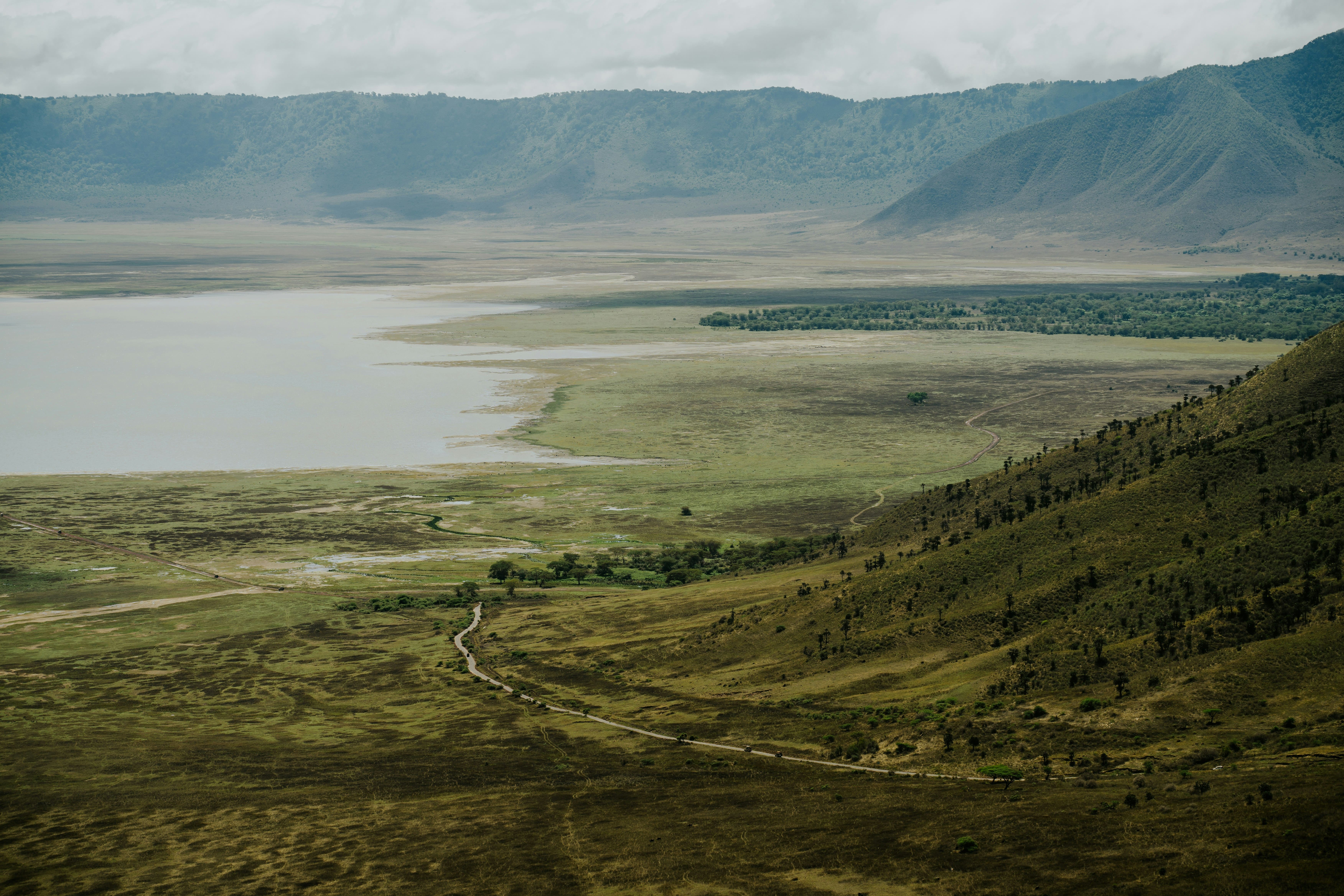
There are places that stop you mid-sentence when you try to describe them. The Ngorongoro Crater is one of them. Standing on the rim at dawn — 600 metres above the caldera floor, looking down into a world that contains 25,000 large mammals in an area you can see the edge of — the scale and the density of what you are about to descend into simply does not compute against any previous experience.
The Ngorongoro Crater is the world's largest intact and unfilled volcanic caldera, formed approximately two to three million years ago when a massive volcano collapsed inward on itself. The resulting bowl — 19 kilometres wide, 600 metres deep, and 260 square kilometres of floor — created a near-enclosed ecosystem that traps moisture year-round and anchors a permanent population of animals that rivals any wildlife destination on Earth for sheer density.
Unlike the Serengeti, where the Great Migration draws visitors to specific zones at specific times, the Ngorongoro Crater is reliably extraordinary in every month of the year. The Big Five are present year-round. Tanzania's most accessible black rhino population lives on the crater floor. Lions, elephants, and hippos are seen on virtually every descent. The question is not whether you will see wildlife in the Ngorongoro Crater — it is how much.
This guide gives you everything you need to plan your Ngorongoro crater safari in 2026: the geology, the wildlife, the specific zones within the crater, the strategy for a crater descent that maximises your permit time, the accommodation options on the rim and within the conservation area, and the full practical picture on costs, logistics, and how to combine it with the broader Northern Circuit.
NGORONGORO CONSERVATION AREA: QUICK FACTS
Ngorongoro Conservation Area — At a Glance
- UNESCO Status
- World Heritage Site (since 1979) and Biosphere Reserve — a dual international designation
- Total Area
- 8,292 km² — significantly larger than the Ngorongoro Crater itself
- Crater Diameter
- 19 km at its widest point, visible end to end from the crater rim
- Crater Depth
- Approximately 600 m from the rim to the crater floor
- Crater Floor Area
- 260 km²
- Formation
- Formed by the collapse of a massive volcano approximately 2–3 million years ago
- Altitude – Rim
- 2,286 m above sea level (highest point on the eastern rim)
- Altitude – Floor
- Approximately 1,700 m above sea level
- Resident Wildlife
- Around 25,000 large mammals permanently inhabit the crater floor
- Black Rhino Population
- Approximately 26 individuals — Tanzania's most reliable destination for black rhino sightings
- Lion Population
- Around 60–75 lions, forming a genetically isolated population that has been monitored since the 1960s
- Established
- 1959 as the Ngorongoro Conservation Area, replacing the former game reserve
- Management Authority
- Managed by the Ngorongoro Conservation Area Authority (NCAA)
- Park Entry Fee
- USD $70 per non-resident adult per day (2026)
- Crater Descent Fee
- USD $295 per vehicle for each crater descent (in addition to the park entry fee)
- Maximum Time on the Crater Floor
- Up to 6 hours per descent permit
- Annual Visitors
- Approximately 500,000 visitors, making it one of Tanzania's most visited wildlife destinations
- Getting There
- Around 3–4 hours by road from Arusha
- Approximately 40 minutes by road from Karatu
- Best Combined With
- Serengeti National Park
- Tarangire National Park
- Lake Manyara National Park
- Olduvai Gorge
- Ndutu Plains
- Famous For
- Africa's highest wildlife density
- Outstanding Big Five sightings
- Black rhinos
- Spectacular volcanic geology
- One of the world's most iconic safari destinations
THE GEOLOGY OF NGORONGORO: HOW THE CRATER WAS FORMED
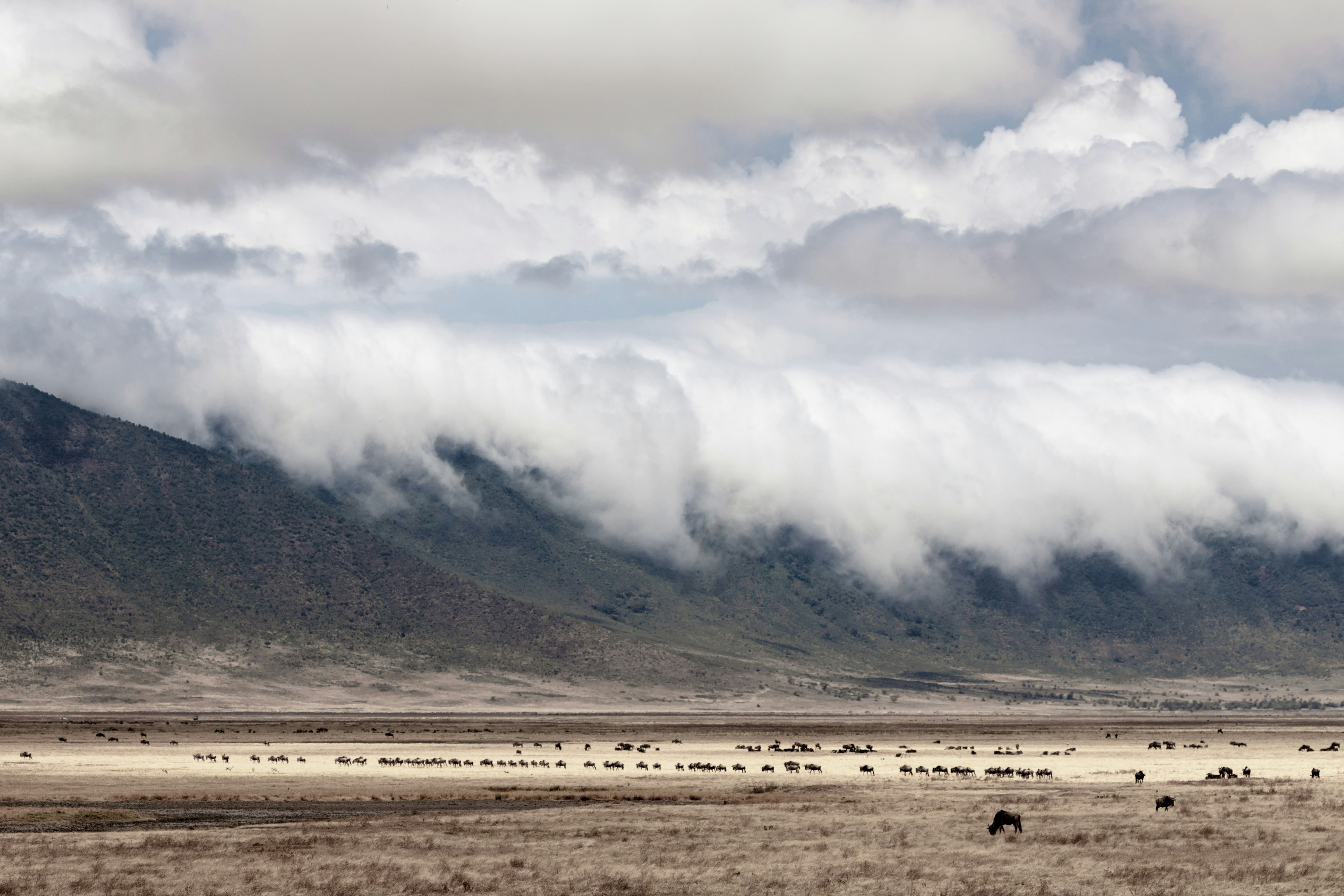
The Ngorongoro Crater is not a meteor crater, as many visitors initially assume. It is a caldera — a volcanic depression formed when a massive volcano erupted catastrophically and its summit collapsed inward, creating the bowl structure that exists today.
How a Caldera Forms
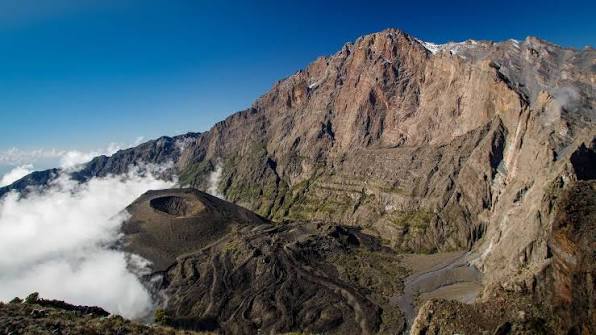
Approximately two to three million years ago, a volcano estimated to have been as tall as Kilimanjaro — perhaps 4,500 to 5,800 metres — occupied the site of the present crater. A series of massive eruptions emptied the magma chamber beneath the volcano. Without the internal pressure of the magma to support it, the summit collapsed vertically into the void, creating the caldera. Subsequent erosion, rainfall accumulation, and ecological colonisation over millions of years transformed the raw rock bowl into the complex, richly diverse ecosystem visible today.
🌋 Geological Scale: The Ngorongoro Crater is the world's largest intact and unfilled volcanic caldera — 'intact' meaning the walls have not been significantly breached, and 'unfilled' meaning it has not been infilled by subsequent volcanic activity or sediment. It is a geological feature with no equivalent on Earth.
The Ngorongoro Highlands
The broader Ngorongoro Conservation Area encompasses much more than the famous crater. The NCA sits within the Eastern Rift Valley system — the geological fault that runs from the Middle East to Mozambique and has been the crucible of human evolution for millions of years. Within the NCA, multiple volcanic features exist alongside Ngorongoro: Olmoti Crater (a shallow caldera with waterfalls and highland grassland), Empakaai Crater (a deep caldera holding a flamingo lake), and Lemagrut and Oldeani mountains. The Ndutu Plains to the south — the calving grounds of the Great Migration — are technically within the Ngorongoro Conservation Area's boundary.
Olduvai Gorge — The Cradle of Human Evolution
On the western edge of the Ngorongoro Conservation Area, the Olduvai Gorge cuts through exposed layers of volcanic sediment representing 2.1 million years of geological and biological history. This is where palaeontologists Louis and Mary Leakey made the discoveries that changed our understanding of human evolution: Australopithecus boisei (1.8 million years old), Homo habilis (1.9 million years old), and Homo erectus tools that pushed the known date of stone tool use back by hundreds of thousands of years. The gorge walls display these geological layers in visible stratigraphy — a literal timeline of Earth's history visible in cross-section. A small but excellent on-site museum provides context.
- Distance from Ngorongoro rim: Approximately 45 km west — 45 minutes by road toward the Serengeti
- Visit format: 2-hour stop on the drive between Ngorongoro and the Serengeti — included in most Northern Circuit itineraries
NGORONGORO CRATER WILDLIFE: THE COMPLETE GUIDE
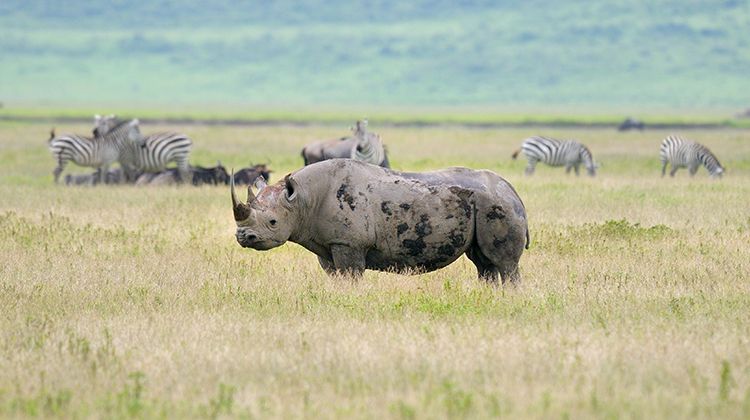
The Ngorongoro Crater hosts the highest concentration of wildlife per square kilometre of any unfenced ecosystem in Africa. The caldera walls create a near-enclosed environment that retains moisture year-round and anchors a permanent population — unlike the Serengeti, where the Great Migration herds move seasonally, the Ngorongoro Crater's core wildlife population stays on the crater floor throughout the year.
Wildlife Population Overview
- Wildebeest
- Estimated population on the crater floor: ~7,000
- Notes: Permanent resident population that does not participate in the Great Migration
- Plains Zebra
- Estimated population on the crater floor: ~4,000
- Notes: Large resident herds grazing the crater's short-grass plains
- Thomson's Gazelle
- Estimated population on the crater floor: ~3,000
- Notes: Commonly found across the open grasslands
- African Buffalo
- Estimated population on the crater floor: ~4,500
- Notes: Large bachelor herds are often seen around Mandusi Swamp
- Spotted Hyena
- Estimated population on the crater floor: ~400
- Notes: One of the highest hyena densities per square kilometre in Africa
- Lion
- Estimated population on the crater floor: 60–75
- Notes: A genetically isolated population that has been studied since the 1960s
- African Elephant
- Estimated population on the crater floor: ~30 (mainly visiting bulls)
- Notes: Mostly large solitary bulls; breeding herds usually remain outside the crater
- Hippopotamus
- Estimated population on the crater floor: ~50
- Notes: Permanent residents of the Mandusi Hippo Pool throughout the year
- Black Rhinoceros
- Estimated population on the crater floor: ~26
- Notes: The most reliable place in Tanzania to see black rhinos
- Eland
- Estimated population on the crater floor: ~100
- Notes: Africa's largest antelope, occasionally seen on the open plains
- Serval
- Estimated population: Present
- Notes: A grassland specialist most often spotted during early morning game drives
- Golden Jackal
- Estimated population: Common
- Notes: Frequently observed hunting or scavenging on the open plains
- Bat-Eared Fox
- Estimated population: Present
- Notes: Insect-eating fox commonly seen in short-grass habitats
- Flamingos
- Estimated population: Seasonal
- Notes: Lake Magadi attracts thousands of flamingos, particularly from November to April
- Bird Species
- Recorded species: Over 500
- Notes: Ngorongoro is one of East Africa's premier birdwatching destinations
The Big Five in Ngorongoro Crater
Lion — Most Reliably Seen Big Five Animal in the Crater
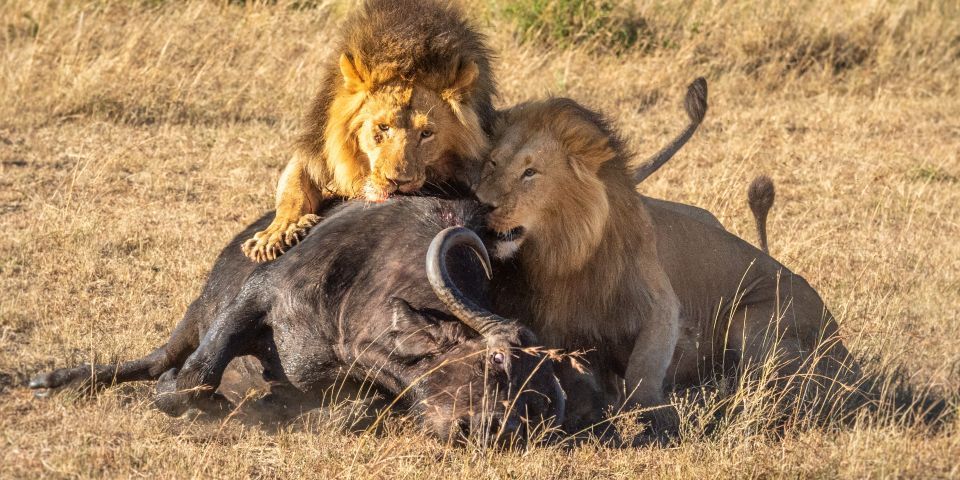
The Ngorongoro Crater lion population of 60 to 75 individuals is one of the most studied in Africa — research has been ongoing since the 1960s. The population is genetically isolated by the crater walls, which has created a small degree of inbreeding over time, but the current population is healthy and actively managed. The crater's lions are notably large-bodied, frequently dark-maned in males, and entirely unperturbed by safari vehicles. They are seen on virtually every crater descent.
The crater's open, short-grass floor means there is almost nowhere for a lion to hide — unlike the tall grass of the Serengeti, where prides can be invisible at 50 metres. Lion prides in the Ngorongoro rest in the open grass, on the banks of the hippo pools, and on the edges of the Lerai Forest. Morning drives consistently find prides resting or active near overnight kills.
- Best area: Open grassland between the descent road and Mandusi Swamp. The short-grass plains between Ngoitokitok Spring and Lake Magadi are particularly productive.
- Best time: First two hours after dawn (6:00–8:00 AM) — prides are active and near kills.
- Unique fact: The crater's lion males historically had difficulty attracting unrelated females (due to isolation), but the current population has benefited from occasional immigration of males from outside the crater, improving genetic diversity.
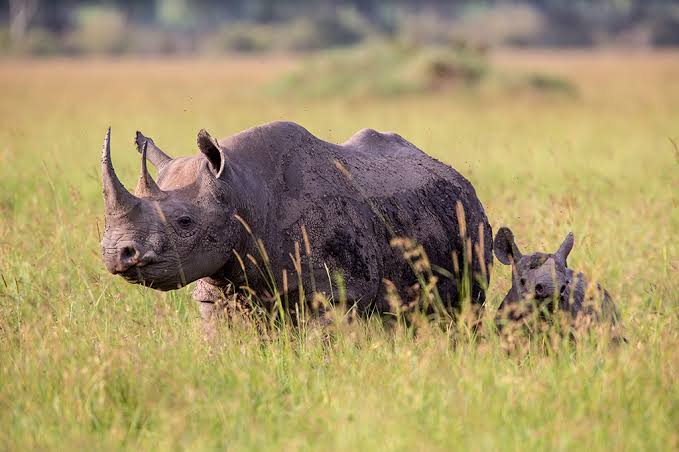
Black Rhinoceros — Tanzania's Most Viewable Population
The Ngorongoro Crater holds Tanzania's most reliably viewable black rhinoceros population — approximately 26 individuals that have been individually identified and monitored for decades. The black rhino was once widespread across East Africa but was devastated by poaching in the 1970s and 1980s. Tanzania's national population was reduced to fewer than 100 animals. The crater's isolated geography and intensive anti-poaching protection have allowed the crater population to survive and very slowly recover.
Sightings are not guaranteed on every descent — the crater floor is 260 square kilometres, and black rhino are solitary and can be anywhere. But a full-day crater visit with an experienced guide produces a rhino sighting on approximately 60 to 70% of visits. The key is knowing where to look and when.
- Best area: The short-grass plains between the ascent road junction and Mandusi Swamp in the early morning. Also the edge of the Lerai Acacia Forest by mid-morning.
- Best time: Early morning — rhinos tend to graze in the open plains at dawn and retreat toward the forest as temperatures rise.
- Identification: Each of the crater's 26 rhinos has been individually named and photographed by researchers. Your guide may know specific individuals by name.
🌋 Rhino Strategy: The single most effective strategy for a rhino sighting is a very early descent — aim to be on the crater floor by 6:30 AM and immediately drive the short-grass area between the descent road and Mandusi Swamp, scanning the open plain. A guide with crater specialist knowledge is essential. Ask adventuresseeker.com about our Ngorongoro crater specialist guides before booking.
African Elephant
The Ngorongoro Crater's elephant population is unusual: it consists primarily of large, old adult bulls rather than breeding herds. The reason is partly geological — the crater walls are steep and challenging for young calves and breeding cows with infants, who tend to prefer the broader access to water and food resources outside the crater. The bulls that do inhabit the crater are typically Tanzania's largest and most impressively tusked individuals, their size and ivory suggesting decades of undisturbed growth.
Encountering a large bull elephant in the Lerai Acacia Forest — moving silently between the fig trees despite his enormous mass — is one of the crater's most memorable encounters. These individuals are entirely habituated to vehicles, approaching within metres without changing direction.
- Best area: Lerai Acacia Forest (south-west of the crater floor). Also seen crossing the open plains between the forest and the hippo pool.
Cape Buffalo
Buffalo are abundant throughout the crater floor — herds of several hundred are commonly encountered on the open grassland. The crater's buffalo provide the primary prey base for the lion population and the two species are frequently encountered together — prides resting near large buffalo herds, or actively hunting at dawn. Large bachelor groups of old bulls — scarred, mud-coated 'dagga boys' — frequent the edges of the Mandusi Swamp and are among the crater's most photographically rewarding subjects.
Leopard — Seen but Not Common
Leopards are present in the Ngorongoro Crater but are rarely seen compared to the Serengeti's kopje habitat. The crater's forested areas — particularly the Lerai Acacia Forest and the dense vegetation near the stream systems — provide cover, but the open floor habitat does not favour the leopard's ambush hunting style. A leopard sighting in the Ngorongoro Crater is a bonus, not a reliable expectation. For guaranteed leopard encounters, the central Serengeti's Seronera valley is the appropriate destination.
Spotted Hyena — The Crater's Most Numerous Large Predator
The Ngorongoro Crater has one of the highest spotted hyena densities in Africa — approximately 400 individuals in 260 square kilometres. The crater's hyenas live in large clans with complex territorial boundaries and are responsible for a significant proportion of the predator kills on the crater floor. The famous Ngorongoro hyena clans have been studied continuously since Hans Kruuk's pioneering 1960s research and are among the most thoroughly understood large predator populations in science.
Hyenas are active at all hours in the Ngorongoro but are most visible at dawn, when clans return from nocturnal hunts, and in the late afternoon when feeding activity is high. The discovery that hyenas kill more than they scavenge — and that lions frequently steal from hyenas rather than the other way around — is one of the great reversals of popular understanding in carnivore biology, and the Ngorongoro Crater is where this fact was established.
🦁 Predator Dynamics Insight: In the Ngorongoro Crater, hyenas outnumber lions significantly and are the dominant predator by biomass. Watch for lion-hyena confrontations near kills — the tension between the crater's largest lion prides and its hyena clans is one of the most complex and dramatic inter-species interactions in African wildlife.
Lake Magadi and the Flamingos
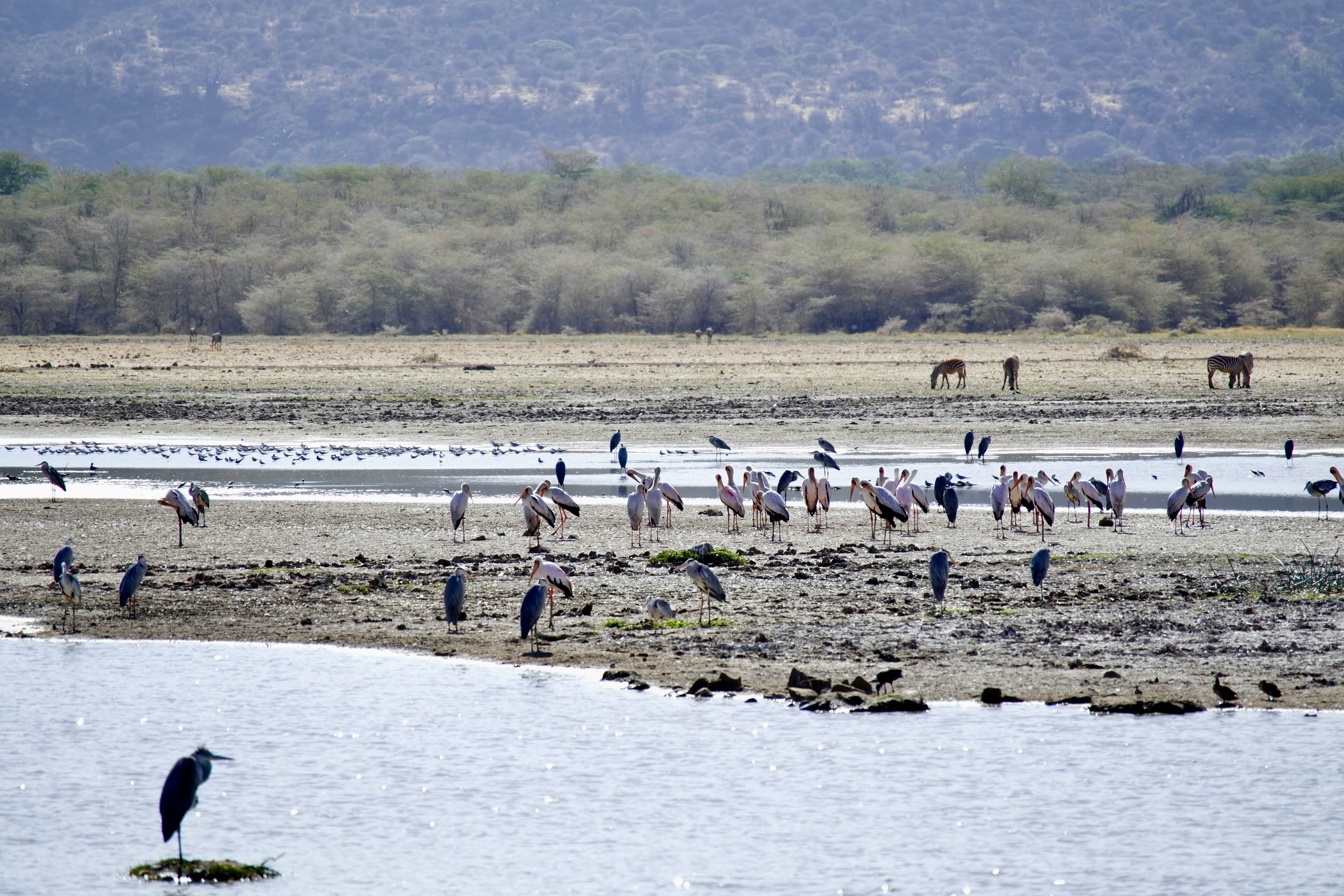
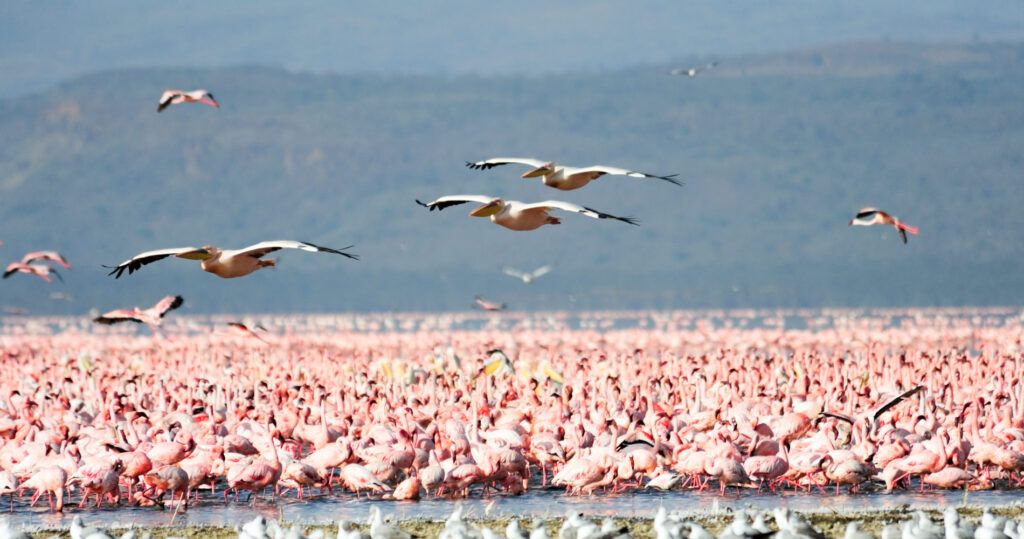
The shallow soda lake on the southern edge of the crater floor — Lake Magadi — is home to seasonal populations of both lesser and greater flamingos. At peak times (typically November to April when conditions are right), thousands of flamingos congregate on the lake, creating the vivid pink spectacle familiar from photographs. The alkaline chemistry of the lake supports the blue-green algae that lesser flamingos filter-feed on. Pelicans, herons, and a wide range of wading birds also use the lake year-round.
- Best months for flamingos: November to April — coinciding with higher water levels and algae blooms
- Best approach: The shore of Lake Magadi is accessible by vehicle via the main crater circuit road. Dawn light on the lake with flamingos and the rim rising behind produces extraordinary photographs.
Mandusi Hippo Pool
The permanent hippo pool in the Mandusi Swamp on the northern section of the crater floor holds 50 or more hippos year-round. The pool is accessible from a short walk from a designated vehicle parking point — making it one of the few places in the NCA where visitors can leave their vehicle to view wildlife at close range. The pool is consistently one of the most entertaining stops on the crater circuit: hippos of all ages jostling for space, submerging and rising, vocalising, and occasionally fighting for position. Buffalo and wildebeest come to drink around the hippo pool throughout the day.
- Visit timing: Mid-morning (9:00–11:00 AM) when the light is good and the pool is active.
- Photography: The designated viewing area allows you to stand at the pool edge. A 70–200mm lens is ideal for portrait shots of hippos at this range.
Ngorongoro Crater Birdlife
More than 500 bird species have been recorded in the Ngorongoro Conservation Area — the crater floor and its surrounding habitats represent one of East Africa's finest birding environments.
- Lesser Flamingo (Phoeniconaias minor)
- Best location: Lake Magadi
- Notes: Thousands gather from November to April, with smaller numbers present year-round
- Greater Flamingo (Phoenicopterus roseus)
- Best location: Lake Magadi
- Notes: Less numerous than the Lesser Flamingo but noticeably larger and pinker
- Grey-Crowned Crane (Balearica regulorum)
- Best location: Open grasslands
- Notes: Elegant pairs and small flocks are commonly seen near wetlands
- Kori Bustard (Ardeotis kori)
- Best location: Short-grass plains
- Notes: The world's heaviest flying bird, often seen walking gracefully across the plains
- Secretary Bird (Sagittarius serpentarius)
- Best location: Short-grass plains
- Notes: A distinctive bird that hunts snakes and rodents while striding across open grasslands
- Superb Starling (Lamprotornis superbus)
- Best location: Throughout the crater
- Notes: One of the most common birds in Ngorongoro, recognized by its brilliant iridescent plumage
- Augur Buzzard (Buteo augur)
- Best location: Crater rim and surrounding thermals
- Notes: Frequently seen soaring above the crater with striking black-and-white plumage
- African Fish Eagle (Haliaeetus vocifer)
- Best location: Near Lake Magadi and streams
- Notes: Famous for its unmistakable call, often heard around the crater's water bodies
- Ostrich (Struthio camelus)
- Best location: Open grasslands
- Notes: Breeding pairs are commonly observed on the crater floor
- Verreaux's Eagle (Aquila verreauxii)
- Best location: Crater rim cliffs
- Notes: A powerful eagle that specializes in hunting rock hyrax and is often seen soaring along the crater walls
BEST TIME TO VISIT NGORONGORO CRATER
The Ngorongoro Crater's most extraordinary characteristic for safari planning is that it has no bad season. Unlike most other African parks, where the rainy season significantly reduces wildlife visibility or access, the crater's enclosed geography and year-round water supply mean that animal populations are present and viewable in every month. What changes between seasons is the visitor experience on the rim, the specific wildlife highlights within the crater, and the price and crowd levels.
- January
- Wildlife highlights: Active lions and nearby Ndutu calving season
- Weather on the rim: Warm with brief showers
- Crowds: Moderate
- Overall: ⭐⭐⭐⭐
- February
- Wildlife highlights: Outstanding wildlife viewing with active black rhinos on the short grass
- Weather on the rim: Warm and mostly dry
- Crowds: Moderate
- Overall: ⭐⭐⭐⭐⭐
- March
- Wildlife highlights: Excellent year-round wildlife; migration herds moving nearby while the crater remains productive
- Weather on the rim: Rains beginning
- Crowds: Low
- Overall: ⭐⭐⭐⭐
- April
- Wildlife highlights: Excellent crater wildlife despite the rainy season
- Weather on the rim: Long rains with misty conditions
- Crowds: Very Low
- Overall: ⭐⭐⭐⭐
- May
- Wildlife highlights: Outstanding wildlife viewing with fewer visitors
- Weather on the rim: Rains easing
- Crowds: Very Low
- Overall: ⭐⭐⭐⭐
- June
- Wildlife highlights: Dry season begins, bringing exceptional wildlife viewing and clear visibility
- Weather on the rim: Dry, cool, and clear
- Crowds: Low
- Overall: ⭐⭐⭐⭐⭐
- July
- Wildlife highlights: Excellent sightings across all major species during peak safari season
- Weather on the rim: Dry with cold mornings
- Crowds: High
- Overall: ⭐⭐⭐⭐⭐
- August
- Wildlife highlights: Peak safari season with outstanding wildlife viewing
- Weather on the rim: Dry with cold mornings
- Crowds: Highest
- Overall: ⭐⭐⭐⭐⭐
- September
- Wildlife highlights: Excellent wildlife with slightly fewer visitors than August
- Weather on the rim: Dry and gradually warming
- Crowds: High
- Overall: ⭐⭐⭐⭐⭐
- October
- Wildlife highlights: Very good conditions with reliable lion and black rhino sightings
- Weather on the rim: Transitional season
- Crowds: Moderate
- Overall: ⭐⭐⭐⭐
- November
- Wildlife highlights: Short rains bring flamingos and newborn animals
- Weather on the rim: Brief showers
- Crowds: Low
- Overall: ⭐⭐⭐⭐
- December
- Wildlife highlights: Excellent wildlife viewing, increasing flamingo numbers, and a festive holiday atmosphere
- Weather on the rim: Partly dry
- Crowds: Moderate
- Overall: ⭐⭐⭐⭐
The Crater in Every Season
Dry Season (June–October): The crater floor is at its most photogenic — clear skies, sharp horizons, and the absence of haze that the dry months produce. The rim can be cold (5–10°C at night in July–August) — pack a warm jacket. The crater floor is warmer, reaching 25–28°C by midday. Wildlife is excellent throughout. Peak visitor season means the descent road can have queues at the main gate in July and August — arrive early.
Green Season (November–May): The crater is frequently misty in the mornings during the rainy season — the rim sits in cloud while the floor below is clear and sunlit. This creates extraordinary visual effects: driving down through mist into brilliant morning sunshine below. The flamingo populations on Lake Magadi peak between November and April. Baby animals appear across multiple species as many time births to the rains. The grass is lush and green, creating a different but equally beautiful photographic environment.
April and May: These months are the crater's least-visited and most affordable — and the wildlife is entirely unaffected by the rim rains. The crater floor has its own microclimate. For budget-conscious travellers who want extraordinary wildlife in complete tranquillity, April and May in the Ngorongoro Crater are among the best-value wildlife experiences in Africa.
🌧️ Rim vs Floor Weather: The rim (2,286m) is frequently cold and misty while the crater floor below is warm, clear, and sunlit. Do not judge crater conditions by rim weather. Even on a cloudy rim morning, descending into the crater typically reveals clear, beautiful conditions on the floor. Always descend regardless of rim weather.
NGORONGORO CRATER DESCENT: YOUR COMPLETE HOW-TO GUIDE
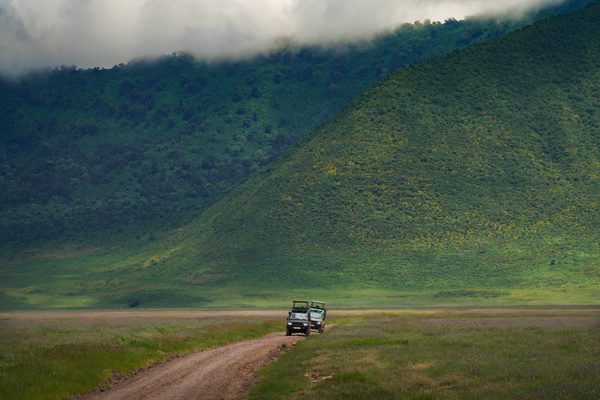
Descending into the Ngorongoro Crater is a singular experience — and getting it right requires understanding the permit system, the route, the timing, and the strategy that maximises your 6-hour floor allocation.
The Permit System
The NCAA (Ngorongoro Conservation Area Authority) controls crater access through a permit system. Each vehicle entering the crater floor pays a descent fee of USD $295 per vehicle in addition to the standard conservation area entry fee of $70 per person per day. The permit authorises a maximum of 6 hours on the crater floor per descent. Overstaying the 6-hour limit results in significant fines.
- Number of vehicles: The NCAA limits the total number of vehicles on the crater floor at any time — overcrowding is a genuine concern at peak season. Descend early to ensure floor access.
- Multiple descents: A second descent on a separate day requires a second $295 vehicle fee. For visitors staying two nights on the rim, a second descent significantly increases total wildlife viewing time and is strongly recommended.
- Picnic lunch: Visitors may not leave their vehicles except at designated picnic sites. Bring a packed lunch — most rim lodges prepare a box lunch on request. The Ngoitokitok Spring picnic site in the crater is the designated stop.
🌋 6-Hour Maximum: The 6-hour floor limit applies strictly. Your guide will track time carefully. Most guides allow 5.5 hours on the floor and begin the ascent 30 minutes before the limit — the ascent road takes 30–45 minutes depending on traffic. Exceeding the limit costs USD $300 per overage hour and creates significant problems with your operator.
Descent and Ascent Roads
Descent road (Seneto): The main descent road enters the crater on the western rim. It is a single-lane, one-way road that winds steeply down the crater wall through a succession of switchbacks. The drive from rim to floor takes approximately 30–45 minutes. The views during descent — of the crater floor gradually revealing itself below — are extraordinary.
Ascent road (Lerai): The ascent road climbs the south-eastern rim through the Lerai Acacia Forest, passing through the shade of large acacia trees before emerging on the rim. One-way ascending only. The drive from floor to rim takes approximately 20–30 minutes.
Access hours: The descent gate opens at 6:00 AM. Vehicles must begin ascending no later than 6:00 PM. The earliest possible descent (6:00 AM departure from the gate) is strongly recommended — more wildlife is active in the first two hours than in any other equivalent period.
The Optimal Crater Day Plan
- 05:30 AM — Wake, breakfast at rim lodge. Pack lunch confirmed with lodge.
- 06:00 AM — Arrive at Seneto Gate (descent gate) as it opens. Be first or early in the queue.
- 06:00–06:45 AM — Descend Seneto road. Scan walls for leopard and klipspringer on the crater wall.
- 06:45–08:30 AM — Short-grass plain sweep: rhino search between descent road and Mandusi Swamp. Lion and hyena activity peak.
- 08:30–10:00 AM — Mandusi Hippo Pool. Buffalo and wildebeest at waterholes. Continue to Ngoitokitok Spring (elephant area).
- 10:00–11:30 AM — Lake Magadi and flamingos. Open plain circuit — cheetah, jackal, bat-eared fox.
- 11:30 AM–12:30 PM — Lerai Acacia Forest. Elephant bulls, leopard search, large fig trees.
- 12:30–13:00 PM — Picnic lunch at Ngoitokitok Spring picnic site (vehicle stay-in area for most of crater — this is one of few stops allowed).
- 13:00–14:30 PM — Second wildlife circuit: repeat best areas from morning based on sightings.
- 14:30–15:00 PM — Begin ascent via Lerai road. 6-hour floor time respected.
- 15:00–15:30 PM — Arrive rim. Afternoon tea at lodge. Debrief sightings.
⏰ Timing Strategy: The most common mistake on a Ngorongoro crater descent is arriving at the descent gate late — after 7:30 AM in peak season, queues can mean waiting 30–45 minutes before descent begins. Every minute of waiting is a minute of prime morning wildlife activity missed. Stay on the rim the previous night; don't try to day-trip from Karatu town for an early descent.
Key Wildlife Zones Within the Crater
- Short-Grass Plains (Central)
- Location on the crater floor: Between the descent road and Mandusi Swamp
- Key wildlife: Lions, black rhinos, wildebeest, and zebras
- Best time to visit: Dawn (6:45–8:30 AM)
- Mandusi Swamp and Hippo Pool
- Location on the crater floor: Northern section
- Key wildlife: Hippos, buffalo, waterfowl, and Grey-Crowned Cranes
- Best time to visit: Mid-morning (8:30–10:00 AM)
- Ngoitokitok Spring
- Location on the crater floor: East-central section
- Key wildlife: Elephants, lions, wildebeest, and zebras
- Best time to visit: Any time of day; also a designated picnic site
- Lake Magadi
- Location on the crater floor: Southern section
- Key wildlife: Flamingos, pelicans, wading birds, and occasionally cheetahs nearby
- Best time to visit: 10:00 AM–12:00 PM for the best lighting
- Lerai Acacia Forest
- Location on the crater floor: South-western section
- Key wildlife: Large elephant bulls, baboons, and vervet monkeys
- Best time to visit: Mid-morning and during the ascent from the crater
- Open Plains Circuit
- Location on the crater floor: Central and eastern plains
- Key wildlife: Cheetahs, golden jackals, bat-eared foxes, and gazelles
- Best time to visit: Morning and late afternoon
- Stream Banks
- Location on the crater floor: Along various drainage lines
- Key wildlife: Leopards (rare), servals, and mongooses
- Best time to visit: Early morning
BEYOND THE CRATER: OTHER EXPERIENCES IN THE NGORONGORO CONSERVATION AREA
The Ngorongoro Crater is the headline, but the broader Conservation Area contains experiences that many visitors miss entirely — and some of them rival the crater itself for impact.
Empakaai Crater — The Hidden Gem
Empakaai is the NCA's secret: a second volcanic caldera, smaller and deeper than Ngorongoro, whose floor holds a deep lake that supports thousands of flamingos. Unlike the Ngorongoro Crater, Empakaai is reached by a 45-minute hike down a steep forest path — the only way to access the floor is on foot with a ranger. The experience is entirely different from the Ngorongoro descent: forest, silence, the gradual reveal of the turquoise lake as you emerge from the trees, and the extraordinary sight of flamingos reflected in still water with no other visitors present.
- Distance from Ngorongoro rim: Approximately 40 km north-east by road, then a 45-minute hike
- Permit: Requires a separate hiking permit from the NCAA — arrange through your operator in advance
- Best months: June–October (dry trails, clearest lake); November–April (flamingo peak)
- Recommended for: Active travellers, birdwatchers, photographers wanting something other than a vehicle-based experience
Olmoti Crater — Waterfall and Highland Walking
Olmoti is a shallow, grass-filled crater north of Ngorongoro whose floor is grazed by Maasai cattle and whose rim gives access to the Munge River waterfall. A two-to-three-hour walking circuit of the crater rim with a ranger is one of the NCA's finest active experiences — panoramic views of the Ngorongoro highlands, birdlife including Augur buzzard and African harrier hawk, and the waterfall as a destination.
Ndutu Plains — The Great Migration's Calving Grounds
The Ndutu area in the southern part of the NCA is technically within the conservation area boundary, though it is managed alongside the Serengeti ecosystem. In January and February, the Great Migration's wildebeest herds descend on the Ndutu short-grass plains for the calving season — Tanzania's most extraordinary wildlife event by intensity. A combined itinerary of Ndutu calving (2 nights) followed by a Ngorongoro crater descent gives visitors two of Tanzania's greatest wildlife experiences in a single 4-day sequence.
Olduvai Gorge (Oldupai Gorge)
Already described under Geology, Olduvai Gorge is worth reemphasising as a standalone experience. The 2-hour stop at the gorge on the drive between Ngorongoro and the Serengeti is one of the most intellectually significant experiences available on a Tanzania safari. The on-site museum houses original fossil casts (including the famous Zinjanthropus skull) and explains the sequence of discoveries that established the Ngorongoro region as the most important site in the study of human evolution. The view into the gorge itself — the stratigraphy of 2.1 million years visible in cross-section — is humbling in a completely different way from the crater.
- Visit duration: 1.5–2 hours including museum and gorge viewpoint
- Entry fee: Included in NCA conservation fee; a small additional museum contribution is typical
- Who should not miss it: Everyone — but particularly any visitor with interest in human history, anthropology, or evolutionary biology
Maasai Cultural Visits
The Ngorongoro Conservation Area is unique among Tanzania's protected areas in permitting the Maasai people to continue living within its boundaries. The NCA was established with the explicit agreement that the Maasai — who had occupied this landscape for centuries — would be able to continue their traditional pastoralist lifestyle within the conservation area, provided they did not cultivate the land. This arrangement makes the NCA one of the few protected areas in Africa where traditional human culture and wildlife conservation genuinely coexist.
Visits to Maasai bomas (homesteads) within the NCA provide an entirely different dimension to a crater safari. Arranged through responsible operators with community consent and direct community benefit, these visits illuminate the Maasai's relationship with the landscape — their ecological knowledge, their cattle herding practices, and their centuries-old understanding of living alongside predators that most contemporary humans never encounter.
- Authentic vs commercial: Avoid the informal 'boma visits' offered at park gates by unsolicited guides. Book through your operator — adventuresseeker.com works with specific communities whose visits are genuine, fair-trade, and culturally respectful.
NGORONGORO ACCOMMODATION: RIM LODGES AND CAMP GUIDE
All accommodation in the Ngorongoro Conservation Area is on or near the crater rim — no lodges exist on the crater floor itself, which is left entirely for wildlife. The rim sits at 2,286 metres and can be cold at night (particularly June–August when temperatures drop to 5–8°C) — pack a warm layer regardless of the wider season.
Types of Accommodation
Rim lodges: The majority of Ngorongoro accommodation is on the eastern and north-eastern rim — the highest and most scenic part of the crater. Properties here look directly down into the caldera. They range from basic bandas to world-famous luxury lodges.
Conservation area lodges (non-rim): Several properties sit within the broader NCA but away from the rim — in the highlands or forested areas. These offer different perspectives and are often quieter.
Karatu town lodges: A number of comfortable lodges and tented camps operate in the Karatu agricultural highlands outside the NCA gate — typically 30–45 minutes from the descent gate. More affordable and a legitimate option for budget-conscious travellers, but the extra drive time reduces floor time on the crater.
- &Beyond Ngorongoro Crater Lodge
- Location: Eastern Rim
- Tier: Ultra-Luxury
- Key feature: One of East Africa's most iconic lodges with Masai-baroque décor, private butler service, and dramatic crater views
- Approx. cost/night per person: $1,200–$2,500
- One Nature Ngorongoro Lodge
- Location: South-Eastern Rim
- Tier: Luxury
- Key feature: Modern glass-front design, panoramic crater views, and infinity-edge viewpoints
- Approx. cost/night per person: $700–$1,400
- Ngorongoro Serena Safari Lodge
- Location: Eastern Rim
- Tier: Premium
- Key feature: Stone-built lodge integrated into the crater rim with good guiding, views, and swimming pool facilities
- Approx. cost/night per person: $350–$700
- Ngorongoro Sopa Lodge
- Location: Eastern Rim
- Tier: Comfort
- Key feature: Large reliable lodge with excellent location, consistent food quality, and good value
- Approx. cost/night per person: $200–$400
- Ngorongoro Farm House
- Location: Karatu (outside NCA)
- Tier: Comfort
- Key feature: Colonial-style farm setting with gardens, excellent food, and family-friendly atmosphere
- Approx. cost/night per person: $150–$350
- Gibbs Farm
- Location: Karatu (outside NCA)
- Tier: Premium
- Key feature: Historic coffee estate offering superb cuisine, organic gardens, swimming pool, and authentic character
- Approx. cost/night per person: $300–$600
- Rhino Lodge
- Location: Crater Rim (inside NCA)
- Tier: Comfort
- Key feature: Simple accommodation with excellent crater access and good value for travellers seeking a no-frills stay
- Approx. cost/night per person: $120–$250
- Ngorongoro Wildlife Lodge
- Location: Crater Rim (inside NCA)
- Tier: Comfort
- Key feature: Located directly on the rim edge with crater views; older style but offers a prime location
- Approx. cost/night per person: $150–$300
- Entamanu Ngorongoro
- Location: Crater Rim (inside NCA)
- Tier: Luxury
- Key feature: Intimate camp with rim-edge platform tents and spectacular crater views
- Approx. cost/night per person: $600–$1,200
- Highlands (Asilia Africa)
- Location: Northern Highlands
- Tier: Premium
- Key feature: Design-focused highland camp with walking experiences and panoramic mountain views
- Approx. cost/night per person: $500–$1,000
How to Choose
- For the most iconic experience: &Beyond Ngorongoro Crater Lodge is the lodge that defines the destination — its Maasai-baroque interior, butler service, and the view from every room directly into the crater are unmatched. If budget allows, one night here is unforgettable.
- For best value on the rim: Ngorongoro Sopa Lodge and Ngorongoro Serena Safari Lodge offer the most consistent quality at reasonable prices. Both have good food, reliable service, and legitimate crater-rim positions.
- For families: Ngorongoro Farm House at Karatu is family-friendly, has space and gardens for children, and the 35-minute drive to the gate is manageable.
- For the romantic experience: Entamanu Ngorongoro — small, intimate, platform tents on the crater rim edge. One of Tanzania's most romantic accommodation options.
- For the best views without the top price: One Nature Ngorongoro Lodge offers luxury-quality views and design at a price point below &Beyond.
adventuresseeker.com Note: We have visited and assessed every rim lodge on this list. Our recommendations are based on actual guest experience, current food and service standards, and the specific needs of each trip — not on commission rates. Tell us your budget and preferences and we will match you to the right property.
NGORONGORO CRATER SAFARI COSTS 2026: COMPLETE BREAKDOWN
Conservation Area Entry Fees (Fixed)
- Conservation Area Entry — Adult Non-Resident
- Fee: USD $70.00 per person per day
- Conservation Area Entry — Child (5–15 years)
- Fee: USD $35.00 per person per day
- Conservation Area Entry — Child Under 5 Years
- Fee: Free
- Vehicle Entry Fee
- Fee: USD $40.00 per vehicle per entry
- Crater Descent Fee
- Fee: USD $295.00 per vehicle per descent
- Camping — Public Campsites
- Fee: USD $50.00 per person per night
- Camping — Special Campsites
- Fee: USD $100.00 per person per night
- Empakaai / Olmoti Hiking Permit
- Fee: Approximately USD $23.80 per person per hike
- Olduvai Gorge Entry
- Fee: Included in the Ngorongoro Conservation Area fee, with a small museum donation sometimes requested
Total Cost Example: 2-Night Ngorongoro (Per Person, Couple)
- Conservation Area Entry (2 days × $70)
- Cost: USD $140 per person
- Vehicle Entry Fee (1 vehicle × $40 / 2 passengers)
- Cost: USD $20 per person
- Crater Descent Fee (2 descents × $295 / 2 passengers)
- Cost: USD $295 per person
- Accommodation — Rim Lodge, Comfort Tier (2 nights)
- Cost: USD $400–$700 per person
- Vehicle and Guide (2 days, private estimate)
- Cost: USD $200–$300 per person
- Meals
- Cost: Included in most rim lodge rates
- Tips (Guide + Lodge Staff, 2 days)
- Cost: USD $70–$100 per person
Total Estimate
- 2 Nights — Comfort Tier
- Total: USD $1,125–$1,555 per person
- 2 Nights — Premium Tier
- Total: USD $1,700–$2,500 per person
- 2 Nights — &Beyond Luxury Tier
- Total: USD $2,800–$4,000+ per person
💡 Crater Descent Cost Reality: The $295 crater descent vehicle fee is the most significant variable cost in Ngorongoro planning. For a couple sharing a private vehicle, this is $147.50 per person per descent — on top of the daily entry fee. Two descents add $295 to the vehicle total. Budget for at least two descents on a 2-night stay — the additional descent is the most cost-effective way to increase wildlife viewing time.
Season Price Impact at Rim Lodges
- Low Season
- Period: April–May
- Price vs Standard: 25%–40% lower
- Availability: Good availability; some smaller properties may close
- Shoulder Season
- Period: March, June, November
- Price vs Standard: 5% lower to 10% higher
- Availability: Good availability; recommended to book 2–3 months ahead
- Standard Season
- Period: January–February, October
- Price vs Standard: Standard rates
- Availability: Book approximately 3–4 months ahead
- High Season
- Period: July–September
- Price vs Standard: 20%–40% higher
- Availability: Limited availability; recommended to book 6–8 months ahead
- Peak Season
- Period: August, Christmas period
- Price vs Standard: 40%–60% higher
- Availability: Very limited; recommended to book 10–12 months ahead
HOW TO GET TO NGORONGORO CRATER
By Road from Arusha — The Standard Route
The Ngorongoro Conservation Area is accessible by road from Arusha — the main gateway city for northern Tanzania safaris. The journey passes through the agricultural highlands around Karatu and the NCA gate at Lodoare. Road quality is generally good on tarmac for the first 150 km; the final section from Karatu to the rim is murram (gravel) and requires a 4WD.
- Arusha → Lodoare Gate (Ngorongoro Conservation Area Entrance)
- Distance / time: ~150 km / approximately 3 hours by road
- Lodoare Gate → Ngorongoro Rim
- Distance / time: ~35 km / approximately 45 minutes by road
- Route condition: Steep ascent to the crater rim
- Total: Arusha → Ngorongoro Rim
- Distance / time: ~185 km / approximately 3.5–4 hours
- Ngorongoro Rim → Serengeti (Naabi Gate)
- Distance / time: ~85 km / approximately 2 hours through the Ngorongoro Conservation Area
- Road Surface
- Tarmac road up to Karatu
- Murram (gravel) roads through the Ngorongoro Conservation Area
- 4WD vehicle is essential
- Via Tarangire (Recommended Safari Route Order)
- Arusha → Tarangire (~2 hours)
- Tarangire → Lake Manyara (~2.5 hours)
- Lake Manyara → Ngorongoro (~3.5 hours)
By Air
There is no airstrip on the Ngorongoro crater rim itself. The nearest airstrips are at Lake Manyara (45 minutes by road from Lodoare Gate) and at Karatu (30 minutes from Lodoare Gate). Domestic flights can be arranged to these airstrips, from which a vehicle transfer continues to the rim. This option is most used by travellers flying in from the Serengeti to avoid the long road journey.
- Lake Manyara airstrip → Ngorongoro rim: ~45 minutes by road
- Karatu airstrip → Ngorongoro rim: ~30 minutes by road
- Seronera (Serengeti) → Lake Manyara → Ngorongoro: ~45 min flight + 45 min road transfer
Position in the Northern Circuit
The Ngorongoro Conservation Area sits naturally between Tarangire/Manyara (east) and the Serengeti (west) on the standard Northern Circuit route. Most itineraries follow the sequence: Arusha → Tarangire → Lake Manyara → Ngorongoro → Serengeti. This west-to-east progression is the most logical flow and allows the Olduvai Gorge stop on the drive between Ngorongoro and the Serengeti to be incorporated naturally.
NGORONGORO IN THE CONTEXT OF THE NORTHERN CIRCUIT
The Ngorongoro Crater is almost never visited in isolation — it is the centrepiece of the Northern Circuit, combining naturally with Tarangire, Lake Manyara, and the Serengeti in itineraries ranging from 5 to 10 days.
Itinerary Option 1: 5-Day Northern Circuit Highlights
- Day 1
- Location: Arusha → Tarangire National Park
- Activity: Afternoon game drive — elephant herds, ancient baobabs, and sunset views
- Overnight: Tarangire lodge
- Day 2
- Location: Tarangire → Ngorongoro
- Activity: Morning Tarangire game drive followed by a scenic drive to the Ngorongoro crater rim via Lake Manyara
- Overnight: Ngorongoro rim lodge
- Day 3
- Location: Ngorongoro Crater
- Activity: Full crater descent — dawn to early afternoon safari with up to 6 hours on the crater floor
- Overnight: Ngorongoro rim lodge
- Day 4
- Location: Ngorongoro → Serengeti
- Activity: Olduvai Gorge visit followed by an afternoon Serengeti game drive
- Overnight: Serengeti camp
- Day 5
- Location: Serengeti → Arusha
- Activity: Morning game drive, then drive or fly back to Arusha for departure
- Overnight: Arusha hotel / departure
Itinerary Option 2: 7-Day Classic Northern Circuit
- Day 1
- Location: Arusha → Tarangire National Park
- Activity: Full-day game drive — elephant herds, Python Rock, and ancient baobabs
- Overnight: Tarangire lodge
- Day 2
- Location: Tarangire National Park
- Activity: Second full-day game drive exploring different zones with a focus on predators and wildlife diversity
- Overnight: Tarangire lodge
- Day 3
- Location: Tarangire → Lake Manyara
- Activity: Morning Tarangire game drive followed by an afternoon Lake Manyara safari — flamingos, tree-climbing lions, and forest wildlife
- Overnight: Manyara area lodge
- Day 4
- Location: Ngorongoro Conservation Area
- Activity: Drive to the crater rim, afternoon rim walk, and sunset sundowner overlooking the crater
- Overnight: Ngorongoro rim lodge
- Day 5
- Location: Ngorongoro Crater
- Activity: Dawn crater descent with a full 6-hour safari on the crater floor; optional second descent depending on availability
- Overnight: Ngorongoro rim lodge
- Day 6
- Location: Ngorongoro → Serengeti
- Activity: Visit Olduvai Gorge, pass through Naabi Hill Gate, and enjoy an afternoon Serengeti game drive
- Overnight: Serengeti camp
- Day 7
- Location: Serengeti
- Activity: Full-day game drive followed by evening return to Arusha or onward flight departure
- Overnight: Arusha hotel / departure
Itinerary Option 3: 4-Day Ngorongoro Deep Dive
For visitors with limited time who want to focus specifically on the Ngorongoro Conservation Area and see everything it offers — crater, highlands, Empakaai, and culture.
- Day 1
- Location: Arusha → Ngorongoro Rim
- Activity: Drive to Ngorongoro Conservation Area, afternoon crater rim walk, and sunset sundowner overlooking the crater
- Overnight: Ngorongoro rim lodge
- Day 2
- Location: Ngorongoro Crater
- Activity: First full crater descent — dawn to early afternoon safari exploring the crater floor
- Overnight: Ngorongoro rim lodge
- Day 3
- Location: Empakaai Crater + Maasai Cultural Visit
- Activity: Morning Empakaai Crater hike followed by an afternoon visit to a Maasai boma for cultural interaction
- Overnight: Ngorongoro rim lodge
- Day 4
- Location: Ngorongoro Crater → Arusha
- Activity: Second crater descent at dawn, followed by an afternoon drive back to Arusha
- Overnight: Arusha hotel / departure
NGORONGORO CONSERVATION: AFRICA'S MOST COMPLEX PROTECTED AREA
The Ngorongoro Conservation Area has a more complex conservation and governance structure than any other protected area in Tanzania — and possibly in Africa. Understanding it provides context for what you are entering.
The Dual UNESCO Designation
Ngorongoro holds a rare dual UNESCO designation: World Heritage Site (for its outstanding universal value to natural heritage) and Biosphere Reserve (for its demonstration of conservation coexisting with human habitation). This dual status reflects the NCA's unique position as a protected area that includes living human communities — the Maasai — rather than excluding them, which is the standard model for national parks.
The Maasai Co-existence Model
When Tanzania's national parks were established in the 1950s and 1960s, the Maasai were excluded from the Serengeti National Park — their ancestral grazing territory. As compensation, they were granted rights to remain within the newly established Ngorongoro Conservation Area. This arrangement is unique in Africa: a conservation area where traditional pastoralism continues alongside wildlife conservation and high-volume tourism.
The arrangement has faced increasing pressure as the Maasai population within the NCA has grown and the demands of livestock grazing have expanded. The political and conservation tension between these competing interests has made Ngorongoro one of the most debated protected areas in African conservation — and one whose future model for human-wildlife coexistence has global implications.
Black Rhino Conservation Programme
The Ngorongoro Crater's black rhino population is part of Tanzania's national rhino conservation programme, managed by the NCAA in partnership with the Frankfurt Zoological Society and various international conservation organisations. Each of the crater's approximately 26 individuals is known, named, and monitored. Anti-poaching patrols specifically targeting rhino security operate around the clock. The population's slow but steady recovery — from fewer than 10 animals in the 1980s to 26 today — represents one of Tanzania's most significant wildlife conservation successes.
Tourism Revenue and Conservation Funding
The Ngorongoro Crater's $295 per vehicle crater descent fee, combined with the daily conservation area entry fee, generates substantial revenue that funds NCAA operations, ranger salaries, anti-poaching, infrastructure, and community development programmes. Visitors who pay these fees — which can feel expensive at the point of payment — are directly funding one of Africa's most important conservation programmes. The connection between tourism revenue and conservation outcomes at Ngorongoro is more direct and more visible than at almost any other African protected area.
NGORONGORO CRATER FAQS: 15 QUESTIONS ANSWERED
What is the Ngorongoro Crater?
The Ngorongoro Crater is the world's largest intact and unfilled volcanic caldera — a natural bowl formed approximately two to three million years ago when a massive volcano collapsed inward. It measures 19 kilometres in diameter, 600 metres in depth, and covers 260 square kilometres of floor. It sits within the 8,292 km² Ngorongoro Conservation Area in northern Tanzania and is a UNESCO World Heritage Site and Biosphere Reserve. The crater floor is home to approximately 25,000 permanently resident large mammals, including Tanzania's most reliably viewable black rhinoceros population.
Is Ngorongoro Crater worth visiting?
Unambiguously yes. The Ngorongoro Crater is Africa's most reliably productive wildlife venue — Big Five sightings in a single morning are not a marketing exaggeration but an accurate description of what a well-planned crater descent delivers. No other destination in Tanzania (or arguably Africa) provides this combination of wildlife density, scenic grandeur, and year-round reliability in a 6-hour visit. It is the single most visited safari destination in Tanzania and consistently produces the most wildlife sightings per hour of any park in the country.
How long should I spend at Ngorongoro?
A minimum of one night on the rim and one full crater descent is the standard visit format. Two nights with two crater descents is significantly more rewarding — you cover more of the crater floor at a relaxed pace, increase your chance of a black rhino sighting, and experience the crater in different light conditions. For the most complete NCA experience, three nights allows the crater (two descents), Empakaai Crater hike, and Olduvai Gorge.
Can I see the Big Five in Ngorongoro Crater?
Yes — the Ngorongoro Crater is one of the very few places in Africa where the Big Five can realistically be seen in a single day. Lions are seen on virtually every descent. Elephants (large bulls) are present in and near the Lerai Forest. Buffalo are abundant. Black rhino — Tanzania's most reliably viewable — are present on approximately 65–70% of full-day visits with an experienced guide. Leopard is the exception: present but rarely seen on the open crater floor.
What is the best time to visit Ngorongoro Crater?
The crater has no genuinely bad time — wildlife is present and excellent year-round. For clearest conditions and best photography light: June through October (dry season). For flamingos on Lake Magadi: November through April. For lowest prices and no crowds: April and May. For the combination of good wildlife and good Zanzibar beach extension: January and February (calving season nearby at Ndutu, warm seas in Zanzibar). Unlike many parks, you do not need to time your Ngorongoro visit around migration seasons — the resident population is the constant.
How much does a Ngorongoro crater descent cost?
The crater descent costs USD $295 per vehicle (not per person) in addition to the standard NCA entry fee of $70 per person per day and the vehicle entry fee of $40. For a couple sharing a private vehicle doing one descent and two days in the NCA, the combined fees are approximately $460 per person ($140 entry + $20 vehicle share + $147.50 descent share + $147.50 second descent share for two descents). Lodge accommodation, vehicle, and guide costs are additional.
How many hours are allowed on the crater floor?
The NCAA permits a maximum of 6 hours on the crater floor per descent. Exceeding this time results in significant fines. Your guide will manage the timing carefully. A 6-hour floor allocation, combined with 30–45 minutes each for descent and ascent roads, means a full crater day begins at the gate at 6:00 AM and returns to the rim by approximately 3:00–3:30 PM.
Can I see black rhino in Ngorongoro?
The Ngorongoro Crater is Tanzania's best and most reliable location for black rhinoceros sightings. The crater's population of approximately 26 individuals is individually monitored and protected by 24-hour anti-poaching patrols. Sightings occur on approximately 65–70% of full-day crater visits with an experienced guide. The best strategy is an early descent (6:00 AM gate opening), an immediate sweep of the short-grass plains between the descent road and Mandusi Swamp, and a guide with Ngorongoro crater specialist knowledge.
Is Ngorongoro Crater crowded?
Yes, in peak season (July–August). The crater can feel busy at major wildlife sightings when multiple vehicles converge. The NCAA has vehicle limits on the crater floor, but enforcement is imperfect in peak season. Early descents significantly reduce the congestion experience — a 6:00 AM start means you have the crater largely to yourself for the first two hours. Visiting in April–May or January–February provides much emptier conditions. The crater is large enough that crowding at sightings does not prevent finding excellent solitary encounters elsewhere on the floor.
What is the difference between Ngorongoro Conservation Area and Ngorongoro National Park?
There is no Ngorongoro National Park — the correct name is Ngorongoro Conservation Area (NCA). This distinction matters: unlike a national park, a conservation area in Tanzania permits limited human habitation and traditional land use. The Maasai people live within the NCA and graze cattle across much of it. The crater floor itself is wildlife-only, but the broader NCA landscape includes Maasai bomas, cattle grazing areas, and villages. This multi-use model is what makes the NCA unique in Africa.
Can I walk in the Ngorongoro Crater?
No — visitors may not leave their vehicles on the crater floor except at the designated Ngoitokitok Spring picnic site and at the Mandusi Hippo Pool viewing area. This rule exists for visitor safety (the crater floor has lions, hyenas, and buffalo that routinely approach vehicles). Walking safaris are available elsewhere in the NCA — Empakaai Crater, Olmoti Crater, and guided highland walks — with a ranger escort and the appropriate hiking permit.
How do I get to Ngorongoro from Arusha?
By road: approximately 185 km, 3.5 to 4 hours — tarmac to Karatu then murram (gravel) 4WD track to the rim. This is the standard route on all Northern Circuit itineraries. By air: fly to Lake Manyara airstrip (~45 min road to the rim) or Karatu airstrip (~30 min road to the rim). Your operator provides all transfers — you do not arrange these independently.
Should I do one or two crater descents?
Two crater descents are strongly recommended if your itinerary allows two nights on the rim. The crater floor is 260 square kilometres — a single descent covers a fraction of it. Two descents allow you to focus on different zones each day, revisit the best sightings from the first day, and significantly increase your chance of a black rhino sighting. The marginal cost of a second descent ($295 vehicle fee) is the best wildlife investment in the Northern Circuit itinerary.
What is the Ngorongoro Crater Lodge and is it worth it?
The &Beyond Ngorongoro Crater Lodge is one of Africa's most famous and most expensive safari lodges. Its 30 suites are built on the crater rim with direct views into the caldera from every room. The interior design — Maasai-influenced baroque, combining beaded chandeliers with animal-print upholstery — is deliberately theatrical and polarising. Butler service, a dedicated vehicle and guide, and exceptional food complete the package. At $1,200 to $2,500 per person per night, it is for a specific kind of traveller. For those who choose it, virtually every guest describes it as one of the finest hotel experiences of their lives. For those on any other budget, Ngorongoro Serena or One Nature Ngorongoro deliver legitimate crater-rim quality at half the price.
Can I combine Ngorongoro with Zanzibar?
Yes — Ngorongoro is a standard component of the Northern Circuit, and the combination of a Northern Circuit safari (including Ngorongoro) followed by a Zanzibar beach extension is Tanzania's most popular international itinerary. The standard format is 7 days Northern Circuit (Tarangire, Manyara, Ngorongoro, Serengeti) followed by 3 to 5 days in Zanzibar. The domestic flight from the Serengeti to Zanzibar takes approximately 55 minutes. Adventures Seeker plans and operates this combination as a single seamless package from Arusha.
Plan Your Ngorongoro Safari with Adventures Seeker
The Ngorongoro Crater is the single most reliably extraordinary wildlife experience in Africa — and one of the few places on Earth where the reality consistently exceeds the expectation. Every descent produces something memorable. The Big Five are present. The black rhino are monitored and findable. The lions are habituated and large. And the crater itself — the geological fact of standing 600 metres above an ancient volcanic collapse and looking down at a world where 25,000 large animals live permanently — produces a sense of scale and wonder that very few other places on Earth can match.
At adventuresseeker.com, we have guided visitors through the Ngorongoro Crater in every season, at every tier of accommodation, and with guides whose crater knowledge ranges from the names of individual rhinos to the specific morning locations of lion prides. Every Ngorongoro itinerary we build is informed by current, ground-level knowledge — not annual press trip visits.
Request Your Ngorongoro Quote: Visit adventuresseeker.com and tell us your travel dates, group size, how many crater descents you want, your accommodation budget, and which other parks you plan to combine. We respond within 24 hours with a personalised, day-by-day Northern Circuit itinerary and full cost breakdown.
Quick Facts
Total Destinations
11
UNESCO Sites
7+
National Parks
16
Popular Destinations
Why Visit Tanzania?
- ✓World's largest wildlife migration
- ✓Home to Mount Kilimanjaro
- ✓Big Five game viewing
- ✓Pristine beaches & islands
- ✓Rich cultural heritage
You May Also Like
Plan Your Adventure
Ready to explore Tanzania's iconic destinations? Get in touch with our travel experts to plan your perfect safari.
Request a custom itinerary for your next trip to Tanzania.
Our team of travel experts is here to help you create a custom itinerary for your next trip to Tanzania. We will work with you to create a itinerary that is tailored to your needs and budget.